Czech literature has a recognisable temperament: absurdist, dryly comic, suspicious of grand causes, and consistently more interested in the person being crushed than in the machine doing the crushing. That sensibility was formed by a specific century — independence in 1918, Nazi occupation, a communist coup in 1948, the crushed reform of 1968, then two decades of normalization and exile.
Reading in rough historical order matters more here than in most national literatures, because the books are in conversation with the events. A joke in Kundera lands differently once you know what happened to people who made it in 1950.
Where the temperament starts
Begin with The good soldier by Jaroslav Hasek — the unfinished, sprawling comic novel about Svejk, an amiable Prague dog-seller conscripted into the Austro-Hungarian army, who obeys every order so literally and so cheerfully that the whole apparatus collapses into farce around him. It was written in the early 1920s by a man who died before finishing it, and it is the founding document of the Czech comic sensibility. Every later writer in this list is working somewhere downstream of Svejk: the small person who survives the machine by refusing to take it seriously. Read it first even though it is long, and feel free to read it in pieces — it was published in instalments and it reads that way.
The first republic and the German-language Prague
Then War With The Newts by Karel Capek. Written in 1936, it is a satirical science-fiction novel about an intelligent aquatic species that humanity exploits, arms and is eventually destroyed by — and it is one of the sharpest anti-fascist satires of the decade, written while the thing it satirised was gathering. Capek's humour tells you what Czech prose sounds like at its best.
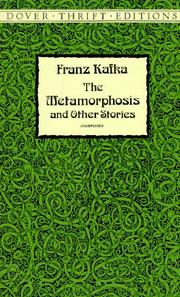
Then Franz Kafka, who wrote in German in Prague and belongs to the city's literature regardless. The Metamorphosis and Other Stories is the right entry point: the shorter fiction shows the machinery working in compressed form. Move on to The Trial, where the bureaucratic nightmare unfolds at novel length. Read both before the postwar books, because half of what follows is written in Kafka's shadow, sometimes explicitly.
Under communism: Hrabal and Kundera
Bohumil Hrabal is the essential Czech novelist of the second half of the century, and Closely watched trains is the compact place to begin — a young railway apprentice under German occupation, comic and abruptly devastating. Follow it with I Served The King Of England, a picaresque about a tiny, ambitious waiter carried through the collapse of several regimes, which is Hrabal at his most exuberant.
Too loud a solitude is his masterpiece and should come after both. A man who has spent thirty-five years compacting wastepaper, rescuing books from the press, narrates in a voice that is drunk, learned and heartbroken at once. It is short and worth reading twice.
Milan Kundera should be read in order of his own development. Broma / the Joke, his first novel, turns on a postcard gag that destroys a young man's life, and it is the most direct treatment of Stalinist Czechoslovakia in this list. Then The Unbearable Lightness of Being, the novel that made him internationally famous, set around 1968 and built on the philosophical conceit its title announces. Kundera's essayistic intrusions divide readers; take them as part of the form rather than as interruptions. One practical note: several editions of both novels are multilingual or bundled reprints, so check what you are buying before you order.
Dissent, exile and the theatre
The garden party and other plays by Vaclav Havel gives you the absurdist theatre of a man who would later become president. The bureaucratic language games in these plays are funny and then quietly terrifying, and they are the clearest bridge between Kafka and the dissident movement Havel led.
Close with The Engineer of Human Souls by Josef Skvorecky, written in Canadian exile — a sprawling, funny, layered novel that moves between a Toronto literature seminar and wartime Bohemia. It is the natural endpoint because it is about looking back at all of the above from outside, by a man who spent the communist decades publishing banned Czech writers from Ontario.
For neighbouring traditions, the Polish literature hub picks up many of the same twentieth-century pressures, and the wider world literature hub puts the century in a larger frame.
Read them in this order and the century assembles itself.
Follow the full ordered path here: The Best Czech Literature to Read, in Order.