Jose Saramago Reading Order: Where to Start
Saramago writes in page-long paragraphs with no quotation marks and speech marked only by commas and capital letters, which is the single obstacle between most readers and one of the great late-twentieth-century novelists. This order solves that first: one book whose premise is gripping enough to carry you past the punctuation, then the historical fabulations that made his name in Portugal, then the cold parables, then the late short novels. By the fourth book the prose reads as speech rather than as an obstacle.
Start here: the book that teaches you the prose
IntermediateGet used to unpunctuated dialogue and the roving narrator inside a plot urgent enough that you stop noticing the style.
▸ Study plan for this stage
Pace: Two to three weeks for roughly 320 pages. Read the first thirty pages in one uninterrupted sitting even if it is hard going — the style only resolves at length, and stopping every five minutes guarantees it never will. After that, 30 pages a sitting. Do not read this one in short fragments on public
- The obstacle first, because it is the only real one. Saramago writes in paragraphs that run for a page or more, with no quotation marks, no dashes and no line breaks for speech. Dialogue is embedded in the prose, separated only by commas, and a new speaker is signalled by a capital letter in the mid
- How to actually read it: treat each capital letter after a comma as a change of speaker. Almost every exchange has only two people in it, so they simply alternate. Do not try to attribute lines individually; follow the alternation and attribution takes care of itself.
- Read it aloud, or subvocalise, for the first fifty pages. The punctuation is modelled on speech — on how someone tells you a long story without stopping — and the ear parses it far faster than the eye does. Almost every reader who gives up did so silently.
- This is the author's style, not a translation artefact and not an accident. It survives into English intact from the Portuguese, and it is the same in every book on this path. There is no easier edition to find.
- The paragraph, not the sentence, is his unit. A paragraph is usually one scene, so use paragraph breaks the way you would use chapter breaks and stop there rather than mid-flow.
- The narrator is a constant presence — commenting, contradicting, offering proverbs, admitting uncertainty about his own story. He is a character, and getting used to his interruptions is half of learning to read Saramago.
- Blindness is first because its premise is urgent enough to pull you through the punctuation: an epidemic of white blindness, a quarantine in a disused asylum, and a society reorganising itself within days around whoever controls the food.
- Nobody in it has a name. They are the doctor, the doctor's wife, the girl with dark glasses, the man with the black eyepatch. That is the fastest possible lesson in how Saramago handles character — as function and situation rather than as biography.
- The middle section, inside the asylum, contains sustained violence including organised sexual violence used as a means of control. It is not gratuitous but it is unsparing, and it is the part of the book people remember.
- Why is the doctor's wife the only one who can see, and what does the novel gain by never explaining it?
- How long does it take, in the story's own timeline, for the quarantine to develop a government, a currency and an army? What does that speed argue?
- Nobody is named. What effect does that have by page two hundred that it did not have on page ten?
- What is the narrator doing when he interrupts to comment on the action? Find three examples and describe the function of each.
- The final chapter offers an explanation of the whole book in a few lines of dialogue. Does the novel earn it?
- Take one page of dialogue and rewrite it with quotation marks and line breaks. Doing this once, early, permanently fixes how the convention works.
- Read the opening traffic-light scene aloud. It is the single best demonstration of why the punctuation is designed the way it is.
- Mark the point at which you stop noticing the style. Most readers report somewhere between page forty and page eighty, and knowing it happens is why this book is placed first.
- Keep a note of the group members by their descriptive tags. You will need them again much later in this path.
Next up: With the prose no longer an obstacle, you can read the Portuguese novels that actually won him the Nobel.

An epidemic of white blindness and a quarantine that becomes a society. The premise pulls you through the punctuation, and nobody in it has a name, which is the fastest possible lesson in how Saramago handles character.
The core: the historical fabulations
BeginnerRead the Portuguese novels that won him the Nobel, and see how he uses a documented past as raw material for argument rather than reconstruction.
▸ Study plan for this stage
Pace: Ten to eleven weeks for roughly 1,360 pages: Baltasar and Blimunda 352, The Year of the Death of Ricardo Reis 358, The Gospel According to Jesus Christ around 380, The Stone Raft 272. Ricardo Reis is the slowest book on this path — very little happens and it happens beautifully — so give it three we
- Saramago's historical novels are not reconstructions. He takes a documented past — a royal building project, a poet's fictional biography, the Gospels, the map of Europe — and uses it as material for an argument about power, faith and ordinary labour.
- Baltasar and Blimunda is the warmest book he wrote: eighteenth-century Lisbon, a soldier who lost a hand in the war, a woman who can see inside people when she fasts, a priest building a flying machine, and the enormous convent at Mafra being built by conscripted labour.
- Its two halves are deliberately opposed — a flying machine powered by collected human wills, and a monastery built with the bodies of men dragged from their villages. The novel is about what a society chooses to spend people on.
- The Inquisition is present throughout, not as gothic decoration but as the ordinary administrative machinery of the period, and the book's ending turns on it.
- The Year of the Death of Ricardo Reis takes one of Fernando Pessoa's heteronyms — the invented poets under whose names Pessoa published — and brings him home to Lisbon in 1936, where the dead Pessoa visits him for the nine months a soul is permitted to linger.
- You do not need to know Pessoa first, though a paragraph about the heteronyms helps. What matters is the year: Salazar's dictatorship consolidating, Spain sliding into civil war, and a man who has spent his life declining to have opinions walking around a city where everyone is choosing sides.
- It is the most static book here and the most political. Nothing happens, deliberately, and the not-happening is the indictment.
- The Gospel According to Jesus Christ is his most confrontational novel: a human Jesus with a human family and a sexual life, a Joseph destroyed by his complicity in the massacre of the innocents, and a God who negotiates the crucifixion as a business proposition for expanding his franchise.
- The book caused a genuine political crisis. The Portuguese government blocked its nomination for a European literary prize on religious grounds, and Saramago — a lifelong atheist and Communist — left Portugal for the Canary Islands, where he lived for the rest of his life.
- The Stone Raft closes the stage by turning the historical method into pure fable: the Iberian Peninsula cracks off at the Pyrenees and floats into the Atlantic, and five people and a dog travel across it. It is a book about Portugal and Spain's relation to Europe, written as Iberia was joining the E
- In Baltasar and Blimunda, what is the flying machine actually powered by, and what is Saramago saying by making that the fuel?
- The convent at Mafra is real and enormous. How does the novel make you feel the cost of it rather than merely be told?
- Why does Ricardo Reis come back to Lisbon at all, and what does he do there? Answer honestly — the answer is the novel.
- What does Pessoa's ghost want from Reis, and what is the joke in one invention haunting another?
- In The Gospel, what is God's argument for the crucifixion, and does the novel let anyone answer it?
- In The Stone Raft, what is the peninsula moving away from, and what does the book think Europe is?
- Look up a photograph of the convent at Mafra before you start Baltasar and Blimunda. Its scale is the novel's argument and it is easier to feel with an image.
- Read a short summary of Pessoa's heteronyms — three or four sentences is enough — before Ricardo Reis. It removes the only genuine obstacle in the book.
- In The Gospel, mark the scene in the boat between God, the Devil and Jesus. Almost every argument about this novel is decided there, and it repays a second reading.
- In The Stone Raft, note each of the five characters' initial impossible act. Saramago never connects them causally and refusing to is the point.
- After these four, write one sentence on what Saramago thinks power is. You will test it against the parables next.
Next up: History exhausted, the next stage takes the same method into offices, registries and elections, where the fantastic premise is stated once and then obeyed absolutely.
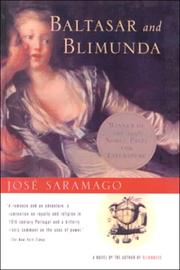
Eighteenth-century Lisbon, a maimed soldier, a woman who sees inside people, and a flying machine powered by human will. The warmest book he wrote and the right second step.

One of Fernando Pessoa's heteronyms comes home to Lisbon in 1936 and is visited by the dead poet. Read after Baltasar, because it assumes you will accept an impossible premise without explanation.

The novel that got him driven out of Portugal — a human Jesus, an implicated God. Third, because it is the most confrontational and it lands hardest once you trust his tone.
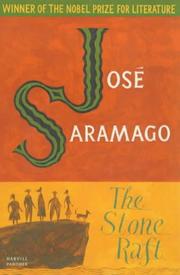
The Iberian Peninsula snaps off Europe and floats into the Atlantic. It closes the stage by turning the historical method into pure geopolitical fable.
The parables of the administered life
BeginnerFollow Saramago's move from history into allegories of bureaucracy, identity and the state, where the fantastic premise is stated in the first paragraph and then obeyed absolutely.
▸ Study plan for this stage
Pace: Nine to ten weeks for roughly 1,210 pages: All the Names 260, The History of the Siege of Lisbon 320, The Double around 320, Seeing around 310. All four are shorter and faster than the historical novels. The Siege of Lisbon has two narratives running at once and needs the most attention; The Double
- The parables all work the same way: an impossible or absurd premise is stated flatly in the opening pages and then obeyed with complete logical rigour, with no further magic permitted. That discipline is what separates Saramago from whimsy.
- All the Names is the purest of them. A clerk in a Central Registry of births, marriages and deaths becomes obsessed with the card of a woman he has never met, and begins investigating her life without any idea why.
- The Registry itself is the novel's great invention: the living filed at the front, the dead in an ever-growing chaos at the back, and an ancient hierarchy of clerks and deputies. It is bureaucracy as cosmology, and it is the natural companion to Blindness — one book about a society collapsing, one a
- The History of the Siege of Lisbon is the funniest thing he wrote and the most directly relevant to this path. A proofreader inserts the word 'not' into a history of the 1147 siege, reversing the historical record, and is then required to write the alternative history he has created.
- It is a novel about how the order in which you read something determines what it means, about editing as an exercise of power, and — underneath — a genuinely tender love story between the proofreader and the editor sent to supervise him.
- The Double is the coldest book on this path. A history teacher spots an actor in a rented film who is his exact physical duplicate, and pursues him. There is no warmth in it and the ending is brutal in a way readers do not expect.
- Read after the two above, it makes clear how much of Saramago's usual effect comes from the narrator's affection for people. Withdraw it and the same technique produces something close to horror.
- Seeing is the direct sequel to Blindness, set in the same city four years on, in which eighty-three per cent of the electorate casts blank ballots and the government responds as though to an insurrection.
- It is deliberately placed last in this stage rather than second in the path. It argues with the parables, it depends on a reader who already trusts the method, and its final pages reach back into Blindness in a way that only works when that book is a memory rather than a fresh read.
- Note across all four that the enemy is never a tyrant. It is procedure — the file, the ballot, the record, the official version — which is Saramago's real political subject.
- Why does Senhor José pursue the woman's card? Note that the novel offers several explanations and endorses none.
- What is the significance of how the dead are filed in the Registry, and of the shepherd who appears near the end?
- In The History of the Siege of Lisbon, what does the single inserted word cost, and who has the authority to say what happened?
- How does the love story in that novel relate to its argument about editing? They are not separate.
- In The Double, what does each man want from the other, and where does the pursuit become inevitable?
- In Seeing, what does the government actually fear about a blank ballot, given that no law has been broken?
- In All the Names, sketch the layout of the Registry as it is described. The building is the argument and it is precisely specified.
- In The History of the Siege of Lisbon, keep the twelfth-century narrative and the present-day one on separate pages of notes. Saramago moves between them without warning and the pleasure is in tracking both.
- After The Double, go back to a paragraph of Baltasar and Blimunda. The technique is identical and the temperature is completely different — that comparison is the fastest way to see what the narrator's voice actually does.
- Before Seeing, reread the last five pages of Blindness. The sequel assumes it.
- List, across all four, what institution each novel puts at its centre. The list is Saramago's political programme.
Next up: The parables at their coldest are behind you, and the last books are the same writer in old age, lighter and no less serious.

A clerk in a registry of births and deaths becomes obsessed with a stranger's card. The purest of the parables and the natural companion to Blindness.
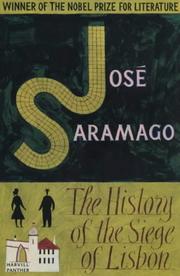
A proofreader inserts the word 'not' into a history book and has to write the consequences. It is the funniest thing he wrote and it is about exactly what this path is about — the order in which you read.
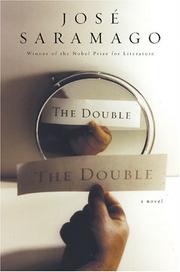
A teacher spots his exact physical duplicate in a rented film. Read after the two above: it is the coldest handling of the identity theme and benefits from the contrast.

The direct sequel to Blindness, in which the same city casts blank ballots. Deliberately placed late rather than second — it is far more effective once you have read the parables it argues with.
The completist tail: late Saramago
BeginnerFinish with the short, wry final novels and be able to characterise how his last decade differs from the Nobel-winning middle period.
▸ Study plan for this stage
Pace: Four to five weeks for 621 pages: Death with Interruptions 238, The Elephant's Journey 224, Cain 159. All three are short and the late voice is genial, so 35 pages a sitting is easy. Cain is the shortest and the sharpest; read it last and read it slowly despite its length.
- The late novels are shorter, wryer and more openly storytelling than the middle period. The narrator now interrupts constantly, addresses the reader, changes his mind and complains about his own material, and the effect is closer to an old man talking than to a novel being constructed.
- Death with Interruptions is the best of them: people simply stop dying in one small country, and the state, the church, the funeral industry and organised crime all have to work out what to do about it.
- Its second half changes register entirely when death herself becomes a character with a bureaucratic problem and a correspondence to conduct. Note that her letters are printed in lower case throughout, which is a joke and a characterisation at once.
- The satire in the first half is the sharpest institutional comedy he wrote — the church's position that without death there is no resurrection and therefore no church is stated in one devastating line.
- The Elephant's Journey is almost weightless: a real sixteenth-century elephant was sent as a gift from the Portuguese king to an archduke in Vienna, and Saramago simply follows it across Europe with its keeper.
- It is the purest demonstration of the late storytelling voice. Nothing is at stake, the digressions are the point, and the narrator's fondness for his own anecdotes is the whole pleasure.
- Cain was his last novel and returns to the quarrel with God he began decades earlier in The Gospel. Cain, cursed to wander, travels through the Old Testament witnessing God's atrocities in sequence — Abraham and Isaac, Job, Sodom, the Flood — and prosecuting the case as he goes.
- It is the right closing book because it explicitly answers a novel earlier on this path. The Gospel argued with the New Testament; Cain finishes the job with the Old, and the two are one continuous argument made twenty years apart.
- Cain is angrier than anything else in the late work and it caused another public quarrel with the church in Portugal. An eighty-six-year-old writing his most combative book is worth noticing.
- Read across the whole path, the constant is the narrator: sceptical, digressive, on the side of the people doing the work, and never willing to let an institution explain itself unchallenged.
- In Death with Interruptions, which institution copes worst with the end of dying, and what does that reveal about what it was really for?
- Why does the novel switch from national satire to one woman's story halfway through, and does the switch work?
- In The Elephant's Journey, what is the elephant for, narratively? It has no interiority and no agency, and the book is about it.
- What does the late narrator do that the narrator of Blindness does not?
- In Cain, which of God's actions does the novel treat as indefensible, and is the case argued or asserted?
- Having read twelve books: is the style a barrier that must be overcome, or is it the thing itself? Answer now that you no longer notice it.
- Read death's first letter in Death with Interruptions twice, once for the joke of the lower case and once for what it tells you about her.
- Read The Elephant's Journey in as few sittings as possible. It is a travelling story and it works better at travelling speed.
- Set a chapter of Cain beside the corresponding chapter of the Book of Genesis. The novel is a close reading before it is a provocation.
- Reread the boat scene from The Gospel after finishing Cain. Two novels, twenty years apart, one argument, and the second one knows it.
- Finally, open Blindness at a random page. If it now reads as speech rather than as an obstacle, this path did the only thing it set out to do.
Next up: The style is second nature and the whole arc from historical fable to late parable is in view, so the remaining novels and the notebooks can be taken in any order.

People stop dying in one country, and death herself eventually writes a letter. Lighter than anything before it, and the best of the late books.
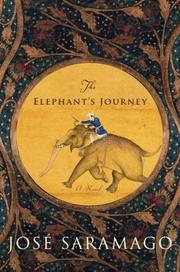
A real sixteenth-century elephant walked from Lisbon to Vienna; Saramago follows it. Almost weightless, and a good demonstration of the late storytelling voice.
His last novel, and a return to the quarrel with God he began in The Gospel. The right closing book because it explicitly answers a work you read earlier in this path.
Discussion
Keep reading
Paths that share books, cover the same subject, or open a related topic.