Machado de Assis Reading Order: Where to Start
Machado wrote nine novels and hundreds of stories, and there is a hard line running through the middle of the career: four competent romantic novels, then a break in 1881 after which he became one of the strangest and funniest writers of the nineteenth century. Start on the far side of that line with the two masterpieces, finish the late quintet, then take the stories. The early novels come last, where they belong — as evidence of what he escaped.
Start Here: The Two Masterpieces
IntermediateMeet the mature Machado — the digressive dead narrator and the unreliable jealous one — and understand why readers claim him as a modernist writing in 1880.
▸ Study plan for this stage
Pace: 5–6 weeks. The Posthumous Memoirs of Brás Cubas is short and built from 160 tiny chapters, so it reads in bursts of 20 minutes — 2 weeks without strain. Dom Casmurro is around 270 pages and deserves 3 weeks, plus one evening at the end to go back and check the evidence you think you were given.
- The dead narrator: Brás Cubas writes from beyond the grave, which frees him from every consequence a living narrator faces
- The dedication to the worm that gnawed his corpse, and what that tells you about the book's manners in the first ten seconds
- 160 chapters, several of them a single line, one of them mostly punctuation — the form is the joke and the joke is serious
- Direct address to the reader, borrowed from Sterne, used to make you complicit rather than comfortable
- Dom Casmurro's Bentinho: a narrator who assembles a case for his wife's adultery out of material that proves nothing
- Capitu's 'oblique and dissembling eyes' — the most argued-over phrase in Brazilian literature, and evidence of nothing except Bentinho's reading of her
- Nineteenth-century Rio, slavery and social position as the constant background these narrators keep declining to look at directly
- Several English translations of both novels are in print and they differ noticeably in how funny they sound — read the first chapter of two before committing
- What does Brás Cubas gain by being dead that he could not have as a memoirist? Name a specific chapter that only works posthumously.
- What is the actual evidence against Capitu? List it, then ask what a court would do with it.
- Bentinho tells you at the start that he is writing to reconnect the two ends of his life. Does the book he produces do that?
- Both narrators are charming. Where does each use charm to skip past something he does not want examined?
- Machado was writing in 1880 and 1899. What in these books makes readers reach for the word modernist?
- How do the enslaved and dependent characters function in each novel, and what does the narrator's inattention to them reveal?
- Count how many chapters of Brás Cubas are under a page and read three of them aloud; the timing is the technique
- Keep a two-column list while reading Dom Casmurro: what Bentinho observes, and what he concludes. The gap is the novel
- After finishing Dom Casmurro, reread the first three chapters — they change completely
- Compare the opening paragraph of two different English translations of Brás Cubas and pick the voice you can hear
- Write down your verdict on Capitu in one sentence, date it, and revisit it after the late quintet
Next up: You have now been fooled by two narrators and learned not to trust the third, which is the only equipment the remaining late novels require.
The correct first book: a dead man narrates his own useless life in 160 tiny chapters, dedicating the book to the worm that gnawed his corpse. Everything unusual about Machado is on the first page, so you find out immediately whether you want the rest.
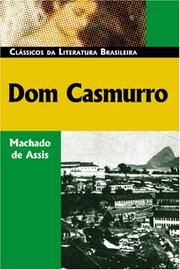
His most perfect novel and the great trap in Brazilian literature — a man convinces you his wife betrayed him, and the case dissolves the second you look at it. Read second, because the trick only works if you already trust his narrators, which Brás Cubas has just taught you not to do.
The Rest of the Late Quintet
IntermediateComplete the five novels of Machado's second career and watch the irony cool from farce into something close to resignation.
▸ Study plan for this stage
Pace: 8–10 weeks. Quincas Borba is about 270 pages and takes 3 weeks. Esau and Jacob is cooler and more political, and most readers slow down in it — allow 3 weeks and do not read it when tired. Counselor Ayres' Memorial is short and diary-formatted, so it reads in a fortnight, but read it last and read i
- Humanitism, the philosophy of Quincas Borba: 'to the victor, the potatoes' — a doctrine that the winner should consume the loser, played entirely straight
- Rubião's inheritance and decline as the plot Machado uses to test that philosophy to destruction
- Esau and Jacob's twins, Pedro and Paulo, who agree on nothing, set against the fall of the Brazilian empire in 1889
- The Counselor Ayres narrator: a man who claims to be merely transcribing, which is the most sophisticated of Machado's unreliable postures
- The diary form in Counselor Ayres' Memorial and how an entry-by-entry structure hides its own editing
- The cooling arc — farce in Quincas Borba, political irony in Esau and Jacob, resignation and tenderness in the last book
- Abolition in 1888 and the end of the monarchy in 1889 running under all three, mostly as things characters mention rather than confront
- Is Humanitism a parody of a specific philosophy, or of philosophising itself?
- Quincas Borba is a sequel of sorts. What would you have missed in it without having met Quincas Borba in Brás Cubas?
- The twins in Esau and Jacob are politically opposed. Does Machado take a side, and how can you tell?
- Ayres claims he is only transcribing. Find three places where he is obviously doing more than that.
- Across these three books, what happens to Machado's irony — does it soften, or does it just get quieter?
- Why does Counselor Ayres' Memorial read as a farewell? Point to something structural, not just biographical.
- Write out Humanitism in your own words in three sentences, then find where the novel disproves it by plot rather than by argument
- Track how often Ayres records other people's words versus his own opinion, and see whether the ratio shifts as the book goes on
- Note every mention of abolition across all three novels; the sparseness is itself a finding
- Read the last page of Counselor Ayres' Memorial immediately after the first page of Brás Cubas — nineteen years and two entirely different tempers
Next up: The five late novels are done, which means you can now read the stories as the form he worked in most rather than as offcuts from the novels.
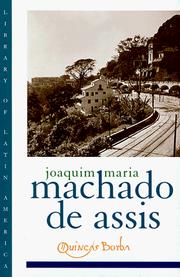
A direct sequel of sorts, following the mad philosopher from Brás Cubas and his doctrine that the winner should be eaten. Third because its joke depends on having met Quincas Borba already.

Twin brothers who agree on nothing, set against the fall of the Brazilian empire, narrated by a counselor who claims to be merely transcribing. Late, cooler and more political than the earlier three.

His last novel, a diary by the narrator of Esau and Jacob, quiet and unexpectedly tender about abolition and old age. The right ending point for the novels because it reads as a farewell and was one.
The Stories
IntermediateRead the form Machado worked in most and where, by common consent, he is at his sharpest.
▸ Study plan for this stage
Pace: Open-ended, and deliberately so. The Alienist is a 60-page novella you can finish in one evening. The Collected Stories runs to about 930 pages and 76 stories arranged chronologically — do not read it front to back in one campaign. Two or three stories a week for a year is the right pace; this is a
- The Alienist: Dr. Bacamarte institutionalises a whole town, then reconsiders which side of the asylum wall the madness is on
- Scientific authority as the joke's engine — the doctor is never insincere, which is what makes it funny and frightening
- The Collected Stories is arranged chronologically, so the 1881 break is visible in miniature across the volume
- The story as Machado's primary form: he wrote hundreds, mostly for newspapers, under deadline
- The narrator who addresses the reader appears in the stories too, often in three pages rather than three hundred
- Machado's Rio: civil servants, dependents, small humiliations, and the enormous social machinery underneath a domestic scene
- Where the stories beat the novels — no plot to sustain means the irony can land in a single closing sentence
- In The Alienist, at what point does the doctor's logic become unanswerable, and is he ever actually wrong?
- Reading the collection chronologically, where would you put the break — does it match 1881, or was he already changing?
- Which recurring situation appears in both the stories and the late novels, and which form handles it better?
- Machado wrote most of these for newspapers. What does the deadline and the column length do to the shape of a story?
- Pick the story you found sharpest. What does it do in its last sentence?
- Read The Alienist in one sitting, then write down whether you think the town was mad — the book is engineered to make that hard
- Read five stories from before 1881 and five from after, back to back, and describe the difference in one paragraph
- Shelve the Collected Stories somewhere you will pass it, and read one story a week rather than attempting the volume
- Keep a list of the five stories you would use to introduce Machado to someone with no time for a novel
Next up: You now know exactly what the mature Machado sounds like, which is the only way the early novels become interesting rather than merely earlier.

A novella about a doctor who institutionalizes an entire town and then reconsiders. The perfect bridge from the novels to the stories, and the funniest thing he wrote.

Seventy-six stories in one volume, arranged chronologically so you can watch the 1881 break happen in miniature. Do not read it front to back in one go — this is a book to keep and dip into for years.
The Early Novels
IntermediateSee the conventional romantic novelist Machado was for fifteen years, and measure the distance he travelled in a single book.
▸ Study plan for this stage
Pace: 6–7 weeks, and read these as evidence rather than for pleasure. Resurrection is about 160 pages and takes a week. The Hand and the Glove is around 145 pages, another week. Helena is roughly 220 pages and is the one that will actually move you — give it 2 to 3 weeks.
- Machado wrote four conventional romantic novels before 1881, and they are competent rather than strange
- Resurrection, from 1872, is Dom Casmurro's jealousy plot handled straight, with all the doubt removed — instructive precisely because it is inferior
- The Hand and the Glove: a calculating young woman choosing a husband, with ironic asides already surfacing in the margins
- Helena as the best of the early books and the most emotionally direct thing Machado published — a secret-parentage plot played almost without irony
- The 1881 break measured concretely: what he stopped doing (plot resolution, sincerity, omniscience) and what he started
- Reading backwards as a method — the early books are only legible as a distance travelled once you know where he arrived
- Set Resurrection beside Dom Casmurro. What single change turns the same material from a romantic plot into a masterpiece?
- Where in The Hand and the Glove can you catch the later ironic voice, and what is it attached to?
- Helena is sincere in a way Machado never was again. Is that a loss?
- Are these novels actually bad, or just conventional? Defend your answer with a scene.
- What do you think happened in 1881 — is the break explicable from the books themselves, or does it need a biography?
- Read the jealousy scene in Resurrection and the corresponding movement in Dom Casmurro on the same day
- Mark every authorial aside in The Hand and the Glove; the count is low and each one is a preview
- Write one paragraph arguing that Helena is the better novel than Dom Casmurro, then one arguing the reverse — the exercise clarifies what the break cost and bought
- Return to your dated verdict on Capitu from the first stage and revise it now
Next up: This closes the path: you have read Machado forwards from the masterpieces and backwards to the novelist he escaped, which is the only order in which the escape is visible.

His first novel, from 1872, about a man whose jealousy destroys an engagement. The theme of Dom Casmurro handled straight, with none of the doubt — instructive precisely because it is inferior.

An early novel of a calculating young woman choosing a husband, where you can already catch the ironic asides that would later take over completely.
The best of the early books and the most emotionally direct thing he ever published — a secret parentage plot played almost without irony. A good final stop, because after it he never wrote sincerely again.
Discussion
Keep reading
Paths that share books, cover the same subject, or open a related topic.