Best Polish Literature to Read, in Order
This curriculum traces Polish literature from its twentieth-century moral and historical foundations through the Nobel laureates, the postwar generation, and into contemporary fiction. Starting at an intermediate level, each stage deepens the reader's feel for the recurring Polish themes — exile, memory, resistance, and irony — so that later, more demanding works land with full force.
Foundations: The Polish Moral Imagination
IntermediateEstablish the historical and ethical landscape — occupation, exile, and survival — that haunts all modern Polish writing, and build the cultural vocabulary needed for the Nobel laureates.
▸ Study plan for this stage
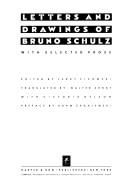
Pace: 4–5 weeks, ~40–50 pages/day (accounting for dense prose and rereading passages). Week 1–2: *The Painted Bird* (~300 pages); Week 3: transition and reflection; Week 4–5: *The Street of Crocodiles* (~150 pages) with overlap for synthesis.
- Trauma as narrative structure: how Kosinski's fragmented, episodic form mirrors the protagonist's psychological fracture and displacement across Eastern European landscapes during WWII
- The grotesque and the mundane: Schulz's technique of elevating ordinary domestic life and provincial commerce into surreal, mythic tableaux as a response to historical precarity
- Moral ambiguity in survival: both authors refuse simple victimhood narratives, instead exploring complicity, betrayal, and the ethical compromises required to endure occupation and exile
- The body as text: physical violation, metamorphosis, and sensory intensity as ways of registering historical violence and cultural displacement without direct statement
- Memory and imagination as resistance: how both writers use subjective, unreliable narration and dreamlike imagery to reclaim agency in the face of historical erasure
- The provincial/marginal perspective: how Eastern European Jewish and Catholic milieus—small towns, provincial commerce, folk superstition—become the crucible for exploring universal moral questions
- Language as homeland: the relationship between Polish language, Yiddish, and German in these texts as a marker of cultural identity, loss, and literary survival
- How does Kosinski's use of fragmented, episodic structure in *The Painted Bird* reflect the protagonist's trauma and displacement? What effect does this form have on your understanding of his survival?
- Identify and analyze a moment in *The Painted Bird* where the protagonist's moral agency is ambiguous or compromised. What does this reveal about Kosinski's vision of survival under occupation?
- How does Schulz transform ordinary domestic and commercial spaces in *The Street of Crocodiles* into sites of mythic or surreal significance? What is the effect of this technique?
- Compare the treatment of the body in both texts. How do physical violation, metamorphosis, and sensory detail function as responses to historical trauma?
- What role does memory and imagination play in both *The Painted Bird* and *The Street of Crocodiles*? How do the authors use subjective narration to resist historical erasure?
- How do both texts use provincial, marginal settings (small towns, folk superstition, local commerce) to explore universal ethical and existential questions?
- Close-read 2–3 key passages from *The Painted Bird* (e.g., the opening, a moment of moral compromise, the ending) and annotate how fragmentation and sensory detail convey trauma without explicit psychological explanation.
- Map the protagonist's journey across *The Painted Bird*: track locations, encounters, and shifts in his moral understanding. What patterns emerge? How does geography mirror psychological states?
- Create a visual or written analysis of one domestic/commercial scene from *The Street of Crocodiles* (e.g., the shop, the father's room, the street itself). Identify surreal or mythic elements and explain how Schulz elevates the mundane.
- Write a comparative character study: How do the protagonists of *The Painted Bird* and *The Street of Crocodiles* (or the narrator's father) respond to powerlessness and historical precarity? What are their strategies for meaning-making?
- Identify and analyze instances of moral ambiguity or complicity in both texts. How do these moments complicate simple victim narratives? What ethical questions do they raise?
- Trace the role of language, dialect, or linguistic alienation in both texts. How do the authors use language to signal cultural displacement or loss? What does this suggest about literature as a form of survival?
Next up: This stage establishes the moral and historical foundations—trauma, ethical ambiguity, and imaginative resistance—that will deepen in the Nobel laureates' work, preparing you to recognize how Miłosz, Szymborska, and Gombrowicz inherit and transform these preoccupations into philosophical and political sophistication.
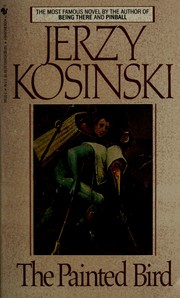
A visceral, unforgettable entry point into the wartime experience that defines postwar Polish consciousness; its stark prose style prepares the reader for the moral weight carried by every subsequent author on this list.
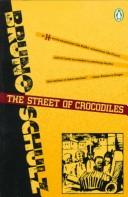
Schulz's mythologized Galician childhood is the wellspring of Polish magical prose; reading him here gives the reader the surrealist, memory-saturated lens that Miłosz and later writers inherit.
The Nobel Laureates: Miłosz & Szymborska
IntermediateRead the two towering Nobel Prize winners in depth — first Miłosz's prose to understand his ideas, then Szymborska's poetry to feel how those ideas compress into irony and wonder.
▸ Study plan for this stage
Pace: 10–12 weeks total, divided into three phases: Phase 1 — "The Captive Mind" (3 weeks, ~15–20 pages/day, including re-reading key chapters); Phase 2 — Miłosz's "New and Collected Poems 1931–2001" (4 weeks, ~8–12 poems/day, with slower re-reading of major sequences); Phase 3 — Szymborska's "Poems New a
- Ketman — the concept Miłosz borrows from Gobineau and applies to intellectual life under totalitarianism: the performance of conformity while privately dissenting, and how it corrodes the self over time (central to 'The Captive Mind')
- The 'captive mind' as a psychological and moral diagnosis: how ideology functions like a narcotic ('the Pill of Murti-Bing'), offering false clarity and relieving the burden of individual judgment
- Miłosz's four character portraits (Alpha, Beta, Gamma, Delta) as case studies in how talented individuals rationalize submission to power — and what each rationalization costs them morally
- Miłosz's poetics of witness and memory: how his poems in 'New and Collected Poems' treat history not as abstraction but as embodied, sensory experience — the specific street, the specific face, the specific moment
- The tension between Miłosz's Catholicism, his Manichean sense of evil, and his Enlightenment faith in reason and beauty — a productive contradiction that drives much of his verse
- Szymborska's ironic minimalism: how she uses the ordinary (a photograph, an onion, a conversation with a stone) as a lever to overturn grand philosophical assumptions
- The 'I don't know' epistemology — Szymborska's recurring stance of radical, joyful uncertainty as an ethical and aesthetic position, contrasting with ideological certainty
- Compression and surprise as craft: how Szymborska's final couplets or stanzas perform a sudden tonal or logical reversal that reframes everything the poem has built
- In 'The Captive Mind,' what is Ketman, and how does Miłosz argue that its long-term practice damages not just the individual intellectual but the broader culture of truth-telling? Use at least one of the four character portraits to illustrate your answer.
- How does Miłosz's prose argument in 'The Captive Mind' about ideology and self-deception find a poetic counterpart in his 'New and Collected Poems'? Identify at least two poems where the themes of complicity, memory, or moral witness appear and explain the connection.
- Szymborska's 'Poems New and Collected' frequently stages a dialogue between the human speaker and a non-human or abstract entity (a stone, chance, death, an onion). What philosophical work does this device do, and how does it relate to her stance on certainty and knowledge?
- Both Miłosz and Szymborska lived through World War II and Stalinist Poland, yet their responses in these books feel tonally very different. How would you characterize the difference in emotional register, and what formal or rhetorical choices produce that difference?
- Miłosz's 'New and Collected Poems' spans seven decades. Trace one thematic or stylistic evolution across early, middle, and late poems — what changes, and what remains constant?
- How does Szymborska use humor and irony not as escape from seriousness but as a mode of philosophical inquiry? Choose three poems from 'Poems New and Collected' to build your argument.
- Ketman self-audit: After reading the Ketman chapter in 'The Captive Mind,' write a one-page reflection on a context in your own life (professional, social, academic) where you have practiced a form of Ketman. Then write a second paragraph on what Miłosz would say about the long-term cost of that performance.
- Character portrait comparison: Choose one of Miłosz's four portraits (Alpha, Beta, Gamma, or Delta) from 'The Captive Mind' and write a 300-word character sketch of a contemporary public intellectual or artist you think fits the same psychological pattern. Justify your comparison with specific textual evidence from Miłosz.
- Poem-to-prose bridge: Select any poem from Miłosz's 'New and Collected Poems' that feels like a direct emotional or thematic response to an argument made in 'The Captive Mind.' Write a one-page close reading that traces the connection — what does the poem do that the prose cannot, and vice versa?
- Szymborska imitation exercise: Choose one of Szymborska's 'dialogue with an object' poems from 'Poems New and Collected' (e.g., 'Conversation with a Stone' or 'I Am Too Close'). Write your own 12–20 line poem in her style: pick an ordinary object, give it a philosophical position, and end with a reversal or an unanswered question.
- Side-by-side comparison essay: Write a 500-word comparative essay on how Miłosz and Szymborska each handle the theme of historical catastrophe — choose one poem by each author and analyze how form (line length, tone, imagery, address) shapes the reader's emotional and intellectual response differently.
- Reading journal sprint: At the end of each week, write a single paragraph (no more than 150 words) that identifies the one idea, image, or line from that week's reading that most surprised or unsettled you, and explain why. Collect all entries at the end of the stage and look for patterns in what drew your attention.
Next up: Having internalized Miłosz's moral seriousness and Szymborska's ironic compression as the twin poles of postwar Polish literary achievement, the reader is now equipped to encounter the broader tradition those two figures both inherited and transformed — setting the stage for exploring earlier and contemporary Polish voices who grapple with the same history through drama, fiction, and experimental
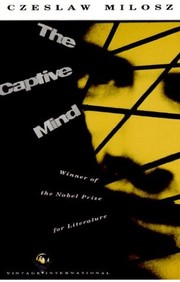
Miłosz's masterwork of political and philosophical prose dissects how intellectuals capitulate to totalitarianism; it is the essential ideological key to all postwar Polish literature and must be read before his poetry.
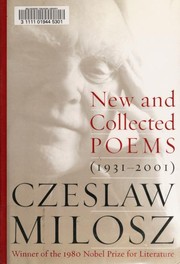
With The Captive Mind as context, Miłosz's poetry reveals its full range — lyric beauty, historical grief, and metaphysical longing — across six decades of exile and witness.
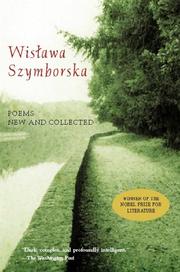
Szymborska's wry, philosophical poems are the perfect counterpoint to Miłosz's grandeur; her irony and precision show a distinctly feminine and skeptical angle on the same century, completing the Nobel picture.
The Postwar Generation: Prose of Memory and Resistance
IntermediateEncounter the novelists and essayists who processed the war's aftermath, Stalinism, and the Solidarity era — building narrative stamina for the longer, more complex works ahead.
▸ Study plan for this stage
Pace: 4–5 weeks, ~25–30 pages/day (approximately 350 pages total across both novels)
- Narrative fragmentation and temporal disruption as reflections of postwar trauma and ideological confusion
- The unreliable narrator and subjective memory as tools for processing historical rupture
- Symbolic and allegorical representation of Stalinism, resistance, and moral compromise under totalitarianism
- The tension between individual conscience and collective political obligation in *Ashes and Diamonds* and *A Minor Apocalypse*
- Existential absurdism and dark satire as responses to historical absurdity and state control
- The role of Catholic faith, doubt, and spiritual crisis in navigating postwar Poland
- Metafictional techniques: how these novels self-consciously examine the act of storytelling under censorship
- How does Andrzejewski use the final hours of WWII and the immediate postwar moment in *Ashes and Diamonds* to explore moral ambiguity and the collapse of clear ideological positions?
- What is the significance of Maciek's assassination of the Soviet officer, and how does the novel complicate any simple reading of him as hero or villain?
- How does Konwicki's *A Minor Apocalypse* use absurdist humor and grotesque imagery to critique Stalinism and the surveillance state?
- What role does the unnamed protagonist's planned self-immolation play in *A Minor Apocalypse*, and what does it suggest about resistance and futility under totalitarianism?
- How do both novels employ unreliable or fragmented narration to mirror the psychological and social disorientation of their historical moments?
- What is the relationship between personal desire, romantic love, and political duty in *Ashes and Diamonds*, and how does this tension remain unresolved?
- Close-read the opening pages of *Ashes and Diamonds* (the hotel scenes) and map how Andrzejewski establishes moral ambiguity through setting, dialogue, and Maciek's internal contradictions.
- Create a timeline of events in *Ashes and Diamonds* (the assassination, the romance with Krystyna, the final shootout) and note how the novel's narrative structure deviates from chronological order; reflect on why this fragmentation matters.
- Write a 2–3 page character study of Maciek comparing his public role as a resistance fighter with his private desires; use specific textual evidence to argue whether the novel endorses or condemns his actions.
- Annotate a passage from *A Minor Apocalypse* (e.g., the protagonist's encounters with bureaucrats or surveillance) identifying instances of dark satire and absurdist logic; explain how Konwicki uses grotesque comedy to critique state power.
- Compose an imagined diary entry from the perspective of either Maciek or Konwicki's protagonist, capturing their internal moral reasoning during a key scene; use the novel's language and concerns.
- Compare the two novels in a 3–4 page essay: How do *Ashes and Diamonds* and *A Minor Apocalypse* differ in their formal strategies (narrative structure, tone, use of symbolism) for representing postwar Polish experience? What does each approach reveal that the other does not?
Next up: This stage develops your capacity to read psychologically complex, formally experimental narratives that embed historical trauma within subjective consciousness—skills essential for engaging the metafictional density and philosophical depth of later Polish modernists.
Set in the chaotic final hours of World War II, this canonical novel captures the moral ambiguity of postwar Poland and is the direct literary ancestor of the generation that followed.
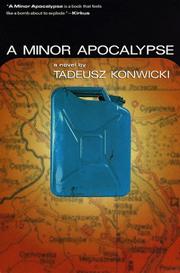
Konwicki's darkly comic, surreal portrait of late-communist Warsaw is the definitive insider's satire of the system; it bridges the postwar generation and the Solidarity-era dissident tradition.
Discussion
Keep reading
Paths that share books, cover the same subject, or open a related topic.