Polish literature in translation is dominated by one century, and that century has a shape: a multiethnic prewar world, its annihilation, and then four decades of writing under a censor. Almost every book on this path is positioned relative to those events, and reading them out of sequence flattens the arc into generic gloom.
There is also a specifically Polish problem of tone. Because direct statement was dangerous for long stretches, writers developed allegory, irony, and deliberate strangeness as working methods rather than stylistic choices. The surrealism in Schulz and the deadpan in Szymborska are doing different jobs, and knowing which is which is most of the reading skill you need here.
The world before, and its destruction
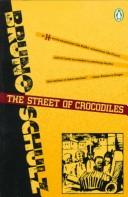
Begin with The street of crocodiles, Bruno Schulz's stories of Drohobycz, where a provincial Galician town is rendered as myth and the narrator's father slowly turns into something else. Schulz was shot by a Gestapo officer in 1942 and his major manuscript was lost, which means this slim book carries the weight of everything he did not get to write. It is the vanished world at its most vivid.
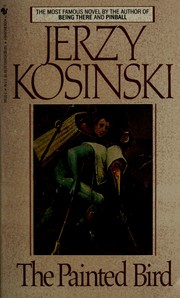
Then The Painted Bird by Jerzy Kosinski, a brutal novel of a child wandering wartime villages. Read it with the controversy attached rather than in ignorance of it: it was received in the West as near-autobiography, later scholarship established that Kosinski's own war was nothing like the book, and questions about how much of the prose was his own have never been settled. Critics still disagree about whether it is a major novel compromised by its author or a fabrication with literary power. Either way it is unsparing, and some readers should skip it.
The poets, and the mind under ideology
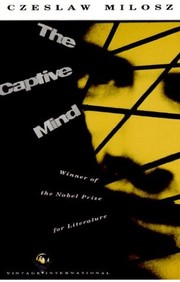
The Captive Mind is the essential nonfiction book of the period. Czeslaw Milosz, writing in 1953 from exile, dissects how intelligent people talked themselves into supporting Stalinism — not through terror alone but through the seductions of historical inevitability and the small daily accommodations he calls Ketman. It explains the intellectual weather of every novel that follows.
Then his poetry in New and collected poems 1931-2001, which spans seventy years, Lithuania to Warsaw to California, and moves between elegy and theological argument. Read it after the essays and the poems stop being opaque.
Poems New and Collected by Wislawa Szymborska is the counterweight and, for many readers, the pleasure of the whole path. Her poems are short, conversational, and funny in a way that suddenly is not; she takes on history, cruelty, and chance from an oblique angle and never raises her voice. Both she and Milosz won the Nobel, twenty-four years apart, which says something about how much attention this small literature has earned.
Living under the system
Close with two novels of the communist decades. Ashes and diamonds by Jerzy Andrzejewski is set in the days around the German surrender, following a young Home Army fighter ordered to assassinate a communist official, and it captures the moment the war ended for everyone except the Poles. Wajda's film made it famous; the novel is more ambivalent about its own hero.
Then A minor apocalypse by Tadeusz Konwicki, a darkly comic account of a writer told by dissident friends to set himself on fire outside Party headquarters, wandering a decaying Warsaw all day toward it. It is the late-communist mood in one book: exhausted, absurd, and unable to take either the regime or the opposition entirely seriously.
If this era interests you, the Czech literature path covers the same decades from the other side of the mountains. Follow the full reading path to take these in order.
Follow the full ordered path here: Best Polish Literature to Read, in Reading Order.