Two facts organize this literature. The first is the sea: Portugal's imperial century produced a national epic that every later writer either invokes or argues with, and the melancholy word saudade is not a cliche but a genuine structural mood running from Camoes to Pessoa. The second is that the language is far bigger than the country — Brazil, Angola, Mozambique, and Cape Verde all write in it, and a reading list confined to Lisbon misses most of it.
So read chronologically for the first half, where each writer is responding to the one before, and then widen. Pessoa is the pivot: everything after him in Portuguese poetry is post-Pessoa whether it wants to be or not.
The epic and the sonnets
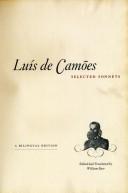
Start with Selected Sonnets by Luis de Camoes. The lyric poems are the accessible entry — compressed, formally exact, and preoccupied with exile, loss, and desire — and they acclimatize you to the register before the epic does.
Then The Lusiads, the 1572 epic of Vasco da Gama's voyage to India, in which the Olympian gods argue over Portuguese sailors and the poem periodically stops to grieve for what the enterprise costs. It is genuinely strange as an imperial epic: the most famous passage is an old man on the dock denouncing the whole voyage as vanity. Read at least the Adamastor episode and the Old Man of Restelo even if you do not finish it.
Pessoa, who was several people
Mensagem is the only book of Portuguese poetry Pessoa published in his lifetime — a mystical, nationalist sequence about Portuguese history that talks back to Camoes directly. It is short and best read second, once the epic is in your head.
Then Fernando Pessoa & Co, Richard Zenith's selection across the heteronyms. Pessoa invented complete authorial personalities — Alberto Caeiro the plain-speaking pastoralist, Ricardo Reis the classicist, Alvaro de Campos the futurist — each with a distinct style, biography, and set of opinions, and they disagree with each other in print. It is the single most original thing in modern Portuguese literature, and Zenith's edition is the standard way in.
Saramago, and how many of him to read
Three Saramago novels appear on this path, which is more than most readers need at once. Baltasar and Blimunda is the historical one — an eighteenth-century Portugal of the Inquisition, a convent-palace built with forced labor, and a flying machine — and it is the warmest introduction to his method.
The Gospel According to Jesus Christ is the one that caused a national scandal and pushed him into self-exile: a human Jesus, an implicated God, and a genuinely serious theological argument underneath the provocation. Blindness is the most widely read — an unnamed city struck by an epidemic of white blindness, quarantine, and rapid social collapse — and the most brutal.
If you read one, read Blindness. If you read two, add Baltasar and Blimunda for the range. All three share his signature style: paragraph-long sentences, dialogue without quotation marks, commas doing the work of full stops. Give it thirty pages before deciding.
Beyond Portugal
Close with two books that expand the map. Mayombe by Pepetela is an Angolan novel of guerrillas in the forest during the independence war, written by a fighter, and it is unusually honest about ethnic tension and doubt inside a liberation movement rather than romanticizing it.
Then The Posthumous Memoirs of Bras Cubas by Machado de Assis, the Brazilian novel narrated by a dead man from beyond the grave, published in 1881 and startlingly modern — digressive, ironic, formally playful decades before European modernism got there. Many readers find it the best book on this list.
Readers who like this era often continue with the Polish literature path. Follow the full reading path to take these in order.
Follow the full ordered path here: The Best Portuguese-Language Literature to Read First.