How to learn Photography
This curriculum takes you from absolute beginner to a deeply skilled, thoughtful photographer across four carefully sequenced stages. It begins with the mechanics of seeing and using a camera, builds through technical mastery of light and exposure, moves into the art and vision of composition and style, and finally reaches the conceptual and critical level where photography is understood as a language and a fine art.
Foundations: Seeing & the Camera
BeginnerUnderstand how a camera works, master the exposure triangle, and begin training your eye to see photographically.
▸ Study plan for this stage
Pace: 6–8 weeks total. Week 1–4: "Understanding Exposure" by Bryan F. Peterson (~20–25 pages/day, reading alongside active camera practice). Week 5–8: "Read This If You Want To Take Great Photographs" by Henry Carroll (~15–20 pages/day, a faster read designed to be browsed visually and revisited often).
- The Exposure Triangle: the interdependent relationship between aperture, shutter speed, and ISO, as Peterson frames it — changing one requires compensating with another
- Aperture & Depth of Field: how f-stop controls the zone of sharpness, from the 'storytelling' apertures (f/8–f/16) to 'singular-theme' apertures (f/2.8–f/5.6), a core Peterson framework
- Shutter Speed & Motion: freezing action vs. implying motion through blur, and how Peterson uses shutter speed as a creative — not just technical — tool
- ISO & Light Sensitivity: understanding the trade-off between sensitivity and noise/grain, and when to push ISO deliberately
- Metering & 'Correct' Exposure: how the camera's light meter works, why it can be fooled (18% gray), and how to override it for creative intent — a key Peterson lesson
- Composition as Vision: Carroll's five visual principles — light, composition, exposure, moment, and subject — as a framework for 'seeing' before pressing the shutter
- The Decisive Moment & Subject: Carroll's emphasis on finding a compelling subject and waiting for (or anticipating) the right moment, drawing on masters like Cartier-Bresson
- Developing a Photographer's Eye: the shift from documenting a scene to actively interpreting it — the unifying theme across both books
- Can you explain the exposure triangle in your own words — if you widen your aperture by one stop, what must you do to shutter speed or ISO to maintain the same exposure, and why?
- What is the difference between Peterson's 'storytelling aperture' and 'singular-theme aperture,' and when would you deliberately choose each?
- Why does a camera's light meter sometimes produce an incorrect exposure (e.g., when shooting snow or a dark background), and how do you override it?
- According to Carroll's framework, what are the five elements that make a great photograph, and which does he argue is the most important starting point?
- How do the two books complement each other — where does Peterson's technical depth connect to Carroll's emphasis on vision and seeing?
- Pick one photograph from Carroll's book: using Peterson's vocabulary (aperture, shutter speed, ISO), how do you think the photographer achieved that image technically and creatively?
- Exposure Triangle Drills: Set your camera to Manual mode and photograph the same static subject (e.g., a coffee mug by a window) using at least 5 different equivalent exposures — same brightness, different aperture/shutter/ISO combinations. Note how depth of field and motion rendering change even when brightness stays constant.
- Depth-of-Field Walk: Go outside and photograph the same scene three times — once at f/2.8 (or your widest aperture), once at f/8, once at f/16. Compare the results and write one sentence describing the 'story' each aperture tells, using Peterson's storytelling framework.
- Motion Study: Find a moving subject (traffic, a fan, running water). Photograph it at a fast shutter speed (1/500s+) to freeze it, and again at a slow shutter speed (1/15s or slower) to blur it. Reflect on which image feels more alive and why.
- Metering Override Exercise: Photograph a predominantly white scene (snow, a white wall) and a predominantly dark scene (dark fabric, a shadowed alley) using only your camera's automatic metering. Observe the errors, then use exposure compensation (+1 to +2 EV for white; -1 to -2 EV for dark) to correct them — internalizing Peterson's 18% gray lesson.
- Carroll's Five-Element Checklist: Before each photo outing, print or write Carroll's five elements (light, composition, exposure, moment, subject). After a 30-minute shoot, review your images and score each shot on which elements are strong and which are weak. Repeat weekly to track your 'seeing' improving.
- Master Study: Choose one photograph from Carroll's book that resonates with you. Spend 10 minutes writing about it: What is the subject? What is the light doing? What aperture and shutter speed do you estimate were used and why? What makes you keep looking at it? This bridges technical analysis with visual intuition.
Next up: Mastering the exposure triangle and beginning to see compositionally — the twin goals of Peterson and Carroll — gives you the technical fluency and visual vocabulary needed to move into more intentional work with light, genre, and personal style in the next stage.
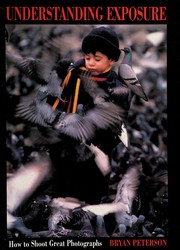
The single best starting point for beginners — Peterson demystifies aperture, shutter speed, and ISO with plain language and vivid examples, giving you an immediate, intuitive grasp of exposure before anything else.
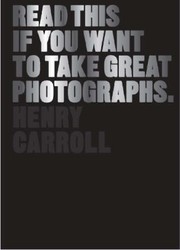
A beautifully visual, concise primer that pairs iconic photographs with clear lessons on composition and light, reinforcing Peterson's technical groundwork with an emphasis on actually looking.
Building Craft: Light, Composition & Technique
IntermediateDevelop a rigorous command of light, compositional principles, and camera technique so that creative choices become deliberate rather than accidental.
▸ Study plan for this stage
Pace: 8–10 weeks total. Weeks 1–4: "The Photographer's Eye" (~20–25 pages/day, 4–5 days/week). Weeks 5–10: "Light: Science and Magic" (~15–20 pages/day, 4–5 days/week, slower pace to allow for lighting experiments alongside reading).
- The frame as a design decision — how the edges, corners, and boundaries of the image actively shape meaning (Freeman)
- The 'decisive moment' of composition: understanding how subject placement, visual weight, and balance interact within the frame (Freeman)
- The role of the horizon, geometry, and perspective lines as compositional forces rather than neutral facts (Freeman)
- Figure-to-ground relationships and how contrast, tone, and separation define a subject against its background (Freeman)
- The physics of light: how light behaves when it strikes surfaces — reflection, transmission, absorption, and the inverse-square law (Hunter)
- Quality of light: the critical distinction between hard (specular) and soft (diffuse) light sources and how source size and distance control it (Hunter)
- Controlling highlights and shadows: the concept of the 'family of angles' to predict and place reflections on any surface (Hunter)
- Surface taxonomy: how photographers must treat shiny, matte, and translucent subjects differently when lighting them (Hunter)
- According to Freeman, how does the position of the horizon line alter the emotional and compositional weight of a photograph — and what are the trade-offs of placing it high vs. low?
- What is the 'family of angles' concept in Hunter, and how does it let you predict exactly where a reflection will appear on a polished surface before you fire a single shot?
- Freeman argues that composition is not a set of rules but a set of options. How does he distinguish between 'classical' balance and deliberate visual tension, and when is each appropriate?
- Using Hunter's framework, how would your lighting setup differ when photographing a matte ceramic mug versus a chrome coffee pot — and why?
- How does the inverse-square law (Hunter) translate into practical decisions about light-to-subject distance in a real shooting scenario?
- Freeman discusses the concept of 'visual weight.' What factors contribute to an element's visual weight, and how can a photographer use this to guide a viewer's eye through the frame?
- 'Frame Dissection' journal: For each chapter of The Photographer's Eye, find 3 published photographs (news, fine art, or advertising) and annotate them — mark horizon lines, visual weight, geometry, and figure-ground separation. Write one sentence explaining every deliberate compositional choice you can identify.
- Single-subject, 20-frame composition drill: Place one ordinary object (a coffee cup, a shoe) in a fixed location and shoot 20 frames, changing only your position, framing, and focal length. Review the contact sheet and rank each frame using Freeman's vocabulary (balance, tension, geometry, visual weight).
- Light-quality comparison shoot: Photograph the same portrait subject first with a bare speedlight (hard light) and then with the same light bounced through a large white sheet (soft light). Print or display both side by side and write a paragraph describing the shadow edges, highlight rolloff, and mood — using Hunter's terminology.
- 'Family of Angles' surface challenge: Set up a small still life with one shiny object (e.g., a spoon or phone screen). Before shooting, sketch on paper where you predict the reflection of your light source will land. Then shoot, compare your prediction to the result, and adjust until you can place the highlight exactly where you want it.
- Translucent vs. opaque lighting test: Light a glass of water and an opaque ceramic bowl in the same frame. Experiment with backlighting, sidelighting, and frontlighting. Document with notes how each direction changes the apparent volume, glow, and surface texture of each object — referencing Hunter's surface taxonomy.
- Weekly 'deliberate choice' log: After every shoot during this stage, write a one-page reflection answering: 'What was accidental and what was intentional?' Map your intentional choices back to specific concepts from Freeman or Hunter. Track how the ratio of deliberate-to-accidental decisions shifts over the 10 weeks.
Next up: Mastering the mechanics of light and composition through Freeman and Hunter gives the reader a reliable technical foundation, making the next stage — which focuses on developing a personal photographic vision and long-term projects — possible to pursue with genuine creative freedom rather than ongoing technical struggle.
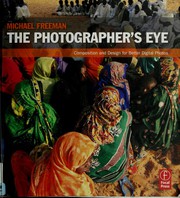
Freeman systematically deconstructs how great images are designed — covering frame, moment, and visual weight — making composition a learnable discipline rather than a mysterious talent.
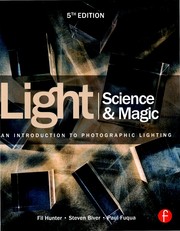
The definitive technical guide to understanding and controlling light in any situation; reading it after Freeman ensures you can execute the compositions you've learned to envision.
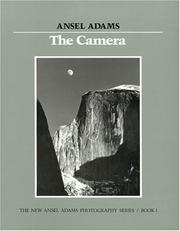
Adams's three-volume series is the canonical deep-dive into the full photographic process; working through it at this stage cements technical mastery and introduces the Zone System as a framework for total tonal control.
Developing Vision: Style, Story & Genre
IntermediateMove beyond technique to develop a personal photographic voice, understand narrative and documentary traditions, and study how master photographers think.
▸ Study plan for this stage
Pace: 10–12 weeks total. Week 1–3: "Ways of Seeing" (~30 pages/day, including re-reading key essays); Week 4–7: "On Photography" (~20 pages/day, slower pace to absorb dense philosophical arguments); Week 8–12: "The Decisive Moment" (~15 pages/day of text, with extended time spent studying the plates and C
- The Male Gaze & Constructed Seeing (Berger): All images are shaped by the social, cultural, and political context of both maker and viewer — 'the way we see things is affected by what we know or believe.'
- Mystification & Reproduction (Berger): Mechanical reproduction strips original artworks of their aura and authority, changing how photographs circulate and carry meaning.
- Photography as Acquisition (Sontag): Taking a photograph is an act of possession — of a moment, a person, a place — raising ethical questions about power and consent.
- The Surrealism of the Ordinary (Sontag): Photography inherently makes the familiar strange; it fragments time and context, creating a new reality rather than documenting an existing one.
- Photography & Memory/Death (Sontag): Every photograph is a certificate of presence that simultaneously signals absence and mortality — images become substitutes for experience.
- The Decisive Moment (Cartier-Bresson): The simultaneous recognition of the significance of an event and the precise geometric organization of forms that gives it proper expression — form and content must align in a single instant.
- Geometry as Visual Language (Cartier-Bresson): Composition is not decoration but the primary vehicle of meaning; the photographer must train the eye to see structure, line, and form instantaneously.
- Personal Vision as Discipline (Cartier-Bresson): Style is not a filter applied after the fact but the result of rigorous, patient, and deeply personal engagement with the world — the photographer's identity is inseparable from their work.
- After reading Berger, how does the social and historical position of a viewer change the meaning of a photograph — and can you apply this to one of your own images?
- Sontag argues that photography creates a 'chronic voyeuristic relation' to the world. Do you agree, and how does this tension between witness and voyeur show up in documentary photography?
- How does Berger's concept of 'mystification' relate to Sontag's argument that photographs are 'experience captured' rather than reality itself?
- Cartier-Bresson describes the decisive moment as the convergence of form and content. How does this idea challenge or complement Sontag's skepticism about photography's ability to convey truth?
- What does Cartier-Bresson mean when he says the viewfinder is 'the eye of the photographer' — and how does this connect to Berger's argument that all seeing is learned and ideological?
- Having read all three books, how would you define your own emerging photographic voice — what do you want to show, and whose way of seeing most challenges or inspires you?
- Ways of Seeing Response Shoot: Choose one essay from Berger and make a series of 10 photographs that consciously respond to its argument (e.g., photograph advertising imagery or public spaces to explore how power is encoded in images). Write a 200-word artist statement explaining the connection.
- Sontag's Ethical Inventory: Review 20 of your existing photographs and, through Sontag's lens, write a short note on each about the act of taking it — who had power, what was possessed, what was left out. Identify two images you feel uncomfortable with and reflect on why.
- Decisive Moment Street Exercise: Spend three separate 90-minute sessions shooting only in one fixed public location (a market, a staircase, a busy corner). Your only goal is to find the moment where geometry and action align. Review and select the single strongest frame from each session, justifying your choice in writing.
- Plate-by-Plate Analysis: Pick 10 images from Cartier-Bresson's plates in 'The Decisive Moment' and sketch the underlying geometric structure of each (triangles, diagonals, circles, leading lines). Then go out and attempt to recreate the same geometric logic — not the subject, but the structure — in your own environment.
- Three-Way Dialogue Journal: Keep a reading journal with a dedicated page for each book. Each time you finish a chapter or essay, write one insight from that book and then one sentence connecting it to each of the other two books. By the end, you will have a map of how all three thinkers speak to each other.
- Personal Vision Statement: After completing all three books, write a 400-word photographic manifesto. Draw explicitly on at least one idea from each author. Define: what you photograph, why it matters, and what you want a viewer to feel or question. Revisit this document at the end of the full curriculum.
Next up: By internalizing how Berger, Sontag, and Cartier-Bresson each theorize the relationship between the photographer's eye, cultural context, and meaning-making, the reader is now equipped to move into more advanced study of specific photographic genres, long-form projects, and the business of building a coherent body of work — applying a personal voice with both critical awareness and technical inten

Berger's landmark work trains you to critically analyze any image — photographic or otherwise — fundamentally changing how you interpret and construct visual meaning.
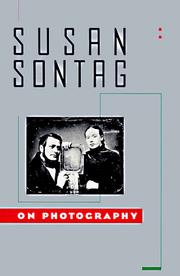
Sontag's essays interrogate what photographs do to our perception of reality and memory; essential reading for any photographer who wants to understand the cultural weight of the medium they're working in.
Cartier-Bresson's own manifesto on street and documentary photography is one of the most influential statements of photographic philosophy ever written, bridging technique and pure vision.
Mastery: Photography as Fine Art & Language
ExpertEngage with photography as a fine art and critical practice — understanding its history, its place in contemporary art, and how to develop a sustained, meaningful body of work.
▸ Study plan for this stage
Pace: 4–5 weeks, ~20–25 pages/day; Patterson's book rewards slow, contemplative reading — revisit chapters alongside active shooting sessions rather than reading straight through
- Seeing vs. looking: the distinction between passive observation and active, intentional visual perception as the foundation of fine-art photography
- Visual design elements: how line, shape, form, texture, colour, and light function as the vocabulary of photographic language
- The self as subject: Patterson's argument that photography is ultimately an act of self-expression and that the photographer's inner world shapes every image
- Relationships between elements: how the interaction and tension between visual components within the frame create meaning and emotional resonance
- Simplification and isolation: the discipline of eliminating visual noise to let the essential subject speak with clarity and power
- Light as a creative medium: understanding the quality, direction, colour temperature, and emotional character of light rather than treating it as mere illumination
- The meditative dimension of photography: slowing down, cultivating presence, and developing a personal philosophy of image-making
- Developing a sustained vision: moving beyond individual strong images toward a coherent, evolving body of work with a recognisable personal voice
- According to Patterson, what is the fundamental difference between 'seeing' and 'looking,' and why does that distinction matter for fine-art photography?
- How do the core visual design elements (line, shape, texture, colour, light) function as a language — what can a photographer 'say' by consciously manipulating each one?
- Patterson argues that every photograph is a self-portrait. What does he mean, and how should this idea influence the way you approach subject selection and composition?
- What practical strategies does Patterson recommend for simplifying a composition, and how does simplification serve expressive intent rather than merely aesthetic tidiness?
- How does Patterson describe the relationship between the photographer's emotional or psychological state and the quality of the images produced in a session?
- What does it mean, in Patterson's framework, to develop a 'personal vision,' and what habits of practice does he suggest for cultivating one over time?
- The Seeing Walk: Go to a single, ordinary location (a park, a street corner, your backyard) for 45 minutes without shooting. Observe only — notice light direction, shadow shapes, textures, colour relationships, and how elements relate. Then return the next day with your camera and photograph only what your deliberate seeing revealed. Compare the two visits in a written reflection.
- Design Element Isolation Series: Create a dedicated set of 6 images, each one built around a single visual element Patterson discusses (one for line, one for shape, one for texture, one for colour, one for form, one for light). Write one sentence per image explaining how that element carries the expressive weight of the photograph.
- The Self-Portrait Project: Choose a theme, emotion, or idea that is personally meaningful to you. Photograph it over two weeks without using yourself as the literal subject. At the end, write a short artist statement (200–300 words) explaining how the images reflect your inner world — testing Patterson's claim that all photography is self-portraiture.
- Light Journal: Over one week, photograph the same subject or scene at four different times of day and in at least two different weather conditions. Annotate each image with notes on the quality, direction, and emotional character of the light, drawing directly on Patterson's vocabulary.
- Simplification Edit: Take 20 of your existing photographs and apply Patterson's principle of simplification retroactively — either by re-cropping in post-processing or by writing a note describing exactly what you would remove or change if you could reshoot. Identify the single most important element in each frame.
- Body-of-Work Blueprint: Using Patterson's ideas about personal vision, draft a one-page plan for a cohesive body of 15–20 images around a single theme or subject. Define your subject, your intended emotional tone, the light conditions you will seek, and the design elements you will prioritise — then begin executing it before this stage ends.
Next up: Patterson's framework for personal vision and photographic language establishes the expressive and philosophical foundation that any subsequent stage — whether exploring the history of fine-art photography, critical theory, or advanced portfolio development — will build directly upon.
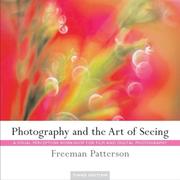
Patterson's meditative, advanced exploration of perception and creativity pushes you to dissolve habitual ways of seeing and approach image-making as a genuine artistic and personal inquiry.
Discussion
Keep reading
Paths that share books, cover the same subject, or open a related topic.