The Best Books on Patents and Intellectual Property
This curriculum builds from a solid conceptual grounding in all major IP categories—patents, trademarks, copyright, and trade secrets—toward practical prosecution skills and, finally, strategic portfolio management. Because the learner starts at an intermediate level, the path skips introductory overviews and moves quickly into the mechanics and strategy of each IP type, culminating in high-level frameworks used by IP counsel and business leaders.
The IP Landscape: All Four Pillars
IntermediateUnderstand how patents, trademarks, copyright, and trade secrets work together as a system, and develop the vocabulary needed to read practitioner-level texts.
▸ Study plan for this stage
Pace: 8–10 weeks, ~40–50 pages/day. Schechter's "Intellectual Property" (weeks 1–5, ~200 pages); Christensen's "The Innovator's Dilemma" (weeks 6–10, ~350 pages). Allocate 1–2 days per week for review and exercises.
- The four pillars of IP: patents (utility, design, plant), trademarks, copyright, and trade secrets—their distinct purposes, durations, and enforcement mechanisms
- Patent prosecution and claims: how patents are drafted, examined, and enforced; the difference between utility patents and design patents
- Trademark law: distinctiveness, likelihood of confusion, dilution, and the role of registration in establishing rights
- Copyright fundamentals: original works of authorship, fair use, duration, and the distinction between copyright and patent protection
- Trade secrets and confidentiality: what qualifies as a trade secret, how to maintain secrecy, and remedies for misappropriation
- IP as a strategic business asset: how firms use IP portfolios to protect innovation, create competitive advantage, and generate licensing revenue
- The innovator's dilemma: how established firms struggle to disrupt themselves; the role of IP strategy in protecting incumbent advantage versus enabling disruption
- Integration across pillars: when to use patents vs. trade secrets, how trademarks support brand value, and how copyright protects software and creative works
- What are the four main pillars of intellectual property, and what does each protect? How do their durations and enforcement mechanisms differ?
- Explain the patent prosecution process: what happens during examination, what are claims, and why is claim drafting critical?
- What makes a trademark distinctive, and how does the concept of 'likelihood of confusion' apply in trademark infringement cases?
- When should a company choose to patent an innovation versus keep it as a trade secret? What are the trade-offs?
- How does Christensen's concept of the innovator's dilemma relate to IP strategy? Can IP protection both enable and inhibit disruption?
- What is fair use in copyright law, and how does it limit the exclusive rights of copyright holders?
- Map out a hypothetical product (e.g., a new software tool or consumer device) and identify which IP pillars would protect different aspects: patent the algorithm, trademark the brand name, copyright the user interface design, trade secret the manufacturing process.
- Read and annotate 2–3 sample patent claims from the USPTO database (search a technology area of interest). Identify the independent and dependent claims, and explain what each protects.
- Conduct a trademark search using the USPTO TESS database for a fictional brand name you create. Document what marks are already registered in relevant classes and assess whether your mark would face likelihood-of-confusion issues.
- Write a one-page 'IP strategy memo' for a startup in a field of your choice (biotech, fintech, hardware, etc.), recommending which IP tools to prioritize and why, grounded in Schechter's framework.
- Analyze a real-world case study of a company that faced the innovator's dilemma (e.g., Kodak, Blockbuster, or a firm discussed in Christensen's book). Assess how its IP strategy either protected or hindered its ability to adapt.
- Create a comparison table: for three different types of innovations (e.g., pharmaceutical drug, software algorithm, consumer brand), list the optimal IP protection strategy and explain the reasoning using concepts from both books.
Next up: This stage equips you with the foundational vocabulary and strategic thinking needed to engage with specialized topics—such as patent litigation, international IP treaties, or sector-specific IP challenges—and to evaluate real-world IP decisions made by companies and inventors.
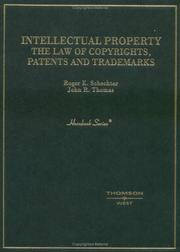
A rigorous but accessible one-volume treatment of all major IP categories written for law students and serious practitioners; reading it first gives you the unified legal vocabulary the rest of the curriculum assumes.
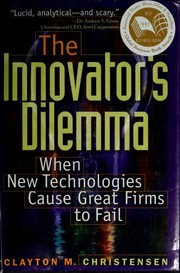
Establishes why IP protection matters strategically in competitive markets—understanding disruption cycles makes later discussions of portfolio strategy far more concrete.
Patents: Mechanics and Prosecution
IntermediateLearn how a patent is structured, written, and prosecuted before the USPTO, and understand claim drafting well enough to evaluate and direct patent work.
▸ Study plan for this stage
Pace: 8–10 weeks, ~25–30 pages/day, with 2–3 days per week reserved for exercises and claim drafting practice
- Patent document structure: specification, claims, drawings, and abstract, and how each component serves a distinct legal and technical function
- Claim drafting fundamentals: independent vs. dependent claims, claim scope, antecedent basis, and the critical role of claims in defining patent protection
- The USPTO prosecution process: office actions, rejections (anticipation, obviousness, enablement, written description), and strategic responses
- Prior art searching and analysis: how to identify and evaluate existing patents and publications to assess patentability and inform claim strategy
- Specification writing best practices: enablement, written description, best mode, and how to support broad claims with detailed disclosure
- Claim interpretation and scope management: how claim language affects enforceability, licensing, and litigation outcomes
- Common prosecution pitfalls: claim amendments that narrow scope, admissions of prior art, and how to avoid waiving arguments
- Practical USPTO procedures: filing requirements, continuation applications, and strategic use of continuation practice to broaden or refine claims
- What are the four main components of a patent document, and what legal or technical purpose does each serve?
- Explain the difference between independent and dependent claims, and why a patent typically includes both.
- What is an office action, and what are the most common grounds for rejection you will encounter during prosecution?
- How do you conduct a prior art search, and what role does it play in claim drafting and prosecution strategy?
- What does 'enablement' mean in the context of patent specifications, and how can inadequate enablement lead to rejection?
- Describe at least three common mistakes applicants make during prosecution that narrow claim scope or weaken enforceability.
- How would you respond to an obviousness rejection, and what evidence or arguments might support your position?
- Conduct a prior art search on a real or hypothetical invention using the USPTO database and Google Patents; document your findings and assess patentability.
- Draft a complete independent claim and 2–3 dependent claims for a simple mechanical or software invention, ensuring proper antecedent basis and claim scope.
- Write a brief specification section (background, summary, detailed description) for your drafted claims, demonstrating enablement and written description.
- Analyze a real office action from a published patent application; identify the rejection grounds and draft a response with amended claims and arguments.
- Compare two versions of the same claim (broad vs. narrow) and explain how the language differences affect scope, enforceability, and litigation risk.
- Review a granted patent in your field of interest; map the claims to the specification and drawings, and identify how the applicant navigated prosecution challenges.
Next up: This stage equips you with the mechanics of patent creation and prosecution, providing the foundation to move into advanced topics such as claim interpretation in litigation, design patents, or specialized fields (software, biotechnology), where you'll apply these fundamentals to more complex or contested scenarios.
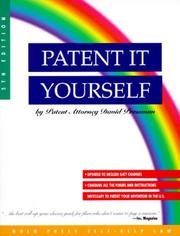
The canonical self-help patent guide; its step-by-step walk through the USPTO process and claim drafting builds the procedural foundation you need before tackling advanced claim strategy.
Trademarks and Copyright in Depth
IntermediateGain practitioner-level understanding of trademark clearance, registration, and enforcement, and of copyright ownership, licensing, and fair use.
▸ Study plan for this stage
Pace: 6–8 weeks, ~25–30 pages/day with 2–3 days per week for exercises and review
- Copyright ownership and initial ownership rules (work-made-for-hire, joint works, derivative works)
- Copyright registration process, benefits, and timing (notice, deposit, examination)
- Fair use doctrine and its four-factor test (purpose, nature, amount, market effect)
- Copyright licensing models (exclusive, non-exclusive, compulsory licenses, Creative Commons)
- Copyright infringement analysis, remedies, and enforcement mechanisms
- Copyright duration, renewal, and the public domain
- International copyright protection and treaties (Berne Convention, TRIPS)
- What determines initial copyright ownership, and how do work-made-for-hire agreements affect ownership?
- What are the key benefits of copyright registration, and what is the timeline for registering a work?
- How does the fair use doctrine work, and what are the four factors courts use to evaluate fair use claims?
- What are the main types of copyright licenses, and how do they differ in scope and exclusivity?
- What constitutes copyright infringement, and what remedies are available to copyright holders?
- How long does copyright protection last, and what happens to works that enter the public domain?
- How does international copyright protection work, and what role do treaties like the Berne Convention play?
- Create a copyright ownership analysis for a hypothetical creative work (e.g., a software project, film, or book) by identifying the author, any contributors, and whether work-made-for-hire applies
- Draft a copyright license agreement (exclusive or non-exclusive) for a specific creative work, specifying permitted uses, restrictions, and royalty terms
- Analyze a real-world fair use case (e.g., a parody, news reporting, or academic use) using Fishman's four-factor test and determine whether fair use likely applies
- Research and document the copyright registration process for a specific work type (literary, visual, musical) using the U.S. Copyright Office website and Fishman's guidance
- Conduct a copyright infringement analysis by comparing two works and assessing whether substantial similarity exists and what defenses might apply
- Create a copyright duration chart for different work types and publication dates, identifying when works enter the public domain
- Review a Creative Commons license and explain which rights are retained by the licensor and which are granted to users
Next up: This stage builds the foundational knowledge of copyright law needed to understand how copyright intersects with trademark enforcement, licensing negotiations, and broader IP portfolio strategy in the next stage.
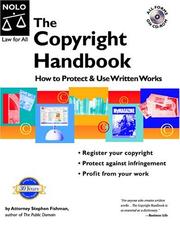
Widely regarded as the definitive practical reference on copyright registration, ownership, fair use, and licensing; pairs naturally with the trademark volume to complete the non-patent IP picture.
Advanced Patent Strategy and Litigation
ExpertUnderstand how sophisticated companies build, attack, and defend patent portfolios, and how patent litigation is conducted and settled.
▸ Study plan for this stage
Pace: 4–5 weeks, ~40–50 pages/day (approximately 280–350 pages total across both books)
- Strategic patent portfolio construction: how companies identify, acquire, and maintain patent assets aligned with business objectives
- Offensive patent strategies: using patents to block competitors, extract licensing revenue, and create market advantages
- Defensive patent strategies: designing portfolios to withstand challenges, cross-licensing, and freedom-to-operate analysis
- Patent quality and validity assessment: understanding claim scope, prior art searches, and factors that determine litigation strength
- Patent litigation mechanics: claim construction, infringement analysis, invalidity defenses, and the role of expert testimony
- Economic failures in patent systems: how patents sometimes fail to incentivize innovation and when litigation becomes economically irrational
- Settlement dynamics and licensing negotiations: how companies value patents in disputes and reach commercial resolutions
- Organizational structures for patent management: roles of in-house counsel, patent agents, and external counsel in strategy execution
- How should a company assess which technologies are worth patenting, and what role should business strategy play in that decision?
- What are the key differences between offensive and defensive patent strategies, and when is each approach most effective?
- How do patent claims determine both infringement liability and vulnerability to invalidity challenges in litigation?
- What are the main economic inefficiencies Bessen identifies in the patent system, and how do they affect litigation incentives?
- How do companies evaluate the cost-benefit of patent litigation versus settlement or licensing, and what factors drive these decisions?
- What organizational capabilities and expertise must a company develop to build and defend a sophisticated patent portfolio?
- Conduct a mock patent portfolio audit: select a real company in a technology sector, identify 3–5 of their patents (via USPTO or Google Patents), analyze claim scope, and assess whether each patent appears offensive or defensive in purpose
- Perform a prior art search for a hypothetical invention: use Google Patents or the USPTO database to find prior art references and write a brief memo assessing patentability and claim scope
- Analyze a real patent litigation case (e.g., from Federal Circuit decisions): read the opinion, identify the claim construction dispute, infringement arguments, and invalidity defenses, then assess whether the outcome aligns with Bessen's critique of patent system efficiency
- Draft a simplified patent strategy memo for a hypothetical startup in a competitive field: specify which technologies to patent, which to keep as trade secrets, and how to structure the portfolio for both offense and defense
- Compare two patents in the same technology area: evaluate differences in claim breadth, specification detail, and potential licensing value; discuss why one might be more valuable in litigation
- Interview or survey a patent attorney or in-house counsel (if accessible): ask about real-world portfolio decisions, litigation cost-benefit analysis, and how Knight's and Bessen's frameworks match actual practice
Next up: This stage equips you with the strategic and tactical knowledge to navigate patent systems as a sophisticated actor; the next stage will likely deepen your understanding of emerging patent policy, international patent harmonization, and reform proposals that address the economic failures Bessen highlights.
Bridges the gap between individual patents and portfolio-level thinking; its focus on R&D-driven organizations makes it the ideal next step after mastering prosecution basics.
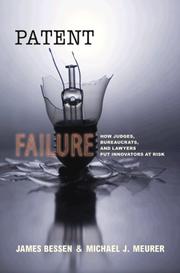
A data-driven analysis of when patents help and when they harm innovation; reading the empirical evidence here sharpens your ability to make defensible strategic decisions about where to invest in IP.
Integrated IP Strategy and Business Value
ExpertSynthesize all IP types into a coherent business strategy—licensing, monetization, open innovation, and building an IP culture inside an organization.
▸ Study plan for this stage
Pace: 8–10 weeks, ~25–30 pages/day (approximately 2 weeks per book with overlap for synthesis)
- IP as a strategic business asset: moving beyond legal protection to revenue generation and competitive advantage
- The IP portfolio audit and valuation: identifying hidden assets in your organization and assessing their market potential
- Licensing strategies and business models: structuring deals, cross-licensing, and extracting value from dormant patents
- Open innovation ecosystems: balancing internal IP protection with external collaboration, partnerships, and knowledge exchange
- Organizational culture and governance: embedding IP thinking into R&D, product development, and corporate decision-making
- Monetization pathways: direct licensing, spin-offs, joint ventures, and alternative revenue models beyond traditional product sales
- Managing IP in collaborative environments: navigating shared ownership, technology transfer, and ecosystem participation
- How can an organization conduct an IP portfolio audit to uncover hidden or underutilized assets, and what metrics should guide prioritization for monetization?
- What are the key differences between traditional licensing models and the open innovation approach, and when is each most appropriate?
- How does building an IP-aware culture inside an organization change the way R&D teams operate and innovate?
- What are the main challenges and benefits of participating in open innovation ecosystems, and how do you protect core IP while collaborating externally?
- How can licensing revenue and alternative monetization strategies complement or substitute for traditional product-based business models?
- What governance structures and decision-making frameworks help organizations balance IP protection with the need for external collaboration and knowledge sharing?
- Conduct a mock IP portfolio audit for a real company (or a case study company): list all potential IP assets (patents, trade secrets, know-how), estimate their market relevance, and identify which are currently monetized versus dormant.
- Design a licensing deal structure: choose a patent or technology from a real company, identify potential licensees, and sketch out terms (royalty rates, exclusivity, field of use, duration) with business justification.
- Map an organization's innovation ecosystem: identify internal R&D teams, external partners, suppliers, and customers; then propose how IP could be shared or protected at each boundary.
- Create a business case for entering an open innovation partnership: outline what IP your organization would contribute, what it would gain, and how you'd protect proprietary information.
- Develop an IP culture change initiative: design a 6-month plan to embed IP awareness into your organization's product development process, including training, incentives, and governance.
- Analyze a real licensing agreement or technology transfer deal: break down the commercial terms, identify the value drivers, and assess whether the deal aligns with open innovation principles or traditional licensing.
Next up: This stage equips you to view IP as a dynamic, organization-wide strategic asset and positions you to lead IP-driven business decisions; the next stage will likely deepen your expertise in specific IP domains (e.g., software/digital IP, biotech IP, or international IP strategy) or teach you how to scale and defend these strategies in competitive markets.
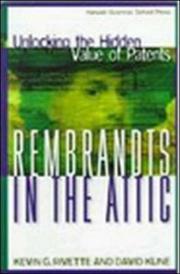
The landmark book that introduced executives to patent portfolio strategy as a competitive weapon; it reframes IP from a legal cost center to a source of business value.
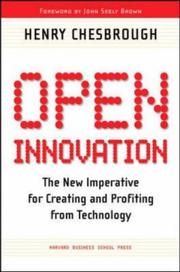
Completes the curriculum by showing how leading companies deliberately manage IP boundaries—licensing out, licensing in, and partnering—to maximize the return on their innovation investments.
Discussion
Keep reading
Paths that share books, cover the same subject, or open a related topic.