A business model is how a company creates, delivers, and captures value — and history is full of superior products beaten by superior models. The subject rewards a reading order because the field has a shared visual language you should learn first, before the strategic theories that explain why models rise and fall.
This path starts with the tools that give you a common vocabulary, moves into the strategy of choosing where and how to compete, and ends with the forces reshaping models today: disruption, platforms, and ecosystems. Learn the canvas before the theory, and the theory has somewhere to live.
Learn the shared language
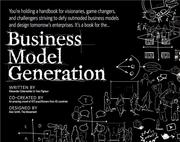
Begin with Business model generation by Alexander Osterwalder — the book that gave the world the Business Model Canvas, a single page for describing any model. Its companion Value proposition design zooms into the hardest part: fitting what you offer to what customers actually want. Then The Invincible Company extends the toolkit to managing a portfolio of models, exploring the new while exploiting the old.
Decide where and how to compete
Strategy comes next. Playing to Win by Lafley and Martin frames strategy as a cascade of five hard choices, the clearest thinking on where to play and how to win. It sets up the central drama of the field.
Understand why incumbents fall
Here sit the theories that define the discipline. The Innovator's Dilemma by Clayton Christensen explains why great companies fail precisely by listening to their best customers — disruption theory in its original form. Its sequel Competing Against Luck introduces Jobs to Be Done, a lens for understanding what customers hire a product to do. Read together, they explain both the threat and how to see it coming.
Model the new landscape
Finish with the models that dominate today. Platform revolution explains how platforms connect producers and consumers and why they beat pipelines. The wide lens by Ron Adner shifts focus to ecosystems — the partners whose success your model depends on. And Dual transformation closes the loop, showing how established firms can reposition today's business while building tomorrow's.
Read in this sequence, you gain a vocabulary, then a strategy, then a working theory of change — the exact progression an innovator needs. Follow the full path to keep the arc intact.
Follow the full reading path →
Ready to learn something deeply?
Build a reading path — free