The Best Books on Family Business and Succession
This curriculum builds from the core dynamics of family enterprise to advanced governance and succession strategy, designed for someone who already has business literacy and some familiarity with family dynamics. Each stage deepens the prior one: first establishing the unique logic of family business, then mastering governance and generational transition, and finally tackling the hardest long-term challenges of legacy, conflict, and continuity across generations.
The Family Business Mindset
IntermediateUnderstand what makes family businesses fundamentally different from other enterprises, and develop the core vocabulary—three-circle model, overlapping systems, ownership vs. management—needed for everything that follows.
▸ Study plan for this stage
Pace: 4–5 weeks, ~25–30 pages/day. Start with "Generation to Generation" (weeks 1–3, ~200 pages), then "Family Business, Risky Business" (weeks 3–5, ~150 pages), with overlap for integration and review.
- The Three-Circle Model: understanding the overlapping domains of family, ownership, and management as distinct systems with their own dynamics and conflicts
- Overlapping Systems Thinking: recognizing how decisions, roles, and emotions in one circle (e.g., family) directly impact the others (ownership, management)
- Ownership vs. Management Distinction: clarifying that family members may occupy different positions in these systems (e.g., owner but not manager, manager but not owner)
- Governance and Decision-Making Structures: how family businesses differ from non-family firms in how decisions are made, who has authority, and how family relationships complicate formal processes
- Succession as a Systems Challenge: viewing succession not as a single event but as a multi-system transition affecting family dynamics, ownership transfer, and management continuity
- Risk and Vulnerability in Family Systems: understanding how family emotional patterns, unresolved conflicts, and informal communication create unique risks distinct from professional enterprises
- The Family Business Culture: recognizing the informal, relationship-driven nature of family business operations and how this shapes communication, accountability, and strategic planning
- How does the three-circle model help explain conflicts that arise in family businesses, and what makes these conflicts different from those in non-family organizations?
- Describe a scenario where a decision made in the 'family' circle (e.g., hiring a relative) creates ripple effects in the 'ownership' and 'management' circles. What tensions emerge?
- What is the fundamental difference between ownership and management, and why is this distinction critical for family business leaders to understand?
- According to the books, what are the primary risks and vulnerabilities unique to family businesses, and how do informal family dynamics amplify these risks?
- How should a family business approach succession planning differently than a non-family enterprise, based on the three-circle model?
- What governance structures or communication practices can help a family business manage the overlapping systems more effectively?
- Map your own family business (or one you know well) onto the three-circle model: identify which family members occupy which circles, where overlaps create tension, and which circle each major decision belongs to.
- Conduct a 'systems audit': interview 3–4 people in a family business (owner, manager, family member not involved in business, if possible) and ask them to describe a recent conflict. Categorize which circles were in tension and how the overlapping systems contributed.
- Create an organizational chart for a family business that separates formal roles (management/ownership) from family relationships. Identify where role confusion exists and propose clarity.
- Write a 2–3 page case study analyzing a succession challenge from either book, explicitly using three-circle language to diagnose the root causes and propose solutions.
- Role-play a family business meeting where a hiring decision must be made. Assign roles (CEO/owner, family member wanting to hire a relative, non-family manager, board member if applicable). Debrief on how family and management circles collided.
- Develop a simple governance framework (decision rights, communication protocol, conflict resolution process) for a hypothetical family business, grounded in the overlapping-systems concept from the readings.
Next up: This stage establishes the foundational vocabulary and systems thinking required to analyze specific succession challenges, governance structures, and conflict resolution strategies in later stages, enabling deeper engagement with tactical and strategic family business issues.
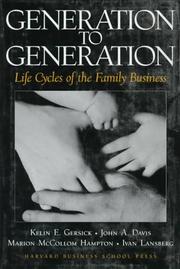
The foundational academic text on family business systems. It introduces the three-circle model (family, ownership, business) that is the lingua franca of the field—read this first to build the conceptual scaffold for every other book.
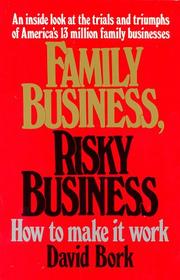
A practitioner-written companion that translates the systems model into real family dynamics and common dysfunctions, grounding the theory in recognizable human situations before moving to governance solutions.
Governance and Ownership Architecture
IntermediateLearn how to design the structures—family councils, boards, ownership agreements, family constitutions—that allow a family enterprise to govern itself professionally without destroying family cohesion.
▸ Study plan for this stage
Pace: 6–8 weeks, ~25–30 pages/day, with 2–3 days per week for reflection and exercises
- Policy Governance model: separating board ownership, strategic direction, and operational delegation to create accountability without micromanagement
- The distinction between family governance structures (family councils, family constitutions) and business governance structures (board of directors, management hierarchy)
- Ownership architecture: designing clarity around voting rights, share transfers, liquidity, and succession planning to prevent family conflict
- Board composition and roles in family businesses: balancing family members, independent directors, and professional management
- Family constitution as a living document: codifying family values, decision-making processes, and conflict resolution mechanisms
- The role of formal agreements (shareholder agreements, buy-sell agreements, operating agreements) in protecting both family relationships and business continuity
- Professionalization of governance: moving from informal, founder-led decision-making to structured, documented processes that survive generational transitions
- What are the core principles of Policy Governance, and how does it differ from traditional board structures in preventing both chaos and micromanagement?
- How should a family business distinguish between decisions that belong to the family council versus the board of directors versus management?
- What elements should a family constitution address, and why is it important to document family values and succession expectations in writing?
- What are the key components of a sound ownership architecture, and how do shareholder agreements and buy-sell agreements protect both family harmony and business stability?
- How should a family business decide on board composition (family vs. non-family, inside vs. outside directors), and what are the trade-offs?
- What governance structures and processes help a family business survive the transition from founder leadership to the next generation?
- Map your family business's current decision-making: identify 5–10 recent major decisions and categorize them as family, board, or management decisions. Note where confusion or conflict occurred.
- Draft a preliminary family constitution outline for a case study family business (real or hypothetical), addressing values, decision-making authority, conflict resolution, and succession principles.
- Design a board structure for a multi-generational family business: specify roles, composition (number of family vs. independent directors), meeting frequency, and key committees.
- Create a sample shareholder agreement and buy-sell agreement for a family business scenario, addressing share transfers, valuation, liquidity events, and dispute resolution.
- Develop a family council charter: define its purpose, membership, meeting cadence, agenda-setting process, and how it interfaces with the board.
- Conduct a governance audit: interview 3–5 family business leaders (or use case studies from the books) and assess their governance maturity against Policy Governance principles and best practices.
Next up: This stage equips you with the structural and procedural frameworks to govern a family business professionally; the next stage will focus on the human dynamics—managing family conflict, preparing the next generation, and navigating the emotional and relational challenges that governance structures alone cannot solve.
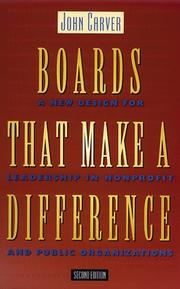
The definitive text on policy governance and board design; reading it here gives the learner a rigorous model of board function before applying it to the family business context specifically.
Applies governance principles directly to family enterprises—family councils, charters, and ownership structures—building directly on Carver's framework with family-specific nuance.
Succession: Planning and Executing the Handoff
IntermediateMaster the succession process end-to-end—preparing the next generation, transitioning leadership and ownership, and managing the emotional and relational complexity of letting go.
▸ Study plan for this stage
Pace: 8–10 weeks, ~25–30 pages/day. Read "Succeeding Generations" (weeks 1–5, ~250 pages), then "Passing the Torch" (weeks 6–10, ~200 pages). Allow 1–2 days per book for reflection and note-taking.
- The psychological and emotional dimensions of succession: letting go, identity loss, and the founder's legacy attachment
- Preparing the next generation through mentoring, skill-building, and gradual responsibility transfer
- Governance structures and family dynamics that enable or hinder smooth transitions
- The role of family meetings, communication protocols, and conflict resolution in managing relational complexity
- Ownership transition mechanics: timing, documentation, tax implications, and legal frameworks
- Managing competing stakeholder interests (family members, non-family managers, board members)
- Post-succession leadership: establishing the successor's authority and the founder's new role
- Building trust and credibility in the next generation before, during, and after the handoff
- What are the key psychological barriers that founders and family members face during succession, and how does Lansberg suggest addressing them?
- How should a family business prepare the next generation for leadership, and what role does mentoring play in this process?
- What governance and communication structures does Lansberg recommend to manage family dynamics during succession?
- According to Cohn's framework, what are the critical phases of executing a leadership handoff, and what must happen in each phase?
- How do you balance the founder's need for legacy and control with the successor's need for autonomy and credibility?
- What are the most common pitfalls in succession planning, and how can they be prevented or mitigated?
- Map your own family business succession timeline: identify the current generation's retirement horizon, the next generation's readiness level, and key milestones needed (skill gaps, governance setup, ownership transfer). Write a 2–3 page succession roadmap.
- Conduct a family dynamics audit: list all stakeholders (founder, potential successors, other family members, key non-family executives), their interests, concerns, and potential sources of conflict. Identify communication gaps and design a family meeting agenda to address them.
- Role-play a difficult succession conversation: practice how the founder would communicate the succession plan to the next generation, addressing concerns about timing, autonomy, and legacy. Record or write out the dialogue.
- Draft a written succession plan document: outline the leadership transition phases, ownership transfer mechanism, the founder's post-succession role, and contingency plans. Use Cohn's framework as a template.
- Create a next-generation development plan: identify 3–5 key competencies the successor needs, design a 12–24 month learning and mentoring program, and specify how progress will be measured.
- Analyze a real family business succession case (from the books or your network): identify what went well, what created friction, and what you would do differently using Lansberg's and Cohn's principles.
Next up: This stage equips you with the practical and emotional tools to execute a successful handoff; the next stage will likely deepen your ability to navigate post-succession challenges, such as managing the founder's disengagement, resolving conflicts that emerge after transition, and ensuring the successor's long-term success and the family's continued cohesion.
The most comprehensive and research-grounded book on succession in family firms; it covers the full arc from planning to implementation and is the essential read before any other succession-specific title.

A practitioner guide focused on the human and relational side of the handoff—preparing heirs, managing founder identity, and navigating the emotional terrain that derails technically sound succession plans.
Keeping the Family Healthy Across Generations
ExpertUnderstand the deeper psychological, relational, and cultural forces that determine whether a family stays unified and the business thrives across multiple generations—and learn tools to address conflict and build resilience.
▸ Study plan for this stage
Pace: 8–10 weeks, ~25–30 pages/day. Start with "Strangers in Paradise" (weeks 1–5, ~250 pages), then move to "Preparing Heirs" (weeks 6–10, ~300 pages). Allocate 1 week for integration and reflection exercises.
- Wealth psychology and the identity crisis it creates across generations—how sudden affluence disrupts family dynamics and individual development
- The three pillars of family unity: shared values, clear communication structures, and defined roles—and how their absence leads to conflict
- Emotional inheritance and intergenerational trauma: how unresolved family patterns and money scripts repeat across generations
- The heir's dilemma: balancing autonomy, competence, and belonging while managing parental expectations and family legacy
- Governance frameworks for family systems: family councils, mission statements, and decision-making protocols that protect both business and relationships
- Resilience-building practices: conflict resolution, vulnerability, and psychological safety as prerequisites for multi-generational thriving
- The role of the family narrative: how families construct meaning around wealth, work, and responsibility—and how to intentionally reshape it
- What are the core psychological challenges that wealth creates for families, and how do these differ across generations (as outlined in Grubman's framework)?
- How do unexamined money scripts and emotional inheritance patterns sabotage succession planning, and what tools does Grubman offer to surface and rewrite them?
- What are the three pillars of family unity according to the readings, and how do you assess whether your family has strength in each area?
- What specific governance structures and communication protocols does 'Preparing Heirs' recommend, and how would you implement them in a real family business?
- How do you distinguish between healthy conflict (that strengthens relationships) and destructive conflict (that fractures the family), and what interventions work for each?
- What does it mean to 'prepare' an heir psychologically and relationally, beyond technical business competence, and what are the markers of readiness?
- Money autobiography: Write a 5–10 page personal history of your relationship with money, family wealth messages, and inherited beliefs. Identify 3–5 money scripts you absorbed and trace their origins. Share with a trusted peer or advisor and discuss which scripts serve you and which limit you.
- Family narrative mapping: Document your family's origin story around wealth and business. What is the founding myth? What values are embedded in it? Rewrite one section to reflect values you want to emphasize going forward.
- Three-pillar assessment: Rate your family on shared values clarity, communication structures, and role definition (scale 1–10 for each). For each pillar scoring below 7, design one concrete intervention (e.g., quarterly family meeting, values workshop, role charter).
- Conflict scenario simulation: Choose a realistic succession or wealth-distribution conflict from the readings (or your own experience). Role-play it with a peer, practicing the communication and resolution techniques from 'Preparing Heirs.' Debrief on what worked and what felt difficult.
- Governance prototype: Draft a one-page family council charter or decision-making protocol for a specific recurring decision (e.g., charitable giving, business reinvestment, heir compensation). Include meeting cadence, attendees, decision rights, and escalation path.
- Intergenerational interview: Conduct a structured conversation with a parent, grandparent, or senior family member about their experience of wealth, responsibility, and family dynamics. Use Grubman's framework to listen for emotional inheritance patterns. Document insights and share findings with the family.
- Resilience audit: Identify 2–3 current or anticipated family conflicts. For each, assess whether the family has psychological safety, vulnerability, and repair capacity to address it. Design one small experiment to build one of these capacities (e.g., a facilitated conversation, a family retreat, a coaching engagement).
Next up: By mastering the psychological and relational foundations of family unity, you are now equipped to move into the operational and strategic dimensions of succession—learning how to structure governance, design transition timelines, and align business strategy with family values across generations.

A psychologically sophisticated look at how wealth and inheritance shape family identity and relationships across generations—essential for understanding the human undercurrents that governance structures alone cannot fix.
Draws on longitudinal research into why wealth transfers fail 70% of the time and provides a concrete framework for preparing the rising generation in values, communication, and stewardship—a powerful capstone for the whole curriculum.
Discussion
Keep reading
Paths that share books, cover the same subject, or open a related topic.