The Best Books to Learn Ornithology, In Order
This curriculum takes a complete beginner from casual bird curiosity to serious ornithological understanding across four carefully sequenced stages. Each stage builds on the last — starting with identification intuition and field confidence, moving through behavior and ecology, then into the deep biology and physiology that professional ornithologists study, and finally into the cutting-edge science shaping the field today.
Foundations: Seeing and Naming Birds
BeginnerBuild field confidence, learn how to observe birds systematically, and develop the core vocabulary of bird anatomy, habitat, and identification that all later reading assumes.
▸ Study plan for this stage
Pace: 8–10 weeks, ~25–30 pages/day (with field observation days built in)
- Bird anatomy and plumage terminology (feather types, molt patterns, field marks)
- Systematic observation techniques: posture, behavior, vocalizations, and habitat context
- Geographic distribution and seasonal migration patterns as identification clues
- Habitat ecology: how birds use different environments and what that reveals about their identity
- Taxonomic organization and how bird families relate to behavior and morphology
- The relationship between form and function: how anatomy reveals lifestyle and identification
- Comparative field identification: using similar species and elimination techniques
- Behavioral patterns as reliable identification markers beyond visual appearance
- What are the major feather types and how do they function in flight, insulation, and display?
- How do you systematically observe a bird you don't recognize, and what sequence of features should you note?
- What role does habitat and seasonal timing play in narrowing down bird identification?
- How are North American birds organized taxonomically, and what does a bird's family tell you about its likely behavior and ecology?
- What are the key differences in molt patterns and plumage between similar species, and how do you use these in the field?
- How do vocalizations, posture, and feeding behavior serve as identification tools alongside visual marks?
- What is the relationship between a bird's anatomy (bill shape, wing length, leg structure) and its ecological role?
- How do you use distribution maps and seasonal presence to eliminate possibilities when identifying an unfamiliar bird?
- Create a personal field notebook: sketch or photograph 10 birds from your local area and annotate them with anatomical terms (coverts, tertials, undertail coverts, etc.) from Sibley
- Practice the 'elimination method': choose 3–4 similar species from Kaufman and write out the key differences you'd use to tell them apart in the field
- Spend 2–3 hours in the field with Kaufman's guide and a notebook; observe and describe one bird in detail using the systematic observation framework (size, shape, posture, behavior, habitat, vocalizations)
- Map the seasonal presence of 5 common birds in your region using Kaufman's range maps; predict when and where you'd expect to find each species
- Watch a David Attenborough bird sequence (from 'Life' or similar) and pause to identify anatomical features and behaviors he highlights; cross-reference with Sibley's descriptions
- Create a 'family cheat sheet': for 4–5 bird families, summarize the shared anatomical traits and typical behaviors that link them together
- Record or find audio clips of 5 local bird species and learn to distinguish them by call; correlate vocalizations with the behaviors described in Sibley and Attenborough
- Conduct a 'blind identification' exercise: have a friend describe a bird without naming it, and use only Kaufman's guide and your notes to narrow down the species
Next up: This foundation in systematic observation, anatomical vocabulary, and field identification confidence prepares you to move into deeper ecological and behavioral study, where you'll use these identification skills to understand how birds interact with their environments, each other, and seasonal cycles.

The gold-standard North American field guide — studying its illustrated plates and range maps trains the eye and embeds the anatomical vocabulary (supercilium, primaries, coverts, etc.) essential for every ornithology text that follows.
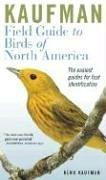
Kaufman's plain-English descriptions and photo-based approach complement Sibley perfectly, reinforcing identification skills while introducing behavioral cues and habitat associations in an accessible way.
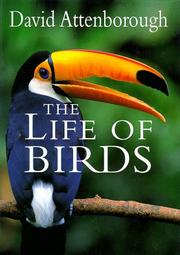
A beautifully written survey of bird biology and behavior tied to the landmark BBC series — ideal at this stage for building broad conceptual excitement and a mental map of the major themes (flight, song, migration, breeding) before diving into textbooks.
Behavior and Natural History
BeginnerUnderstand why birds do what they do — foraging strategies, song, mating systems, migration, and social behavior — grounded in real field observation and evolutionary thinking.
▸ Study plan for this stage
Pace: 8–10 weeks, ~40–50 pages/day (approximately 2–3 weeks per book, with overlap for synthesis)
- Natural selection and adaptation in action: how Darwin's finches demonstrate evolution through measurable beak and body changes in response to environmental pressures
- Foraging strategies and ecological niches: how different bird species partition resources and optimize feeding behavior based on morphology and habitat
- Birdsong as communication and evolution: the functions of song (territory, mate attraction, species recognition), learning mechanisms, and geographic variation
- Mating systems and reproductive behavior: monogamy, polygamy, and the trade-offs between parental investment and reproductive success
- Migration as an adaptive strategy: the physiological, navigational, and ecological drivers of long-distance movement and seasonal timing
- Social behavior and cognition: flocking, dominance hierarchies, cooperation, and evidence of problem-solving and cultural transmission in birds
- Field observation methods: how ornithologists gather data on behavior through direct observation, banding, and experimental manipulation
- Evolutionary thinking applied to behavior: using ultimate (why did this trait evolve?) and proximate (how does it work mechanistically?) explanations
- How do the Darwin finches demonstrate natural selection, and what specific environmental changes drove shifts in beak morphology as described in *The Beak of the Finch*?
- What are the main functions of birdsong, and how do birds learn their songs? Provide examples from *Birdsong* of geographic variation and individual differences.
- Explain the relationship between a bird's morphology (beak shape, body size) and its foraging strategy. How does this connect to ecological specialization?
- What are the major mating systems in birds (monogamy, polygamy, etc.), and what evolutionary trade-offs explain why different species adopt different systems?
- Describe the physiological and navigational challenges of migration, and explain why birds undertake these costly journeys despite the risks.
- What evidence presented in *The Genius of Birds* demonstrates that birds possess problem-solving abilities and cultural learning? How does this change our understanding of avian cognition?
- Conduct a 30-minute focal observation of a local bird species (or a video recording if live observation is unavailable). Document foraging behavior, vocalizations, and social interactions. Sketch the habitat and note environmental conditions. Repeat 3–4 times and look for patterns.
- Create a comparative morphology chart: select 3–4 finch species (or other birds) from *The Beak of the Finch*. Plot beak length vs. depth, body size, and primary food source. Hypothesize how each morphology relates to foraging niche.
- Record or find audio recordings of the same bird species from different geographic locations (use Macaulay Library or eBird). Compare song structure, frequency, and complexity. Document differences and hypothesize why they exist based on *Birdsong*.
- Design a simple experiment to test a hypothesis about bird behavior (e.g., do birds prefer certain feeder heights? Do they forage differently in groups vs. alone?). Collect data over 2–3 weeks and analyze results.
- Write a 2–3 page evolutionary explanation of a specific bird behavior (e.g., why some species are monogamous, why warblers migrate, why corvids cache food). Use both ultimate and proximate reasoning, citing examples from the three books.
- Create a migration timeline for a specific migratory species: map the route, identify stopover sites, note timing, and explain the physiological and environmental cues that trigger departure and arrival.
Next up: This stage grounds you in the observable, behavioral reality of birds and the evolutionary logic behind their actions; the next stage will likely deepen your understanding of the physiological and neurobiological mechanisms that enable these behaviors, as well as the conservation challenges birds face in a changing world.

This Pulitzer Prize-winning account of the Grants' decades of fieldwork on Galápagos finches is the perfect bridge from identification to evolutionary biology, showing how ornithology generates hard scientific knowledge.

Follows scientist Donald Kroodsma into the field and lab to explain how and why birds sing — a deep, readable dive into one of ornithology's richest research areas that introduces bioacoustics without requiring a science degree.

A rigorous yet accessible survey of avian cognition, navigation, and social learning that synthesizes recent research and prepares the reader for the more technical treatments of neurobiology and sensory ecology ahead.
Core Ornithology: Biology and Ecology
IntermediateMaster the scientific framework of ornithology — physiology, reproduction, migration ecology, population dynamics, and systematics — at the level of an advanced undergraduate or serious amateur.
▸ Study plan for this stage
Pace: 10–12 weeks, ~40–50 pages/day. Gill's *Ornithology* (weeks 1–7, ~400 pages); Alerstam's *Bird Migration* (weeks 8–12, ~300 pages). Allocate 1–2 days per major chapter for review and note-taking.
- Avian skeletal, muscular, and respiratory anatomy adapted for flight and metabolic demands
- Thermoregulation, plumage structure, and energetics in birds across environments
- Reproductive physiology, courtship, mating systems, and parental care strategies
- Molt cycles, feather development, and their ecological significance
- Proximate and ultimate mechanisms of migration: navigation, orientation, and timing cues
- Population dynamics, life history trade-offs, and demographic variation in birds
- Avian systematics, phylogenetic relationships, and evolutionary adaptations within major orders
- Ecological interactions: foraging ecology, competition, predation, and niche partitioning
- How does avian respiratory anatomy (air sacs, unidirectional airflow) differ from mammalian lungs, and what selective advantages does it provide?
- Explain the relationship between body size, metabolic rate, and thermoregulation in birds, including the roles of plumage and behavior.
- What are the major mating systems in birds (monogamy, polygyny, polyandry), and what ecological and social factors favor each?
- Describe the proximate cues (photoperiod, temperature, food availability) and ultimate mechanisms (energy reserves, navigation) that trigger and sustain migration.
- How do birds navigate during migration, and what evidence supports the use of magnetic, celestial, and landmark-based orientation?
- What demographic parameters (survival, fecundity, age structure) determine population growth, and how do life history strategies vary across bird taxa?
- Dissect or closely examine a prepared bird skeleton (museum specimen or teaching model); identify key adaptations for flight and compare to a mammalian skeleton.
- Collect and analyze molt feathers from local birds; document feather structure, wear patterns, and seasonal variation to understand molt cycles.
- Design a field study protocol to observe courtship and mating behavior in a local bird species; record behavioral sequences and relate to Gill's mating system framework.
- Create a migration timeline for a specific species using Alerstam's framework: map departure/arrival dates, identify proximate cues, and hypothesize navigation mechanisms.
- Build a population model (spreadsheet or simple code) incorporating survival, fecundity, and age structure; test how life history changes affect population growth rate.
- Conduct a literature review on a single bird family (e.g., Accipitridae, Parulidae); synthesize systematics, ecology, and behavior using Gill's phylogenetic framework.
Next up: Mastery of ornithological fundamentals—physiology, reproduction, migration, and systematics—provides the mechanistic foundation to explore applied topics such as conservation biology, human–bird interactions, and behavioral ecology in greater depth.
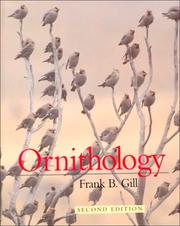
The definitive English-language ornithology textbook, now in its fourth edition — this is the canonical reference that ties together everything from feather microstructure to phylogenetics, and should be read chapter by chapter as a structured course.
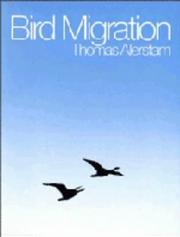
The authoritative scientific treatment of avian migration — orientation, navigation, energetics, and routes — written by one of the world's leading migration researchers; dense but rewarding after Gill's foundations are in place.
Advanced: Evolution, Systematics, and Cutting-Edge Research
ExpertEngage with ornithology at the research frontier — avian evolution, genomics, sensory biology, and the deep history of birds — and read the field the way professional ornithologists do.
▸ Study plan for this stage
Pace: 8–10 weeks, ~40–50 pages/day. Start with "The Rise of Birds" (weeks 1–3), move to "Avian Architecture" (weeks 4–6), then "Bird Sense" (weeks 7–10). Allocate 1–2 days per week for synthesis and note-taking.
- Avian origins and the evolutionary transition from theropod dinosaurs to modern birds, including fossil evidence and phylogenetic relationships
- Adaptive radiation and diversification of bird lineages in response to ecological niches and environmental change
- Form-function relationships: how skeletal, muscular, and integumentary systems enable flight, locomotion, and ecological specialization
- Developmental and architectural principles underlying feather morphology, plumage patterns, and structural coloration
- Sensory systems in birds (vision, hearing, olfaction, magnetoreception, proprioception) and their ecological and behavioral significance
- Genomic and molecular approaches to understanding avian evolution, phylogenetics, and the genetic basis of phenotypic traits
- Integration of paleontological, morphological, and molecular evidence in reconstructing avian evolutionary history and systematics
- What fossil evidence and anatomical features support the hypothesis that birds evolved from theropod dinosaurs, and what does Chatterjee present as key transitional forms?
- How do feather structure and plumage architecture relate to flight performance, thermoregulation, and signaling, according to Goodfellow's analysis?
- What are the major sensory modalities in birds, and how do their sensory capabilities differ from and compare to those of mammals and other vertebrates?
- How do modern genomic and molecular techniques complement paleontological and morphological approaches in understanding avian systematics and evolution?
- What role do developmental constraints and functional trade-offs play in shaping avian morphological diversity?
- How have birds adapted to diverse ecological niches through changes in body size, skeletal architecture, and sensory systems?
- Create a detailed timeline of avian evolution from Chatterjee's work, mapping key fossil discoveries, divergence events, and the emergence of modern bird orders onto a phylogenetic tree.
- Dissect or examine museum specimens (or high-quality photographs/videos) of feathers from different bird groups, documenting variation in barb structure, barbule density, and coloration mechanisms; relate observations to Goodfellow's architectural principles.
- Conduct a comparative sensory analysis: design an experiment or observational study that tests one sensory modality (e.g., visual acuity, auditory localization, or magnetoreception) in a local bird species, grounding predictions in Birkhead's framework.
- Write a research synthesis paper (2,000–3,000 words) integrating evidence from all three books to explain how a specific avian trait (e.g., powered flight, elaborate plumage, or migratory navigation) evolved and is maintained by natural selection.
- Analyze a recent ornithological research paper (from journals like *The Auk*, *Journal of Avian Biology*, or *Ornithology*) and map its arguments and methods onto the conceptual frameworks presented in the three books.
- Create detailed anatomical sketches or 3D models showing the skeletal, muscular, and feather systems of a bird in flight, annotating how form enables function as discussed in Chatterjee and Goodfellow.
Next up: This stage equips you with a deep, research-grounded understanding of avian evolution, systematics, and sensory biology—the conceptual and empirical foundations of modern ornithology—preparing you to engage with specialized topics, current literature, and independent research questions in subsequent stages.
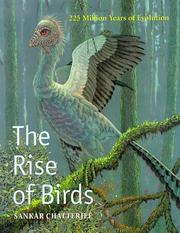
A rigorous account of avian origins and the fossil record from a leading paleontologist — essential for understanding the evolutionary deep time that underlies all modern bird biology.

An expert examination of nest construction across the bird world that doubles as a case study in how behavior, ecology, and natural selection interact — a sophisticated complement to the evolutionary perspective of Chatterjee.
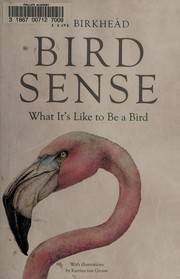
Written by one of Britain's foremost ornithologists, this book synthesizes cutting-edge sensory biology research — how birds see, hear, smell, and feel — and models the kind of evidence-based scientific reasoning that defines professional ornithology.
Discussion
Keep reading
Paths that share books, cover the same subject, or open a related topic.