Start birdwatching
This curriculum takes a brand-new birder from zero to confident field observer across three carefully sequenced stages. It begins with the mindset and joy of birding, builds practical identification and optics skills, then deepens fieldcraft and habitat knowledge so the learner can tackle any bird they encounter.
Catching the Bug
BeginnerUnderstand what birdwatching is, develop an observer's mindset, and get genuinely excited before picking up a field guide.
▸ Study plan for this stage
Pace: 6–8 weeks total: spend the first 3–4 weeks on "The Life of the Skies" (~20–25 pages/day, savoring Rosen's reflective prose), then 3–4 weeks on "Birding Without Borders" (~25–30 pages/day, riding Strycker's fast-paced global adventure).
- Birdwatching as a philosophical and literary practice: Rosen frames birding not as a hobby but as a way of paying attention to the living world and our place in it — a lens through which human history, literature (Whitman, Thoreau), and extinction are all visible.
- The observer's mindset — slowing down and looking: Both books, in very different registers, teach that the core skill of birding is patient, deliberate noticing rather than any technical expertise.
- Birds as connective tissue between nature and culture: Rosen shows how specific birds (the Ivory-billed Woodpecker, warblers) carry enormous cultural and emotional weight, making birding an act of cultural memory as much as natural history.
- The global universality of birds: Strycker's year-long Big Year across all seven continents demonstrates that birds are everywhere and that the birding community is a worldwide, welcoming tribe.
- Intrinsic motivation and the 'spark bird' phenomenon: Strycker's narrative illustrates how a single memorable encounter can ignite a lifelong passion — readers are encouraged to identify or anticipate their own spark bird.
- Listing and record-keeping as a personal narrative tool: Strycker's Big Year structure shows how a life list is not mere score-keeping but a personal diary of places, people, and moments.
- Embracing beginner's mind: Neither author was born an expert; both books normalize not knowing and celebrate the joy of discovery over mastery.
- Conservation stakes — why birds matter: Rosen's meditation on the Ivory-billed Woodpecker grounds birding in real ecological urgency, giving the hobby moral and emotional depth from the very start.
- After reading Rosen, how does he argue that watching birds connects us to broader questions about loss, extinction, and what it means to be human — and can you give one specific bird or story from the book that illustrates this?
- What does Strycker's Big Year reveal about what it actually takes — logistically, emotionally, and socially — to pursue birdwatching at an obsessive level, and what does that suggest about the hobby at a casual level?
- Both authors find deep meaning in birds, but through very different styles (Rosen: reflective/literary; Strycker: adventurous/journalistic). How did each style affect your own excitement about getting outside and looking?
- What is a 'spark bird,' and based on your reading of Strycker, why do birders consider it such a defining moment in their development?
- How does Rosen use the near-extinction of the Ivory-billed Woodpecker to argue for the importance of paying attention to the natural world before it disappears?
- Having finished both books, how would you describe birdwatching to a complete skeptic — what is it really about, beyond just identifying species?
- 'Sit Spot' sessions (tied to Rosen): Choose one outdoor location near your home. Visit it for 15–20 minutes on at least 5 separate days while reading 'The Life of the Skies.' Bring no field guide — just watch, listen, and write 3–5 sentences in a notebook about what you noticed. Practice Rosen's core lesson: attention before identification.
- Literary bird journal (tied to Rosen): Each time Rosen mentions a specific bird species, look up a photo or short video clip of that bird. Write one sentence about your reaction. By the end of the book you will have a personal, illustrated bestiary rooted in his narrative.
- Map Strycker's journey (tied to 'Birding Without Borders'): As you read, mark each country or region Strycker visits on a world map (physical or digital). Note the one bird per region that most captured your imagination. This builds geographic awareness and personal connection to the global scope of birding.
- Identify YOUR spark bird moment: After finishing Strycker, write a short paragraph (half a page) describing either (a) a bird encounter from your own past that could qualify as a spark bird, or (b) the single bird from either book that you most want to see in real life and why. Pin this to your study notes — it becomes your motivational anchor.
- First unguided outing: Before moving to Stage 2, go on one 30–45 minute walk outdoors with the sole goal of counting how many distinct birds you can detect (by sight or sound) without any app or field guide. Write down your count and one observation about each. This baseline snapshot will feel dramatically different after Stage 2.
- Compare the two authors' 'why': Write a one-page (or bullet-point) comparison of why Rosen birds versus why Strycker birds. What does each man get out of it? Which motivation resonates more with you right now? This reflection will help you set your own intentions going into the more technical stages ahead.
Next up: By the end of this stage the reader is emotionally invested in birds and armed with an observer's mindset — the perfect moment to introduce a field guide and binoculars, because the 'why' is already burning and the technical 'how' will now feel like unlocking a door rather than doing homework.

A beautifully written introduction to why people watch birds; it builds emotional investment and curiosity before any technical learning begins.

A fast-paced, inspiring account of a year-long global big year that shows what attentive looking feels like and motivates beginners to get outside immediately.
Foundations — Field Guide & Optics Basics
BeginnerLearn how to use a field guide, understand bird topography and field marks, choose and use binoculars correctly, and make first confident identifications.
▸ Study plan for this stage
Pace: 8–10 weeks total. Week 1–2: "The Young Birder's Guide to Birds of Eastern North America" (~20–25 pages/day, including all species accounts and intro sections). Week 3–5: "Sibley's Birding Basics" (~15–20 pages/day, read slowly and re-read diagrams). Week 6–10: "The Sibley Guide to Bird Life & Behavi
- Bird topography: learning the standardized names for body regions (crown, supercilium, primaries, tertials, etc.) as introduced in Sibley's Birding Basics, so every field mark can be described precisely
- Field marks and how to use them: understanding which features — size, shape, color pattern, bill shape, tail length — are most reliable for identification, as emphasized throughout both Sibley texts
- How to read and navigate a field guide: using habitat, range maps, and species accounts efficiently, practiced first with The Young Birder's Guide and then reinforced by Sibley's layout conventions
- Optics basics — binocular selection and use: magnification vs. field of view trade-offs, eye relief, focusing technique, and how to raise bins onto a bird quickly, all covered in Sibley's Birding Basics
- Size and shape as primary ID tools: Sibley's Birding Basics stresses that overall silhouette and proportions are often more diagnostic than color, especially at a distance
- Behavior as an identification clue: The Sibley Guide to Bird Life & Behavior introduces how foraging style, posture, and flock behavior narrow down ID before you even see color
- Plumage variation — age, sex, and season: understanding that one species can look very different across molt cycles, a concept built up progressively from The Young Birder's Guide through both Sibley books
- Habitat and range as filters: using a bird's expected environment and geographic range (range maps in The Young Birder's Guide; ecology chapters in Bird Life & Behavior) to narrow the candidate list before looking at field marks
- After reading The Young Birder's Guide, can you point to and name at least 15 topographic regions on a blank bird diagram without looking at the book?
- What are the four main optic specifications (magnification, objective lens diameter, field of view, eye relief) and how does each affect your experience in the field, as explained in Sibley's Birding Basics?
- According to Sibley's Birding Basics, why should size and shape be evaluated before color when identifying an unfamiliar bird?
- How does The Sibley Guide to Bird Life & Behavior argue that understanding a bird's foraging behavior or habitat preference can help confirm or rule out an identification?
- How do range maps work, and what are their limitations? Use examples from the range maps in The Young Birder's Guide to illustrate your answer.
- What is molt, why does it matter for identification, and how do the two Sibley books handle the topic differently in terms of depth and audience?
- Blank-diagram drill: Print or sketch a plain bird silhouette and, after each reading session in The Young Birder's Guide, label as many topographic parts as you can from memory. Repeat until you hit 100% without help.
- Optics comparison outing: Before buying or borrowing binoculars, handle at least two pairs with different magnifications (e.g., 8×42 vs. 10×42) in a store or at a club meeting. Time how quickly you can locate a stationary object 30 m away with each pair, then re-read the relevant section of Sibley's Birding Basics and write a one-paragraph justification for your choice.
- Field guide scavenger hunt: Choose 10 birds you might realistically see in your area from The Young Birder's Guide. For each, write down the three field marks Sibley's Birding Basics would call most reliable (shape/size first, then pattern), the expected habitat, and the season it should be present per the range map.
- Observation journal — shape-first sketching: On each outdoor session (aim for at least one per week), sketch every bird you see as a quick silhouette only — no color notes — then write one sentence describing its behavior. Compare your sketches to the behavior descriptions in The Sibley Guide to Bird Life & Behavior when you return home.
- Plumage-variation card set: For 5 common species covered in both The Young Birder's Guide and Bird Life & Behavior (e.g., American Robin, Mallard, Red-tailed Hawk), create a small index card showing the different plumages (juvenile, female, breeding male, non-breeding). Note which book gave you more detail and why.
- End-of-stage identification challenge: Visit a local park or wildlife area and attempt to identify every bird you see using only the field skills from this stage — size/shape first, field marks second, habitat/behavior third. Log each bird with the field marks that clinched the ID, then cross-check against The Young Birder's Guide accounts to assess your accuracy.
Next up: By mastering field guide navigation, bird topography, optics use, and the principle that shape + behavior precede color in identification, the reader has built the observational vocabulary and outdoor habits needed to tackle more advanced identification challenges — such as tricky similar species, birds in flight, and regional variation — in the next stage.

Despite the title, this is the clearest plain-language primer on bird topography, field marks, and how to read a field guide entry — perfect first technical read for any adult beginner.
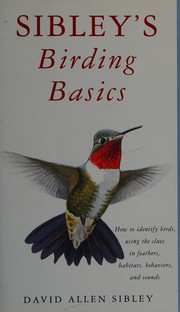
The definitive short guide to identification concepts, optics selection, and how birds vary by age, sex, and season — read this before opening a full field guide so the guide makes sense.

The gold-standard North American field guide; having read Sibley's Basics first, the learner can now navigate its layout and use range maps, plumage plates, and size comparisons fluently.
Fieldcraft — Getting Better in the Field
IntermediateDevelop active fieldcraft skills: reading habitat, using sound for identification, moving quietly, and building a systematic search image for unfamiliar birds.
▸ Study plan for this stage
Pace: 10–12 weeks total. Week 1–3: "The Art of Bird Finding" (~20–25 pages/day, including re-reading habitat chapters); Week 4–7: "Pete Dunne on Bird Watching" (~25 pages/day, pausing to practice techniques in the field after each major section); Week 8–12: "The Warbler Guide" (~15–20 pages/day — treat it
- Habitat reading: learning to decode landscape features (edge, canopy height, water proximity, plant community) as predictors of bird presence, as taught through Dunne's site-by-site reasoning in 'The Art of Bird Finding'
- Search image construction: building a mental template for an unfamiliar bird by breaking it into size, shape, behavior, and habitat before consulting color, as emphasized throughout Dunne's approach in both books
- Birding by ear: using song and call as the primary detection tool, including how to mentally 'lock on' to a sound and triangulate a bird's position before it is seen
- Quiet movement and field discipline: slow pace, wind awareness, sun angle, and stillness as active skills that multiply sighting opportunities, detailed in 'Pete Dunne on Bird Watching'
- Gestalt and GISS (General Impression of Size and Shape): Dunne's signature framework for rapid, confident identification based on overall impression rather than checklist features
- Systematic warbler identification: using the Warbler Guide's quad-view plates, spectrograms, and undertail/face pattern grids to build a repeatable, angle-independent ID workflow
- Spectrogram literacy: reading song spectrograms in 'The Warbler Guide' to connect visual sound patterns to field-heard songs, enabling identification even when a bird is not visible
- Probability thinking: using season, geography, and habitat to weight which species are likely before you even raise binoculars — a thread running through all three books
- After reading 'The Art of Bird Finding,' can you walk up to an unfamiliar patch of habitat and articulate — before seeing a single bird — which five to eight species you expect to find there and why?
- How does Pete Dunne's GISS/gestalt method differ from traditional field-mark identification, and in what field situations does each approach have the advantage?
- What are the three or four movement and positioning habits described in 'Pete Dunne on Bird Watching' that most directly increase the number of birds you detect, and what is the reasoning behind each?
- Using 'The Warbler Guide,' how would you systematically identify a warbler seen only from below or behind, where classic face and breast patterns are not visible?
- How do spectrograms in 'The Warbler Guide' help you distinguish between two similar-sounding species (e.g., Nashville vs. Tennessee Warbler), and how would you use that knowledge in the field before the bird shows itself?
- How do the probability and habitat-filtering concepts from Dunne's two books change the way you approach an unfamiliar warbler versus how a beginner would approach the same bird?
- Habitat prediction walk (tied to 'The Art of Bird Finding'): Before entering any new birding site, stand at the edge and write down your predicted species list based solely on visible habitat cues. Then bird the site and score your predictions. Repeat weekly, tracking improvement.
- Silent 10-minute stand (tied to 'Pete Dunne on Bird Watching'): At any birding location, stop completely for 10 minutes without moving or raising binoculars. Log every bird detected by sound alone, then compare to what you find when you resume active searching — this directly trains the ear-first detection habit Dunne advocates.
- GISS sketching drill (tied to both Dunne books): When you encounter any bird, before consulting a field guide, sketch its silhouette and jot three words describing its overall impression (e.g., 'chunky, short-tailed, creeping'). Build a personal notebook of these gestalt sketches over the stage.
- Spectrogram-to-field matching (tied to 'The Warbler Guide'): Choose five warbler species from the guide. Study their spectrograms and written sound descriptions indoors, then go to the field specifically to find and hear those five species, comparing what you hear to the mental image of the spectrogram.
- Angle-independent warbler ID challenge (tied to 'The Warbler Guide'): Using the quad-view plates, practice identifying 10 warbler species using only the undertail or back view plates — covering the face plate with a card. This forces use of the guide's full identification system rather than relying on familiar face patterns.
- Probability checklist exercise (synthesizing all three books): For a planned field outing, write a tiered species list — 'almost certain,' 'likely,' 'possible,' 'unlikely but worth checking' — using habitat, season, and range. After the outing, analyze which tier your actual sightings fell into and revise your habitat-reading assumptions accordingly.
Next up: By internalizing Dunne's habitat-reading and gestalt frameworks alongside the Warbler Guide's systematic ID methodology, the reader has moved from reactive to proactive birding and is now ready to tackle advanced identification of difficult groups — such as shorebirds, flycatchers, or fall warblers — where fine morphological detail, molt, and subspecies variation demand the next level of study.

Dunne teaches how to think about habitat, season, and behavior to find birds before you even raise your binoculars — the essential bridge from passive observer to active birder.

A comprehensive, conversational guide to all aspects of the hobby — optics, ethics, keeping lists, and joining birding communities — that consolidates everything learned so far into a coherent practice.

Using one notoriously tricky family as a case study, this book teaches advanced visual and auditory ID techniques (undertail patterns, song spectrograms) that sharpen skills applicable to all bird groups.
Discussion
Keep reading
Paths that share books, cover the same subject, or open a related topic.