Ecology: the best books to understand life and its systems, in order
This curriculum builds ecological understanding from the ground up — starting with the living world as experienced through vivid natural history, then climbing through population and community ecology, into ecosystem science, and finally to the biosphere and humanity's role within it. Each stage deepens the conceptual toolkit needed for the next, so that by the end the reader can think rigorously across all scales of ecological organization.
Foundations: The Living World
BeginnerDevelop an intuitive feel for how organisms interact with their environments, build core ecological vocabulary, and fall in love with the natural world as a subject of serious inquiry.
▸ Study plan for this stage
Pace: 8–10 weeks, ~40–50 pages/day (mix of reading and reflection)
- Ecological ethics and land as a community (Leopold's land ethic)
- Keystone species and trophic cascades—how single species regulate entire ecosystems
- Energy flow and nutrient cycling through food webs and food chains
- Population dynamics, carrying capacity, and density-dependent regulation
- Habitat, niche, and the concept of ecological balance
- Biodiversity as both intrinsic value and functional necessity
- Human role in ecosystems—from observer to active participant
- What is Leopold's land ethic, and how does it challenge the way we typically view our relationship with nature?
- How do keystone species like sea otters and wolves maintain ecosystem stability, and what happens when they are removed?
- Trace energy flow from the sun through a food chain; where is most energy lost, and why?
- What is the difference between a habitat and a niche, and why does this distinction matter for conservation?
- How do populations self-regulate through density-dependent factors, and what is carrying capacity?
- Why is biodiversity important both ecologically and ethically, according to these authors?
- How do the three books build on each other to move from philosophical foundations to mechanistic understanding?
- Keep a nature journal while reading: observe one local ecosystem weekly and sketch food webs, species interactions, and changes you notice
- Create detailed food web diagrams for three different ecosystems (one from each book) and label energy loss at each trophic level
- Research and present on one keystone species: explain its ecological role, the consequences of its removal, and conservation efforts
- Conduct a local biodiversity inventory: identify and count species in a small area (park, garden, stream) and reflect on what you find
- Write a personal land ethic statement inspired by Leopold, then revise it after reading Carroll and Ghazoul
- Map a local watershed or ecosystem and identify human impacts; propose one restoration or conservation intervention
- Debate: Is biodiversity valuable because it supports human welfare, or does it have intrinsic worth independent of human benefit? Use examples from all three books
Next up: This stage grounds you in ecological philosophy, real-world examples of ecosystem dynamics, and core vocabulary—preparing you to tackle the mechanistic details of population ecology, community ecology, and ecosystem processes in the next stage with both intellectual rigor and genuine wonder for the living world.

A timeless entry point that trains the reader to observe seasonal and ecological rhythms with care; it introduces the 'land ethic' and the idea that organisms and environments are inseparable.

Tells the story of how ecologists discovered the rules that govern animal populations and communities, making core concepts like keystone species and trophic cascades vivid and accessible before any formal textbook.

A concise, authoritative overview of the entire field — populations, communities, ecosystems, and biomes — that maps the intellectual landscape the rest of the curriculum will explore in depth.
Populations & Species Interactions
BeginnerUnderstand how individual organisms survive and reproduce, how populations grow and are regulated, and how species interact through competition, predation, and mutualism.
▸ Study plan for this stage
Pace: 8–10 weeks, ~40–50 pages/day (alternating between both books; start with "The Selfish Gene" for conceptual foundations, then move to "The Beak of the Finch" for real-world application)
- Gene-centered view of evolution: genes as replicators that drive organism behavior and survival strategies
- Natural selection operating at the genetic level, not just the organism level
- Population growth, carrying capacity, and density-dependent regulation mechanisms
- Competitive exclusion and resource limitation as drivers of population dynamics
- Predator-prey relationships and coevolutionary arms races
- Adaptation and heritable variation as the foundation for evolutionary change within populations
- Real-world case study: Darwin's finches as a model for observing evolution and natural selection in action
- Speciation and reproductive isolation emerging from population-level processes
- What does Dawkins mean by the 'selfish gene,' and how does this perspective explain organism behavior and survival strategies?
- How do populations grow, and what factors regulate population size (carrying capacity, density-dependent vs. density-independent factors)?
- What role does heritable variation in traits play in natural selection, and how did Darwin's finches demonstrate this principle?
- How do predator-prey interactions and competition shape population dynamics and drive evolutionary change?
- What is coevolution, and how do Weiner's finch studies illustrate predator-prey or competitive coevolutionary dynamics?
- How can small changes in allele frequencies within a population lead to measurable morphological change over just a few generations?
- Create a concept map linking genes, organisms, populations, and natural selection—show how Dawkins' gene-centered view connects to population-level outcomes in finches
- Model population growth using the logistic equation: track how a hypothetical finch population changes with different carrying capacities and growth rates
- Analyze Weiner's finch data: plot beak size distributions before and after drought years; calculate selection differentials and predict allele frequency changes
- Design a predator-prey simulation (using a spreadsheet or simple code) where prey reproduction and predator hunting efficiency vary; observe oscillating population cycles
- Write a 2–3 page case study comparing two finch species on the Galápagos: explain how competition for seeds and beak morphology are linked through natural selection
- Conduct a field observation or literature review: identify one local organism and describe how its heritable traits reflect adaptation to competition, predation, or resource availability
Next up: This stage establishes the mechanisms of evolution (genes, selection, population dynamics) and demonstrates them in action through real finch populations, preparing you to explore how these processes scale up to community ecology, ecosystem function, and conservation challenges in the next stage.
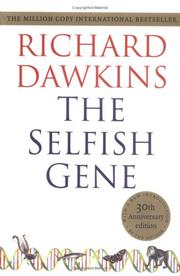
Grounds ecology in evolutionary logic — explaining why organisms behave as they do — giving the reader the gene's-eye view that underpins modern population ecology and behavioral ecology.
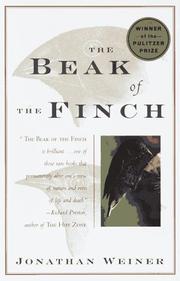
A real-time study of natural selection and population dynamics in the Galápagos that makes abstract population concepts concrete and shows how ecology and evolution are intertwined.
Communities & Ecosystems
IntermediateGrasp how multiple species assemble into communities, how energy and nutrients flow through ecosystems, and how disturbance and succession shape ecological structure over time.
▸ Study plan for this stage
Pace: 8–10 weeks, ~40–50 pages/day. Begin with Begon's foundational chapters (weeks 1–6, ~35 pages/day), then transition to Haskell's observational work (weeks 7–10, ~50 pages/day as it reads faster). Allocate 1–2 days per week for exercises and reflection.
- Community assembly and species interactions: competition, predation, mutualism, and how these shape which species coexist in a place
- Energy flow through trophic levels: primary production, herbivory, carnivory, and the efficiency losses at each step
- Nutrient cycling: how carbon, nitrogen, and other elements move between organisms and the abiotic environment
- Ecosystem stability and resilience: how disturbances (fire, drought, disease) disrupt systems and how succession rebuilds structure over time
- Succession pathways: primary succession on bare substrate and secondary succession after disturbance, leading to climax communities
- Spatial heterogeneity and patch dynamics: how variation in microhabitats and disturbance creates mosaic patterns within ecosystems
- Biodiversity and ecosystem function: how species richness and functional diversity influence productivity and stability
- Observational ecology: how to read ecological patterns in the field and connect them to underlying mechanisms
- How do competition, predation, and mutualism structure a community, and what determines which species can coexist?
- Trace energy flow from sunlight to a top predator: where is most energy lost, and why does this limit food chain length?
- Describe the nitrogen cycle and carbon cycle: what are the key reservoirs and processes, and how do organisms participate?
- What is the difference between primary and secondary succession, and what mechanisms drive communities toward a climax state?
- How do disturbances (fire, logging, disease) reset succession, and what determines how quickly an ecosystem recovers?
- Why does a diverse ecosystem often function differently than a species-poor one, and what does 'ecosystem function' mean?
- How would you design a field study to test whether a particular species interaction (e.g., competition or predation) is actually structuring a community?
- Energy pyramid exercise: Choose a real ecosystem (e.g., grassland, forest, pond). Map out at least three trophic levels, estimate biomass at each level, and calculate energy transfer efficiency between levels. Explain where energy is lost.
- Nutrient cycle diagram: Create detailed flow charts for the nitrogen and carbon cycles, labeling all major reservoirs (atmosphere, soil, organisms, water) and processes (photosynthesis, decomposition, nitrification, denitrification). Annotate with timescales.
- Succession field study: Identify a disturbed site near you (abandoned lot, recent burn, logged area, or pond margin). Document species composition and structure at multiple points. Hypothesize what the next successional stage will look like and why.
- Community interaction matrix: Select a real community (e.g., a forest understory or rocky intertidal zone). List 8–10 species and create a matrix showing the type and direction of each pairwise interaction (competition, predation, mutualism, none). Discuss which interactions most strongly structure the community.
- Disturbance simulation: Using data from Haskell's observations or a published study, model how a disturbance (e.g., fire, herbivory) would alter species composition and ecosystem function. Predict recovery trajectory and identify limiting factors.
- Microhabitat survey: In a small area (e.g., 10 m × 10 m forest plot or streamside), map variation in light, moisture, soil, and substrate. Correlate this spatial heterogeneity with species distribution. Explain how patch dynamics maintain diversity.
Next up: This stage builds the mechanistic foundation—how species interact, energy flows, and systems recover—preparing you to explore population dynamics, evolutionary responses to ecological pressures, and ultimately how humans alter and manage ecosystems at landscape and global scales.

The canonical intermediate-to-advanced textbook of the field; reading it now pays off because the reader has the intuition to absorb its rigorous treatment of populations, communities, and ecosystems systematically.
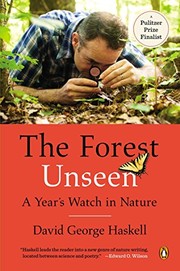
Complements the textbook by grounding community and ecosystem concepts in a single square meter of old-growth forest observed across a full year, making abstract processes like nutrient cycling and food webs viscerally real.
Biosphere, Global Patterns & Conservation
IntermediateScale up to biomes, biogeography, and the global biosphere; understand how human activity is reshaping ecological systems at every scale and what conservation science proposes in response.
▸ Study plan for this stage
Pace: 8–10 weeks, ~40–50 pages/day. "The Song of the Dodo" (approximately 700 pages) over 4–5 weeks, then "The Sixth Extinction" (approximately 320 pages) over 3–4 weeks, with 1–2 weeks for integration and review.
- Island biogeography and the theory of island size/isolation effects on species diversity (Quammen's central framework)
- Habitat fragmentation as a modern extinction driver: how humans break continuous ecosystems into isolated 'islands' on land
- Biogeographic patterns and how species distributions reflect evolutionary history, climate, and dispersal barriers
- The Anthropocene and human-driven extinction rates: how current extinction rates vastly exceed background rates (Kolbert's thesis)
- Cascading ecological consequences: how loss of one species or habitat type triggers broader ecosystem collapse
- Conservation strategies and their limitations: protected areas, captive breeding, restoration, and why they often fail at scale
- The role of climate change as a multiplier of extinction risk, interacting with habitat loss and other stressors
- Interdependence between human economies and ecosystem services: why biodiversity loss threatens human wellbeing
- What is island biogeography theory, and how does Quammen use it to explain why isolated habitats (whether literal islands or fragmented forests) lose species so rapidly?
- How does habitat fragmentation create an 'island effect' on continents, and what are the consequences for species like the dodo and modern endangered animals?
- According to Kolbert, what evidence shows that we are in a sixth mass extinction, and how do current extinction rates compare to background rates?
- What are the main mechanisms driving extinctions in the Anthropocene (habitat loss, climate change, invasive species, overexploitation), and how do they interact?
- What conservation approaches does Quammen or Kolbert discuss, and why are many of them insufficient to prevent extinctions at the scale we face?
- How do the case studies in both books (dodo, passenger pigeon, polar bears, coral reefs, etc.) illustrate broader principles about extinction and conservation?
- Map a local or regional habitat fragmentation: identify patches of forest, wetland, or grassland near you, measure their size and isolation, and hypothesize which species would be most vulnerable using island biogeography principles from Quammen.
- Create a 'extinction timeline' for 5–6 species mentioned across both books (dodo, passenger pigeon, Baiji dolphin, Sumatran rhino, etc.), noting the primary drivers and human role in each case.
- Design a hypothetical conservation plan for an endangered species: specify habitat protection, corridor creation, captive breeding if needed, and climate adaptation measures, then critique it using Kolbert's discussion of conservation limitations.
- Analyze a current news story about species loss or habitat destruction through the lens of both books: identify which extinction mechanisms are at play and what biogeographic or ecological principles explain the situation.
- Read and annotate one scientific paper on island biogeography, habitat fragmentation, or extinction rates to deepen understanding beyond the narrative accounts in the books.
- Create a visual infographic or concept map showing how habitat fragmentation, climate change, invasive species, and human exploitation interact to drive extinctions, using examples from both texts.
Next up: This stage establishes that extinctions are not isolated tragedies but symptoms of systemic, global-scale ecological disruption driven by human activity—setting the stage for the next level, which will likely focus on ecosystem services, restoration ecology, and solutions-oriented frameworks for building resilient, sustainable human-nature relationships.
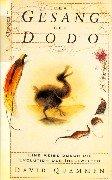
A masterful account of island biogeography — one of ecology's most powerful theoretical frameworks — and its devastating implications for extinction and habitat fragmentation in the modern world.
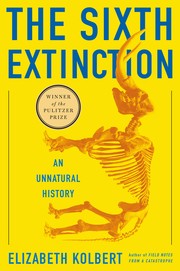
Synthesizes the ecological consequences of human activity across the biosphere, connecting concepts from every prior stage — population collapse, community disruption, ecosystem degradation — into a coherent global picture.
Advanced Synthesis: Complexity & the Future
ExpertThink like a research ecologist — understanding complexity, resilience, and nonlinear dynamics in ecosystems — and engage with cutting-edge questions about the Anthropocene biosphere.
▸ Study plan for this stage
Pace: 8–10 weeks, ~25–30 pages/day (alternating between the two books; Colander first 4 weeks, then Sheldrake 4–6 weeks, with 1–2 weeks for synthesis and reflection)
- Complex adaptive systems: how ecosystems exhibit emergent properties that cannot be predicted from individual components alone
- Nonlinear dynamics and tipping points: understanding feedback loops, phase transitions, and why small changes can trigger disproportionate ecosystem shifts
- Resilience and adaptive capacity: how ecosystems maintain function under disturbance and the role of diversity in buffering against collapse
- Mycelial networks and fungal ecology: the hidden architecture of forest ecosystems and nutrient cycling through symbiotic relationships
- Entanglement and interdependence: recognizing that organisms are not isolated agents but deeply embedded in webs of chemical, genetic, and ecological communication
- Policy implications of complexity: why top-down, reductionist approaches fail in managing natural systems and what adaptive governance looks like
- The Anthropocene challenge: how human-dominated systems exhibit novel complexity and require new frameworks for understanding ecosystem futures
- What is a complex adaptive system, and how does Colander's framework help explain why ecosystems resist simple management solutions?
- How do nonlinear dynamics and feedback loops create tipping points in ecosystems, and what are real-world examples from the books?
- What is the role of mycelial networks in forest ecosystems, and how does Sheldrake's work challenge the individualistic view of plants?
- How are organisms 'entangled' with one another through chemical signaling, genetic exchange, and symbiosis, and what does this mean for conservation?
- Why do top-down, command-and-control policies often fail in managing ecosystems, and what does adaptive governance look like according to Colander?
- How can understanding resilience and diversity inform strategies for managing ecosystems in the Anthropocene?
- Map a local ecosystem (forest, wetland, or grassland) as a complex adaptive system: identify key agents (species, abiotic factors), interactions, and feedback loops; note where tipping points might exist
- Read and annotate one peer-reviewed case study on ecosystem collapse or recovery (e.g., coral bleaching, forest regeneration); analyze it through the lens of complexity and resilience from both books
- Conduct a thought experiment: design an adaptive management policy for a real environmental problem (invasive species, water scarcity, etc.) that incorporates nonlinear dynamics and acknowledges uncertainty
- Examine a mycelial network diagram or video (e.g., from mycology research); trace nutrient and chemical flows and write a 500-word reflection on how this changes your understanding of 'individual' organisms
- Interview an ecologist or land manager about how they encounter complexity and uncertainty in their work; compare their experience to Colander's and Sheldrake's frameworks
- Create a visual or written synthesis comparing reductionist vs. systems-based approaches to a specific ecological problem (e.g., pest management, restoration); highlight where each falls short
Next up: This stage equips you with the conceptual tools and humility to recognize that ecosystems are irreducibly complex and that our interventions often have unintended consequences—preparing you to engage with applied conservation, restoration ecology, or policy work that demands adaptive thinking and acceptance of uncertainty.

Introduces complexity theory and systems thinking in an accessible way, providing the conceptual tools needed to understand why ecosystems are nonlinear, adaptive, and often surprising in their behavior.

A frontier-level exploration of fungal networks and ecological interdependence that challenges reductionist thinking and exemplifies the holistic, systems-level perspective that defines advanced ecological understanding.
Discussion
Keep reading
Paths that share books, cover the same subject, or open a related topic.