How to learn Evolution
This curriculum takes you from the core story of evolution told accessibly, through the mechanisms and evidence that underpin it, and finally into the frontier debates and mathematical depths that define modern evolutionary biology. Each stage builds the vocabulary, intuition, and conceptual scaffolding needed to tackle the next, turning a curious beginner into a genuinely deep thinker on the subject.
Foundations: The Big Story
BeginnerUnderstand what evolution is, why it is true, and how Darwin arrived at the idea — building core vocabulary (natural selection, adaptation, common descent, fossil record) and genuine enthusiasm for the subject.
▸ Study plan for this stage
Pace: 10–12 weeks total. Week 1–4: The Selfish Gene (~20–25 pages/day, focusing on ch. 1–5 and 11–13 for core theory; skim the more technical middle chapters on first pass). Week 5–8: Why Evolution Is True (~15–20 pages/day — this is the most evidence-dense book, so read slowly and take notes on each evid
- Natural selection: heritable variation + differential reproductive success = change over time (The Selfish Gene, ch. 1–3)
- The gene's-eye view: evolution is best understood as genes 'competing' to propagate themselves, not individuals or species (The Selfish Gene, ch. 1 & 13)
- Common descent: all life shares ancestors, forming a branching tree — the single most unifying claim of evolutionary biology (Why Evolution Is True, ch. 2)
- The fossil record as evidence: transitional fossils, stratigraphic order, and 'missing links' that have since been found (Why Evolution Is True, ch. 3)
- Adaptation: traits are shaped by selection to solve specific survival/reproduction problems in a specific environment (The Selfish Gene, ch. 4–5; Why Evolution Is True, ch. 4)
- Biogeography: why species are distributed where they are — island species, continental patterns — is powerful evidence for evolution (Why Evolution Is True, ch. 8; The Voyage of the Beagle, Galápagos chapters)
- Darwin's method of observation: how meticulous field notes, specimen collection, and pattern recognition across continents led to a testable theory (The Voyage of the Beagle throughout)
- The consilience of evidence: no single proof, but fossils + genetics + biogeography + comparative anatomy all converge on the same conclusion (Why Evolution Is True, ch. 1 & 9)
- In your own words, what is natural selection? Use an example from either The Selfish Gene or Why Evolution Is True — not a textbook definition.
- Coyne organizes Why Evolution Is True around independent lines of evidence. Name at least four of those lines and explain why their agreement matters more than any single line alone.
- Dawkins argues that we should think of the gene, not the organism, as the fundamental unit of selection. What does this mean, and why does it change how we interpret animal behavior?
- The Voyage of the Beagle is a travel journal, not a science textbook. What specific observations — animals, geology, fossils — did Darwin record that later fed directly into his theory of evolution?
- What is the difference between evolution as a fact (it happened) and natural selection as a mechanism (here is how)? How do Dawkins and Coyne each handle this distinction?
- Why do vestigial structures (e.g., the human coccyx, whale hip bones discussed by Coyne) count as evidence for evolution rather than just curiosities?
- Concept map: After finishing The Selfish Gene, draw a diagram linking these terms with labeled arrows — gene, replicator, phenotype, natural selection, adaptation, fitness. Revise the map after each subsequent book.
- Evidence table: While reading Why Evolution Is True, build a running table with columns: Evidence Type | Key Example from the Book | What It Rules Out | What It Supports. Aim for at least 8 rows by the end.
- Darwin's journal imitation: Pick any local animal or plant you can observe (a pigeon, a weed, a pet). Write a one-page Beagle-style field note describing its traits, behavior, and habitat — then speculate, as Darwin would, about what selective pressures might have shaped those traits.
- Rewrite the gene: Choose any one adaptation described in Why Evolution Is True (e.g., the blind cave fish, antibiotic resistance) and re-explain it using Dawkins's gene's-eye vocabulary from The Selfish Gene. This forces you to connect both books.
- Debate prep: Write a one-page 'steelman' of a common misconception about evolution (e.g., 'evolution is just a theory,' 'it's directed toward progress,' 'humans descended from modern chimps'). Then write a rebuttal using specific passages from Coyne or Dawkins.
- Galápagos audit: Re-read Darwin's Galápagos chapters in The Voyage of the Beagle and list every observation he makes. For each, note whether Coyne or Dawkins later explains the evolutionary mechanism behind it. This ties all three books together.
Next up: ">Mastering the 'what and why' of evolution here — its core logic, evidence, and historical discovery — gives you the conceptual scaffolding needed to tackle deeper mechanistic and population-level questions (genetics, speciation, sexual selection) in the next stage without getting lost in jargon.
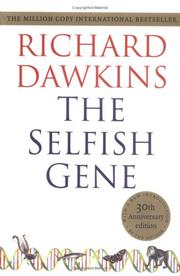
Reframes evolution from the gene's-eye view in vivid, accessible prose — the single best introduction to how natural selection actually works and why it produces the organisms we see.
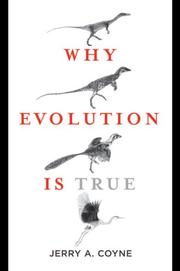
Systematically walks through every major line of evidence — fossils, biogeography, genetics, vestigial structures — cementing the factual case before you go deeper into mechanism.

Reading Darwin's own field journal shows how observational thinking builds toward a revolutionary theory, and grounds everything in the natural world rather than abstraction.
Mechanisms: How Evolution Works
IntermediateMaster the key mechanisms beyond basic natural selection — genetic drift, sexual selection, speciation, evo-devo, and the Modern Synthesis — and understand how they interact.
▸ Study plan for this stage
Pace: 10–12 weeks total, reading ~25–35 pages/day. Week 1–4: "The Blind Watchmaker" (368 pp); Week 5–8: "Endless Forms Most Beautiful" (350 pp); Week 9–12: "The Beak of the Finch" (332 pp). Reserve the final 2–3 days of each book for review and reflection before moving on.
- Cumulative selection vs. single-step selection: Dawkins's core argument that small, incremental steps — not chance leaps — power adaptive complexity
- Gene's-eye view of evolution: replicators as the true units of selection, and how this reframes fitness and adaptation
- Genetic drift and neutral evolution: how random changes in allele frequency (especially in small populations) shape genomes independently of selection
- Sexual selection: the distinction between natural and sexual selection, and how runaway processes (Fisherian and good-genes models) produce elaborate traits
- The Modern Synthesis: the unification of Mendelian genetics with Darwinian selection, and its explanatory scope and limits
- Evo-devo and toolkit genes: how a conserved set of regulatory genes (Hox, Pax, etc.) can generate vast morphological diversity by changing when, where, and how much they are expressed
- Cis-regulatory elements and modularity: why changes in gene switches rather than coding sequences are the primary drivers of body-plan evolution
- Real-time natural selection: the Grant studies on Daphne Major as a live demonstration that selection pressures, trait distributions, and fitness are measurable across generations
- After reading Dawkins, can you explain in your own words why 'cumulative selection' makes the evolution of complex structures (like the eye) statistically inevitable rather than astronomically improbable?
- How does the gene's-eye view from 'The Blind Watchmaker' complement or tension with the population-level thinking introduced by the Modern Synthesis?
- Drawing on Carroll's 'Endless Forms Most Beautiful,' what is a cis-regulatory element, and why does Carroll argue that changes in gene switches — rather than protein-coding sequences — are the dominant source of morphological novelty?
- How do the Grants' field measurements in 'The Beak of the Finch' provide empirical, quantitative support for the mechanisms described theoretically by Dawkins and Carroll?
- What does the Daphne Major drought episode (Weiner) reveal about the speed and reversibility of natural selection, and how does this challenge or refine your intuitions from reading Dawkins?
- How do genetic drift, sexual selection, and natural selection interact — and can you construct a scenario drawing on all three books where all three mechanisms operate simultaneously on a single population?
- Cumulative-selection simulation: Replicate Dawkins's 'METHINKS IT IS LIKE A WEASEL' experiment using a free online tool or a simple spreadsheet. Record how many generations it takes versus a random-search baseline, then write a one-paragraph explanation of what this demonstrates about biological complexity.
- Toolkit-gene mapping: After finishing Carroll, draw a diagram of a body plan of your choice (insect, vertebrate limb, flower) and annotate it with the Hox/toolkit genes responsible for each region. Use Carroll's figures as a guide, then close the book and redraw from memory.
- Selection-pressure journal: While reading 'The Beak of the Finch,' keep a running log of every distinct selection pressure the Grants identify (drought, flood, competitor species, etc.). For each, note the trait affected, the direction of selection, and the outcome. At the end, look for patterns across episodes.
- Mechanism comparison matrix: Create a 4-column table (rows = Natural Selection, Sexual Selection, Genetic Drift, Evo-Devo regulatory change; columns = unit of action, speed, directionality, primary evidence from the three books). Fill it in as you finish each book and refine it at the end of the stage.
- Debate-prep exercise: Write a 300-word argument for the position 'The Modern Synthesis is sufficient to explain all evolutionary phenomena,' then write an equally strong 300-word rebuttal using evidence from Carroll's evo-devo findings. This forces engagement with the Extended Evolutionary Synthesis debate.
- Cross-book synthesis essay: After finishing all three books, write a 500-word essay answering: 'How would the evolution of the Galápagos finch beak look different if genetic drift dominated over selection, and what molecular-developmental changes (à la Carroll) would actually implement a beak-size shift?' Cite specific passages or data from all three books.
Next up: By mastering the mechanistic toolkit — from cumulative selection and gene regulation to real-time field measurement — the reader is now equipped to tackle the higher-level questions of macroevolution, the history of life, and human origins, where these same mechanisms play out across deep time and across the tree of life.

Deepens the mechanistic picture of cumulative selection and tackles the complexity objection head-on, bridging the beginner stage to more rigorous thinking about adaptation.
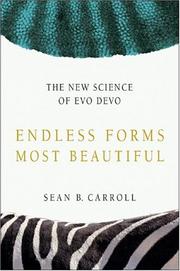
Introduces evolutionary developmental biology (evo-devo), showing how changes in gene regulation — not just gene sequences — drive the diversity of animal body plans.
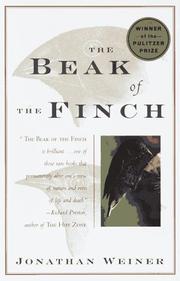
A Pulitzer-winning account of the Grants' real-time field study of natural selection in Darwin's finches — the best single demonstration that evolution is observable and measurable.
Synthesis: Genetics, Population, and the Tree of Life
IntermediateUnderstand the population-genetic engine of evolution, molecular phylogenetics, and how all life is connected — moving from qualitative to quantitative reasoning.
▸ Study plan for this stage
Pace: 10–13 weeks total: ~3 weeks on "The Making of the Fittest" (~25 pages/day), ~2–3 weeks on "Your Inner Fish" (~20 pages/day), ~5–6 weeks on "The Ancestor's Tale" (~30 pages/day). Budget extra time on Dawkins — it rewards slow, reflective reading. Aim for 5 reading days per week, leaving 2 days for re
- DNA as a literal fossil record: Carroll's concept of 'molecular fossils' — how conserved gene sequences (e.g., opsin genes, antifreeze proteins) preserve evolutionary history directly in the genome
- The population-genetic engine: mutation, selection, genetic drift, and gene flow as the quantitative forces that shift allele frequencies over time, illustrated through Carroll's case studies (e.g., sickle-cell, pigmentation genes)
- Evo-devo foundations: how a shared 'toolkit' of regulatory genes (Hox genes, Pax6) can generate vast morphological diversity through changes in gene expression rather than gene sequence
- The fossil-to-gene bridge: Shubin's Tiktaalik as the centerpiece of how paleontology and genomics converge — predicting WHERE to dig based on phylogenetic reasoning, then confirming it molecularly
- Deep homology: Shubin's demonstration that fins, limbs, wings, and hands are built by the same genetic instructions, reframing 'body plan' as a deeply conserved genomic program
- Phylogenetic thinking and cladistics: Dawkins' 'rendezvous' structure as a masterclass in reading the Tree of Life — understanding nodes, common ancestors, and the logic of clade membership
- Molecular phylogenetics: how DNA sequence divergence is used to estimate evolutionary distances and reconstruct branching order, the molecular clock hypothesis, and its limitations
- Universal common descent as an empirical conclusion: synthesizing Carroll's genomic evidence, Shubin's anatomical evidence, and Dawkins' phylogenetic narrative into one coherent, evidence-based framework
- Carroll argues that the genome is a 'forensic document' of evolutionary history. Using at least two specific examples from 'The Making of the Fittest' (e.g., antifreeze proteins, opsins, or pigmentation), explain what molecular evidence reveals that the fossil record alone cannot.
- How does Carroll distinguish between changes in gene sequence versus changes in gene regulation as drivers of evolutionary change? Why does this distinction matter for understanding how large morphological differences can arise from small genetic differences?
- Shubin describes the discovery of Tiktaalik as a 'predicted' fossil. What was the reasoning — drawing on stratigraphy and phylogenetics — that led his team to the Canadian Arctic, and what does this illustrate about the scientific method in evolutionary biology?
- Using Shubin's concept of deep homology, explain how the same genetic toolkit can produce a fish fin, a human hand, and a bat wing. What does this imply about the nature of evolutionary 'innovation'?
- Dawkins structures 'The Ancestor's Tale' as a backwards pilgrimage. Choose any three 'rendezvous points' (e.g., with chimps, with lungfish, with fungi) and explain what each reveals about the pace, mechanism, or evidence for evolution at that node.
- By the end of all three books, you should be able to make the case for universal common descent using three independent lines of evidence — one genomic (Carroll), one anatomical/paleontological (Shubin), and one phylogenetic (Dawkins). Can you construct that argument in a coherent paragraph?
- Molecular fossil journal: As you read Carroll, keep a running log of each molecular 'fossil' he describes (gene name, organism, what it preserves, what it proves). By the end, you should have 8–12 entries. Review the log and write a one-paragraph synthesis: what patterns emerge across all examples?
- Allele frequency simulation: Use a free online genetic drift simulator (e.g., the Drift Simulator at PhET or Labster) to model the scenarios Carroll describes — strong selection, weak selection, and neutral drift. Record how population size interacts with selection strength. Write 3–4 sentences connecting your results to a specific Carroll case study.
- Body-plan homology sketch: After finishing 'Your Inner Fish,' draw a simple diagram comparing the bone-by-bone homology of a human arm, a whale flipper, a bat wing, and a fish fin. Label each element with its embryological/genetic origin as Shubin describes it. No artistic skill required — the act of mapping forces active recall.
- Tiktaalik timeline reconstruction: Using only information from 'Your Inner Fish,' reconstruct the logical chain of evidence Shubin used: (1) phylogenetic prediction, (2) stratigraphic targeting, (3) anatomical confirmation, (4) genomic corroboration. Present it as a numbered flowchart or bullet sequence, then identify which step was most dependent on prior evolutionary theory.
- Build your own Ancestor's Tale: Choose 6 organisms that personally interest you (can include plants, fungi, microbes). Using the rendezvous logic from Dawkins, sketch your own mini-pilgrimage — place the rendezvous points in correct order, estimate the geological time of each, and note what type of evidence (molecular, fossil, anatomical) best supports each node.
- Three-pillar synthesis essay: After completing all three books, write a 400–600 word essay arguing for common descent using exactly one piece of evidence from each book. Practice making the argument flow — Carroll's genomics sets up the mechanism, Shubin's anatomy provides the physical record, and Dawkins' phylogenetics provides the map. Share it with a study partner or post it to a forum for feed
Next up: Mastering the population-genetic mechanisms and the deep unity of life in this stage equips the reader to tackle more contested and nuanced territory — such as the pace of evolution (punctuated equilibrium vs. gradualism), the evolution of complexity, behavior, and cognition, and the modern extensions of the synthesis — which form the natural focus of an advanced stage.
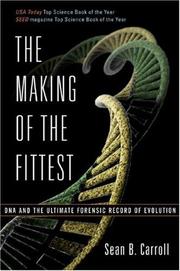
Uses DNA evidence — molecular fossils, dead genes, and the genetic record — to show evolution written directly in the genome, bridging evo-devo to molecular population genetics.
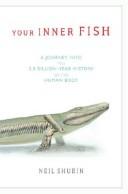
Traces the deep homology between human anatomy and ancient fish, making the concept of common descent viscerally real through paleontology and comparative anatomy.

A grand pilgrimage back through the entire tree of life, consolidating everything learned so far into a unified picture of universal common descent across billions of years.
Advanced: Modern Evolutionary Theory
ExpertEngage with the cutting-edge extensions of the Modern Synthesis — niche construction, evolvability, cultural evolution, multilevel selection, and the ongoing debates that define 21st-century evolutionary biology.
▸ Study plan for this stage
Pace: 8–10 weeks total: Weeks 1–4 on Williams' "Adaptation and Natural Selection" (~20–25 pages/day, including re-reading dense argumentative sections); Weeks 5–10 on Dawkins' "The Extended Phenotype" (~20–25 pages/day, with slower pacing for chapters on replicators, vehicles, and the extended phenotype p
- Williams' critique of group selection: why individual- and gene-level selection almost always suffices to explain apparent 'for the good of the species' adaptations
- The precision criterion for adaptation: adaptations must be complex, costly, and coordinated — sloppy effects of selection are not adaptations
- Genic selectionism and the gene as the fundamental unit of selection in Williams, setting the conceptual stage for Dawkins
- The replicator/vehicle distinction in Dawkins: replicators (genes) are the true units of selection; organisms are their survival machines
- The extended phenotype: a gene's phenotypic reach extends beyond the organism's body to encompass artifacts, host organisms, and other individuals
- Parasite manipulation and host phenotype as a case study of the extended phenotype — whose adaptation is it?
- Action at a distance: how genes in one organism can influence the phenotype of another organism (e.g., cuckoo–host coevolution)
- The 'central theorem' of the extended phenotype: an organism's behavior tends to maximize the survival of the genes controlling that behavior, regardless of whose body those genes are in
- According to Williams, what logical and empirical criteria must be met before we invoke group selection as an explanation, and why does he find most historical invocations of it unwarranted?
- How does Williams define and operationalize 'adaptation,' and how does his precision criterion help distinguish true adaptations from incidental effects of selection?
- What is the replicator/vehicle distinction as Dawkins develops it in The Extended Phenotype, and how does it sharpen — or depart from — the framework Williams established?
- Give two concrete biological examples from The Extended Phenotype where a gene's phenotypic effects extend beyond the body of the organism carrying it, and explain the selective logic in each case.
- How does the concept of the extended phenotype challenge the organism-centered view of adaptation, and what implications does this have for how we define 'the individual' in evolutionary biology?
- Where do Williams and Dawkins agree, and where — if anywhere — does Dawkins extend or revise Williams' conclusions about the unit of selection?
- Adaptation audit: Choose three classic 'for the good of the species' explanations (e.g., warning coloration, altruistic alarm calls, senescence) and reanalyze each using Williams' precision criterion and individual/genic selection logic. Write a one-page argument for each.
- Replicator mapping: After finishing The Extended Phenotype, draw a diagram for one parasite–host system (e.g., Ophiocordyceps fungus and ants, or cuckoo and reed warbler) showing the replicator, the vehicle(s), and all phenotypic effects — including extended ones — with arrows indicating direction of selective benefit.
- Debate simulation: Write a 500-word steelman of group selection as it was understood before Williams, then a 500-word rebuttal using only arguments available in Williams' book. Reflect on which arguments you found hardest to counter.
- Concept comparison table: Create a two-column table contrasting Williams' and Dawkins' treatments of at least six key terms: adaptation, unit of selection, vehicle, fitness, altruism, and phenotype. Note where they converge and where Dawkins innovates.
- Extended phenotype field observation: Observe any organism-modified environment near you (spider web, beaver dam, bird nest, gall on a leaf). Write a short analysis applying Dawkins' framework: identify the replicator, the vehicle, and the extended phenotypic effect, and ask what selection pressure maintains it.
- Critical reading journal: For each chapter of The Extended Phenotype, write one sentence summarizing the main claim, one sentence identifying the strongest evidence offered, and one sentence posing an unanswered question or potential objection. Review the full journal at the end to trace the book's argumentative arc.
Next up: Mastering the gene-centered, extended-phenotype framework from Williams and Dawkins gives the reader the rigorous selectionist baseline needed to critically evaluate the next frontier — niche construction, evolvability, multilevel selection, and cultural evolution — where researchers either build on, complicate, or directly challenge the gene-centric view established in this stage.
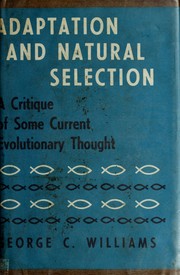
A rigorous, foundational critique of group selection and a precise articulation of gene-level thinking — essential reading for understanding the theoretical debates that still shape the field.
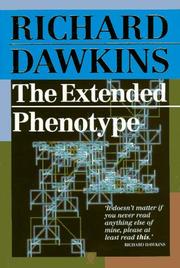
Dawkins's most technically demanding book, arguing that the gene's reach extends beyond the body into behavior and environment — a conceptual leap that rewards the advanced reader.
Discussion
Keep reading
Paths that share books, cover the same subject, or open a related topic.