Learn ASL: sign language from the ground up
This curriculum takes a complete beginner from zero ASL knowledge to genuine conversational ability across four progressive stages. It pairs hands-on signing and fingerspelling skill-building with deep immersion in Deaf culture and linguistics, so the learner develops not just vocabulary but the cultural fluency needed to participate respectfully and authentically in the Deaf community.
Foundations: Fingerspelling, Basic Signs & Deaf World
BeginnerMaster the ASL manual alphabet, learn essential everyday vocabulary, and gain a foundational understanding of who Deaf people are and why culture matters from day one.
▸ Study plan for this stage
Pace: 8–10 weeks total. Weeks 1–6: Work through "A Basic Course in American Sign Language" by Humphries at a pace of roughly 2–3 units per week, spending 30–45 minutes daily on active signing practice alongside the reading. Weeks 7–10: Read "Deaf in America" by Padden at ~20–25 pages per sitting, 3–4 sitt
- The ASL manual alphabet (fingerspelling A–Z) and its role as a bridge for proper nouns and borrowed English words
- Handshape, location, movement, and palm orientation as the four core parameters of every ASL sign
- Essential everyday vocabulary clusters: greetings, numbers, colors, family, food, time, and common verbs introduced in Humphries' units
- The distinction between ASL and Signed Exact English (SEE) — ASL is a complete, independent visual-gestural language with its own grammar
- Deaf culture as a lived identity, not merely an audiological condition — the capital-D 'Deaf' vs. lowercase 'd' deaf distinction introduced in Padden
- The role of residential schools, Deaf clubs, and intergenerational storytelling in transmitting ASL and Deaf cultural values
- ASL storytelling and narrative traditions as explored through community voices in 'Deaf in America'
- The concept of 'Deaf World' — a distinct linguistic and cultural community with its own norms, humor, art forms, and social structures
- Can you produce the entire ASL manual alphabet from memory, and fingerspell your own name, city, and three common proper nouns fluently?
- What are the four phonological parameters of ASL signs, and how does changing just one parameter (e.g., location) change a sign's meaning entirely?
- How does Humphries' course distinguish ASL grammar (e.g., use of space, non-manual markers, topic-comment structure) from English grammar?
- According to Padden in 'Deaf in America,' what does it mean to be culturally Deaf, and why is the capital-D distinction significant?
- What institutions and community spaces have historically served as the backbone of Deaf cultural transmission, and why does Padden argue they matter?
- How do the storytelling traditions documented in 'Deaf in America' reflect broader Deaf cultural values such as visual humor, identity pride, and community solidarity?
- Fingerspelling drill (daily, 10 min): Use a mirror or phone camera to practice the full A–Z alphabet, then fingerspell 10 new words each day — start with your name, family members' names, and your city, then progress to vocabulary from Humphries' current unit.
- Sign-and-mirror sessions (3×/week, 20 min): After each Humphries unit, stand before a mirror and produce every new sign introduced, checking your handshape, location, movement, and palm orientation against the book's illustrations before moving on.
- Vocabulary flashcard sets: Create physical or digital flashcards (e.g., Anki) for every sign cluster in Humphries — one side shows the English gloss, the other a self-drawn or photographed hand diagram. Review daily using spaced repetition.
- Cultural reflection journal: After each chapter of 'Deaf in America,' write a half-page response to one prompt — e.g., 'What surprised me about this aspect of Deaf community life?' or 'How does this change how I think about language and identity?' — to deepen engagement with Padden's arguments.
- ASL YouTube immersion (2×/week, 15 min): Watch beginner-friendly ASL content from Deaf signers (e.g., Bill Vicars' ASL University videos) to see the signs from Humphries' units used in natural, flowing context; note any signs that look different from the book and research regional variation.
- Community observation or event attendance: Attend at least one Deaf community event, Deaf coffee chat, or ASL club meeting (in-person or virtual) during the stage. Bring your journal and afterward write about one cultural norm or interaction that connected to something you read in Padden.
Next up: Mastering the manual alphabet, core vocabulary parameters, and the cultural 'why' behind ASL in this stage gives the learner both the motor vocabulary and the respectful cultural lens needed to engage with more complex ASL grammar, sentence structure, and intermediate conversation in the next stage.
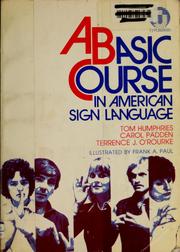
The single most widely used ASL textbook for beginners; it introduces handshapes, fingerspelling, and core vocabulary in a structured, lesson-by-lesson format that gives newcomers an immediate, reliable framework.
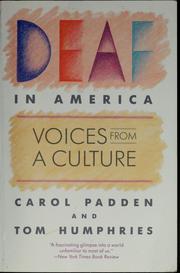
Read alongside early signing practice to understand that ASL is inseparable from Deaf culture; this landmark book humanizes the community and prevents the common beginner mistake of treating ASL as merely a coded form of English.
Building Blocks: Grammar, Sentence Structure & Vocabulary Expansion
BeginnerUnderstand ASL's unique grammar — spatial grammar, non-manual markers, classifiers — and significantly expand signing vocabulary beyond basic phrases.
▸ Study plan for this stage
Pace: 6–8 weeks, ~20–30 minutes per day; work through the dictionary section by section (organized by handshape), targeting 1–2 handshape groups per session (~15–25 signs per sitting). Reserve one day per week for review and active practice of the week's signs.
- Handshape as a foundational parameter: every ASL sign is built on a specific handshape, and changing the handshape changes the meaning entirely
- The organizational logic of Tennant's dictionary: signs are grouped by handshape (A, B, C, etc.) rather than by English gloss, training the learner to think visually rather than alphabetically
- The four parameters of ASL signs: Handshape, Location, Movement, and Palm Orientation (HOLME) — the dictionary entries illustrate all four simultaneously
- Minimal pairs in ASL: signs that differ by only one parameter (e.g., same handshape but different location) and how small changes create entirely different words
- Building a mental visual lexicon: learning to recognize and recall signs by their physical form rather than by an English translation
- Classifiers as a grammar concept introduced through handshapes: certain handshapes function as classifiers that represent categories of objects or people in space
- Non-manual markers (NMMs): facial expressions, mouth movements, and body posture that accompany handshapes to convey grammar (questions, negation, intensity)
- Productive vocabulary expansion strategy: grouping signs thematically after locating them by handshape to reinforce both form and meaning simultaneously
- What are the four parameters of an ASL sign, and how does Tennant's handshape-based organization highlight their importance?
- How does changing a single parameter — such as location while keeping the same handshape — create a completely different sign? Give two examples from the dictionary.
- Why is it more effective for an ASL learner to look up signs by handshape rather than by English word, and what does this reveal about ASL's nature as a visual-spatial language?
- What is a classifier handshape, and how does it function differently from a lexical sign in ASL grammar?
- How do non-manual markers interact with handshapes to change the grammatical meaning of a sign or sentence?
- After working through the dictionary, which handshape groups contain the highest number of signs, and what does that suggest about the productivity of those handshapes in ASL?
- Handshape Drill Cards: For each handshape group studied in Tennant's dictionary, create physical or digital flashcards showing the handshape on one side and 5–8 signs that use it on the other. Practice producing each sign from memory, focusing on accurate location and movement.
- Minimal Pair Hunt: Select 10 handshape groups and identify at least one minimal pair within each (two signs sharing a handshape but differing in location, movement, or orientation). Sign both members of each pair back-to-back and note the contrast in a vocabulary journal.
- Thematic Vocabulary Clusters: After locating signs by handshape in the dictionary, re-sort 30–40 newly learned signs into thematic categories (food, emotions, time, family). Practice signing each cluster as a group to build contextual memory.
- Mirror Practice with Parameter Checklist: Stand before a mirror and sign 10 new signs from the dictionary. For each, self-evaluate all four parameters (Handshape ✓, Location ✓, Movement ✓, Palm Orientation ✓) against the dictionary illustration before moving on.
- Classifier Handshape Mapping: Identify all handshapes in Tennant's dictionary that are noted or commonly known to function as classifiers (e.g., the 3-handshape for vehicles, the 1-handshape for a person). Create a one-page reference chart and practice using each in a simple spatial sentence.
- Weekly Video Self-Recording: Once per week, record yourself signing 15–20 signs learned that week from the dictionary. Review the footage against the dictionary illustrations, noting any parameter errors, and re-practice corrected forms the following day.
Next up: Mastering handshape-based vocabulary and the four parameters through Tennant's dictionary gives the learner the visual-lexical foundation needed to tackle more complex ASL grammar — including full sentence construction, spatial grammar in discourse, and conversational fluency — in the next stage.

Organized by handshape rather than English word, this dictionary trains the learner to think in ASL's visual logic and serves as an essential reference for looking up unfamiliar signs encountered in practice.
The gold-standard curriculum used in ASL classrooms nationwide; its dialogues, cultural notes, and structured drills build grammatically correct ASL sentences and introduce spatial grammar in a carefully sequenced way.
Going Deeper: Linguistics, Classifiers & Deaf Culture Immersion
IntermediateUnderstand ASL as a complete natural language with its own phonology and morphology, master classifier constructions, and develop genuine cultural competency within the Deaf community.
▸ Study plan for this stage
Pace: 4–5 weeks, ~20–25 pages/day; read each chapter twice — once for narrative flow, once for analytical note-taking on cultural and linguistic themes
- Deaf culture as a distinct, self-defined community with its own norms, values, and history — not a disability subculture but a linguistic minority
- The historical tension between oralism and manualism, including the lasting impact of the 1880 Milan Conference on Deaf education and identity
- ASL as a complete natural language with its own phonology (handshape, location, movement, palm orientation, non-manual markers), morphology, and syntax — fully independent of English
- The concept of 'inside' vs. 'outside' perspectives: how Deaf people narrate and construct their own cultural identity versus how hearing society has historically defined them
- The role of residential schools (e.g., American School for the Deaf) as cultural and linguistic transmission hubs for the Deaf community
- Code-switching, contact signing, and the sociolinguistic landscape between ASL and English in everyday Deaf life
- Deaf cultural artifacts, storytelling traditions, humor, and ASL literature as expressions of a living linguistic culture
- The evolution of Deaf identity politics, including the Deaf President Now movement and ongoing debates about cochlear implants and mainstreaming
- According to Padden, what distinguishes Deaf culture as a cultural and linguistic community rather than simply a group defined by audiological status — and why does this distinction matter?
- How did the oralist movement, particularly after the 1880 Milan Conference, attempt to suppress ASL, and what were the long-term consequences for Deaf cultural transmission and identity?
- What role did residential schools play in the formation and preservation of Deaf culture, and how has the shift toward mainstreaming affected community cohesion?
- How does Padden illustrate the tension between 'insider' Deaf self-representation and 'outsider' hearing-dominated narratives about deafness?
- In what ways do ASL storytelling, humor, and folklore function as markers of cultural belonging and vehicles for passing on Deaf values across generations?
- How do contemporary debates — cochlear implants, Deaf education policy, identity politics — reflect the deeper historical struggles Padden traces throughout the book?
- Deaf Community Immersion Log: Attend at least two Deaf community events (Deaf coffee chats, ASL club meetups, Deaf church services, or virtual Deaf spaces) while reading the book. After each event, write a one-page reflection connecting what you observed to a specific theme from Padden — e.g., code-switching, community norms, or insider/outsider dynamics.
- Cultural Timeline: Build a visual timeline of major events in Deaf history covered in the book (Milan Conference 1880, founding of Gallaudet, Deaf President Now 1988, etc.). For each event, annotate how it shaped ASL's status and Deaf cultural identity.
- Classifier Construction Practice: While Padden focuses on culture, pair your reading with daily 15-minute ASL practice sessions specifically drilling classifier predicates (e.g., CL:1 for a person walking, CL:V for legs, CL:3 for vehicles). Record yourself and review for accuracy of handshape, placement, and movement — connecting the linguistic richness of ASL to the cultural pride Padden describe
- Perspective Essay: Write a 500-word essay from the perspective of a Deaf student at a residential school in the early 20th century during the height of oralism. Draw directly on details and historical accounts from 'Inside Deaf Culture' to make it authentic.
- ASL Literature Analysis: Find a recorded ASL story, poem, or comedic performance by a Deaf artist online (e.g., on Deaf Professional Arts Network or YouTube). Watch it 3–4 times and write a short analysis identifying cultural values, linguistic features (use of space, non-manual markers, classifiers), and connections to themes in Padden's book.
- Debate Preparation: Using Padden's arguments, prepare talking points for both sides of the cochlear implant debate as it relates to Deaf cultural identity. Practice presenting each side in ASL (even at a basic level), then reflect in writing on how Padden's framing shaped your thinking.
Next up: By grounding the reader in the cultural legitimacy, historical depth, and sociolinguistic complexity of the Deaf community through Padden, this stage builds the informed, respectful insider perspective needed to tackle more technically advanced ASL linguistics, grammar, and fluency work in the next stage with both rigor and cultural humility.
The definitive academic introduction to ASL linguistics; reading this reveals how ASL works as a full human language, which dramatically improves a learner's ability to produce grammatically natural signing rather than transliterated English.
The advanced continuation of the Signing Naturally series tackles complex narratives, classifiers, and nuanced grammar — best tackled after the linguistics foundation is in place so the learner understands why structures work the way they do.
A deeper follow-up to Padden's earlier work, this book traces how Deaf culture has evolved through technology, education policy, and community activism — essential reading for anyone who wants to engage meaningfully with the Deaf community at an intermediate level.
Fluency & Community: Narrative, Identity & Real Conversation
ExpertDevelop storytelling ability, understand ASL literature and poetry, and gain the sociolinguistic awareness needed to navigate real-world Deaf spaces with confidence and respect.
▸ Study plan for this stage
Pace: 3–4 weeks, ~20–25 pages/day; Sacks writes in rich, essayistic prose with extensive endnotes — budget extra time to read the notes, which contain some of his deepest linguistic and cultural insights. Suggested breakdown: Week 1 — Part I ("The Deaf") on Deaf history and the suppression of sign languag
- ASL as a complete, natural human language — not a code, not 'broken English,' but a fully autonomous visual-spatial language with its own grammar, syntax, and poetry
- The history of oralism and the suppression of sign language, particularly the devastating impact of the 1880 Milan Conference, and how this shaped Deaf identity and intergenerational trauma
- The Deaf President Now (DPN) movement of 1988 at Gallaudet University as a landmark moment in Deaf civil rights, cultural self-determination, and community solidarity
- The concept of Deaf culture as a distinct ethnicity and community — with its own literature, humor, art, values, and transmission through residential schools — rather than a medical 'disability' category
- Visual-spatial grammar in ASL: how meaning is constructed through space, movement, handshape, facial grammar, and simultaneity rather than linear sequencing
- The neurolinguistics of sign language: how the brain processes signed and spoken languages in the same left-hemisphere language centers, proving the biological universality of language
- ASL literature, storytelling, and poetry as high art forms — including the use of handshape constraints, visual metaphor, and narrative structure unique to a visual medium
- Sociolinguistic awareness for navigating Deaf spaces: understanding insider/outsider dynamics, the ethics of interpretation, and the hearing person's role and responsibilities in Deaf community contexts
- How did the 1880 Milan Conference reshape Deaf education and what were its long-term consequences for ASL and Deaf identity — and how does Sacks use this history to argue for the legitimacy of sign language?
- What does Sacks mean when he argues that language acquisition in early childhood is not just educational but neurological and existential — and what are the stakes for Deaf children denied access to a signed language?
- How does the Deaf President Now movement illustrate the relationship between language, identity, political power, and community cohesion, and what does it reveal about how Deaf people view themselves relative to hearing institutions?
- In what ways does Sacks challenge the medical/pathological model of deafness, and what alternative framework does he propose — and do you find his argument convincing or limited in any way?
- What specific features of ASL's visual-spatial grammar does Sacks highlight, and how do these features enable forms of expression (in storytelling and poetry) that spoken languages cannot easily replicate?
- After reading Sacks, how would you describe the responsibilities and potential blind spots of a hearing person entering Deaf community spaces, and what sociolinguistic principles should guide that engagement?
- Deaf Community Immersion Log: Attend at least two Deaf community events (a Deaf coffee chat, ASL club, Deaf church, or similar) during this reading stage. After each, write a one-page reflection connecting what you observed — communication norms, storytelling styles, community dynamics — to specific passages or arguments in Seeing Voices.
- Storytelling in ASL — Structured Narrative Practice: Prepare and record a 2–3 minute ASL narrative (a personal story, a fable, or a retelling of a current event) focusing deliberately on spatial grammar: establish characters in space, use directional verbs, and incorporate non-manual markers for grammatical function. Review the recording and self-critique your use of visual-spatial structure.
- ASL Poetry Analysis: Find a recorded ASL poem (e.g., works by Ella Mae Lentz, Clayton Valli, or Flying Words Project — freely available online) and watch it at least five times. Write a short analysis (one page) identifying the handshape motif, the visual metaphors, the rhythm, and how the poem exploits the visual medium in ways a written or spoken poem could not. Connect your analysis to Sacks's
- Milan Conference Position Paper: Write a one-to-two page argument either defending or critiquing the legacy of the 1880 Milan Conference from the perspective of a Deaf educator today. Use Sacks's historical account as your evidence base, but also interrogate where Sacks's hearing, neurologist perspective may shape or limit his framing.
- Neurolinguistics Explainer: Based on Part III of Seeing Voices, create a simple one-page visual diagram or written explainer (aimed at a non-specialist friend) illustrating how the brain processes sign language. Include what this reveals about the universality of human language and why it matters for how society should treat Deaf education.
- Sociolinguistic Reflection — Hearing Privilege Inventory: Make a written list of at least ten 'hearing privileges' — situations where your hearing status gives you automatic access, ease, or assumptions of competence that a Deaf person would not have. For each, note one concrete way an ally or interpreter could help close that gap. Use Sacks's cultural and political arguments to frame your reflect
Next up: By grounding the reader in the history, neuroscience, and cultural politics of ASL through Sacks, this stage builds the critical sociolinguistic consciousness and narrative awareness needed to engage authentically with Deaf literature, live conversation, and community participation at a truly fluent, culturally informed level in any subsequent advanced study or real-world practice.
A compelling neurological and cultural exploration of Deaf identity and ASL; reading this at the advanced stage deepens empathy and provides a broader intellectual framework for understanding why ASL matters — a powerful capstone to the entire curriculum.
Discussion
Keep reading
Paths that share books, cover the same subject, or open a related topic.