Best Books on Blindness and Low Vision, in Reading Order
Most sighted people carry a picture of blindness assembled from metaphor rather than from blind people, and this literature exists largely to replace it. The path opens with memoirs by writers who are blind or losing sight, moves to accounts of what actually happens perceptually when vision goes, then to the practical infrastructure of a blind life — braille, guide dogs, navigation — and finishes with the cultural criticism that examines how sightedness became the default in art, language and philosophy. It is about understanding blindness as an experience and a subject, not about eye conditions or their treatment.
From the Inside
BeginnerReplace the received picture of blindness with first-person accounts, and learn that most legally blind people see something — the binary of sighted and blind is the first thing to discard.
▸ Study plan for this stage
Pace: Three to four weeks. Planet of the Blind (200pp) and Blind Man's Bluff (224pp) are both short and read quickly — a week each is generous. The Country of the Blind is longer and more reported; give it a fortnight. Read them in the given order, which is chronological in both publication and generation
- The spectrum, which is the first thing to take from Kuusisto: most people who are legally blind see something, and the sighted-or-blind binary is a category error that this whole path works against
- Passing, and what it costs — Kuusisto walking into things rather than carrying a cane, Hill spending fifteen years memorising restaurant menus and faking eye contact
- Why people conceal: Hill is unusually explicit that the motive is social rather than practical, and that the concealment is more disabling than the vision loss
- Kuusisto's sensory writing — the way he renders low vision as a world of colour, motion and partial shape rather than as absence, which is a direct attack on the darkness metaphor
- Macular loss versus peripheral loss as different experiences: Hill's central vision goes and his periphery remains, which produces very different practical problems from Leland's retinitis pigmentosa narrowing from the outside in
- Leland's reporting layer — training centres, the organised blindness movement, technology, the sleep-shade philosophy at some rehabilitation centres — which introduces the institutions that stage three examines
- Progressive loss as a distinct situation from congenital blindness or sudden loss, and the identity questions that come with being between categories
- The reader's own received picture: all three books are, in part, arguments about what sighted readers assume, and it is worth noticing which of your assumptions each one hits
- What does it mean to be legally blind, and roughly what proportion of people so classified have no light perception at all?
- Why did Kuusisto and Hill both conceal their vision loss for so long, and what did each say it cost?
- How do Hill's central-vision loss and Leland's peripheral narrowing differ in daily practice? Name three specific tasks that are affected differently.
- What does Leland's reporting add that a memoir alone cannot, and what does the reporting frame make harder to convey?
- Which of your own assumptions about blindness did these books contradict? Be specific — a general 'I learned a lot' means the reading has not landed yet.
- Write down, before starting, what you currently believe blindness is like. Seal it, and reread it after this stage. This is the only version of a before-and-after exercise this path endorses.
- List every strategy Hill describes for passing as sighted. The length of the list is the argument of his book.
- Take one page of Kuusisto's sensory description and write 200 words on what he is actually seeing, in plain language. Translating poetry into description shows how much visual information the writing carries.
- Do not attempt a blindfold simulation. The reason is worth understanding now rather than in stage four: Kleege's central objection is that a sighted person blindfolded for an hour experiences sudden disorientation, which is nothing like a practised blind person's competence, and the exercise reliably produces pity rather than understanding. Read the books instead.
- Note every piece of technology Leland mentions and what it is for. You will meet several again in the practical stage.
Next up: The memoirs describe living with changed sight; the next stage asks the narrower question of what actually happens perceptually when vision goes — including what happens to the pictures in your head.

A poet's memoir of growing up with severe low vision while passing as sighted, and the cost of that concealment. It is the best-written entry point in the path and it establishes the central fact that blindness is a spectrum, not a switch.

Hill lost most of his central vision at sixteen and spent fifteen years hiding it, and the book is funny and specific about the enormous effort of faking sight. Read it second: it is the same concealment theme as Kuusisto, one generation on, and unusually clear about why people conceal.

A writer with retinitis pigmentosa documents his own slow transition while reporting on blindness organisations, technology and history. It is the most recent and most journalistic of the three, and it bridges the memoirs to the rest of the path.
What Happens When Sight Goes
BeginnerUnderstand the perceptual and cognitive reality of losing vision — including what happens to visual imagery and memory — and why restoring sight is not simply the reverse of losing it.
▸ Study plan for this stage
Pace: Four to five weeks for about 810 pages. Touching the Rock (218pp) is a journal in short entries and should be read slowly, a few entries at a time — it is the densest phenomenological writing here and rushing it wastes it. The Mind's Eye (278pp) is a set of independent case studies and can be read i
- Hull's stages: the practical adjustments first, then the slower loss of visual imagery, and finally what he names deep blindness — a state in which he can no longer picture faces, including his own children's
- Visual memory as something that decays rather than persists, which is Hull's most surprising and most carefully documented observation
- Hull's rendering of a rain shower as revealing the shape of a garden — the standard example of the world being disclosed acoustically rather than being merely reported to him
- Hull writes as a theologian and the journal includes his religious reflection on the experience. It is presented as one man's meaning-making, not as an argument the reader is asked to accept, and it can be read either as integral to his account or as separable from it
- Sacks's central point of contrast: some of his subjects lose visual imagery as Hull did and others retain or intensify it, so there is no single neurological story about blindness
- Sacks's own case — the loss of stereo vision after ocular melanoma — which puts the author inside his own case series and changes the register of the book
- The restoration problem in Crashing Through: sight restored in adulthood delivers signal without interpretation, so Mike May could see edges and colours and could not reliably recognise a face or judge a step
- Why the restoration narrative is the sighted imagination's favourite ending and why it is the hardest case in the literature — the visual cortex's development is time-sensitive, and adaptation to blindness is itself a competence that restored sight disrupts
- What does Hull mean by deep blindness, and what specifically did he notice going?
- How does Hull describe rain as an acoustic disclosure of space, and what does that tell you about how his attention had reorganised?
- Which of Sacks's cases lose visual imagery and which retain it, and does he offer any explanation for the difference?
- What was hardest for Mike May after surgery, and why is that difficulty a fact about the brain rather than about the eye?
- Hull, Sacks's subjects and May all differ enormously in outcome. What does that variation mean for anyone trying to generalise about blindness?
- Chart Hull's journal by theme rather than date — practical, perceptual, imagery, meaning — and note when each theme first appears. The sequence is the finding.
- Write 200 words on what it would mean for your visual memory of a familiar face to fade, using Hull's own descriptions rather than speculation.
- Tabulate Sacks's cases: what was lost, what was retained, what compensated. Three columns and six rows will show you why he refuses to generalise.
- Write a paragraph on why Mike May's story disappoints the expectations most readers bring to it, and what those expectations reveal.
- Return to the memoirs from stage one and mark every place Kuusisto, Hill or Leland describes a perceptual effect that Hull or Sacks explains. The two stages interlock more tightly than they first appear.
Next up: Having covered what changes perceptually, the next stage covers what blind people actually do about it — the reading system, the dog, the cane and the career.
A theologian's journal of going completely blind, and of the strange stage he calls deep blindness, where visual memory itself begins to fade. It is the most precise phenomenological record in this literature and worth reading slowly.
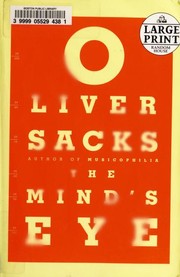
Case studies of people who lost sight, reading or facial recognition, including Sacks's own loss of stereo vision. Read it after Hull to see how differently individual brains adapt — some retain vivid imagery, some lose it entirely, and Sacks refuses to generalise.
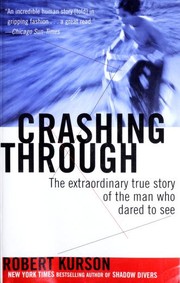
A man blind since childhood has his sight surgically restored and finds he cannot make sense of what he sees. Placed last in this stage as the deliberate complication: the restoration narrative that sighted readers expect turns out to be the hardest case of all.
The Practical Life
IntermediateLearn how blind people actually read, travel and work — braille, guide dogs, cane travel, assistive technology — and the history behind each.
▸ Study plan for this stage
Pace: Three to four weeks. Louis Braille (183pp) is a short biography and reads in a few sittings. Have Dog, Will Travel (256pp) is a memoir and equally quick. Do You Dream in Color? is a longer memoir of schooling and a music career; give it a fortnight. Read Mellor first, because braille is the oldest a
- The braille cell — six dots, sixty-three combinations — and why a system designed by a blind teenager for blind fingers beat the raised-letter systems designed by sighted educators for sighted intuitions
- Mellor's account of institutional resistance: the school that suppressed the system its own pupils were using, and the decades between invention and adoption
- Braille literacy as a live political question rather than a historical one — the debate over teaching braille to children with partial sight, and what audio-only literacy does and does not provide
- The guide dog partnership as Kuusisto describes it: not a navigation device but a working relationship with a trained animal exercising judgement, including intelligent disobedience
- What changed for Kuusisto at thirty-eight — the transformation is social and psychological at least as much as practical, and directly reverses the concealment of his first memoir
- Cane travel and dogs as alternative rather than ranked solutions, each suiting different people, environments and routes
- The accommodation as a specific negotiated thing in Rubin's account — scores in braille, rehearsal arrangements, staging worked out in advance — rather than a general policy
- Rubin's insistence on ambition: the book is about building a professional performing career, which places the practical material inside a life with goals rather than presenting adaptation as the whole story
- How is the braille cell constructed, and why did it succeed where embossed Roman letters failed?
- What arguments were made against braille by sighted educators, and which of those arguments have modern equivalents in the audio-versus-braille debate?
- What does a guide dog actually do that a cane does not, and what does it require of the handler in return?
- What changed for Kuusisto when he got Corky, and how much of that change was about travel?
- List the specific accommodations Rubin describes in her training and career. Which of them cost money, which cost planning, and which cost only someone's willingness?
- Learn the braille alphabet from Mellor's diagrams — the first ten letters follow a single pattern and the rest are derived from it. An hour gets you the system's logic even if you never read a page by touch.
- Write out the braille cell numbering and derive letters k through t from a through j yourself. Doing the derivation shows why the system is efficient in a way that reading about it does not.
- List every task Kuusisto describes doing differently before and after the dog, in two columns. The list is more persuasive than any summary.
- Take one professional environment you know and write a page on what specific accommodations a blind colleague would need in it, using Rubin's examples as the model. Concreteness is the whole point.
- Note every assistive technology across all three books with its date. The pace of change between Mellor's nineteenth century, Kuusisto's 2018 and Rubin's account is itself informative.
Next up: With the experience and the infrastructure established, the final stage turns the analysis outward — on to how sighted culture has imagined blindness, and what it has assumed about knowing by looking.

A biography of the blind teenager who invented the reading system that carries his name, and of the sighted institutions that resisted it for decades. Start here: braille literacy is still the central political question in blindness education.

Kuusisto's account of getting his first guide dog at thirty-eight, and how completely it changed what independent travel meant. Read it as the practical counterpart to the concealment described in his earlier memoir.
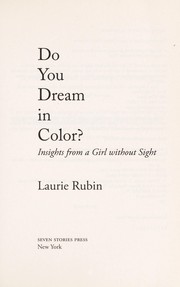
A blind mezzo-soprano writes about schooling, music training and building a professional career, with a great deal of concrete detail about accommodations that worked and did not. It closes the stage on work and ambition rather than on adaptation alone.
Blindness as an Idea
BeginnerAnalyse how blindness has been used in literature, philosophy and art, and understand the critique of a visual culture that treats sight as the default way of knowing.
▸ Study plan for this stage
Pace: Six to eight weeks for about 820 pages, and the most demanding stage in the path. There Plant Eyes (426pp) ranges from Homer to modern accessibility technology and reads well at 25 pages a session. Sight Unseen (233pp) is essayistic criticism and should be read slowly, since Kleege's argument is mad
- The blind seer as the oldest and most durable trope — Tiresias, Homer, Milton — in which blindness is compensated by insight, and Godin's tracking of how long that exchange has structured the Western imagination
- The counter-trope of blindness as ignorance and helplessness, and the fact that both stereotypes are available simultaneously and are equally unlike anyone's life
- Kleege's critique of blindness in film and fiction: the specific implausibilities, the sudden-total-darkness convention, and the plot function blind characters are made to serve
- Kleege's own precise account of her low vision, offered deliberately as a corrective to fictional blindness — including her point that she reads print, which fiction rarely permits its blind characters
- The objection to blindness simulation exercises: a blindfolded sighted person experiences the shock of sudden loss without the skills of a practised blind person, and the exercise reliably teaches pity rather than understanding
- Ocularcentrism as a philosophical claim — the identification of knowing with seeing in Western epistemology, visible in the metaphors of enlightenment, insight, vision and clarity
- Kleege on audio description in More Than Meets the Eye: her argument that description is a form of interpretation and that blind museum-goers are participants in looking rather than recipients of a summary
- The consequence for the reader: if seeing is not the default and only route to knowing, then accessibility work is not accommodation added to a finished culture but a question about what the culture was made for
- What are the two dominant stereotypes of blindness Godin traces, and how can a culture hold both at once?
- Take one film or novel Kleege analyses and reconstruct her objection. What does the depiction get wrong, and what does the error do for the plot?
- Why does Kleege object to blindness simulations, and what would a defender of simulation exercises say in reply?
- What does Kleege argue about audio description in museums, and how does it differ from the standard view of description as a substitute for looking?
- What is ocularcentrism, and how many sight metaphors for knowledge can you find in your own writing from the past week?
- After the whole path: what would you now say to someone whose entire picture of blindness comes from film?
- Collect twenty sight metaphors for knowledge from ordinary use — see what I mean, in light of, a blind spot, vision, insight, oversight — and write a paragraph on what each assumes. This is ocularcentrism made visible in an hour.
- Take one blind character from a film or novel you know and write 500 words on the depiction using Kleege's criteria. Doing it on a work she does not analyse is the real test.
- Find one piece of professional audio description online, listen to it, and write down every interpretive choice the describer made. Kleege's argument becomes concrete immediately.
- Reread the opening pages of Planet of the Blind after finishing Kleege, and note what you now read differently. The stage is designed to make stage one look different.
- Write a final 300 words on what you got wrong at the start, against the sealed prediction from the first exercise of this path. Being specific about the error is the deliverable.
Next up: This is the end of the path — first-person accounts, the perceptual reality, the practical infrastructure and the cultural critique — and the natural next step is not another book but attention to how blindness appears in the next film, novel or news story you meet, which you will now read very differently.

A cultural history of blindness from Homer and Milton through Braille, Helen Keller and modern technology, written by a blind scholar and performer. It is the broadest survey and the right place to begin the critical stage.
Kleege takes apart the depiction of blindness in film and fiction and describes her own low vision with deliberate precision. It is the founding text of blindness cultural criticism and the sharpest single corrective to the sighted imagination.

Kleege turns to visual art, audio description and museums, and argues that blind viewers are not merely receiving second-hand accounts of images. It is the most demanding book in the path and the right end point, because it presumes everything the earlier stages establish.
Discussion
Keep reading
Paths that share books, cover the same subject, or open a related topic.