Best Books on Alchemy and the History of Chemistry, in Order
Alchemy is usually told as the embarrassing prehistory of chemistry, which is both unfair and historically wrong: the alchemists ran real experiments, and the chemical revolution grew directly out of their laboratories. This path starts with popular books that make the elements feel alive, spends a stage taking alchemy seriously on its own terms, then follows the eighteenth-century revolution through its primary texts before ending with the scholarly histories and the industrial chemistry that remade the modern world.
Why the elements are worth a story
BeginnerAcquire a working feel for the periodic table and for how individual substances have shaped history, before meeting any historiography
▸ Study plan for this stage
Pace: 4-5 weeks. All three are trade paperbacks that read at 40-50 pages an evening. Sacks's Uncle Tungsten is 352 pages of memoir, Kean's The Disappearing Spoon 391 pages of anecdote, and Le Couteur and Burreson's Napoleon's Buttons 384 pages organised as seventeen self-contained chapters, so it can be d
- The periodic table as a map with a logic - groups, periods, and why chemical behaviour repeats
- The difference between an element and a compound, which is exactly the transition from Kean's book to Le Couteur and Burreson's
- How individual substances have driven history: spices, dyes, explosives, ascorbic acid, rubber
- Nineteenth-century chemistry as Sacks encountered it - flames, precipitates, smells, and the experimental culture behind the abstractions
- Structural formulae as claims about three-dimensional arrangement, not decoration
- Why elements were discovered in the order they were, and what the ordering says about available techniques
- Why do elements in the same group behave similarly, and how would you explain that to someone who has never seen the table?
- Which single molecule in Napoleon's Buttons has the strongest historical case made for it, and where is the argument weakest?
- What does Sacks's childhood chemistry show about experimental practice that a textbook account leaves out?
- Name five elements, their discoverers and roughly when - and say what technique made each discovery possible.
- What is the difference between the story-driven history in these three books and a history of chemistry proper?
- Draw the periodic table from memory once a week through this stage, adding groups and blocks each time, until you can place any of the first thirty-six elements without checking.
- Pick three of Le Couteur and Burreson's molecules and sketch each structure by hand from the book's diagram, annotating which feature the chapter says is responsible for the historical effect.
- Keep a log of every chemical claim in Kean that surprises you, with the page number; you will check several of them against Brock's Norton history in the final stage.
- Repeat one of Sacks's simple observations safely - a flame test with common salts, or watching an iron nail in copper sulphate solution - and write down what you actually see rather than what you expected.
Next up: Having a feel for substances and for how their discovery was told popularly is what makes the historiographical argument about alchemy in the next stage legible as an argument.

Sacks's memoir of a chemistry-obsessed London boyhood doubles as an affectionate history of the elements and of nineteenth-century chemistry. It is the gentlest possible entry point and it establishes why anyone would care about this subject at all.
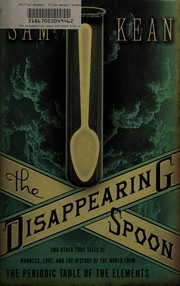
A tour of the periodic table told through the stories attached to each element. Read it second: it gives you a mental map of the table that the Mendeleev material later in the path assumes you have.
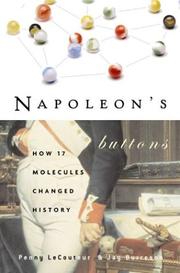
Seventeen molecules that changed history, from spices to explosives to dyes. It shifts the frame from elements to compounds, which is the level at which the industrial chemistry in the final stage operates.
Alchemy, taken seriously
IntermediateUnderstand what alchemists actually believed and did, and why the modern rehabilitation of alchemy is a serious historical argument rather than mysticism
▸ Study plan for this stage
Pace: 5-6 weeks. Principe's The Secrets of Alchemy is 292 pages of accessible academic history - three weeks at 20 pages a day, with time for the recipe reconstructions. Klossowski de Rola's Alchemy: The Secret Art is a short image-led book you can go through in a couple of sittings, though the plates rep
- Chrysopoeia and the transmutation project as a coherent research programme given the matter theory available
- Decknamen - the cover names of alchemical texts - and Principe's method of decoding them by reconstructing the operations in a laboratory
- The distinction between alchemy as practised chemistry and alchemy as spiritual allegory, and how the nineteenth century collapsed the first into the second
- The emblematic tradition: what an alchemical engraving is actually instructing the reader to do
- Eliade's argument connecting metallurgy, the smith and transmutation myths to a much older stratum of belief
- The historiography problem - why the field's own sources were designed to be unreadable to outsiders
- What did alchemists actually do in a laboratory, on Principe's account, and what results could they legitimately claim?
- How does Principe decode a Deckname, and what makes the method testable rather than speculative?
- Where does Klossowski de Rola's interpretation part company with Principe's, and what is at stake in the difference?
- Is Eliade doing history or comparative mythology, and how should that affect what you take from him?
- Why was alchemy written off as mysticism, and by whom?
- Take one alchemical engraving from Klossowski de Rola and write out a literal, operation-by-operation reading of it using Principe's decoding method; then note every element you cannot account for.
- Follow Principe's reconstruction of the Philosophers' Tree closely enough to state the modern chemistry of what is happening, with the actual reagents named.
- Keep a running list of the alchemical terms you meet - regulus, aqua regia, the sophic mercury, calcination, sublimation - and give each a modern chemical gloss where one exists and an honest blank where it does not.
- Write 500 words arguing the case against Principe's rehabilitation, using Eliade's material as your evidence, then say which side you find more convincing and why.
Next up: Once alchemy is a laboratory practice rather than an embarrassment, the eighteenth-century revolution reads as a transformation of an existing science rather than as its founding.

The definitive modern rehabilitation, by a historian who is also a working chemist and who reproduced alchemical recipes in the lab to find out whether they worked. This is the book that reframes the entire subject, so read it before anything else on alchemy.
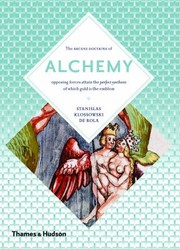
A short, image-led survey of alchemical emblems and symbolism. Its interpretive stance is far more esoteric than Principe's, which is exactly why it is placed second: you now have the tools to read the pictures without swallowing the mysticism.
Eliade's classic account of the myths surrounding metallurgy and transmutation, tracing alchemy back to the smith and the furnace. Read it as history of religion rather than history of science, and as the widest possible context for what follows.
The chemical revolution, in the primary sources
IntermediateFollow the argument from Boyle through phlogiston to Lavoisier and Mendeleev, and read the two books that actually turned the argument
▸ Study plan for this stage
Pace: 8-10 weeks, and it is uneven by design. Boyle's The Sceptical Chymist is 230 pages of dialogue in seventeenth-century prose - allow three weeks and read for the argument, not the style. Lavoisier's Elements of Chemistry runs to 568 pages in the standard edition; read the preface and the first part c
- The four-element and tria prima theories Boyle is attacking, and the corpuscular alternative he proposes without quite establishing
- Phlogiston as a serious theory that explained real phenomena, and what specifically defeated it
- Lavoisier's three simultaneous moves: quantitative mass balance, the oxygen theory of combustion, and a systematic nomenclature
- Nomenclature as a scientific instrument - naming a substance for its composition forces a theory into the language
- Lavoisier as tax farmer and administrator, and how the institutional life and the science were entangled
- The route from the chemical revolution to Dalton's atoms and on to Mendeleev's periodic law
- Why reading a primary text is different from reading about it: you see the argument's actual weaknesses
- What does Boyle actually establish, as against what he is usually credited with establishing?
- State phlogiston theory in its strongest form and name the observations it accounted for better than its rivals.
- Which of Lavoisier's three innovations was doing most of the work, and how would you argue for your answer?
- How much did Lavoisier owe to Priestley, Scheele and Cavendish, and how does Donovan handle the priority question?
- What had to be in place before Mendeleev's table was possible, and how much of it is in Lavoisier?
- Compare Strathern's narrative of the revolution with the picture you formed from the primary texts - what has been smoothed?
- Read Lavoisier's table of simple substances and mark every entry that is not an element by modern criteria; write a sentence on each explaining why he included it.
- Work through the mass balance of one of Lavoisier's combustion experiments with his own numbers, and confirm for yourself that the accounting closes.
- Take five substances named in Boyle and give each its Lavoisian systematic name and its modern formula, showing how the naming changed what the name asserts.
- Write a one-page defence of phlogiston as of 1770, using only what a chemist could have known then, then list what would have to be measured to refute it.
- Keep a log through this stage of every claim Strathern makes that you can check directly against Boyle, Lavoisier or Donovan, and record the discrepancies.
Next up: With the primary texts read and the revolution understood from inside it, the scholarly histories of the final stage can be read as interventions in a debate whose terms you already know.

The 1661 attack on the classical elements that pushed chemistry toward corpuscular explanation. Catalogued under its full period title, Chymico-Physical Doubts and Paradoxes; expect seventeenth-century prose and read it for the argument, not the style.

The 1789 textbook that killed phlogiston, named oxygen and imposed a systematic nomenclature that chemistry still uses. Read it directly after Boyle to see how much had to change in 130 years.
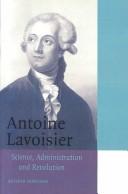
The standard scholarly biography, and the corrective to reading Lavoisier's textbook as a lone act of genius: he was also a tax farmer and administrator, which is what got him guillotined. Read after his own book, not before.
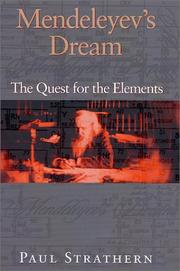
Strathern runs the whole story from the Greeks to the periodic table in one readable narrative, ending on Mendeleev. It consolidates this stage and gives you the through-line before the more demanding scholarly histories.
The scholarly history and the industrial payoff
IntermediateCommand a full scholarly history of the discipline, understand how alchemy and chemistry were actually continuous, and see what industrial chemistry did to the twentieth century
▸ Study plan for this stage
Pace: 3-4 months. Brock's The Norton History of Chemistry is 744 pages of comprehensive scholarly history - work through it a chapter a week for two months and treat it as the reference you will keep. Moran's Distilling Knowledge is 216 pages of concentrated academic argument and needs two weeks of carefu
- The full arc of chemistry as a discipline from antiquity to the late twentieth century, including the parts the popular books skip: organic structure theory, physical chemistry, quantum chemistry
- Moran's continuity thesis - that the alchemical and chemical laboratories are one tradition of practice, distinguished by aims rather than by methods
- Boyle's own lifelong and serious alchemical quest, and what it does to the received image of him as the first modern chemist
- Nitrogen fixation and the Haber-Bosch process: the specific chemistry, the pressures and catalysts involved, and the scale of its effect on world food supply
- The same chemistry serving fertiliser and explosives, and Haber's role in chemical weapons
- How professionalisation, industry and the university laboratory shaped what chemistry became
- Transmutation achieved in a real sense - air into bread - and what that reframing is worth as a historical claim
- Where does Brock's account differ from the popular narrative you absorbed in stage one, and on which specific episodes?
- What is Moran's evidence for continuity between alchemical and chemical practice, and what would count against it?
- How does The Aspiring Adept change the way you read The Sceptical Chymist?
- What are the actual conditions of the Haber-Bosch process, and why was each of them so hard to achieve in 1909?
- Roughly what fraction of the world's population depends on synthetic nitrogen, and how is that figure arrived at?
- Having read the whole path, is alchemy the prehistory of chemistry or an early phase of it - and what turns on the answer?
- Go back to the surprising claims you logged from Kean in stage one and check each against Brock; write down how many survive intact.
- Write out the Haber-Bosch reaction with its conditions, then work through the Le Chatelier argument for why high pressure and moderate temperature are the compromise, using real published values for the equilibrium.
- Construct a two-column table of alchemical and eighteenth-century chemical laboratory operations - distillation, sublimation, calcination, digestion, assay - and mark which ones changed and which only changed names, using Moran and Principe.
- Take one of Principe's reconstructions of a Boyle experiment and write a 500-word account of it as a modern chemist would report it, then say what the translation loses.
- Write a 1,000-word history of chemistry from antiquity to 1914 in your own words, then check it against Brock's chapter headings and record everything you left out.
Next up: You finish with a scholarly command of the discipline's history and a concrete case - fertiliser out of air - of what its methods finally delivered, which is the right footing for reading the primary literature in the history of science.
The single-volume standard history of chemistry from antiquity to the late twentieth century. It is the reference the rest of this path has been preparing you to read, and the place to check anything the popular books simplified.

A concise scholarly argument that the alchemical laboratory and the chemical laboratory are one continuous tradition. Placed after Brock because it is a targeted intervention in a debate you now know the shape of.
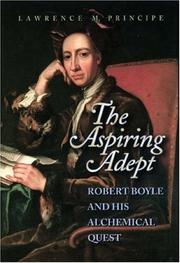
Principe's monograph on Robert Boyle's own serious, lifelong alchemical quest, complete with reconstructed recipes. It is the hardest evidence for the continuity thesis, and it retroactively changes how you read The Sceptical Chymist.

Haber and Bosch pulling fertiliser out of the atmosphere: the single chemical process that feeds roughly half the planet, invented by men who also gave the world chemical weapons. The right ending, because it is where the transmutation dream actually came true.
Discussion
Keep reading
Paths that share books, cover the same subject, or open a related topic.