Nigerian Literature: Best Books to Read in Order
This curriculum traces Nigerian literature from its colonial-era foundations through its postcolonial flowering and into its contemporary global voice. Each stage builds on the last — beginning with the novels that defined the tradition, moving through drama and poetry, and arriving at the writers who are reshaping what Nigerian literature means today.
The Foundation: Achebe's World
BeginnerUnderstand the bedrock of Nigerian (and African) literature — the Igbo world, colonialism's impact, and the storytelling style that set the template for everything that followed.
▸ Study plan for this stage
Pace: 6–8 weeks, ~40–50 pages/day (accounting for re-reading key passages and reflection time)
- The pre-colonial Igbo society: social structure, values, and oral storytelling traditions as depicted in Things Fall Apart
- Colonialism as a disruptive force: how European presence fragments Igbo culture, religion, and identity across the trilogy
- The protagonist's tragic arc: Okonkwo's fall in Things Fall Apart as a template for understanding cultural collision and personal agency
- Generational conflict and cultural adaptation: how Obi (No Longer at Ease) and Ezeulu (Arrow of God) navigate a colonized world differently than their predecessors
- Achebe's narrative technique: the use of proverbs, oral storytelling, and third-person perspective to authenticate African voices and counter colonial narratives
- Religion and power: how Christianity and traditional religion compete for authority and meaning in the Igbo world
- The concept of 'things falling apart': how individual choices, cultural pride, and external forces interact to destabilize societies
- Ambiguity and moral complexity: characters are neither purely heroic nor villainous, reflecting the nuanced reality of colonialism's impact
- What is Okonkwo's worldview in Things Fall Apart, and how does his response to colonialism differ from other characters like Obierika or Nwoye?
- How does Achebe use proverbs and oral storytelling in Things Fall Apart to establish the legitimacy and sophistication of Igbo culture?
- What is the significance of the title 'Things Fall Apart,' and how does it apply to the individual, the community, and the broader colonial encounter?
- How does No Longer at Ease show the psychological and social consequences of colonialism for the next generation, particularly through Obi's character?
- What role does religion (both traditional and Christian) play in the trilogy, and how does Achebe present the conflict between them?
- In Arrow of God, how does Ezeulu's attempt to maintain traditional authority in a colonial context compare to Okonkwo's resistance in Things Fall Apart?
- How does Achebe's narrative perspective and use of language work to counter colonial stereotypes about African societies?
- Close-read 3–4 key passages from Things Fall Apart (e.g., the opening description of Okonkwo, the arrival of the missionary, Okonkwo's exile) and annotate how Achebe establishes Igbo values and the impact of colonialism.
- Create a character map tracking Okonkwo, Obierika, Nwoye, and Reverend Smith across Things Fall Apart, noting how each responds differently to cultural change—then extend it to Obi in No Longer at Ease.
- Collect and analyze 8–10 proverbs from Things Fall Apart; write a short reflection on what each reveals about Igbo philosophy and how Achebe uses them to authenticate the narrative voice.
- Write a comparative essay (1,500–2,000 words) on how Okonkwo's tragedy in Things Fall Apart sets up the generational and psychological conflicts explored in No Longer at Ease and Arrow of God.
- Create a timeline of key events across the trilogy (pre-colonial, early colonial contact, established colonial rule, post-independence) and annotate how each character's choices are shaped by their historical moment.
- Perform a dramatic reading or written dialogue between two characters from different books (e.g., Okonkwo and Obi, or Ezeulu and Okonkwo) imagining how they would discuss colonialism, tradition, and survival—highlight the generational and philosophical differences.
Next up: This stage establishes Achebe as the foundational voice of Nigerian literature and the colonial encounter as the defining rupture; the next stage will explore how subsequent Nigerian writers responded to, critiqued, or departed from Achebe's template, building on the historical and cultural literacy you've now developed.

The single most important Nigerian novel ever written. Start here to absorb Achebe's prose rhythm, Igbo proverbs, and the collision of tradition with colonial power — every later writer responds to this book.

The direct sequel follows Okonkwo's grandson into 1950s Lagos, shifting from village to city and introducing the corruption and identity crises that define postcolonial Nigeria — essential context for all later reading.
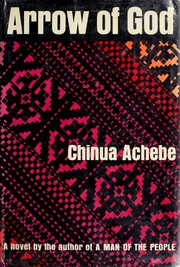
Achebe's most complex novel, deepening the colonial-era themes of Things Fall Apart with a tragic portrait of a chief priest; reading it third lets you appreciate his full range before moving to other voices.
Drama & Poetry: Soyinka's Stage
BeginnerEncounter Nigeria's Nobel Prize-winning voice — Wole Soyinka's Yoruba-rooted drama and poetry — and understand how Nigerian literature extends far beyond the novel.
▸ Study plan for this stage
Pace: 4–5 weeks, ~25–30 pages/day (with pauses for reflection and re-reading key scenes)
- Yoruba cosmology and the tension between traditional and colonial worldviews in Death and the King's Horseman
- Ritual and performance as central to Soyinka's dramatic vision — the play as ceremony, not mere entertainment
- The figure of Elesin Oba (the King's Horseman) as tragic protagonist caught between duty to ancestors and colonial disruption
- Language and translation: how Soyinka's English carries Yoruba idiom, rhythm, and spiritual resonance
- Colonial authority as a force that corrupts and misunderstands sacred tradition
- The role of women (Iyaloja, the Bride) in preserving and transmitting cultural memory
- Soyinka's use of music, dance, and visual spectacle as dramatic language equal to dialogue
- Shame and honor as driving forces in Yoruba ethics and their collision with Western rationalism
- What is Elesin's central conflict, and why does he ultimately fail to complete his ritual duty? How does colonialism play a role in his failure?
- How does Soyinka use performance, music, and ritual within the play's structure? What is the significance of the Praise-Singer and the opening market scene?
- What is the relationship between Elesin and the Bride, and what does her role reveal about how tradition is transmitted and preserved?
- How does the character of Pilkings (the colonial administrator) embody the play's critique of colonial power? What does his misunderstanding of the ritual reveal?
- What is the significance of Elesin's son Olunde's return from England, and how does his presence complicate the play's themes?
- How does Soyinka's use of language—including Yoruba words, rhythms, and idioms embedded in English—shape the play's meaning and emotional impact?
- Read the opening market scene (Act One) aloud, paying attention to the Praise-Singer's rhythmic language and the collective energy of the community. Write a brief reflection on how this scene establishes the play's spiritual and social world.
- Create a visual map or diagram showing the key relationships and conflicts between Elesin, Iyaloja, Pilkings, Olunde, and the Bride. Annotate with key quotes that reveal each character's values and motivations.
- Research Yoruba funeral rites and the role of the King's Horseman in traditional society. Write a 1–2 page essay connecting what you learn to Elesin's internal struggle in the play.
- Perform or record a dramatic reading of one key scene (e.g., Elesin's seduction of the Bride, or his final confrontation with Iyaloja). Reflect on how performance choices change the meaning of the text.
- Compare Elesin's perspective on his duty with Olunde's perspective (revealed in Act Four). Write a dialogue between them that explores their different views on tradition, modernity, and honor.
- Analyze the play's ending: Elesin's suicide in prison. What does this final act suggest about Soyinka's view of colonial power, ritual, and the possibility of redemption? Write a critical reflection.
Next up: This stage establishes Soyinka as a major voice in Nigerian literature and demonstrates how drama—rooted in Yoruba performance traditions—can interrogate colonialism and cultural survival, preparing you to explore how other Nigerian writers (across genres) engage with similar themes of tradition, identity, and postcolonial consciousness.
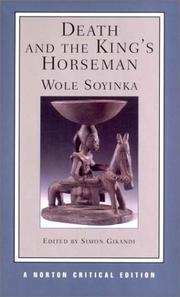
Soyinka's masterpiece play is the ideal entry point into his work: the Yoruba metaphysics are vivid, the colonial critique is sharp, and his author's note frames the entire drama so a newcomer can follow it confidently.
Expanding the Canon: Other Essential Voices
IntermediateDiscover the writers who broadened Nigerian literature's scope — war, women's experience, and the Niger Delta — building a richer picture of the tradition beyond its two giants.
▸ Study plan for this stage
Pace: 8–10 weeks, ~40–50 pages/day, with 1–2 weeks per book for reading and reflection
- Experimental narrative form as political resistance: how Soyinka's fragmented structure in *Season of Anomy* mirrors social upheaval and challenges linear storytelling conventions
- Women's agency and perspective in wartime: Adichie's dual narrative in *Half of a Yellow Sun* centers female experience during the Biafran War, complicating heroic war narratives
- The spirit world as narrative reality: Okri's magical realism in *The Famished Road* legitimizes non-Western epistemologies and blurs boundaries between the physical and metaphysical
- Regional specificity and marginalized voices: these three writers move beyond Lagos-centric narratives to explore the Niger Delta, the Biafran conflict, and rural spiritual landscapes
- Language as cultural assertion: each author's distinct stylistic choices (Soyinka's density, Adichie's accessibility, Okri's lyricism) represent different strategies for claiming literary authority
- Trauma, memory, and historical reckoning: how each novel processes collective wounds—political violence, war, displacement—through individual consciousness
- The relationship between the personal and the political: intimate relationships and family dynamics become sites where larger historical forces are negotiated and contested
- How does Soyinka's fragmented, non-linear structure in *Season of Anomy* function as a formal response to political chaos and state violence? What does this narrative technique communicate that a conventional plot could not?
- Compare the narrative perspectives in *Half of a Yellow Sun*: how does Adichie's use of multiple viewpoints—particularly Olanna's and Kainene's—reshape our understanding of the Biafran War compared to traditional male-centered war narratives?
- What is the significance of Azaro's existence as a spirit-child in *The Famished Road*? How does Okri's magical realism challenge Western literary realism and validate Yoruba cosmology?
- How do these three novels collectively expand the geographic and thematic scope of Nigerian literature? What regions, experiences, and perspectives do they bring into focus that might have been absent from earlier canonical works?
- Analyze the role of language and style in each novel: how do Soyinka's density, Adichie's clarity, and Okri's lyricism each serve the author's thematic and political purposes?
- What forms of trauma—political, personal, historical—are central to each novel, and how do the protagonists attempt to survive or transcend them?
- Close-read a passage from *Season of Anomy* (e.g., the opening or a moment of political violence) and map how Soyinka's syntax, fragmentation, and imagery create disorientation; write a 500-word analysis of how form mirrors content
- Create a comparative timeline of *Half of a Yellow Sun*: chart the major events of the Biafran War alongside the personal milestones of Olanna, Kainene, and Richard; reflect on how the novel interweaves private and public history
- Write a short scene (300–400 words) set in the spirit world of *The Famished Road*, using Okri's magical realist style; experiment with how he renders the invisible as tangible and emotionally real
- Select one key scene from each novel and write a comparative essay (1,500–2,000 words) on how each author uses dialogue, internal monologue, or narrative voice to reveal character and advance political themes
- Create a visual map or diagram showing the geographic and thematic territories each novel opens up in Nigerian literature—what regions, social classes, genders, and historical moments does each prioritize?
- Conduct a stylistic imitation exercise: rewrite a passage from one novel in the style of another (e.g., rewrite a scene from *Half of a Yellow Sun* in Okri's magical realist mode, or a *Famished Road* moment in Soyinka's experimental density); reflect on what is gained and lost in translation
Next up: This stage establishes how Nigerian literature encompasses diverse formal innovations, regional perspectives, and historical experiences; the next stage will likely synthesize these voices into a comprehensive understanding of the tradition's ongoing evolution and global influence.

Soyinka's novel — written in the shadow of the Biafran War — bridges the drama stage and the war literature ahead, showing how Nigeria's political trauma entered prose fiction.

The definitive novel of the Nigeria-Biafra War (1967–70) and one of the most celebrated African novels of the 21st century; its dual timelines and human scale make the history visceral and unforgettable.
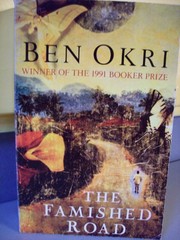
This Booker Prize-winning novel blends Yoruba spirit-child mythology with the chaos of a newly independent Nigeria, expanding your sense of what Nigerian prose can do stylistically.
Contemporary Nigeria: Adichie & the New Generation
IntermediateEngage with the writers who are carrying Nigerian literature into the global 21st century — diaspora identity, gender, race, and the internet age — and see how they inherit and challenge the earlier canon.
▸ Study plan for this stage
Pace: 8–10 weeks, ~40–50 pages/day (accounting for reflection and note-taking). Week 1–3: "Purple Hibiscus" (~400 pages); Week 4–6: "Americanah" (~600 pages); Week 7–8: "Stay with Me" (~300 pages); Week 9–10: synthesis and comparative work.
- Diaspora and belonging: how Adichie's characters navigate between Nigeria and the West, and what 'home' means across borders
- Gender and power in contemporary Nigeria: domestic violence, female agency, reproductive autonomy, and the cost of tradition
- Race and identity in the diaspora: how Americanah specifically interrogates anti-Blackness, colorism, and the construction of race in America vs. Nigeria
- Religious fundamentalism and trauma: the role of Catholicism in Purple Hibiscus and how faith intersects with family violence
- The internet age and narrative voice: how these writers use social media, online identity, and modern communication to shape character and plot
- Inheritance and challenge: how this generation of writers both honor and critique the earlier Nigerian literary canon (Achebe, Soyinka, Emecheta)
- Narrative perspective and intimacy: the use of first-person, close third-person, and shifting perspectives to create reader identification with marginalized voices
- How do Kambili (Purple Hibiscus) and Ifemelu (Americanah) each define 'home,' and what does their relationship to Nigeria reveal about diaspora identity in Adichie's work?
- What role does religious faith play in Purple Hibiscus, and how does Adichie use it to explore the tension between tradition and individual freedom?
- In Americanah, how does Ifemelu's experience of race in America differ from her understanding of race in Nigeria, and what does the novel suggest about the constructed nature of racial identity?
- How do the three novels collectively portray motherhood, marriage, and female desire? What patterns emerge across Kambili, Ifemelu, and Yejide?
- What narrative techniques does Adichie use in Purple Hibiscus and Americanah to build reader sympathy for characters in difficult circumstances, and how does Adébáyò employ similar or different strategies in Stay with Me?
- How do these three novels engage with or challenge the themes and concerns of earlier Nigerian literature (colonialism, national identity, oral tradition)?
- Character mapping: Create a detailed profile of Kambili, Ifemelu, and Yejide—track their desires, constraints, and turning points. Note where their agency is limited and where they claim it.
- Diaspora journal: As you read Americanah, keep a running list of moments where Ifemelu's perception of race, beauty, or 'Nigerianness' shifts. Annotate what triggers each shift.
- Close reading: Select one scene from each novel that pivots on a woman's decision or refusal (e.g., Kambili's silence, Ifemelu's choices about her body, Yejide's grief). Write a 2–3 page analysis of how Adichie/Adébáyò uses language to convey internal conflict.
- Comparative essay: Write a 4–5 page essay on how Purple Hibiscus and Stay with Me each explore the impact of male authority (Eugene, Akin) on female subjectivity. How do the novels differ in their treatment of complicity vs. victimhood?
- Social media reconstruction: Imagine Ifemelu's blog from Americanah as a real social media account. Write 5–8 posts that capture her voice, observations about race and identity, and evolving perspective. Reflect on how the novel uses writing/documentation as a form of self-making.
- Inheritance analysis: Create a two-column chart: 'What earlier Nigerian writers (Achebe, Emecheta) explored' vs. 'How Adichie and Adébáyò extend, complicate, or reject those themes.' Use specific textual examples.
Next up: This stage equips you to recognize how contemporary Nigerian writers engage global audiences through intimate, diaspora-centered narratives while remaining rooted in local specificity—preparing you to explore how subsequent generations use digital platforms, experimental form, and transnational collaboration to further reshape what Nigerian literature can be.

Adichie's debut novel — a coming-of-age story set against religious fundamentalism and political repression — is the perfect starting point for her work, written in a clear, accessible voice.
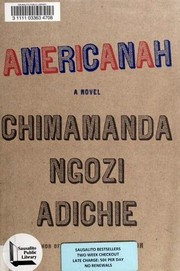
Her most ambitious novel tackles race, hair, love, and the Nigerian diaspora experience in America and the UK; it synthesizes everything the curriculum has built and speaks directly to the contemporary world.

One of the strongest novels from the post-Adichie generation, weaving Yoruba tradition, infertility, and political violence into a story that proves Nigerian literature's next wave is already here.
Discussion
Keep reading
Paths that share books, cover the same subject, or open a related topic.