Arabic Literature: Best Books to Read in Order
This curriculum guides an intermediate reader through the richest canon of Arabic literature in translation, moving from Naguib Mahfouz's accessible realism through the grandeur of classical poetry and into the bold voices of modern Arab novelists. Each stage builds cultural and literary context that makes the next stage richer and more resonant — you will finish with the tools to read Arabic literature not just as story, but as civilization.
Enter Through Mahfouz
IntermediateGain a deep foothold in modern Arabic narrative through Mahfouz's most celebrated works, absorbing the rhythms of Egyptian society, Islamic tradition, and realist storytelling that define the modern Arabic novel.
▸ Study plan for this stage
Pace: 4–5 weeks, ~40–50 pages/day (the novel is ~300 pages; allocate extra time for re-reading passages, note-taking, and cultural context absorption)
- Mahfouz's realist narrative technique: how he captures everyday Egyptian life with precise social observation and psychological depth
- The alley as microcosm: how Midaq Alley functions as a self-contained world reflecting broader Egyptian society, class dynamics, and tradition vs. modernity
- Character as social type: understanding how Mahfouz constructs characters to embody social roles, desires, and contradictions within their historical moment
- The rhythms of Islamic tradition and folk culture: how Islamic values, superstition, honor codes, and street life permeate the narrative voice and character behavior
- Narrative structure and time: how Mahfouz uses cyclical and episodic storytelling to suggest the repetitive, inescapable nature of social life
- Language and voice: the relationship between Mahfouz's literary Arabic and colloquial Egyptian speech patterns, and what this hybrid achieves
- Modernity's disruption: how World War II, urbanization, and Western influence destabilize the alley's traditional order and individual lives
- Tragedy and inevitability: how Mahfouz builds toward tragic outcomes through character psychology and social constraint rather than melodrama
- How does Mahfouz use the setting of Midaq Alley itself as a character, and what does the alley's physical and social geography reveal about Egyptian society?
- Trace the parallel trajectories of Hamida and Abdu. What does their divergence reveal about gender, class, and opportunity in Mahfouz's Cairo?
- How does Mahfouz embed Islamic tradition, folk belief, and superstition into the narrative without authorial judgment? What effect does this have on your reading?
- Analyze the role of World War II in the novel. How does the external historical event reshape the alley's internal dynamics and individual fates?
- What is Mahfouz's narrative stance toward his characters? Does he judge them, pity them, or present them with detachment? Provide textual evidence.
- How does Mahfouz's use of realism differ from European realist novels you may have read? What are the distinctive features of his approach?
- Create a detailed map of Midaq Alley based on textual descriptions. Mark the locations of key scenes and note how the geography constrains or enables character movement and social interaction.
- Maintain a character dossier for at least 6 major characters (e.g., Hamida, Abdu, Radish, Um Hamida, Sheikh Darwish, Kirsha). For each, track their desires, contradictions, and how they change or remain trapped across the novel.
- Select 3–4 passages that exemplify Mahfouz's narrative voice. Analyze the syntax, imagery, and tone. How does his prose rhythm mirror the life of the alley?
- Write a 2–3 page essay: 'The Alley as Microcosm.' Argue how Midaq Alley embodies a particular vision of Egyptian society and tradition under pressure from modernity.
- Identify and annotate 5–6 moments where Islamic tradition, superstition, or folk belief directly influence plot or character decision. Discuss how Mahfouz treats these elements.
- Rewrite one scene from the perspective of a different character (e.g., retell Hamida's departure from the alley from Um Hamida's or Abdu's viewpoint). What shifts in meaning and sympathy?
Next up: Mastering Mahfouz's realist technique and his portrayal of Cairo's social fabric in *Midaq Alley* establishes the foundation for engaging with his more complex, philosophically ambitious works—such as *The Cairo Trilogy*—where these same narrative methods expand to encompass three generations and deeper existential questions about tradition, faith, and individual agency in modern Arab life.
A self-contained, character-driven portrait of a Cairo alley — the perfect entry point into Mahfouz's world before tackling his longer epics. Its vivid ensemble cast introduces the social textures that run through all his work.
The first volume of the Cairo Trilogy, widely considered the masterpiece of Arabic fiction. Reading it after Midaq Alley means you already know Mahfouz's Cairo intimately, so the epic scale feels earned rather than overwhelming.
Mahfouz's allegorical retelling of human spiritual history — more ambitious and symbolic than the Trilogy. Placed here, after the realist works, its mythic departures feel like a natural and exciting evolution.
The Classical Roots — Poetry and the Oral Tradition
IntermediateUnderstand the poetic bedrock of Arabic literary culture — the pre-Islamic odes, the Abbasid golden age, and the mystical tradition — so that every modern novel you read afterward can be heard echoing these older voices.
Abu Nuwas's witty, sensual Abbasid poetry represents the classical tradition at its most urbane and playful — a necessary counterweight to the desert severity of the Mu'allaqat, showing the full range of classical Arabic verse.
Though Persian in origin, Rumi's Sufi mystical poetry is inseparable from the broader Islamicate literary world and deeply influenced Arabic literary spirituality — essential context for understanding allegory in modern Arabic novels.
The Modern Arab Novel — Exile, Identity, and War
IntermediateRead the landmark modern Arabic novels in translation that grapple with colonialism, displacement, and the fracturing of Arab identity in the 20th century — the essential conversation every contemporary Arab writer is joining.
▸ Study plan for this stage
Pace: 4–5 weeks, ~40–50 pages/day (with reflection pauses). Week 1–2: "Season of Migration to the North" (~160 pages); Week 3: "Memory for Forgetfulness" (~100 pages); Week 4–5: synthesis, rereading key passages, and comparative analysis.
- The unreliable narrator and fragmented identity: how Salih's unnamed narrator and Darwish's first-person voice construct and destabilize the self through memory and displacement
- Colonialism and its psychological aftermath: the legacy of European domination in shaping Arab consciousness, sexuality, and belonging (Mustafa Sa'eed's trajectory in Salih; Darwish's occupation and exile)
- Migration as metaphor and lived reality: the tension between physical displacement and spiritual/intellectual homelessness across both texts
- Memory as a contested site: how both authors use fragmented, non-linear narrative to represent trauma, loss, and the impossibility of stable historical truth
- The Arab intellectual in crisis: the figure of the educated, Westernized Arab caught between cultures—complicit, alienated, and searching for authenticity
- War, occupation, and the body: how violence inscribes itself on individual consciousness and national identity in real time (Darwish's 24-hour chronicle)
- Language and translation: the politics of writing in Arabic about Western influence, and what is gained/lost in translation for English readers
- Who is Mustafa Sa'eed in 'Season of Migration to the North,' and why does the narrator's inability to fully know him matter thematically? How does this uncertainty reflect the novel's exploration of identity?
- How does Tayeb Salih use the Nile and the journey to Europe as symbolic spaces? What do they reveal about the relationship between the Arab world and the West?
- In 'Memory for Forgetfulness,' how does Darwish's hour-by-hour account of a single day under bombardment function as a meditation on time, mortality, and national consciousness?
- Compare the two texts' treatment of exile and return: what does it mean to come 'home' in Salih's novel, and how does Darwish's inability to leave Beirut complicate this question?
- How do both Salih and Darwish use fragmented, non-linear narrative structures to represent the psychological impact of colonialism and war? What does form reveal about content?
- What is the role of sexuality and desire in 'Season of Migration to the North'? How does Mustafa Sa'eed's relationship with European women encode anxieties about power, identity, and cultural domination?
- Close-read the opening and closing scenes of 'Season of Migration to the North' side by side: how has the narrator's understanding of Mustafa Sa'eed and himself shifted? Write a 2–3 page reflection on what the novel's circular structure suggests about the possibility of self-knowledge.
- Create a timeline of Mustafa Sa'eed's life (birth, education in Sudan, journey to England, return, death) as the narrator reconstructs it. Identify gaps and contradictions. What do these absences tell you about the narrator's reliability and the novel's themes?
- Track the Nile throughout 'Season of Migration to the North': map its symbolic meanings (homeland, continuity, barrier, witness). Write a short essay on how the river functions as a character in the novel.
- Read Darwish's 'Memory for Forgetfulness' in one sitting if possible, or over 2–3 days. Keep a log of how your sense of time shifts as the day progresses in the text. How does the author's temporal compression affect your reading experience?
- Select 3–4 key passages from each text that deal with memory, loss, or displacement. Annotate them closely, noting Salih's and Darwish's different narrative strategies. Write a comparative analysis (3–4 pages) on how form embodies meaning in each.
- Conduct a 'character interview': write out imagined responses from Mustafa Sa'eed, the narrator, and Darwish (as protagonist of his own text) to the question: 'What does it mean to be Arab in the modern world?' How do their answers diverge, and what do these differences reveal about each author's vision?
Next up: Having grappled with the canonical modernist responses to colonialism and displacement through Salih and Darwish, you are now prepared to encounter contemporary Arab writers who inherit, critique, and reimagine these foundational concerns—understanding both what conversation they are joining and how they are transforming it.

Often called the most important Arabic novel after the Cairo Trilogy, this Sudanese masterpiece is a direct, devastating response to Conrad's Heart of Darkness. Its postcolonial tension is best appreciated after Mahfouz has grounded you in the Arabic novel form.
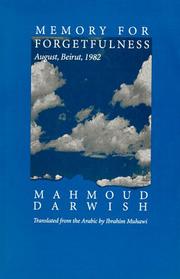
Palestine's greatest poet turns to lyric prose to document the 1982 siege of Beirut — a bridge between the poetry stage and the novel stage, and one of the most beautiful pieces of Arabic writing in any genre.

This sprawling Lebanese epic of Palestinian displacement is the most ambitious modern Arabic novel after the Trilogy. Darwish's prose poem prepares you emotionally and thematically for Khoury's monumental, layered narrative.
Contemporary Voices — The Arabic Novel Today
ExpertEncounter the living edge of Arabic literature — experimental, feminist, and globally engaged — and leave with a sense of where the tradition is heading in the 21st century.
▸ Study plan for this stage
Pace: 4–5 weeks, ~40–50 pages/day (approximately 2 weeks per novel, allowing time for reflection and discussion)
- The Arabic novel as a vehicle for social critique and urban documentation—how *The Yacoubian Building* maps Cairo's class hierarchies and moral contradictions through a single structure
- Narrative fragmentation and metafiction as tools for representing contemporary consciousness—*An Unnecessary Woman*'s layered storytelling and self-aware narrator
- Feminist consciousness and female subjectivity in Arabic literature—the reclamation of women's voices, desire, and intellectual autonomy
- The tension between tradition and modernity in contemporary Arab identity—religious fundamentalism, secularism, sexuality, and belonging
- Intertextuality and literary self-awareness—how contemporary Arabic novels engage with the canon, translation, and global literary conversations
- The role of language, translation, and linguistic hybridity in shaping meaning and identity across cultures
- How does *The Yacoubian Building* use the apartment building as a structural and thematic device to explore Cairo's social stratification and moral decay?
- What narrative techniques does Rabih Alameddine employ in *An Unnecessary Woman*, and how do they reflect the protagonist's psychological state and relationship to literature?
- How do both novels represent female desire, autonomy, and resistance within conservative social contexts?
- What role does translation play in *An Unnecessary Woman*, and what does the novel suggest about literature's power to sustain identity?
- How do these two novels differ in their approach to depicting contemporary Arab life—one through social realism, the other through experimental form?
- What is the significance of each novel's engagement with global culture, sexuality, and secular values in the context of 21st-century Arabic literature?
- Close-read the opening sections of both novels side-by-side: compare how Al Aswany introduces Cairo through the building's residents versus how Alameddine introduces her protagonist through her relationship to books. What does each opening reveal about the novel's concerns?
- Create a character map of *The Yacoubian Building* that traces the intersections between residents across class, profession, sexuality, and morality. Identify which characters represent competing visions of modern Egypt.
- Track the narrator's literary references in *An Unnecessary Woman*—compile a list of the books she mentions and translates. What patterns emerge? What does her reading history reveal about her identity?
- Write a comparative essay: How do both novels handle the theme of forbidden desire (sexual, political, or intellectual)? What consequences do characters face, and what does this reveal about social constraints?
- Annotate a passage from each novel that exemplifies its formal approach (e.g., a fragmented section from *An Unnecessary Woman*, a multi-character scene from *The Yacoubian Building*). Analyze how form serves content.
- Conduct a discussion or written reflection: Which novel feels more 'experimental' to you, and why? How does each author's formal choices shape your engagement with contemporary Arab experience?
Next up: This stage establishes the contemporary Arabic novel as a space of formal innovation, social urgency, and feminist consciousness—preparing you to explore how these voices engage with diaspora, trauma, and transnational identity in the next stage of the curriculum.
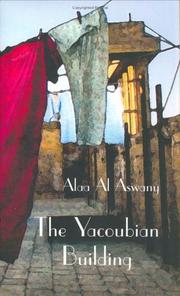
A bestselling, scandalously frank portrait of contemporary Cairo that updates Mahfouz's social realism for the post-Mubarak era — a perfect bookend to where the curriculum began, showing how the tradition renews itself.

A Beirut woman who secretly translates world literature into Arabic — this novel is itself a meditation on Arabic literary culture and translation, making it the ideal final book for a reader who has just traveled this entire path.
Discussion
Keep reading
Paths that share books, cover the same subject, or open a related topic.