World literature: an ordered reading path across continents
This curriculum takes you on a journey through world literature continent by continent, starting with accessible, story-driven classics and gradually moving toward more structurally and culturally complex works. Each stage builds your literary vocabulary — familiarity with non-Western narrative traditions, translated prose, and diverse cultural contexts — so that by the final stage you can engage deeply with the most challenging and rewarding voices global literature has to offer.
First Horizons: Accessible Classics from Around the World
BeginnerBuild confidence reading translated and non-Western literature through highly readable, story-driven novels that introduce diverse cultural settings without overwhelming complexity.
▸ Study plan for this stage
Pace: 6–7 weeks, ~40–50 pages/day (graphic novel: 2–3 days; Things Fall Apart: 3 weeks; The Old Man and the Sea: 1–2 weeks, with reflection time built in)
- How translated and non-Western literature conveys universal human themes (destiny, cultural identity, perseverance) through distinct narrative voices and settings
- The power of visual storytelling in graphic novels to make philosophical ideas (The Alchemist's personal legend) accessible and emotionally resonant
- Cultural context as essential to understanding character motivation: how Igbo traditions shape the tragedy in Things Fall Apart versus how isolation shapes Santiago's struggle in The Old Man and the Sea
- Minimalist prose and symbolic imagery as tools for conveying deep meaning without ornate language (Hemingway's style in contrast to Coelho's spiritual directness)
- How colonialism, cultural collision, and external forces disrupt individual dreams and societies (Things Fall Apart as historical counterpoint to the personal quests in the other novels)
- The role of mentorship, wisdom figures, and internal transformation across different literary traditions (the Alchemist's guide, Okonkwo's father, Santiago's past mentors)
- What is Santiago's 'Personal Legend' in The Alchemist, and how does the graphic novel format help communicate this spiritual concept compared to how it might work in prose?
- How does Chinua Achebe use Igbo cultural details (proverbs, rituals, social hierarchy) to make Okonkwo's downfall feel inevitable, and what does this reveal about the impact of colonialism?
- Compare the three protagonists (Santiago in the graphic novel, Okonkwo, and Santiago the old man): What does each character's struggle reveal about how different cultures and time periods define success and failure?
- How do Hemingway's sparse, direct sentences in The Old Man and the Sea differ from Coelho's more lyrical, philosophical style, and what effect does each approach have on the reader's emotional engagement?
- What role do mentors and guides play in each book, and how do they help (or fail to help) the protagonists achieve their goals?
- How do these three books together demonstrate that meaningful stories can come from any culture or literary tradition, and what barriers to reading translated/non-Western literature might this stage help you overcome?
- After finishing The Alchemist Graphic Novel, create a visual map or collage representing Santiago's journey and the symbols he encounters (the desert, the pyramids, the treasure). Annotate it with quotes about his Personal Legend.
- Read 2–3 Igbo proverbs from Things Fall Apart (e.g., 'A man who calls his kinsman to a feast does so to show his wealth') and write a short reflection on how each one illuminates Okonkwo's character or his society's values.
- Rewrite one scene from Things Fall Apart (e.g., Okonkwo's exile or the arrival of the colonizers) from the perspective of a female character or a younger villager, then compare how the narrative focus shifts understanding of the events.
- Analyze Hemingway's use of the sea as a symbol in The Old Man and the Sea by tracking 5–7 moments where the sea represents different things (adversary, teacher, indifferent force, etc.). Write a short essay on how this ambiguity deepens the novel's meaning.
- Create a character comparison chart for Santiago (Alchemist), Okonkwo, and Santiago (Old Man): their goals, their obstacles, their relationships with tradition, and their ultimate fates. Discuss what each character's story suggests about the human condition.
- Write a letter from one protagonist to another (e.g., from the young Santiago to the old Santiago, or from Okonkwo to either Santiago). What wisdom or warning would they share? What would they not understand about each other's worlds?
Next up: This stage establishes that powerful literature exists across cultures and writing styles, building the confidence and interpretive skills needed to engage with more structurally complex, formally experimental, or historically dense works in the next stage.

A short, universally beloved Brazilian fable that eases beginners into world literature with a simple, mythic narrative style — a perfect first step into non-English storytelling.

This Nigerian masterpiece is clear and propulsive yet rich in Igbo culture and colonial history, teaching you to read for cultural context — an essential skill for all world literature.
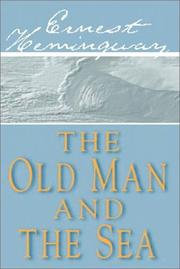
Set in Cuba and steeped in universal human themes, this slim novella trains the reader to find deep meaning in spare prose before tackling denser international works.
Expanding the Map: Asia, Latin America & the Middle East
BeginnerEncounter the major literary traditions of Asia, Latin America, and the Arab world through landmark novels that are emotionally gripping and culturally illuminating.
▸ Study plan for this stage
Pace: 4–5 weeks, ~40–50 pages/day. Week 1–2: "The Kite Runner" (324 pages); Week 3–4: "Like Water for Chocolate" (245 pages); Week 5: Review and synthesis.
- Redemption and moral responsibility: How characters confront past wrongs and seek to make amends (Amir's journey in The Kite Runner)
- Cultural and historical trauma: Understanding how political violence and displacement shape individual identity and relationships (Afghanistan's turmoil in The Kite Runner)
- Magic realism and magical thinking: Blending the fantastical with the everyday to express emotional and spiritual truths (Tita's supernatural connection to food in Like Water for Chocolate)
- Gender, tradition, and rebellion: How patriarchal and family structures constrain women's agency, and how women resist through unconventional means (Tita's defiance in Like Water for Chocolate)
- Food, memory, and sensory storytelling: Using culinary imagery and sensory detail to convey emotion, history, and cultural identity (both novels)
- Narrative structure and perspective: How first-person retrospective narration (The Kite Runner) and non-linear storytelling (Like Water for Chocolate) shape reader understanding
- Class, power, and social hierarchy: Examining how wealth, ethnicity, and social status determine relationships and opportunities (Hazara servitude and Afghan class divisions in The Kite Runner; Mexican rural class dynamics in Like Water for Chocolate)
- What is the central betrayal in The Kite Runner, and how does Amir attempt to redeem himself? What does the novel suggest about whether true redemption is possible?
- How does Hosseini use Afghanistan's political history (Soviet invasion, Taliban rule) to shape the personal story of Amir and Hassan? What is the relationship between historical trauma and individual guilt?
- In Like Water for Chocolate, how does Tita use cooking and food as a form of resistance against her mother's control and Mexican patriarchal tradition? What does the novel suggest about women's agency?
- Compare the narrative structures of the two novels: How does The Kite Runner's first-person retrospective narration differ from Like Water for Chocolate's non-linear, recipe-framed structure, and how does each shape your understanding of the story?
- What role does magical realism play in Like Water for Chocolate? How does Esquivel use supernatural elements to express truths about emotion, desire, and family that realistic narration alone could not convey?
- How are class and social hierarchy depicted differently in each novel? What do The Kite Runner and Like Water for Chocolate reveal about how power imbalances affect relationships and individual destinies?
- Character mapping: Create a detailed chart for Amir, Hassan, and Baba in The Kite Runner, tracking how each character's values, secrets, and choices evolve. Then do the same for Tita, Mama Elena, and Pedro in Like Water for Chocolate. Identify parallels in how family dynamics create conflict.
- Sensory journal: As you read Like Water for Chocolate, keep a running list of food descriptions and the emotions they evoke. Write 2–3 paragraphs reflecting on how Esquivel uses taste, smell, and texture to tell the story—then compare this to how Hosseini uses sensory detail in The Kite Runner.
- Historical context research: Read a brief overview of Afghanistan's political history (Soviet invasion, Taliban rule, 2001 U.S. invasion). Create a timeline and annotate key moments in The Kite Runner that reflect these events. Write a 1-page reflection on how understanding this history changes your reading of Amir's guilt and redemption.
- Dialogue analysis: Select 3–4 key conversations from The Kite Runner (e.g., Amir and Baba, Amir and Hassan, Amir and Rahim Khan). Analyze what each character reveals and conceals through dialogue. What do silences and evasions tell us?
- Recipe and symbolism: Choose one recipe from Like Water for Chocolate (e.g., the wedding cake, the quail in rose petal sauce). Research the actual recipe, then write a 1-page analysis of how Esquivel transforms it into a vehicle for emotion and character development.
- Comparative essay outline: Outline a 3–4 page essay comparing how The Kite Runner and Like Water for Chocolate each explore the theme of 'love and loyalty under constraint.' How do cultural context, gender, and power dynamics shape what characters can express and do?
Next up: This stage establishes how non-Western literary traditions use culturally specific storytelling techniques—magical realism, oral narrative, food symbolism, historical trauma—to explore universal human experiences, preparing you to recognize and appreciate these distinctive voices across a wider range of Asian, Latin American, and Middle Eastern literature in the next stage.
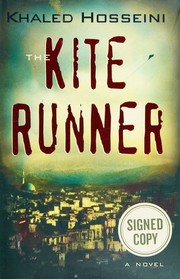
Set in Afghanistan, this emotionally immediate novel introduces Middle Eastern and Central Asian history through an intimate personal story, making an unfamiliar world deeply relatable.

This Mexican novel introduces magical realism — a defining mode of Latin American literature — through food, family, and desire, preparing you for the more complex Márquez ahead.
Going Deeper: Modernist Voices and Structural Ambition
IntermediateEngage with more formally ambitious world literature — novels that experiment with time, memory, and structure — drawing on the cultural grounding built in earlier stages.

The pinnacle of Latin American magical realism and one of the greatest novels ever written; your earlier exposure to Esquivel makes the style familiar while Márquez takes it to its fullest expression.
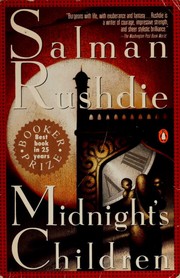
Rushdie's epic of Indian independence is maximalist, allusive, and wildly inventive — a natural next step after Márquez that introduces South Asian history and postcolonial narrative.

The Arab world's Nobel laureate traces three generations of an Egyptian family across decades; its novelistic sweep rewards the patience and cultural attentiveness you've been building.
The Deepest Waters: Challenging Masterworks
ExpertRead the most demanding and philosophically rich works of world literature, synthesizing everything learned to appreciate radical narrative form, moral complexity, and cross-cultural depth.
▸ Study plan for this stage
Pace: 8–10 weeks, ~40–50 pages/day with 2–3 days per week for reflection and synthesis. Allocate roughly 3 weeks per book, with 1–2 weeks at the end for cross-textual analysis and integration.
- Narrative unreliability and metafictional complexity: how Bulgakov's frame narrative (the Devil's visit to Soviet Moscow) and Kingston's blurred memoir-fiction boundary challenge readers to question narrative authority and truth itself
- Postcolonial consciousness and cultural displacement: Salih's narrator's psychological fragmentation in London and Kingston's negotiation between Chinese heritage and American identity as responses to colonial/immigrant trauma
- Moral ambiguity in totalitarian and oppressive contexts: the ethical compromises of characters in all three works who navigate systems (Soviet censorship, colonial hierarchies, patriarchal family structures) that offer no clean choices
- Magical realism and the fantastic as philosophical tools: Bulgakov's Devil and supernatural elements, Kingston's talk-story blending myth with autobiography, and Salih's dreamlike temporal shifts as ways to express truths that realism cannot
- The relationship between form and meaning: how radical narrative structures (nested stories, fragmented chronology, genre hybridity) embody the disorientation and multiplicity of the works' thematic concerns
- Intertextuality and cultural synthesis: Bulgakov's engagement with Dostoevsky and Goethe, Salih's dialogue with colonial literature, Kingston's fusion of Chinese oral tradition with American modernism as acts of literary resistance
- Gender, voice, and silencing: how women's narratives are constructed, suppressed, or reclaimed across these works—from Margarita's agency to the unnamed woman in Salih's narrative to Kingston's struggle to find her voice
- The role of language and translation: how these works (especially Kingston and Salih, written in English by non-native speakers) use linguistic hybridity to express cultural in-betweenness and resist monolithic meaning
- How does Bulgakov use the Devil's visit to Moscow as a frame for critiquing Soviet society, and what does the novel's nested narrative structure (the manuscript within the story) suggest about the relationship between art and truth under totalitarianism?
- In *Season of Migration to the North*, how does the unnamed narrator's obsession with the mysterious Mustafa Sa'eed reflect postcolonial anxieties about identity, and what is the significance of the novel's ambiguous ending regarding the narrator's fate?
- How does Kingston blur the boundaries between autobiography, myth, and fiction in *The Woman Warrior*, and what effect does this narrative hybridity have on the reader's understanding of truth and cultural identity?
- Compare the use of magical realism or the fantastic across all three works: how do Bulgakov's supernatural elements, Salih's dreamlike sequences, and Kingston's talk-story serve similar philosophical or political purposes?
- What forms of moral compromise or ethical ambiguity do the protagonists face in each work, and how do the novels suggest that their contexts (Soviet totalitarianism, colonialism, patriarchal family structures) make simple ethical choices impossible?
- How do all three works engage with the concept of displacement—whether temporal (Bulgakov's Moscow), geographical (Salih's London), or cultural (Kingston's Chinese-American identity)—and what does each author suggest about the possibility of belonging or return?
- Create a detailed map of *The Master and Margarita*'s nested narratives (the Devil's story, the Master's manuscript, the Pontius Pilate chapters, the frame story). Annotate how each level comments on or complicates the others, and write a short reflection on how this structure mirrors the novel's themes about truth and art under censorship.
- Track the narrator's psychological state throughout *Season of Migration to the North* by noting shifts in tone, temporal coherence, and his relationship to Mustafa Sa'eed. Create a timeline of events as the narrator understands them versus what the reader can infer, and write an analysis of how this gap embodies postcolonial disorientation.
- Identify 5–7 instances in *The Woman Warrior* where Kingston explicitly blurs fact and fiction (e.g., 'I don't know how she became Chinese' or the No Name Woman chapter). For each, write a paragraph explaining what cultural or psychological truth Kingston conveys through this narrative ambiguity that a straightforward memoir could not.
- Conduct a comparative close reading of one passage from each novel that uses magical realism or the fantastic (e.g., the Devil's appearance in Bulgakov, the dreamlike river sequence in Salih, the ghost of the No Name Woman in Kingston). Analyze how form and content work together to express ideas about identity, power, or truth.
- Write a dialogue or debate between the three protagonists (the Master, the narrator of *Season of Migration*, and Kingston's narrator) on the question: 'What does it mean to have a voice in a world that silences you?' Use specific textual evidence from each work.
- Create a visual or written genealogy of literary influences for each work: trace Bulgakov's engagement with Dostoevsky and Goethe, Salih's relationship to colonial literature and Arabic literary tradition, and Kingston's synthesis of Chinese oral tradition with American modernism. Write a synthesis essay on how these works use intertextuality as a form of cultural resistance.
Next up: Having mastered these three radical masterworks and internalized how form, narrative unreliability, and cross-cultural complexity can express philosophical depth, you are now prepared to either engage in independent critical reading of world literature with sophisticated analytical tools, or to move into specialized study of particular traditions, authors, or themes with the advanced interpretive
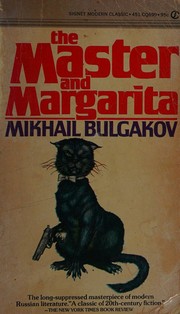
This Russian satirical fantasy weaves Soviet-era Moscow with the story of Pontius Pilate in a dazzlingly complex structure — a reward for readers now comfortable with non-linear, layered storytelling.

Often called the most important Arabic novel of the 20th century, this Sudanese novella confronts colonialism, identity, and desire with devastating moral ambiguity — a perfect capstone for the African and Arab threads of this curriculum.
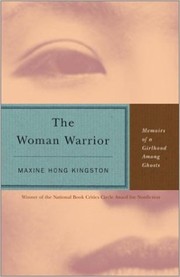
This genre-defying Chinese-American memoir-novel blends myth, history, and autobiography, challenging every assumption about narrative form and closing the curriculum with a meditation on what world literature itself means.
Discussion
Keep reading
Paths that share books, cover the same subject, or open a related topic.