Canadian Literature: Best Books to Read in Order
This curriculum builds a deep, personal relationship with Canadian literature by starting with accessible, beloved short fiction and novels before moving into the more layered, demanding prose of Atwood, Munro, and Ondaatje at their peak. Each stage expands the reader's feel for the distinctly Canadian literary sensibility — its landscapes, colonial memory, immigrant identity, and quiet emotional intensity — so that by the final stage, the most complex masterworks feel earned and fully resonant.
First Footsteps: The Canadian Voice
BeginnerDevelop an intuitive feel for Canadian storytelling — its tone, geography, and emotional restraint — through two highly readable, celebrated entry points.
▸ Study plan for this stage
Pace: 4–5 weeks, ~40–50 pages/day (alternating between the two books to maintain engagement and allow for reflection between sections)
- Canadian emotional restraint and understatement as a literary signature—how characters reveal feeling through silence and small gestures rather than grand declarations
- The power of place and landscape in shaping identity—how Ontario farmland and prairie settings become characters themselves in Munro and Laurence
- Female interiority and the gap between public persona and private thought—particularly how Munro's Del and Laurence's Hagar navigate societal expectations
- Narrative structure as meaning: Munro's interconnected stories and Laurence's retrospective first-person voice as windows into how memory and identity are constructed
- The Canadian bildungsroman tradition—coming-of-age not as triumph but as gradual, ambivalent self-awareness
- Dialogue with colonial and small-town Canadian culture—the tension between tradition, propriety, and individual desire
- How do Munro and Laurence use silence, restraint, and understatement to convey emotion? Provide specific examples from both texts.
- What role does landscape and geography play in shaping Del's and Hagar's identities and choices? How are these settings distinctly Canadian?
- How does each author structure narrative to reveal character? What does Munro's story-cycle format accomplish that Laurence's retrospective monologue does not, and vice versa?
- Compare Del's coming-of-age in Lives of Girls and Women with Hagar's reflection on her life in The Stone Angel. How do these two journeys differ in tone and resolution?
- What does each text reveal about female desire, sexuality, and autonomy within Canadian small-town and rural contexts?
- How do both authors portray the tension between individual aspiration and community/family obligation? What does this reveal about Canadian values?
- Close-reading exercise: Select one scene from Lives of Girls and Women and one from The Stone Angel where emotion is conveyed through physical detail or dialogue rather than introspection. Annotate what is *not* said, and discuss how this restraint affects the reader's emotional response.
- Landscape mapping: Create a detailed map or written description of the geography in each novel (Del's Jubilee, Hagar's prairie and Manawaka). Note how specific locations recur and what emotional weight they carry. How would these stories change if set in urban Canada?
- Character voice study: Write two short monologues—one in Del's voice (from Lives of Girls and Women) and one in Hagar's voice (from The Stone Angel)—about a moment of regret or desire. How do their narrative voices differ? What does each reveal about how they process experience?
- Comparative timeline: Create a chronological outline of major events in Del's life (from childhood through the novel's end) and Hagar's life (as revealed through her memories). What patterns emerge? How does the order in which each author reveals information shape our understanding?
- Dialogue analysis: Find three moments of significant dialogue in each novel where what is *not* said is as important as what is. Write a brief reflection on how Canadian reserve functions as both protection and limitation for these characters.
- Thematic essay (1500–2000 words): 'How do Lives of Girls and Women and The Stone Angel define what it means to be a woman in Canadian literature?' Use specific scenes and consider how geography, family, sexuality, and ambition intersect in each text.
Next up: This stage establishes the foundational Canadian literary voice—emotional restraint, complex female interiority, and the weight of place—that will deepen in the next stage as you encounter more experimental forms, Indigenous perspectives, and the evolution of Canadian storytelling beyond the mid-20th century.

Munro's only novel-in-stories is the perfect gateway: it reads with the momentum of a coming-of-age novel while introducing her signature small-town Ontario world. Starting here makes her later story collections feel like a natural deepening.
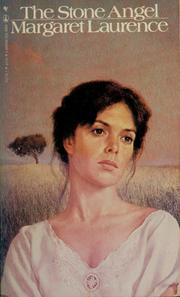
A foundational Canadian novel and a direct ancestor of Atwood and Munro, Laurence's portrait of aging, pride, and prairie life establishes the moral seriousness and interior voice that defines the tradition you are about to enter.
Atwood Begins: Wit, Myth, and Survival
BeginnerUnderstand Margaret Atwood's core concerns — female experience, power, Canadian identity, and myth — through her two most accessible and widely taught novels.
▸ Study plan for this stage
Pace: 8–10 weeks, ~40–50 pages/day (Surfacing: ~3 weeks; The Handmaid's Tale: ~5–6 weeks, with 1–2 weeks for synthesis and review)
- Female consciousness and bodily autonomy as central to Atwood's vision — how women's physical and psychological survival are intertwined
- Myth and storytelling as tools for understanding identity and resistance — Atwood's use of fairy tales, creation myths, and personal mythology
- Canadian identity and landscape as character — how wilderness, geography, and national belonging shape selfhood in Surfacing
- Power structures and totalitarianism — the mechanisms by which patriarchal systems control women's bodies, language, and reproduction in The Handmaid's Tale
- Ambiguity and unreliable narration — Atwood's refusal to provide easy answers or redemptive endings; the reader's role in interpretation
- Survival as both physical and psychological act — what it means to endure, adapt, and resist in hostile environments
- Language and naming — how control of language reflects and reinforces power; the importance of reclaiming words and stories
- How does the unnamed narrator's journey into the Canadian wilderness in Surfacing function as both literal and psychological exploration? What does she discover about herself, her family, and her nation?
- What role does myth — particularly the idea of descent and return — play in Surfacing? How does Atwood use mythological frameworks to structure the protagonist's self-discovery?
- In The Handmaid's Tale, how does the regime control women through language, ritual, and the manipulation of reproductive capacity? What specific mechanisms does Atwood depict?
- How do Offred's acts of resistance in The Handmaid's Tale — both internal and external — challenge the totalitarian system? What is the significance of her storytelling?
- What are the key differences in how Atwood explores female experience and survival across these two novels? What thematic continuities connect them?
- How does Atwood use ambiguity and open endings in both novels? What is the reader left to interpret, and why might Atwood resist providing closure?
- Close-read 3–4 key passages from Surfacing (e.g., the descent into the lake, the encounter with the parents' bodies, the final scene) and annotate them for imagery, symbolism, and shifts in the narrator's consciousness.
- Create a myth map: identify mythological references and patterns in Surfacing (descent, rebirth, sacrifice, transformation) and trace how they structure the narrative.
- Write a comparative character study of the narrators in both novels — how do their voices, concerns, and strategies for survival differ? What does each reveal about Atwood's conception of female consciousness?
- Analyze the role of landscape and setting in Surfacing — create a visual or written map of the protagonist's journey and explain how geography mirrors psychological states.
- Deconstruct the language and rituals of Gilead in The Handmaid's Tale — select 3–4 examples (e.g., the Ceremony, the Salvaging, official titles) and explain how language enforces the regime's ideology.
- Write a short creative response: compose an alternate ending or a missing scene from either novel, then reflect on what your choices reveal about how you interpret Atwood's themes.
Next up: This stage establishes Atwood's signature concerns — female embodiment, mythic consciousness, and resistance to totalizing systems — providing the thematic and stylistic foundation for engaging with her more formally experimental or historically expansive works in subsequent stages.
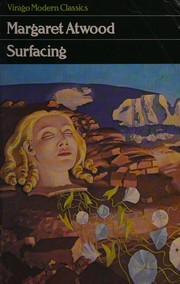
Atwood's second novel is short, eerie, and elemental — a wilderness quest that doubles as a meditation on Canadian identity and psychological survival. It introduces her symbolic language before her prose becomes more elaborate.
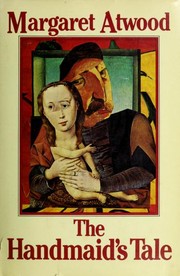
Her most famous work and a natural next step: the dystopian frame makes her feminist and political themes vivid and urgent, and the clean, controlled prose is an ideal model for reading her more complex later work.
Munro at Full Power: The Architecture of the Short Story
IntermediateExperience Alice Munro at the height of her craft, understanding how she compresses entire lifetimes into a story and why she earned the Nobel Prize.
▸ Study plan for this stage
Pace: 8–10 weeks, ~40–50 pages/day (accounting for re-reading key passages and reflection)
- Narrative compression: how Munro distills decades of emotional and psychological development into 20–40 page stories
- The interconnected story cycle: understanding how stories in 'Who do you think you are?' form a unified portrait of Rose through fragmented moments
- Munro's use of time and temporal shifts: moving fluidly between past and present to reveal how the past haunts and shapes the present
- Character revelation through restraint: what Munro leaves unsaid and how silence, gaps, and ambiguity create psychological depth
- The architecture of the final revelation: how Munro positions climactic moments (often quiet, anticlimactic) to reframe everything that came before
- Domestic realism as a vehicle for existential questions: how ordinary lives, marriages, and family dynamics explore identity, mortality, and self-deception
- Narrative unreliability and perspective shifts: recognizing how Munro's narrators misunderstand themselves and how readers must read between the lines
- The Nobel Prize achievement: understanding why Munro's formal mastery and psychological acuity earned her the highest literary recognition
- How does Munro use temporal shifts and fragmentation in 'Who do you think you are?' to create a portrait of Rose that feels complete despite being told in disconnected episodes?
- In 'Runaway,' how does Munro compress an entire marriage, a woman's internal crisis, and a moment of transformation into a single narrative arc? What is left deliberately ambiguous?
- Identify a moment of narrative compression in either book where Munro conveys years of emotional history in a few sentences. What techniques does she use?
- How does Munro use restraint and what-is-not-said to create psychological depth? Provide specific examples from both books.
- What is the relationship between the domestic, everyday details in Munro's stories and the larger existential or philosophical questions they explore?
- How does Munro position her climactic moments—often quiet or anticlimactic—to reframe the reader's understanding of what came before?
- Read 'Who do you think you are?' as a unified novel rather than separate stories: create a timeline of Rose's life across all the stories, noting how each episode adds layers to her character and self-understanding.
- Select one story from 'Who do you think you are?' and map its temporal structure on paper—mark where the narrative shifts in time, what triggers each shift, and what emotional or psychological purpose each shift serves.
- Close-read a passage of 2–3 pages from 'Runaway' (e.g., Carla's internal monologue or a key dialogue) and annotate what Munro reveals directly vs. what she leaves for the reader to infer about the character's emotional state.
- Write a 500-word analysis comparing how Munro handles a similar theme (e.g., self-deception, marriage, female identity) across one story from each book. What variations in approach do you notice?
- Rewrite the ending of one story from either book in a more explicit, emotionally direct style (tell the reader exactly what the character feels). Then compare it to Munro's original—what is lost and gained?
- Create a character study of either Rose (from 'Who do you think you are?') or Carla (from 'Runaway') that synthesizes all the fragmented moments and indirect revelations into a coherent psychological portrait. What does Munro's restraint force you to do as a reader?
Next up: This stage equips you with an intimate understanding of Munro's formal mastery and psychological penetration at her peak, preparing you to either explore her later work with deeper appreciation for her evolution, or to apply these close-reading skills to other modernist and contemporary short story masters who similarly compress human complexity into brief, architecturally precise narratives.
This linked story collection — following Rose from a rough Ontario childhood into adulthood — is Munro's most novelistic and emotionally direct work, making it the ideal bridge between her early writing and her mature, elliptical style.
Published in the US under this title (same as Who Do You Think You Are?), this edition is widely available and confirms the collection's international standing; reading the critical essays around it deepens appreciation of her structural genius.
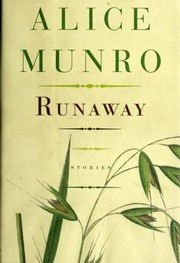
Widely considered her masterpiece collection, these eight stories show Munro at her most technically daring — time shifts, ambiguous endings, devastating emotional precision. After the earlier work, the reader is fully equipped to feel every layer.
Ondaatje: Memory, War, and the Lyric Novel
IntermediateGrasp Michael Ondaatje's unique fusion of poetry, history, and fragmented narrative, moving from his memoir-novel into his internationally celebrated fiction.
▸ Study plan for this stage
Pace: 8–10 weeks, ~40–50 pages/day. Week 1–2: Running in the Family (200 pp). Week 3–4: In the Skin of a Lion (250 pp). Week 5–8: The English Patient (320 pp). Week 9–10: Review, synthesis, and exercises.
- Fragmentation as form: how Ondaatje uses non-linear narrative, gaps, and layered perspectives to represent memory and trauma
- The lyric novel: blending poetic language, imagery, and emotional intensity with novelistic scope and historical setting
- Memoir versus fiction: Running in the Family as a hybrid form that questions the reliability and reconstructability of family history
- Palimpsests of place: how Toronto, Sri Lanka, and the desert function as layered, contested spaces shaped by colonial history and personal memory
- The body as archive: how physical sensation, touch, and bodily experience carry historical and emotional meaning across all three texts
- War and displacement: the impact of conflict (WWII, colonial violence, personal rupture) on identity, love, and narrative coherence
- Intertextuality and allusion: Ondaatje's dialogue with poetry, history, and other texts to create meaning beyond the page
- The unreliable narrator and the constructed self: how characters and the author-narrator piece together identity from fragments
- How does Ondaatje use fragmentation and non-linearity in Running in the Family to represent the act of recovering family history, and what does this suggest about memory's reliability?
- Compare the role of place (Sri Lanka in Running in the Family, Toronto in In the Skin of a Lion, the desert in The English Patient) as a character or archive in each text. How does geography shape identity?
- What is the relationship between poetry and prose in these three works? How does Ondaatje's lyric language function differently in memoir versus fiction?
- How do the protagonists of In the Skin of a Lion and The English Patient experience displacement and fragmentation, and what role does love or connection play in their attempts to cohere?
- Trace the theme of war and violence across the three texts. How does each work represent the impact of historical conflict on individual lives and narrative form?
- What does Ondaatje suggest about the constructed nature of identity and narrative? How do his characters and the author-narrator piece together selfhood from fragments?
- Create a visual timeline or map of Running in the Family that tracks the author's journey through Sri Lanka and his family's history. Annotate it with key images, names, and gaps in the narrative to identify how fragmentation shapes the memoir's meaning.
- Write a 2–3 page lyric essay (using poetic language, imagery, and emotional intensity) about a place from your own life, imitating Ondaatje's technique of layering sensory detail with historical or personal significance.
- Identify 5–7 key images or motifs that recur across all three texts (e.g., water, fire, the body, maps, light). Create an annotated chart showing how each image functions differently in Running in the Family, In the Skin of a Lion, and The English Patient.
- Write a comparative character study of Caravaggio (In the Skin of a Lion) and the English Patient (The English Patient), focusing on how each man's fragmented identity and displacement relate to war, love, and narrative unreliability.
- Rewrite a scene from one of the novels in a completely linear, chronological style, then reflect on what is lost and gained by removing Ondaatje's fragmentation and lyric intensity.
- Research the historical contexts referenced in each text (Sri Lankan colonial history, 1920s–30s Toronto, WWII North Africa) and write a 3–4 page essay on how Ondaatje fictionalizes or reimagines these historical moments through his characters' experiences.
Next up: This stage establishes Ondaatje's signature techniques—fragmentation, lyricism, and the interweaving of personal and historical trauma—providing the foundation to explore how these methods evolve in his later works and how they have influenced contemporary experimental fiction and the postmodern novel.
This lyrical memoir about his Sri Lankan family is the most accessible entry into Ondaatje's world — it teaches the reader to trust his non-linear, image-driven prose before tackling his novels.

Set among immigrant workers building Toronto in the 1930s, this novel is Ondaatje's most purely Canadian work and the direct prequel to The English Patient — essential for understanding the full arc of his vision.
His Booker Prize-winning masterpiece, and one of the great novels of the 20th century. Having read Running in the Family and In the Skin of a Lion, the reader can now fully inhabit its fractured, gorgeous world.
Atwood at the Summit & The Broader Canon
ExpertEncounter Atwood's most ambitious, layered work and place the entire tradition in context with one essential novel from a major contemporary Canadian voice.
▸ Study plan for this stage
Pace: 8–10 weeks, ~40–50 pages/day (accounting for dense prose and layered narratives; ~560 pages for Alias Grace, ~645 pages for The Blind Assassin, ~600 pages for A Fine Balance)
- Narrative unreliability and the construction of truth: how Atwood uses multiple narrators and fragmented timelines (Grace's confession, Iris's retrospective account) to challenge readers' assumptions about what 'really happened'
- Gender, power, and complicity: the ways female characters navigate, resist, or become entangled in patriarchal systems across all three novels
- Historical consciousness as literary method: how each novel embeds personal stories within larger historical moments (the 1840s murders in Alias Grace, post-WWII Toronto in The Blind Assassin, 1970s–80s India in A Fine Balance)
- Metafiction and the act of storytelling: how Atwood's novels self-consciously examine how stories are told, recorded, and interpreted, and how Mistry extends this to oral tradition and collective memory
- Class, caste, and economic systems: the material conditions that shape character choices and survival, particularly acute in Mistry's examination of Indian class hierarchies
- The artist's complicity: how creative ambition, artistic vision, and personal survival sometimes require moral compromise or silence
- Intertextuality and literary allusion: how these novels reference, rewrite, or dialogue with earlier Canadian and world literature
- Trauma, testimony, and the limits of narrative: how unspeakable experiences are represented (or withheld) in fiction
- How does Atwood use the structure of Alias Grace (Grace's confession interspersed with historical documents and Dr. Jordan's perspective) to create ambiguity about Grace's guilt or innocence, and what does this suggest about the reliability of historical 'truth'?
- In The Blind Assassin, how does Iris's retrospective narration reveal the ways she has been complicit in her own silencing, and what role does her sister Laura's novel-within-the-novel play in the larger narrative?
- How do the three novels differently represent the relationship between personal survival and moral compromise? Consider Grace's possible crime, Iris's passivity, and the Chenoy family's strategies in A Fine Balance.
- What is the significance of the 'blind assassin' as a metaphor in Atwood's novel, and how does it relate to themes of hidden violence and invisible power in the other two works?
- How does Mistry's A Fine Balance use the 1970s Indian Emergency as a historical backdrop to explore individual agency and powerlessness, and how does this compare to Atwood's approach to historical setting?
- Across all three novels, how are women's artistic or intellectual ambitions (Grace's possible agency, Laura's novel, Dina's tailoring, Maneck's education) portrayed in relation to systemic constraints?
- Create a detailed timeline for Alias Grace that separates 'what we know for certain' from 'what Grace claims' from 'what Dr. Jordan infers.' Then write a 2–3 page reflection on how this exercise changes your interpretation of Grace's character.
- Construct a family tree and power map for The Blind Assassin showing the economic, social, and emotional relationships between Iris, Laura, Richard, Widdacomb, and the Chase family. Annotate it with key moments where power shifts or is withheld.
- Read the 'Blind Assassin' novel-within-the-novel (the excerpts Iris provides) as a standalone narrative. Write an analysis of how Laura's story comments on or mirrors Iris's own life—what is Laura saying that Iris cannot say directly?
- Create a comparative chart analyzing how each of the three novels treats a historical moment (the 1840s murders, post-WWII Toronto, 1970s India). What does each author emphasize, and what does each leave ambiguous or silent?
- Write two alternative endings: one for Alias Grace (imagining what 'really' happened), and one for The Blind Assassin (imagining what Iris might have done differently). Then reflect on why Atwood withholds these certainties from readers.
- Conduct a close reading of a key scene from A Fine Balance (e.g., the tailoring shop, the begging sequence, or a moment of violence) and analyze how Mistry's prose style and narrative perspective differ from Atwood's. What does each author's style suggest about their relationship to their material?
Next up: This stage establishes mastery of narrative complexity, historical consciousness, and the ethical dimensions of storytelling—skills essential for engaging with postcolonial, experimental, and politically urgent contemporary Canadian literature in the final stage.
Atwood's richest historical novel — a true-crime narrative about a 19th-century murderess — synthesizes everything learned so far: unreliable narration, feminist inquiry, Canadian history, and extraordinary prose control.

Her Booker Prize winner and arguably her most technically complex novel, with nested narratives spanning decades. It rewards the patient, trained reader this curriculum has built.

The essential novel from the next generation of Canadian literature — a sweeping, heartbreaking story of India that also defines the immigrant and diasporic strand of Canadian writing, completing the picture of what Canadian literature truly encompasses.
Discussion
Keep reading
Paths that share books, cover the same subject, or open a related topic.