Korean Literature: Best Books to Read in Order
This curriculum traces Korean literature from its most accessible modern entry points through to its richest, most complex works, with a focus on translated fiction that has shaped the global reputation of Korean writing. Each stage builds emotional and cultural context so that later, denser novels land with full force — beginning with Han Kang's most celebrated work and expanding outward to the essential voices of 20th- and 21st-century Korean fiction.
First Steps: The Gateway Works
BeginnerGet an immediate, visceral feel for contemporary Korean literary fiction — its spare prose, psychological intensity, and recurring themes of body, trauma, and social pressure — through the two most celebrated and widely-read entry points.
▸ Study plan for this stage
Pace: 4–5 weeks, ~40–50 pages/day (approximately 2 weeks per book, accounting for re-reading key passages and reflection time)
- Bodily autonomy and refusal as political/personal acts: how Han Kang uses Yeong-hye's vegetarianism as a form of resistance and self-definition
- Fragmentation of narrative perspective: how both novels use multiple narrators and non-linear structure to reveal psychological complexity and unreliable memory
- Intergenerational trauma and family obligation: the tension between individual desire and filial duty, especially in Korean cultural context
- Psychological intensity and minimalist prose: how sparse, precise language conveys emotional depth and alienation
- The body as a site of social pressure and control: how physical appearance, eating, and bodily functions become battlegrounds in family dynamics
- Absence and silence as narrative tools: what is *not* said reveals as much as what is spoken
- The theme of disappearance and loss: literal (mother's vanishing in Sin's novel) and metaphorical (Yeong-hye's withdrawal from social life)
- What does Yeong-hye's decision to become vegetarian represent beyond dietary choice, and how do her family members misinterpret or resist this act?
- How does Han Kang's use of multiple narrators in *The Vegetarian* create different versions of the same events, and what does this suggest about truth and perspective?
- In *Please Look After Mom*, why does the mother's disappearance trigger such different responses from each family member, and what does this reveal about their relationships with her?
- How do both novels use physical descriptions and bodily experiences to convey psychological states and social alienation?
- What role does silence and what is left unsaid play in both narratives, and how does this reflect Korean cultural communication patterns?
- How do both novels challenge or complicate the reader's sympathy for their main characters, and what does this reveal about the authors' intentions?
- Close-read a key scene from *The Vegetarian* (e.g., the family dinner confrontation) and annotate how Han Kang conveys tension through dialogue, body language, and what remains unspoken.
- Create a narrative map of *The Vegetarian* showing how the same events are described differently by each narrator (Yeong-hye, her husband, her brother-in-law); note contradictions and gaps.
- Write a short passage (300–500 words) from the perspective of a minor character in *Please Look After Mom* (e.g., the taxi driver, a neighbor) imagining what they might have seen or known about the mother.
- Compare two family scenes—one from each novel—and analyze how bodily autonomy (or lack thereof) functions as a power dynamic between family members.
- Keep a reading journal noting moments where you felt uncomfortable or uncertain about a character's actions; reflect on whether the novel asks you to judge or understand them.
- Create a visual timeline or diagram of the mother's absence in *Please Look After Mom*, marking what each family member knows, suspects, or refuses to acknowledge at different points.
Next up: This stage establishes the core aesthetic and thematic DNA of Korean literary fiction—psychological depth, formal innovation, and the collision between individual desire and social constraint—preparing you to encounter these elements in more complex, historically-layered, or formally experimental works in the next stage.

The single most famous Korean novel in translation and the perfect starting point: short, triptych-structured, and immediately gripping. It introduces Han Kang's signature themes of bodily autonomy and societal violence and won the International Booker Prize, making it a landmark of world literature.
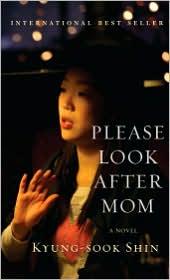
A bestseller in Korea and internationally, this novel uses a missing mother as a lens onto family guilt, sacrifice, and modern Korean life. Its second-person narration is unusual and affecting, and it provides warm cultural grounding that complements Han Kang's colder intensity.
Expanding the Map: More Han Kang & Key Contemporaries
BeginnerDeepen your understanding of Han Kang's full range and discover the other major voices of contemporary Korean fiction, building a sense of the generation of writers who came of age after democratization.
▸ Study plan for this stage
Pace: 3–4 weeks, ~40–50 pages/day (novel is ~280 pages total)
- Psychological realism and the interior monologue as a window into obsession and paranoia
- The domestic space as a site of entrapment and existential crisis
- Unreliable narration and the instability of perception in contemporary Korean fiction
- Class anxiety and economic precarity as drivers of psychological breakdown
- The 'hole' as metaphor: absence, void, and the unknowable in human relationships
- Pyun's minimalist prose style and its emotional intensity compared to Han Kang's approach
- Post-democratization alienation: how individual consciousness fragments in modern Korea
- How does Pyun use the metaphor of the hole to explore the protagonist's psychological state, and what does it reveal about her relationship to her husband and the world?
- What role does class anxiety and economic vulnerability play in driving the narrator's paranoia and obsession throughout the novel?
- How does Pyun's use of unreliable narration compare to Han Kang's narrative techniques, and what effect does this have on the reader's trust in the protagonist?
- In what ways does the domestic space function as both a refuge and a prison in *The Hole*, and how does this reflect broader themes in contemporary Korean literature?
- How does Pyun's minimalist prose style create psychological intensity, and how does this differ from Han Kang's approach to depicting consciousness?
- What does *The Hole* suggest about isolation, connection, and the impossibility of truly knowing another person?
- Track the narrator's emotional state across three key sections of the novel (early, middle, late). Note shifts in her perception of her husband and the apartment—how does her paranoia escalate or shift?
- Write a 2–3 page character study of the husband from the narrator's perspective, then rewrite it from what you imagine his perspective might be. What gaps emerge between these two versions?
- Identify 5–7 passages where Pyun's prose becomes particularly dense or fragmented. Analyze how the sentence structure mirrors the narrator's mental state.
- Create a visual map of the apartment as the narrator experiences it. Mark spaces of comfort, danger, and mystery. How does this spatial anxiety reflect her psychological fragmentation?
- Compare a passage from *The Hole* with a passage from Han Kang's *The Vegetarian* (from the previous stage) side-by-side. How do both authors use minimalism differently to convey psychological crisis?
- Write a reflective journal entry from the perspective of the narrator one week after the novel's ending. What has she learned, if anything, about the hole, her husband, or herself?
Next up: By mastering Pyun's exploration of psychological fragmentation and domestic paranoia, you'll be prepared to encounter other contemporary Korean voices who similarly interrogate consciousness, perception, and the fractures in modern relationships—expanding your sense of how this generation of writers processes post-democratization anxiety through intimate, introspective narratives.
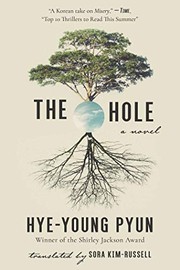
A taut, unsettling psychological thriller about a man trapped in his own body after an accident. It introduces the darker, genre-inflected strand of Korean literary fiction and shows the breadth of what 'Korean literature' encompasses.
Historical Roots: 20th-Century Masters
IntermediateUnderstand where contemporary Korean fiction comes from by reading the essential 20th-century novels that deal with colonialism, the Korean War, and the painful birth of modern Korea — the historical bedrock every serious reader needs.
▸ Study plan for this stage
Pace: 4–5 weeks, ~40–50 pages/day (approximately 200–250 pages total)
- The novella's exploration of the Vietnam War as a lens for Korean national trauma and complicity
- The protagonist's moral ambiguity and the impossibility of innocence in wartime
- Hwang Sok-yong's sparse, meditative prose style as a vehicle for psychological introspection
- The theme of hospitality and the guest-host relationship as a metaphor for national identity and obligation
- How personal memory intersects with historical violence and collective guilt
- The role of silence, confession, and the unspeakable in processing historical trauma
- What is the significance of the guest's arrival, and how does the protagonist's relationship to him evolve throughout the novella?
- How does Hwang Sok-yong use the Vietnam War setting to comment on Korea's own historical wounds and moral position?
- What does the protagonist's internal conflict reveal about the psychological aftermath of war on individuals and nations?
- How does the novella's minimalist narrative style contribute to its exploration of trauma and memory?
- What is the role of confession or revelation in the text, and what remains deliberately unspoken?
- How does 'The Guest' establish the foundational themes of 20th-century Korean literature that will appear in subsequent works?
- Close-read 2–3 key passages (e.g., the guest's first appearance, moments of internal monologue) and annotate them for narrative perspective, tone shifts, and symbolic language
- Create a timeline of historical events referenced or implied in the novella (Vietnam War, Korean War echoes, post-war Korea) and map them against the protagonist's psychological states
- Write a 500-word character study of the protagonist that explores his moral position and what his choices reveal about Korean identity in the post-war period
- Compare the novella's treatment of war trauma to one other war narrative you've read; identify Hwang's distinctive approach
- Discuss in writing or conversation: What does the novella suggest about the relationship between national history and personal guilt?
- Reread the ending and write a reflection on what remains ambiguous or unresolved—what does this ambiguity accomplish thematically?
Next up: This novella establishes Hwang Sok-yong's signature style of using historical rupture to interrogate individual consciousness, a foundation that will deepen as you encounter longer, more structurally complex works that layer multiple perspectives and time periods to build a fuller picture of Korea's 20th-century transformation.
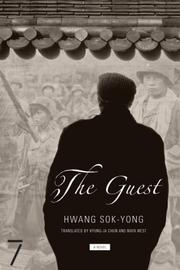
A formally inventive novel about the Korean War's fratricidal violence in the North, structured around a shamanistic ritual. Hwang is Korea's most internationally recognized elder statesman of letters, and this is his most accessible major work.
Going Deeper: Complexity & Range
IntermediateEncounter the full stylistic and thematic range of Korean fiction — from lyrical autofiction to surrealist satire — and read Han Kang's most recent, meditative work with the full context needed to appreciate it.
▸ Study plan for this stage
Pace: 8–10 weeks, ~40–50 pages/day, with 1–2 weeks per book to allow for reflection and thematic synthesis
- Multigenerational narrative and historical trauma: how *Pachinko* uses family saga to trace Korean identity across displacement, colonialism, and diaspora
- Allegory and fable in contemporary fiction: *The Hen Who Dreamed She Could Fly* as a deceptively simple parable about agency, freedom, and self-determination
- Lyrical autofiction and fragmentation: Han Kang's *The White Book* as a meditation on absence, memory, and the color white as both literal and metaphorical subject
- Stylistic range in Korean fiction: contrasting Lee's expansive realism, Hwang's folkloric simplicity, and Han Kang's experimental lyricism
- The relationship between form and meaning: how each author's structural choices (chronological epic, fable structure, fragmented essay-poetry) shape thematic resonance
- Silence, absence, and what remains unsaid: a recurring concern across all three works, manifested differently in each
- The individual versus collective identity: how each text negotiates personal agency within historical, social, or existential constraints
- How does *Pachinko*'s multigenerational structure deepen our understanding of Korean identity and diaspora compared to a single-protagonist narrative?
- What is the significance of the pachinko game itself as a metaphor, and how does it relate to the characters' sense of agency and fate?
- In *The Hen Who Dreamed She Could Fly*, what does the hen's escape represent beyond a literal flight, and how does Hwang's fable form enhance this meaning?
- How does Han Kang's *The White Book* differ formally and thematically from the previous two works, and what does this difference reveal about the range of contemporary Korean fiction?
- What role does the color white play in Han Kang's work, and how does it connect to her broader concerns with absence and memory?
- Across all three texts, how do authors use silence, gaps, and what is left unsaid as a literary technique?
- How do these three works collectively demonstrate different approaches to exploring Korean identity, freedom, and the individual's place in history?
- Create a family tree for *Pachinko* and annotate it with key historical events (Japanese occupation, WWII, Korean War, migration to Japan); then write a 1-page reflection on how the structure mirrors the novel's themes
- Read *The Hen Who Dreamed She Could Fly* in one or two sittings, then rewrite one scene from the perspective of another character (the rooster, the farm owner, or another hen) to explore how Hwang's limited perspective shapes meaning
- Compile a visual or written inventory of every reference to the color white in Han Kang's *The White Book*; categorize them (objects, emotions, memories, absences) and write a short analysis of patterns
- Write comparative character sketches of one character from *Pachinko* (e.g., Sunja) and the hen, focusing on how each author portrays agency and constraint
- Create a timeline that places these three works in Korean literary history and contemporary context; research the authors' biographical connections to their themes (diaspora, rural life, experimental form)
- Select one passage from each book that exemplifies the author's distinctive style; annotate for syntax, imagery, and tone, then write a 2-page essay on how form reflects each author's thematic concerns
Next up: This stage establishes the full spectrum of Korean fiction—from historical epic to philosophical fable to experimental lyric—preparing you to engage with more challenging, formally innovative works and to recognize how Korean authors use diverse techniques to interrogate identity, freedom, and memory across different registers.
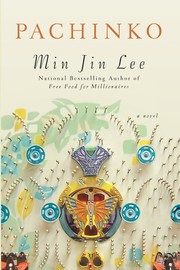
A sweeping multigenerational saga of a Korean family in Japan, covering colonial-era discrimination and identity across a century. Though written in English, it is considered essential reading for understanding the Korean diaspora experience that haunts much of Korean literature.
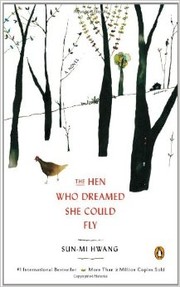
A beloved Korean fable — deceptively simple, deeply allegorical — that has sold millions in Korea. It offers a completely different register (folk-tale warmth) and shows how Korean literature speaks across age and genre.

Han Kang's most lyrical and meditative work, a prose-poem meditation on grief, whiteness, and her sister's death. Best read last among her books, when you have the emotional vocabulary to sit with its quiet, fragmented beauty.
Advanced Horizons: The Avant-Garde & Nobel
ExpertEngage with the most formally challenging and critically acclaimed works in Korean literature, including Han Kang's Nobel Prize–winning novel and a landmark of Korean literary modernism, cementing a sophisticated, well-rounded understanding of the tradition.
▸ Study plan for this stage
Pace: 6–7 weeks, ~40–50 pages/day (accounting for dense prose and philosophical depth)
- Fragmentation and non-linear narrative as formal expressions of trauma, memory, and consciousness in Han Kang's work
- The aesthetics of silence, absence, and the unsaid as central to meaning-making in contemporary Korean literature
- Ideological division and Cold War legacy as lived experience in the Korean body and psyche (We Do Not Part and Your Republic Is Calling You)
- Metafiction and narrative unreliability as tools for interrogating truth, identity, and historical authority
- The relationship between form and politics: how experimental technique embodies resistance to conventional representation
- Intertextuality and allusion as methods of engaging with Korean literary tradition and global modernism
- The liminal spaces of exile, displacement, and non-belonging as sites of philosophical inquiry
- How does Han Kang's fragmented narrative structure in We Do Not Part reflect the psychological and historical ruptures of Korean division and diaspora?
- What role does silence, absence, and what remains unspoken play in constructing meaning across both novels?
- How do both Han Kang and Young-ha Kim use experimental form to interrogate the reliability of memory, identity, and historical narrative?
- What is the relationship between ideological conflict (North/South Korea) and the intimate, bodily experience of characters in Your Republic Is Calling You?
- How do these novels engage with or challenge the conventions of the Korean literary tradition, and what does this formal innovation suggest about literature's political possibilities?
- What philosophical or existential questions emerge from the liminal positions occupied by characters in both works, and how does form reinforce these themes?
- Create a fragmentation map: chart the narrative breaks, temporal shifts, and perspective changes in We Do Not Part, then analyze how each disruption mirrors a thematic concern (trauma, memory, identity)
- Conduct a close reading of a 3–5 page passage from each novel, annotating instances of silence, ellipsis, and what is deliberately withheld; write a 500-word reflection on how absence generates meaning
- Write a comparative essay (1,500–2,000 words) examining how both novels use experimental form to represent the lived experience of Korean division and ideological conflict
- Trace one motif or image across both novels (e.g., the body, borders, communication, displacement); create a visual or written analysis showing how it evolves and what it reveals about the authors' shared concerns
- Rewrite a key scene from either novel in a conventional, linear narrative style, then write a reflection on what is lost and gained in this translation—what does Han Kang or Kim's original form accomplish that conventional narrative cannot?
- Create an annotated reading journal identifying intertextual references, allusions to Korean history/literature, and formal techniques in both novels; write brief notes on their significance and how they enrich interpretation
Next up: This stage establishes mastery of Korean literature's most formally sophisticated and globally recognized voices, positioning the reader to either pursue specialized study in particular authors, engage with critical theory and literary history, or explore how these advanced techniques manifest across other world literature traditions.
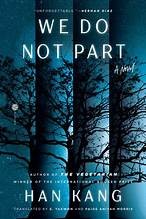
Han Kang's most recent novel, published just before her 2024 Nobel Prize, and widely considered her most mature work. Set against the Jeju April 3rd massacre, it synthesizes everything her writing has built toward — memory, snow, survival, and love.
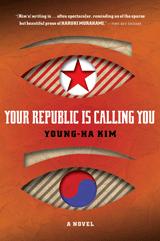
One of Korea's most important contemporary male writers, Young-ha Kim brings a Kafkaesque, thriller-paced energy to questions of ideology and identity. This novel, set over a single day, is a perfect capstone showing how Korean literary fiction can be both intellectually rigorous and propulsively readable.
Discussion
Keep reading
Paths that share books, cover the same subject, or open a related topic.