Best books on growing microgreens at home
This curriculum takes a beginner from zero knowledge of microgreens all the way to expert-level indoor growing, covering seeds, trays, lighting, harvesting, and nutrition. Each stage builds on the last — starting with hands-on basics, moving into crop-specific mastery, then advancing into the science of nutrition and controlled indoor growing environments.
Crop Knowledge: Seeds, Varieties & Flavor Profiles
BeginnerLearn which seed varieties to grow for taste, nutrition, and ease; understand germination windows, soaking, and blackout periods for different crops.
▸ Study plan for this stage
Pace: 2–3 weeks, ~20–25 pages/day, focusing on seed variety chapters and germination sections
- Seed variety selection based on taste, nutrition, and growing difficulty for microgreens crops (radish, mustard, broccoli, sunflower, pea shoots, etc.)
- Germination windows and optimal timing for different seed types to achieve harvestable microgreens
- Soaking protocols: which seeds require pre-soaking, duration, and water temperature to accelerate germination
- Blackout periods: why darkness is critical for certain varieties (brassicas, legumes) and how long to maintain them
- Seed quality assessment and storage conditions to ensure viable, healthy seeds for consistent crop production
- Flavor profile and nutritional differences between microgreen varieties to guide crop planning and customer appeal
- Troubleshooting common germination failures and how seed characteristics determine growing medium and moisture management
- Which microgreen varieties from The Vegetable Gardener's Bible are easiest for beginners, and what are their key flavor and nutritional profiles?
- What is the typical germination window for fast-germinating seeds (radish, mustard) versus slower seeds (sunflower, pea), and how does this affect your planting schedule?
- Which seed varieties require soaking before planting, and what are the recommended soaking times and water conditions?
- Why do certain microgreen crops (like broccoli and other brassicas) need a blackout period, and how long should this period last?
- How do you assess seed viability and quality, and what storage conditions will keep your seeds viable for multiple crop cycles?
- How would you choose between two microgreen varieties with similar growing times but different flavor profiles based on your target market?
- Create a microgreen variety comparison chart for 5–6 crops mentioned in Smith's book, listing germination time, soaking requirements, blackout period, flavor profile, and nutritional highlights
- Conduct a seed viability test on 3 different microgreen seed varieties using the germination window data from the book; document sprouting rates and timing
- Practice soaking seeds according to Smith's guidelines for at least 2 varieties; measure water absorption and observe changes in seed appearance
- Set up a small blackout trial with brassica seeds (e.g., broccoli or mustard) to observe how darkness affects sprouting vigor and compare to non-blackout controls
- Design a 4-week planting calendar for a rotating microgreen operation using 4–5 varieties from the book, accounting for their different germination windows and blackout needs
- Taste and document flavor notes for 3–4 microgreen varieties as you grow them, then cross-reference with Smith's descriptions to refine your palate and market positioning
Next up: Mastering seed selection, germination timing, and variety characteristics prepares you to move into the next stage—growing systems and equipment—where you'll apply this crop knowledge to choose appropriate trays, growing mediums, and environmental controls for each variety's specific needs.

Provides deeper botanical context for the plant families most used in microgreens (brassicas, legumes, amaranths), building intuition for why different seeds behave differently in trays.
Indoor Systems: Lighting, Humidity & Scaling Up
IntermediateDesign an efficient indoor growing system with proper LED or fluorescent lighting, airflow, humidity control, and multi-tray stacking for consistent year-round production.
▸ Study plan for this stage
Pace: 4–5 weeks, ~25–30 pages/day, with 2–3 days per week dedicated to hands-on system setup and testing
- LED and fluorescent lighting specifications for microgreens (wavelength, intensity, photoperiod) and how to calculate light requirements for different tray densities
- Humidity control mechanisms (misting systems, ventilation, moisture sensors) and optimal humidity ranges (60–80%) for disease prevention and germination
- Airflow design and circulation patterns to prevent mold, fungal issues, and ensure even growth across stacked trays
- Multi-tray vertical stacking systems and space optimization strategies for scaling production without proportional cost increases
- Environmental monitoring and data logging to track temperature, light, and humidity for consistent reproducible results
- Integration of urban farming principles with controlled environment agriculture (CEA) for year-round production in limited spaces
- Cost-benefit analysis of different lighting and climate control technologies for small-scale commercial viability
- What are the minimum light intensity (measured in µmol/m²/s) and photoperiod requirements for fast-growing microgreens like radish and mustard, and how do these differ from slower crops like sunflower?
- How would you design an airflow system for a 4-tray vertical stack to prevent dead zones and ensure uniform humidity without creating excessive air movement that damages seedlings?
- What humidity level range is optimal for microgreens during germination versus growth phases, and what are the early warning signs of humidity-related problems (mold, damping-off)?
- How do you calculate the total wattage and fixture placement needed for LED grow lights to cover a 2m × 1m growing area with 3 stacked trays, and what is the expected energy cost per crop cycle?
- What monitoring systems (sensors, data logging, automation) would you implement to scale from a single 4-tray unit to a 12-tray system while maintaining consistency?
- How does Curtis Stone's urban farming model address the trade-offs between initial capital investment in climate control versus ongoing operational costs and crop yields?
- Build or assemble a basic 2–3 tray vertical growing unit with adjustable shelving and measure light intensity at each tray level using a light meter app or inexpensive sensor; document how intensity drops with distance and plan fixture placement accordingly
- Install and calibrate a humidity sensor at different heights within a growing chamber; run a 7-day test cycle with and without active ventilation to observe humidity fluctuations and identify optimal fan placement
- Design a lighting plan on paper for your space: measure your growing area, choose either LED or fluorescent fixtures, calculate total wattage needed, and estimate monthly electricity costs; compare 2–3 product options
- Conduct a germination test with 3 different microgreen varieties (e.g., radish, mustard, sunflower) under your lighting setup, tracking germination rate, time-to-harvest, and yield; document environmental conditions daily
- Create a simple environmental monitoring log (spreadsheet or notebook) tracking temperature, humidity, and light hours for one complete crop cycle; identify correlations between conditions and growth rate or disease issues
- Sketch or build a prototype airflow system using fans and ducting for a 4-tray stack; test with smoke or incense to visualize air patterns and adjust to eliminate stagnant zones
Next up: This stage equips you with the technical infrastructure and environmental control knowledge to reliably produce microgreens year-round at scale, preparing you for the next stage where you'll focus on crop selection, succession planning, and market-ready harvesting and packaging techniques.

Though focused on urban market growing, Stone's chapters on indoor and small-space production, lighting strategy, and workflow efficiency translate directly to scaling a microgreens operation.
Nutrition Science: Growing the Most Nutrient-Dense Greens
IntermediateUnderstand the nutritional science behind microgreens — why they are more nutrient-dense than mature plants — and learn how to optimize growing conditions to maximize vitamins, minerals, and antioxidants.
▸ Study plan for this stage
Pace: 4–5 weeks, ~25–30 pages/day. Start with "Eating on the Wild Side" (2 weeks), then "The Wheatgrass Book" (2–3 weeks). Allocate time for note-taking on nutritional profiles and growing condition correlations.
- Phytonutrient density increases in young plants due to concentrated nutrient allocation before structural growth
- How soil mineral content, light spectrum, and water quality directly influence vitamin and antioxidant levels in microgreens
- The role of enzymes in raw microgreens and how they enhance nutrient bioavailability compared to mature plants
- Specific nutrient profiles of common microgreens (wheatgrass, broccoli, radish, etc.) and their therapeutic applications
- Timing of harvest in relation to nutrient peak—why microgreens at 7–14 days often contain maximum phytonutrient concentration
- The connection between plant stress (light, temperature, moisture) and secondary metabolite production (antioxidants, sulfur compounds)
- Practical optimization: selecting seed varieties, substrate composition, and environmental controls to maximize nutritional yield
- Why are microgreens typically more nutrient-dense per gram than their mature plant counterparts, according to Robinson and Wigmore?
- What is the relationship between harvest timing and nutrient concentration, and how do you identify the optimal harvest window for maximum nutrition?
- How do soil minerals, light exposure, and water quality affect the phytonutrient profile of microgreens, and which factors have the greatest impact?
- What role do enzymes play in the nutritional superiority of raw microgreens, and how does this relate to human digestion and nutrient absorption?
- Which microgreens discussed in these books have the highest concentrations of specific nutrients (e.g., sulforaphane in broccoli, chlorophyll in wheatgrass), and what are their documented health benefits?
- How can a grower manipulate growing conditions—seed selection, substrate, light, temperature, and moisture—to intentionally increase antioxidant and vitamin content?
- Create a detailed nutrient comparison chart: select 5 microgreens from the books and list their key phytonutrients, vitamin levels, and mineral content at harvest versus mature plant stages.
- Conduct a controlled growing experiment: grow the same microgreen variety under two different light conditions (e.g., full spectrum vs. limited spectrum) and measure/document observable differences in color, growth rate, and taste as a proxy for nutrient density.
- Design a substrate optimization protocol: test three different soil/substrate compositions (as discussed in Wigmore's work) and document how each affects plant vigor and nutrient uptake over a 2-week growing cycle.
- Harvest timing study: grow a batch of microgreens and harvest samples every 2–3 days from day 5 to day 14, noting color intensity, taste profile, and texture changes to correlate with the books' claims about nutrient peaks.
- Enzyme activity observation: prepare raw microgreens and cooked microgreens side-by-side, then research and document how heat affects enzyme content and relate this to Robinson's and Wigmore's discussion of raw food nutrition.
- Create a grower's optimization checklist: synthesize both books into a single actionable guide listing all variables (seed type, water quality, light hours, temperature range, harvest day) that impact nutritional density, with specific targets for each.
Next up: This stage establishes the scientific *why* behind microgreen nutrition, preparing you to move into the next stage—practical cultivation techniques and scaling—where you'll apply this nutritional knowledge to design growing systems that reliably produce the most nutrient-dense yields.

Groundbreaking research-backed book on how growing and harvesting choices affect nutrient content in plants — gives microgreen growers the scientific 'why' behind best practices like proper harvest timing.

A classic deep-dive into the nutritional and health properties of young greens and wheatgrass specifically — provides historical and nutritional context that informs how to grow for maximum health benefit.
Mastery: Commercial Thinking & Advanced Techniques
ExpertApply professional-level systems thinking to microgreens growing — including hydroponic media, business-scale production planning, seed density optimization, and food safety.
▸ Study plan for this stage
Pace: 8–10 weeks, ~40–50 pages/day (alternating between both books; start with Fortier's market systems, then transition to Resh's technical depth)
- Market-driven production planning: crop rotation, succession planting, and demand forecasting to maximize yield and profitability on limited space
- Hydroponic media selection and preparation: substrate types, water chemistry, nutrient film technique (NFT), and deep water culture (DWC) systems for microgreens
- Seed density optimization: calculating germination rates, seeding density per tray, and spacing to balance yield with quality and air circulation
- Scaling production: labor efficiency, equipment ROI, batch scheduling, and cost-per-unit analysis for commercial viability
- Food safety and traceability: contamination prevention, sanitization protocols, and record-keeping systems for regulatory compliance
- Systems thinking: integrating growing environment (temperature, humidity, light), nutrient delivery, and harvest timing into a cohesive operation
- Business economics of microgreens: pricing strategy, packaging, distribution channels, and break-even analysis from Fortier's market gardening framework
- How would you design a 12-week crop rotation and succession planting schedule for microgreens to meet consistent weekly demand from 5 restaurant clients?
- Compare NFT and DWC systems for microgreens production: what are the trade-offs in water usage, nutrient uptake, labor, and initial capital investment?
- What seed density (seeds per square inch) would you recommend for arugula microgreens, and how would you justify this choice based on germination rates and air circulation needs?
- Walk through a cost-per-unit calculation for a batch of radish microgreens: include seeds, media, water, electricity, labor, and packaging. At what price point is the operation profitable?
- Describe a food safety protocol for your microgreens operation, including seed sourcing, sanitization, environmental monitoring, and traceability records.
- How would you use Fortier's market gardening principles to identify your highest-margin microgreens varieties and allocate growing space accordingly?
- Build a 16-week production calendar for a commercial microgreens operation: map crop types, planting dates, harvest dates, and customer delivery schedules for at least 8 varieties.
- Design a hydroponic system specification sheet: choose either NFT or DWC, specify media type, nutrient solution recipe (using Resh's guidelines), water flow rates, and pH/EC targets for microgreens.
- Conduct a seed density trial: plant 3 trays of the same microgreens variety at different densities (e.g., 50, 75, 100 seeds/sq in), measure germination %, air circulation, yield weight, and quality; document findings.
- Create a complete cost-per-unit model in a spreadsheet: include all fixed costs (equipment, facility), variable costs (seeds, media, utilities, labor), and calculate break-even volume and profit margins at 3 different retail prices.
- Develop a food safety manual for your operation: document seed sourcing criteria, sanitization procedures, environmental monitoring (temperature, humidity, mold/pathogen checks), and a traceability system with batch codes.
- Interview or shadow a commercial microgreens grower (or research a case study): identify 3 key operational decisions they made to scale profitably, and analyze them through both Fortier's market lens and Resh's technical lens.
Next up: This stage equips you with the integrated business and technical systems to run a professional microgreens operation; the next stage will likely deepen specialization—whether in advanced automation, organic certification and premium positioning, or expansion into related crops like sprouts or baby greens.

The definitive book on intensive small-scale growing systems; its principles of crop scheduling, input efficiency, and quality control apply directly to running a serious microgreens operation.
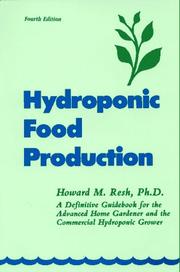
The authoritative technical reference for soilless growing — covers hydroponic media, nutrient solutions, and system design that advanced microgreens growers use to maximize yield and consistency.
Discussion
Keep reading
Paths that share books, cover the same subject, or open a related topic.