Grow without soil: hydroponics at home
This curriculum takes a beginner from zero soil-free experience to confident system designer and year-round food producer. Each stage builds on the last: first you learn what hydroponics is and why it works, then you master the core systems and nutrients, then you tackle lighting and controlled-environment growing, and finally you integrate everything into a productive, optimized indoor garden.
Foundations — What Hydroponics Is and How Plants Grow
BeginnerUnderstand the basic science of plant growth, why soil isn't necessary, and get a clear mental model of how hydroponic systems work before touching any equipment.
▸ Study plan for this stage
Pace: 2–3 weeks, ~20–25 pages/day — "The Edible Balcony" by Alex Mitchell is a practical, accessible read (~200 pages); pace yourself to absorb the plant-science and system-overview sections without rushing into the project chapters.
- Why soil is a delivery mechanism, not a necessity — plants need water, nutrients, oxygen, and light, not soil itself
- The six essential plant nutrients (N, P, K, Ca, Mg, S) and how they drive growth stages from seedling to harvest
- How roots function in a soilless environment: oxygen availability, moisture balance, and nutrient uptake in containers and hydroponic setups
- The role of light (natural and supplemental) in photosynthesis and how a balcony or indoor space can be optimised for plant growth
- Microclimate thinking — how temperature, humidity, wind exposure, and reflected light on a small urban space affect what and how you grow
- Container growing as a conceptual bridge: understanding how a pot with potting mix already decouples a plant from garden soil, setting the stage for fully soilless systems
- Plant selection logic — matching a plant's growth requirements (root depth, light needs, moisture tolerance) to the constraints of a small space
- The water–nutrient–air triangle: the three variables you will actively manage in any hydroponic system
- In your own words, explain why a plant grown in a container of potting mix and a plant grown in a hydroponic system both prove that garden soil is not essential for growth — what does each one tell you?
- What are the primary macronutrients plants need, and what visible role does each play in healthy plant development?
- How does root-zone oxygen availability differ between a waterlogged pot, a well-draining container, and a hydroponic system — and why does it matter?
- Looking at the balcony or indoor space you plan to grow in, what microclimate factors (light hours, temperature swings, airflow) would Mitchell ask you to assess before choosing a crop?
- Why is container growing described as a conceptual 'stepping stone' toward hydroponics, and what key variable does a grower take on full responsibility for when soil is removed from the equation?
- After reading Mitchell's crop guidance, name three edible plants whose growth requirements (root depth, light, moisture) make them well-suited to a small-space or soilless setup, and explain your reasoning.
- Microclimate audit: Spend three days tracking your intended growing space — log light hours (direct vs. indirect), morning and evening temperatures, and any wind or humidity patterns. Compare your findings to Mitchell's site-assessment guidance and write a one-page 'space profile'.
- Nutrient label decode: Buy or find online a bag of general-purpose potting mix and a bottle of liquid plant feed. List every nutrient shown on both labels, match each to its function from your reading, and note which nutrients are absent — this gap is exactly what a hydroponic nutrient solution must fill.
- Root observation experiment: Grow three identical seedlings (e.g., basil or lettuce) simultaneously — one in garden soil, one in potting mix, and one in a glass of plain water changed every two days. After 10–14 days, gently remove and photograph the roots. Record differences in root length, colour, and density, linking observations to Mitchell's explanations of root health.
- Crop-selection matrix: Using Mitchell's plant profiles, build a simple table of 8–10 edible plants with columns for light requirement, root depth, water needs, and days to harvest. Highlight the plants that score 'low root depth + high moisture tolerance' — these are your best hydroponic candidates for the next stage.
- Sketch your system: Without buying anything, draw a labelled diagram of how you imagine a simple water-based growing system for your space would look — where the light comes from, where roots sit, how water moves. Revisit and revise this sketch at the end of the full curriculum to see how your mental model evolved.
- Vocabulary flashcards: As you read, create a flashcard for every unfamiliar term (e.g., photosynthesis, transpiration, macronutrient, microclimate, growing medium). Aim for 20–30 cards; quiz yourself at the end of each reading session.
Next up: By finishing this stage you will have a clear mental model of what plants actually need to survive and a practiced eye for assessing a growing space — the exact foundation required to evaluate and choose between specific hydroponic system types (NFT, DWC, ebb-and-flow, etc.) in the next stage without being overwhelmed by the hardware.

Bridges the gap between traditional gardening intuition and space-limited indoor/container growing, helping beginners understand plant needs (light, water, nutrients) before going fully soil-free.
Core Systems & Nutrients — Building and Feeding Your Garden
BeginnerLearn the major hydroponic system types (DWC, NFT, ebb-and-flow, wick, drip), how to mix and manage nutrient solutions, and how to set up a first working system.
▸ Study plan for this stage
Pace: 8–10 weeks total. Week 1–5: "Hydroponic Food Production" by Howard M. Resh (~30–35 pages/day, 5 days/week) — read sequentially, paying close attention to system design chapters and the nutrient solution formulation sections. Week 6–10: "Hydroponics" by J. Benton Jones Jr. (~20–25 pages/day, 5 days/w
- The five major hydroponic system types — Deep Water Culture (DWC), Nutrient Film Technique (NFT), ebb-and-flow (flood-and-drain), wick, and drip — and the mechanical logic that distinguishes each, as laid out in Resh's system-by-system chapters.
- How plant roots interact with water, oxygen, and nutrients differently in each system type, and why oxygenation is the central design constraint (a theme Resh returns to repeatedly).
- The essential macro- and micronutrients required for plant growth (N, P, K, Ca, Mg, S, and trace elements), their roles in plant physiology, and how Jones's nutrient chemistry chapters explain deficiency and toxicity symptoms.
- How to read, interpret, and mix a nutrient solution from a concentrate or dry salts, including the concept of parts per million (ppm) and electrical conductivity (EC) as proxies for solution strength.
- pH management: the ideal pH range for hydroponic solutions (~5.5–6.5), how pH drifts over time, and how to correct it — covered practically in Resh and chemically in Jones.
- Water quality considerations (hardness, alkalinity, chlorine, baseline mineral content) and how source water affects nutrient formulation, as discussed in both books.
- System maintenance routines: reservoir changes, cleaning schedules, monitoring EC and pH daily, and identifying early signs of nutrient imbalance or root disease.
- The concept of a 'first working system' — selecting the right system type for a beginner's space, budget, and target crop, synthesizing the practical guidance from Resh's setup walkthroughs.
- After reading Resh, can you explain in plain language how a DWC system differs from an NFT system in terms of how roots receive water, oxygen, and nutrients — and which crops each suits best?
- Using Jones's nutrient chemistry chapters, what happens to a tomato plant when potassium is deficient, and how would you adjust your nutrient solution to correct it without throwing off EC or pH?
- Resh provides nutrient solution formulas for several crops. Walk through the steps you would take to mix a fresh 20-gallon reservoir for lettuce from a two-part concentrate — what measurements, tools, and safety checks are involved?
- Both Resh and Jones discuss pH. What are the consequences of allowing solution pH to climb above 7.0 for more than 48 hours, and what does each author recommend as a corrective action?
- Given a beginner's setup with limited space (e.g., a spare bedroom or garage), limited budget, and a goal of growing leafy greens, which system type would you choose based on Resh's guidance, and what are your top three reasons?
- What daily and weekly maintenance tasks does Resh prescribe for a small recirculating system, and how do Jones's explanations of nutrient uptake rates inform how often you should top off or fully replace the reservoir?
- System Comparison Chart: Create a hand-drawn or spreadsheet table with the five system types as rows and the following columns: how water is delivered, oxygenation method, best crops, complexity, and estimated startup cost. Fill it in using only Resh's descriptions, then annotate with any additions from Jones.
- Mix a Test Nutrient Solution: Using Resh's formulas as a guide, physically mix a small batch (1–5 gallons) of nutrient solution using a commercially available two-part or three-part concentrate. Measure and log the EC and pH before and after mixing, and again 24 hours later to observe drift.
- pH Correction Drill: Deliberately raise the pH of a small water sample to ~7.5 using baking soda, then bring it back to 6.0 using pH-down solution. Record how many drops/ml were needed and graph the relationship — this builds intuition for how sensitive pH management is in a real reservoir.
- Deficiency Symptom Flashcards: Using Jones's nutrient chapters, create one flashcard per macronutrient (N, P, K, Ca, Mg, S) showing: the nutrient's primary role, the visual deficiency symptom, the visual toxicity symptom, and the pH range at which it becomes unavailable. Quiz yourself daily for one week.
- Design Your First System on Paper: Before buying anything, sketch a complete system design for growing lettuce or basil in your available space. Label every component (reservoir, pump, timer, grow tray, net pots, air stone, tubing), specify the system type, and write a one-page justification citing specific pages from Resh.
- Two-Week Grow Journal: Start a simple wick or DWC system with fast-growing seedlings (lettuce, basil, or radish). Log EC, pH, water temperature, and visual plant observations every day for two weeks. At the end, compare your observations to the benchmarks and troubleshooting cues described in both Resh and Jones.
Next up: Mastering how each system type works and how to keep a nutrient solution balanced gives the reader the operational foundation needed to tackle the next stage's focus on environmental control — lighting, temperature, humidity, and CO₂ — where the health of the root zone established here must be matched by an equally well-managed aerial environment.
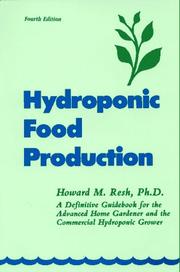
The canonical, most-cited textbook on hydroponics — covers every major system type and nutrient chemistry in depth; reading it after the beginner overview transforms intuition into real knowledge.
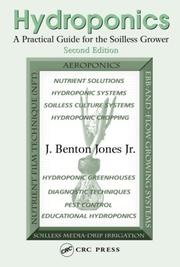
Complements Resh by focusing specifically on nutrient management and solution chemistry, solidifying the reader's understanding of what plants actually eat and how to keep them healthy.
Lighting & the Controlled Environment
IntermediateMaster indoor lighting (HID, LED, fluorescent, photoperiods), climate control, and the principles of controlled-environment agriculture so you can design a productive year-round grow space.
▸ Study plan for this stage
Pace: 6–8 weeks total. Week 1–4: "The Cannabis Grow Bible" by Greg Green — focus on the lighting and environment chapters (~25–35 pages/day, skimming cultivation-specific sections outside lighting/climate scope). Week 5–8: "Gardening Under Lights" by Leslie F. Halleck — read cover to cover at a relaxed ~2
- HID lighting systems (HPS & MH): how High-Pressure Sodium and Metal Halide lamps differ in spectrum, heat output, and best-use growth stages, as detailed in Greg Green's grow room chapters
- LED grow light technology: understanding full-spectrum and targeted-wavelength LEDs, their efficiency advantages, and how Halleck frames PAR, PPF, and PPFD as the true measures of usable plant light
- Fluorescent lighting (T5/CFL): appropriate use cases for seedlings, clones, and low-light plants per Halleck's coverage of fixture types and their limitations at canopy scale
- Photoperiod control: the science of long-day vs. short-day vs. day-neutral plants and how manipulating the light/dark cycle triggers flowering, drawn from Green's detailed photoperiod chapters
- Light metrics demystified: lumens vs. PAR vs. PPFD vs. DLI (Daily Light Integral) — Halleck's framework for measuring and comparing light sources objectively rather than relying on watt-based rules of thumb
- Climate control fundamentals: temperature, humidity, CO₂ enrichment, and VPD (Vapor Pressure Deficit) as an integrated system, synthesizing Green's grow-room environment sections with Halleck's controlled-environment principles
- Controlled-Environment Agriculture (CEA): the philosophy of decoupling plant growth from outdoor seasons to achieve year-round productivity, a throughline in Halleck's book
- Light distribution & canopy management: reflector design, light footprint, PPFD uniformity across a canopy, and training techniques to maximize light interception, covered in both books from complementary angles
- What are the key spectral differences between MH and HPS lamps, and why does Greg Green recommend switching between them at different growth stages?
- According to Leslie Halleck, why is PPFD a more actionable metric than lumens when evaluating a grow light for plants, and how do you calculate DLI from a PPFD reading?
- How do photoperiod manipulations described in The Cannabis Grow Bible apply broadly to other short-day and long-day crops, and what equipment is needed to implement a reliable light schedule?
- What role does Vapor Pressure Deficit (VPD) play in a controlled environment, and how do temperature and humidity interact to keep VPD in an optimal range?
- Using Halleck's fixture comparison framework, under what circumstances would you choose T5 fluorescents over LEDs, and when does the calculus reverse?
- How would you design a year-round grow space — specifying light type, photoperiod schedule, temperature/humidity targets, and CO₂ strategy — for a mixed garden of one short-day and one day-neutral crop?
- Lighting audit: Set up or sketch a grow space and use a free PPFD calculator (or a PAR meter if available) to map light intensity at canopy level; compare your readings against Halleck's recommended PPFD ranges for at least two different plant types.
- Spectrum comparison log: Place identical seedlings under an HID (or CFL) source and an LED source side by side for two weeks; photograph and measure growth weekly, then relate your observations to the spectral data Green and Halleck provide.
- DLI calculation worksheet: For three different crops mentioned in Gardening Under Lights, calculate the required photoperiod (hours of light per day) needed to hit the target DLI given a fixed PPFD value — practice the formula DLI = PPFD × (hours × 3600) ÷ 1,000,000.
- Photoperiod timer setup: Program a mechanical or digital outlet timer to run a strict 18/6 (vegetative) schedule for two weeks, then switch to 12/12 (flowering); document any light-leak issues and troubleshoot them as Green's environment chapters suggest.
- VPD tracking chart: Over one week, log temperature and relative humidity in your grow space (or a test room) morning, midday, and evening; plot the data on a VPD chart and identify periods when the environment falls outside the optimal 0.8–1.2 kPa range, then propose corrective actions.
- Grow-room design blueprint: Draft a scaled floor plan for a 4×4 ft (or 1.2×1.2 m) indoor grow space specifying: chosen light fixture with justification (using Halleck's selection criteria), reflector type, ventilation layout, temperature/humidity control equipment, and a photoperiod schedule — then peer-review it against the principles in both books.
Next up: Mastering how light and climate are controlled in isolation sets the essential environmental baseline that the next stage builds on — understanding how water, nutrients, and root-zone systems (hydroponics proper) interact with that controlled environment to drive maximum plant productivity.

Despite its primary crop focus, this is one of the most thorough and widely-read practical guides to indoor grow-room design, lighting spectra, HVAC, and photoperiod management — skills that transfer directly to any indoor food crop.

A science-based, food-crop-focused guide to grow lights and light planning; reads naturally after the grow-room fundamentals above and ties lighting directly to vegetables, herbs, and fruiting plants.
Year-Round Food Production — Putting It All Together
IntermediateIntegrate systems, nutrients, and lighting into a cohesive plan for growing fresh food continuously indoors, including crop selection, scheduling, troubleshooting, and scaling up.
▸ Study plan for this stage
Pace: 6–8 weeks total: Weeks 1–4 cover "The Year-Round Vegetable Gardener" (~20–25 pages/day, reading in thematic sections: season-extension techniques, crop calendars, and indoor growing chapters); Weeks 5–8 cover "Epic Tomatoes" (~15–20 pages/day, reading variety profiles alongside active grow-room plan
- Continuous harvest planning: using Niki Jabbour's succession planting and crop calendar frameworks to stagger plantings so something is always ready to harvest indoors year-round
- Season-extension logic applied indoors: understanding how cold-hardy vs. heat-loving crops behave under artificial conditions, drawn from Jabbour's variety and timing guidance
- Crop selection for indoor/hydroponic suitability: matching plant size, light demand, and growth rate to your available space and system, using both Jabbour's vegetable profiles and LeHoullier's tomato variety deep-dives
- Tomato variety diversity and trait selection: leveraging LeHoullier's catalog of 200+ varieties to identify compact, prolific, or fast-maturing types best suited to indoor hydroponic production
- Integrated grow-room scheduling: combining nutrient cycling, lighting schedules, and planting timelines into a single master plan informed by both books' seasonal and crop-specific guidance
- Troubleshooting through observation: using the detailed plant-health and cultural-problem sections in both books to diagnose issues (nutrient deficiencies, light stress, pollination failure in tomatoes) in a soilless environment
- Scaling up production: applying Jabbour's multi-bed/multi-crop rotation logic and LeHoullier's seed-saving and variety-trialing methods to expand an indoor operation systematically
- Seed sourcing, saving, and variety trialing: using LeHoullier's sourcing appendix and tasting/evaluation frameworks to build a living seed library that feeds future grow cycles
- Using Jabbour's crop calendar approach, how would you design a 12-month indoor planting schedule that ensures at least one crop is being harvested every week of the year?
- Which categories of vegetables does Jabbour identify as easiest to grow in low-light or cool indoor conditions, and how does that inform which crops anchor your year-round plan?
- From LeHoullier's variety profiles, which tomato types (by size, color, and growth habit) are most practical for a space-constrained indoor hydroponic setup, and why?
- How do you adapt Jabbour's outdoor succession-planting intervals to an indoor environment where temperature and day-length are controlled rather than seasonal?
- What are the most common tomato cultural problems LeHoullier describes (blossom drop, cracking, poor fruit set), and what hydroponic-specific factors might trigger or worsen each?
- How would you use LeHoullier's variety-trialing and tasting-note methodology to systematically evaluate and refine your indoor tomato crop selections over multiple grow cycles?
- Build a 52-week indoor crop calendar: Using Jabbour's planting charts as a template, map out at least 6 different crops across the full year in a spreadsheet, noting seeding date, transplant date, expected first harvest, and succession interval for each.
- Conduct a 'crop suitability audit': Go through Jabbour's vegetable profiles and score each crop on 3 criteria (compact size, low-to-moderate light tolerance, fast days-to-harvest). Rank your top 10 candidates for your specific indoor setup.
- Run a tomato variety selection exercise using Epic Tomatoes: From LeHoullier's variety catalog, shortlist 5 varieties using explicit criteria — determinate or compact indeterminate habit, fewer than 75 days to maturity, and documented productivity in containers — and write a one-paragraph justification for each choice.
- Set up a physical or digital grow-room master plan: Draw or diagram your grow space showing which system zones are assigned to which crops, the lighting footprint, and how crop rotations will flow through the space over a 3-month period, integrating both books' guidance.
- Simulate a troubleshooting scenario: Write up a fictional but realistic problem (e.g., indoor tomatoes dropping blossoms, lettuce bolting early) and use both Jabbour's cultural guidance and LeHoullier's problem-solving sections to write a structured diagnosis and corrective action plan.
- Start a variety trial journal: Germinate at least 2 different tomato varieties side by side (from LeHoullier's recommended seed sources), and keep weekly tasting and performance notes using LeHoullier's evaluation criteria — yield, flavor, disease resistance, and plant habit — to build a personal data set for future crop decisions.
Next up: Mastering crop scheduling, variety selection, and integrated troubleshooting across these two books gives the reader a complete operational framework, positioning them to explore advanced topics such as commercial-scale hydroponics, automated environmental controls, or specialty/exotic crop production in the next stage of the curriculum.

Teaches season-extension thinking and crop scheduling — essential for planning continuous harvests — and bridges the gap between outdoor knowledge and the year-round indoor mindset.

A deep dive into growing one of the most rewarding and challenging indoor food crops; after mastering systems and lighting, studying a single demanding crop like tomatoes sharpens troubleshooting and optimization skills applicable to all plants.
Advanced Mastery — Optimization, Scaling & Commercial Thinking
ExpertThink like a professional grower: optimize yields, understand vertical and commercial-scale systems, apply data-driven decisions, and future-proof your indoor garden.
▸ Study plan for this stage
Pace: 3–4 weeks, ~20–25 pages/day — The Lean Farm is dense with systems-thinking and case studies, so allow time to annotate, map workflows, and revisit chapters on waste elimination and value-stream analysis before moving on.
- Lean manufacturing principles applied to farming — eliminate waste (muda), reduce overproduction, and streamline workflows to maximize profitability per square foot of growing space
- Value-stream mapping: tracing every step from seed to sale to identify bottlenecks, redundant labor, and non-value-adding activities in an indoor growing operation
- The 5S system (Sort, Set in Order, Shine, Standardize, Sustain) as a framework for organizing grow rooms, tool stations, and harvest areas for peak efficiency
- Pull vs. push production: growing exactly what customers demand (pull) rather than producing speculatively (push), directly applicable to scheduling hydroponic crop cycles
- Kaizen — continuous, incremental improvement culture — and how to build feedback loops that let data from each grow cycle drive the next decision
- Cost-of-production thinking: calculating true input costs (nutrients, electricity, labor, water) per unit of yield to set profitable pricing and identify where to cut without sacrificing quality
- Standardization of processes (SOPs) for seeding, transplanting, nutrient mixing, and harvest to reduce variability and enable scaling or delegation
- Right-sizing equipment and infrastructure: matching tool and system capacity to actual throughput demand rather than aspirational volume, avoiding capital waste
- After reading The Lean Farm, can you draw a complete value-stream map of your current or hypothetical hydroponic operation — from germination to customer delivery — and label at least three specific sources of waste?
- How does the pull-production model described by Hartman translate into a concrete crop-scheduling strategy for a lettuce or herb NFT system, and what metrics would you track to keep supply aligned with demand?
- What does Hartman identify as the most common forms of waste on small farms, and which of those are uniquely amplified or reduced in an indoor/hydroponic context compared to field farming?
- How would you implement a 5S audit in a grow room — what would each of the five steps look like in practice, and what measurable outcomes would signal success?
- Using Hartman's cost-of-production framework, how would you calculate the true break-even price per head of lettuce in a hydroponic system, and which input variables have the greatest leverage on profitability?
- How does a kaizen mindset change the way you respond to a failed nutrient batch, a pest outbreak, or an underperforming grow light — and what does a structured post-mortem process look like for an indoor grower?
- Value-Stream Mapping Sprint: Map your entire growing workflow on paper or a whiteboard — every task, movement, wait time, and handoff from seed to sale. Time each step if possible. Circle every activity that does not directly add value for the end customer, then brainstorm one elimination or improvement for each.
- 5S Grow-Room Audit: Apply all five S's to your grow space or a detailed floor-plan sketch. Photograph or diagram the 'before' state, execute Sort and Set in Order physically, then write a one-page Standardize document (an SOP) for maintaining the new layout.
- Cost-Per-Unit Spreadsheet: Build a spreadsheet that calculates your true cost per unit (head of lettuce, bunch of basil, etc.) by logging electricity (kWh × rate), nutrients (cost per gallon of solution), seeds, labor hours (at a realistic wage), and infrastructure depreciation. Run the numbers for one full crop cycle.
- Pull-Schedule Simulation: Choose one crop and design a 12-week pull-production calendar. Work backward from a target weekly harvest quantity to determine exact seeding dates, transplant dates, and nutrient-change schedules. Identify where buffer capacity is needed and where you can reduce it.
- Kaizen Log: For four consecutive weeks, hold a weekly 15-minute solo or team review. Record one problem observed, its root cause (use the '5 Whys' method Hartman references), the countermeasure applied, and the result. Review all four entries at the end and identify a pattern.
- SOP Library Build: Write three standardized operating procedures for your most repetitive tasks (e.g., nutrient solution mixing, pH/EC daily check, weekly reservoir flush). Include step-by-step instructions, target parameters, tools needed, and a quality-check sign-off. Test each SOP by having someone unfamiliar with your system follow it without verbal guidance.
Next up: Mastering lean operations and cost-of-production thinking through The Lean Farm equips the reader with the professional mindset needed to responsibly evaluate emerging technologies, vertical scaling strategies, and data-driven automation tools — the natural frontier once efficiency fundamentals are locked in.

Applies lean manufacturing principles to small-scale food production, teaching the advanced grower how to eliminate waste, improve efficiency, and run a productive indoor garden like a well-oiled system.
Discussion
Keep reading
Paths that share books, cover the same subject, or open a related topic.