Four-season gardening: top books to grow food all year long
This curriculum takes a beginner from the fundamental rhythms of vegetable gardening all the way through advanced season-extension structures and year-round harvest planning. Each stage builds on the last: you first learn how plants and seasons work, then how to stretch those seasons with simple tools, and finally how to design a sophisticated, productive four-season system using cold frames, hoop houses, succession planting, and winter-hardy crops.
Foundations: Understanding the Garden Year
BeginnerUnderstand how vegetables grow, what they need in each season, and how to plan a productive kitchen garden — building the vocabulary and intuition needed for season extension.
▸ Study plan for this stage
Pace: 6–8 weeks, ~25–30 pages/day. Start with "The Vegetable Gardener's Bible" (weeks 1–5, ~250 pages), then "The Market Gardener" (weeks 6–8, ~150 pages). Allow 1–2 weeks for overlap and reflection.
- Soil health and structure as the foundation for all gardening success
- Crop rotation principles and how to plan multi-season vegetable sequences
- Seasonal timing: frost dates, growing degree days, and succession planting windows
- Vegetable families and their specific nutrient, water, and spacing needs
- Season extension techniques (cold frames, row covers, succession planting) to maximize the growing year
- Garden layout and bed design for efficiency and productivity
- Market gardening principles: intensive production, record-keeping, and yield planning
- The relationship between soil preparation, plant health, and harvest quality
- What are the three main components of healthy soil, and why does Smith emphasize soil building before planting?
- How does crop rotation work, and which vegetable families should not follow each other in the same bed?
- What is the difference between spring, summer, and fall planting windows, and how do frost dates determine your planting calendar?
- How does Fortier's intensive bed system differ from traditional row gardening, and what yields can you expect from a small intensively managed garden?
- What are at least three season extension methods, and when in the year would you deploy each one?
- How do you plan a succession planting schedule to ensure continuous harvests rather than feast-or-famine cycles?
- Build or amend a 4×8 ft garden bed following Smith's soil-building protocol: test your soil, add compost and organic matter, and document baseline fertility.
- Create a crop rotation plan for your garden space for three consecutive years, mapping which families go where and why.
- Calculate your local frost dates and growing season length, then map out a succession planting calendar for one crop (e.g., lettuce, beans, or brassicas) across spring, summer, and fall.
- Design a small intensive bed layout (following Fortier's principles) for 4–6 vegetables, including spacing, expected yields, and harvest timing.
- Set up a simple garden journal or spreadsheet to track planting dates, varieties, soil conditions, and harvest results for at least one season.
- Construct or install one season extension tool (cold frame, row cover, or low tunnel) and test it with an early spring or late fall crop.
Next up: This stage equips you with the foundational knowledge and hands-on experience to understand *why* certain techniques work, preparing you to move into advanced season extension methods (like greenhouse management and microclimate optimization) and specialized growing systems in the next stage.
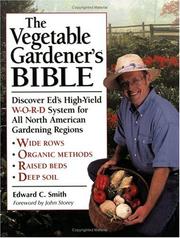
A thorough, beginner-friendly introduction to growing vegetables that covers soil, spacing, and crop-by-crop guidance — giving you the baseline knowledge every season-extension technique depends on.

Introduces intensive, small-space growing and the mindset of planning crops in successions and rotations, which is the conceptual bridge to four-season thinking.
Stretching the Seasons: First Tools and Techniques
BeginnerLearn the core season-extension tools — row covers, cold frames, low tunnels, and basic succession planting — and understand how to use them to grow beyond the standard frost dates.
▸ Study plan for this stage
Pace: 4–5 weeks, ~25–30 pages/day, with 2–3 days per week reserved for hands-on setup and planning
- Row covers (lightweight and heavyweight) as the simplest, most versatile season-extension tool and how they protect against frost, wind, and pests
- Cold frames and how to build or source one, position it, and manage ventilation to create a microclimate
- Low tunnels (hoop houses) as a step up in complexity and their role in extending both spring and fall seasons
- Succession planting principles: timing multiple sowings 2–3 weeks apart to ensure continuous harvest across seasons
- Frost dates, growing degree days, and how to use them to plan planting schedules that work with your local climate
- Crop selection for season extension: which vegetables thrive in cool-season conditions and which need protection
- Soil preparation and management in season-extended beds to maintain fertility and structure year-round
- Monitoring and adjusting: temperature management, watering, and ventilation in protected growing spaces
- What are the key differences between lightweight and heavyweight row covers, and when would you use each?
- How do you build or set up a cold frame, and what are the critical steps for managing temperature and moisture inside it?
- Explain the concept of succession planting and how it enables continuous harvest. How far apart should you space successive sowings?
- What is a low tunnel, how does it differ from a cold frame, and what are the main challenges in managing one?
- How do you use your local frost dates and growing degree days to plan a season-extension planting calendar?
- Which vegetables are best suited for spring and fall season extension, and why do some crops thrive in cool conditions while others struggle?
- Build or assemble a cold frame (or plan one in detail if building isn't immediately possible) and test temperature fluctuations over a week, recording daily highs and lows
- Create a succession planting calendar for your garden zone using Jabbour's methods: choose 3 crops and map out 4–5 sowings each, spaced 2–3 weeks apart, from early spring through late fall
- Purchase or make row covers (lightweight and heavyweight) and practice installing them over a garden bed; test how they affect soil and air temperature
- Research and document your local frost dates, growing degree days, and average first/last frost dates; use this data to adjust a planting schedule
- Plan a low tunnel setup for your garden: sketch the location, dimensions, materials needed, and ventilation strategy
- Conduct a crop trial: select 2–3 cool-season vegetables (e.g., lettuce, spinach, kale) and grow them in both protected and unprotected beds; compare growth rates and harvest dates
Next up: This stage equips you with the foundational tools and planning skills to extend your growing season; the next stage will deepen your knowledge of specific crops, advanced techniques like microclimate management, and year-round production systems that layer multiple season-extension strategies together.

Jabbour's companion volume walks through every month of the year, naming specific cold-hardy varieties and simple protection strategies, cementing the succession-planting mindset introduced in Stage 1.
Going Deeper: Cold Frames, Hoop Houses, and Winter Crops
IntermediateMaster the design, construction, and management of cold frames and hoop houses, and learn which crops genuinely thrive in winter conditions for reliable cold-weather harvests.
▸ Study plan for this stage
Pace: 8–10 weeks, ~25–30 pages/day, with 1–2 weeks between books for integration and hands-on work
- Cold frame design principles: orientation, materials, ventilation, and thermal mass for passive season extension
- Hoop house construction and management: frame types, covering materials, ventilation strategies, and microclimate control
- Winter crop selection and timing: which vegetables genuinely tolerate cold (spinach, mâche, arugula, kale, carrots, beets) and their specific temperature thresholds
- Soil preparation and fertility management for winter production: compost, amendments, and nutrient cycling in cold conditions
- Succession planting and crop scheduling: calculating planting dates backward from first frost and forward from last frost for continuous winter harvests
- Pest and disease management under cover: reduced pest pressure, fungal risks, and integrated approaches without synthetic inputs
- Microclimate monitoring: temperature, humidity, light, and soil conditions specific to covered growing systems
- What are the critical design differences between a cold frame and a hoop house, and when would you choose one over the other for your climate?
- How do you calculate backward from your first frost date to determine the planting date for a winter crop like spinach or mâche?
- What are the three main winter crops that reliably produce in cold climates, and what minimum temperatures can they tolerate?
- Describe the ventilation strategy you would use in a hoop house during a warm winter day to prevent overheating and fungal disease.
- How does soil preparation and compost management differ for winter crops compared to summer production?
- What are the advantages and disadvantages of different cold frame covering materials (glass, polycarbonate, plastic film)?
- How would you monitor and adjust microclimate conditions (temperature, humidity, light) in a covered growing system throughout winter?
- Build or assemble a small cold frame (2×4 ft minimum) using reclaimed materials or a kit; document its thermal performance over 2 weeks with daily temperature readings at dawn, midday, and dusk
- Create a winter crop succession plan for your specific location: identify your first frost date, select 3–4 winter crops, calculate backward planting dates, and map out a 12-week harvest window
- Design a hoop house layout on paper (or full-scale with stakes and string): specify frame type, covering material, ventilation openings, and orientation based on your site's sun exposure and wind patterns
- Prepare a winter garden bed: amend soil with finished compost, test soil pH and nutrients, and plant a test crop of spinach or mâche to observe germination and growth rates
- Conduct a microclimate experiment: place temperature/humidity data loggers inside and outside a cold frame or hoop house for 1 week; analyze the data and identify when ventilation or shading is needed
- Source and compare three different covering materials (polycarbonate panels, 6-mil plastic, row cover) by cost, durability, light transmission, and insulation value; create a comparison chart
Next up: This stage equips you with the practical skills and crop knowledge to extend your growing season year-round; the next stage will build on this foundation by exploring advanced techniques like aquaponics, season extension in extreme climates, and integrating livestock or perennial systems into a resilient whole-farm design.
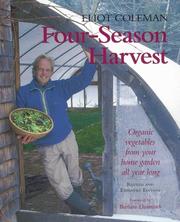
The canonical text on harvesting fresh vegetables through winter; Coleman introduces cold frames and low tunnels with deep horticultural reasoning, and this book is the intellectual core of the entire curriculum.

Coleman's follow-up scales up to high tunnels and unheated greenhouses, providing detailed crop lists, planting calendars, and management practices that build directly on the cold-frame foundation of the previous book.
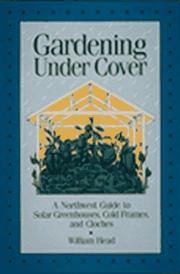
A focused, practical guide to building and managing cold frames, cloches, and greenhouses that adds construction detail and regional adaptability to complement Coleman's system.
Advanced Mastery: Designing a Year-Round System
ExpertSynthesize everything into a fully planned, year-round growing system — integrating succession planting schedules, structure management, soil health, and crop selection into a seamless annual cycle.
▸ Study plan for this stage
Pace: 8–10 weeks, ~40–50 pages/day. Allocate 4–5 weeks to "The New Organic Grower" (dense, technical), then 3–4 weeks to "Epic Tomatoes" (more narrative-driven). Include weekly integration sessions to connect concepts across both books.
- Whole-farm systems thinking: designing soil fertility, crop rotation, and succession planting as interconnected cycles rather than isolated tasks
- Coleman's four-season production model: extending the growing season through season extension structures (cold frames, low tunnels, high tunnels) and variety selection
- Succession planting schedules: calculating planting dates, spacing, and timing to ensure continuous harvest across all seasons
- Soil health as foundation: building and maintaining soil fertility through compost, cover crops, and minimal tillage practices
- Variety selection and breeding for season and climate: understanding how cultivar choice (especially tomatoes) enables year-round production
- Integrated pest and disease management within a closed-loop system: preventing problems through crop diversity, timing, and resistant varieties
- Record-keeping and adaptive management: using detailed notes to refine your system year after year
- Scaling and economics: balancing production goals with labor, infrastructure, and market demands
- How does Coleman's four-season production model work, and what specific structures and techniques does he recommend for extending the season in your climate?
- Design a succession planting schedule for a single crop (e.g., lettuce, beans, or tomatoes) across all four seasons, accounting for days to maturity, soil temperature, and your local frost dates.
- What is the relationship between soil health, cover crops, and long-term fertility in Coleman's system, and how would you implement this on your own land?
- How does variety selection—particularly in tomatoes, as detailed in LeHoullier's work—enable you to achieve continuous production across seasons?
- Create a simplified year-round crop rotation plan for a small garden or farm, explaining how you would prevent pest and disease buildup while maintaining soil fertility.
- What records would you keep to monitor and refine your year-round growing system, and how would you use that data to make adjustments?
- Map your local growing season: determine your first and last frost dates, average soil temperatures by month, and rainfall patterns. Overlay this with Coleman's season-extension techniques to identify where you could add 4–6 weeks of production.
- Build or design a season-extension structure (cold frame, low tunnel, or high tunnel) appropriate for your space and climate. Document materials, costs, and expected growing season extension.
- Create a detailed succession planting calendar for three crops (e.g., lettuce, beans, and tomatoes) across 12 months, including planting dates, transplant timing, and expected harvest windows.
- Conduct a soil test and design a 3-year soil-building plan using Coleman's methods: calculate compost needs, select cover crops for each season, and outline a minimal-tillage approach.
- Research and select 5–8 tomato varieties (drawing on LeHoullier's recommendations) that suit your climate and season-extension setup, noting maturity dates, disease resistance, and flavor profile.
- Draft a simplified integrated pest management strategy for your year-round system: identify 3–4 likely pests/diseases, and for each, describe how crop rotation, timing, variety choice, and diversity will prevent or minimize problems.
Next up: This stage equips you with a complete, systems-level blueprint for year-round production; the next stage will likely focus on refining specialized skills (e.g., seed saving, advanced propagation, or market-garden economics) or scaling your system to meet specific production or business goals.
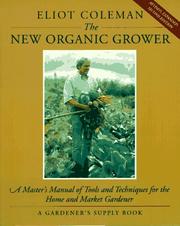
Coleman's comprehensive farming manual covers crop rotations, soil fertility, and whole-farm planning at a level of depth that allows you to design a truly self-sustaining four-season garden system.

While focused on tomatoes, this book models the expert-level thinking about variety selection, succession timing, and season extension under cover that you can apply to your entire crop portfolio.
Discussion
Keep reading
Paths that share books, cover the same subject, or open a related topic.