Michael Ondaatje Reading Order: Where to Start
Ondaatje is a poet who drifted into fiction, and his novels never entirely stopped behaving like poems — fragmented, image-led, indifferent to conventional plot. The efficient way in is to start with the famous novel, then double back to the book it grew out of, and only then decide how much of the early experimental work and the poetry you want. This order front-loads the most readable books and saves the difficult ones for when you have the ear for them.
Start Here: The Two Toronto-and-Desert Novels
BeginnerGet inside Ondaatje's method — braided timelines, a story told through images rather than events — using his two most accessible novels.
▸ Study plan for this stage
Pace: Two short novels, about 560 pages together, but give them three weeks rather than one. Both are built in sections of two to five pages that jump in time and place without warning, and they reward being read at roughly half the speed you would give an ordinary novel - twenty or thirty pages a sitting
- Braided time. Scenes are placed for resonance rather than sequence, and the reader is expected to hold several periods open at once instead of being led through them.
- The set piece as the unit of composition. A nun falling from an unfinished bridge, a tunnel dug under a lake, a bomb taken apart in a garden - Ondaatje builds outward from images like these rather than toward them.
- Names withheld. The patient is unnamed for most of a novel and characters are frequently introduced by what they do before you learn who they are.
- The camera eye. Ondaatje watches bodies at work with an attention closer to film or documentary than to psychological fiction; interiority is inferred from gesture.
- Characters carried between books. Hana and Caravaggio appear in both novels, and the later book expects nothing of you while the earlier one quietly turns into a prequel.
- History from underneath. In the Skin of a Lion is about the immigrant labourers who built Toronto and whose names are not in the record, which is the same interest that drives the two early collages later in this path.
- Prose written by a poet. Sentences are weighted for rhythm and image, and reading a paragraph aloud usually explains a difficulty that rereading it silently will not.
- Name a scene from either novel you can still see clearly, then check how many pages it actually occupies. The mismatch between vividness and length is the method working.
- How does The English Patient release the patient's identity, and how much of it is ever confirmed rather than inferred?
- Which characters appear in both novels, and what does the later book keep from the earlier one and what does it discard?
- In the Skin of a Lion is about people missing from the official record. What does the novel do about that absence besides notice it?
- Pick one paragraph you had to read twice. Was the difficulty in the syntax, in a jump in time, or in an image you had not yet placed?
- Read the opening two pages of In the Skin of a Lion aloud. It is verse rhythm carried into prose, and hearing it is the fastest way to understand what every book on this path is doing.
- Keep a list of section breaks in The English Patient with the year each section is set in. The novel never gives you this and building it yourself makes the structure visible in a way no amount of careful reading will.
- Re-read one chapter of In the Skin of a Lion immediately after finishing it. These books are designed to be reread in pieces rather than straight through, and testing that on a single chapter now teaches you how to read the four stages that follow.
- Decide, having met Hana and Caravaggio in The English Patient first, whether the non-chronological order improved them or gave something away. There is no correct answer and the question is the useful part.
Next up: These two novels teach the method on European and Canadian material; the next stage turns the same method on Ondaatje's own family and the country he was taken away from as a child.
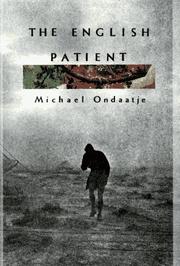
The Booker winner and the right entry point: a burned man in an Italian villa at the end of the war, told in fragments that assemble slowly. It is his most plotted novel, which makes it the gentlest introduction to a writer who usually refuses plot.

Read second even though it was published first — Hana and Caravaggio come from this book, and meeting them here after The English Patient turns it into a prequel with a payoff. It is the novel Ondaatje fans most often name as his best.
The Sri Lankan Books
IntermediateFollow Ondaatje back to the country he left as a child, in one comic memoir and one grief-stricken novel about the same place thirty years later.
▸ Study plan for this stage
Pace: Two short books, roughly 520 pages together, over two to three weeks - and the sharpest tonal reversal on this path, so do not read them in the same week. Running in the Family is the funniest thing Ondaatje has written and goes quickly; it is assembled from anecdote, photographs and poems and can b
- A memoir that admits it is inventing. Ondaatje states outright that the family stories are unreliable and keeps telling them anyway, which is a formal position rather than a disclaimer.
- Mixed forms inside one book. Running in the Family carries poems and photographs alongside the prose, which is the same collage instinct the next stage takes to its extreme.
- The Burgher family as comedy - the drinking, the dogs, the ruined marriages - rendered with affection and no defence.
- The same island written twice, thirty years apart, as myth and then as crime scene. Reading them in this order is what makes the second one land.
- Forensic detail used as a moral instrument. In Anil's Ghost the description of bones is the argument, not the atmosphere.
- A deliberate refusal to assign blame. Anil's Ghost describes a war with several guilty parties and declines to nominate one, which some readers regard as its integrity and others as its evasion.
- The absent son. Both books are shaped by Ondaatje having left as a child, which gives the memoir its comedy and the novel its distance.
- Where in Running in the Family does Ondaatje admit he is inventing, and does it change how you read the anecdotes that follow?
- What is the effect of dropping poems and photographs into a prose memoir - what do they do that a paragraph could not?
- Anil returns to Sri Lanka as a professional with an international mandate. What does the novel think of that position?
- The novel refuses to name a side as responsible. Is that a moral choice, a formal one, or an evasion?
- Having read the memoir first, what specifically does Anil's Ghost take away from you?
- Read Running in the Family with the photographs actually looked at rather than skipped past. They are placed, not decorative, and the book is arguing with them.
- Copy out one paragraph of bone description from Anil's Ghost and one paragraph of family anecdote from Running in the Family, and set them side by side. Same writer, same island, two entirely different uses of precision.
- Leave at least three days between the two books and note what you expected Anil's Ghost to be before you opened it. The reversal is the reason this stage exists.
- Mark every passage in Anil's Ghost where the prose slows into an image and stops advancing the story. Those are the moments where the poet is overriding the novelist, and the next stage is made almost entirely of them.
Next up: You have now seen Ondaatje use collage on his own life and on a war; the next stage goes back to the two books where the collage was the whole thing and there was no novel underneath it.
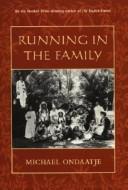
A memoir of his eccentric Burgher family in colonial Ceylon, assembled from gossip, photographs and invention. Read it before Anil's Ghost: it establishes the island as a place of comedy and myth, which is exactly what the later novel destroys.

A forensic anthropologist returns to Sri Lanka during the civil war to identify a skeleton. It is his angriest and coldest book, and it lands hardest immediately after the warmth of Running in the Family.
The Early Experiments
IntermediateGo back to the two book-length collages that made his name in Canada, and see where the fragmented style actually came from.
▸ Study plan for this stage
Pace: Two short books - around 113 and 160 pages - and by a wide margin the hardest reading on this path. Do not plan by page count. Give each of them a week and read in sittings of twenty or thirty pages. The Collected Works of Billy the Kid is not a novel in any normal sense: it is poems, prose fragment
- Documentary collage. Both books assemble invented documents - testimony, interviews, lists, photographs - and present them without a narrator to reconcile them.
- Two subjects who left almost no reliable record: an outlaw mythologised past recovery, and a cornet player who was never recorded. The absence of evidence is what attracts Ondaatje to both.
- A dead man given the first person. Billy speaks, which no responsible historical account would allow, and the book makes no apology for the liberty.
- Typography and white space doing work. Where a fragment sits on the page and how much blank surrounds it carries meaning, which is why these books do not read the same in every edition.
- Violence rendered as image rather than event. The most brutal passages are also the most static, and the effect is closer to a photograph than to a scene.
- Collapse written formally. Coming Through Slaughter fragments harder as Bolden loses coherence, so the reader's difficulty and the subject's are the same difficulty.
- The source of everything in the earlier stages. The braided timelines and free-standing set pieces of the novels are these techniques with a story fitted around them afterwards.
- What is The Collected Works of Billy the Kid, if it is not a novel and not a poetry collection? Try to answer in one sentence.
- What does giving Billy the first person let Ondaatje do that a historical account could not?
- Where does Coming Through Slaughter start to fall apart on the page, and does the timing match what is happening to Bolden?
- Both subjects left almost no record. What does Ondaatje appear to think is owed to people the record has lost?
- Which technique from these two books can you now point to in The English Patient or In the Skin of a Lion?
- Read The Collected Works of Billy the Kid once out of order, opening at random, before reading it front to back. It survives that treatment, which tells you something about how it is built.
- Put a page of Billy the Kid beside a page from the middle of The English Patient and mark what the two have in common. The answer is usually the sentence rhythm and the refusal to explain.
- Read the most fragmented section of Coming Through Slaughter aloud. Sound holds it together where sense does not, and that is the intended experience.
- Give yourself permission to put either book down for a week and come back. These two are short, difficult and non-linear, and reading them in pieces over time costs you nothing that reading them straight through would gain.
- Before moving on, write two sentences on what these books explain about the novels. If you cannot manage it, reread the twenty pages of Billy the Kid that struck you hardest rather than the whole thing.
Next up: With the collages behind you, the late novels read as a writer who has spent forty years learning to hide the same technique inside something that still behaves like a story.

Neither a novel nor a poetry collection but a documentary hallucination in prose, verse and photographs. Save it until you have read the novels, because it explains their construction better than any critic does.
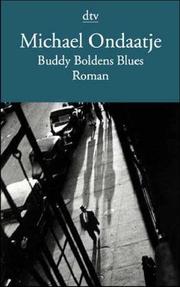
The same technique aimed at the New Orleans cornet player Buddy Bolden, who left no recordings. Shorter and stranger than the novels, and the clearest demonstration of Ondaatje's interest in people the record has lost.
The Later Novels
IntermediateRead the three twenty-first-century novels, where the fragmentation gets quieter and the books turn toward memory and secrecy.
▸ Study plan for this stage
Pace: Three novels, roughly 860 pages, about four weeks. These are quieter than everything before them and the fragmentation is buried rather than displayed, so they can be read a little faster - thirty or forty pages a sitting. Divisadero is the difficult one and the one to read first: it abandons its ow
- A novel that walks away from its own plot. Divisadero's mid-book abandonment is the boldest structural move in Ondaatje's fiction and the reason the path puts it after you already trust him.
- Secrecy as subject. The late books are repeatedly about what is deliberately not told - to children, by governments, within families.
- Children as observers. The Cat's Table and Warlight both narrate from a boy who understands less than the reader does, which does the withholding for Ondaatje without any formal trickery.
- Memory as an unreliable narrator with a job. The late novels are told by adults reconstructing childhoods, and the reconstruction is admitted to be partial.
- The autobiographical thread. A boy sailing from Colombo to England is the nearest thing to Ondaatje's own passage since Running in the Family, though the book is not a memoir.
- Fragmentation gone quiet. The jumps are still there but the seams are smoothed, and a first-time reader of Warlight might not notice the technique at all.
- Postwar London and wartime secrecy as material, treated with the same interest in the unrecorded that drove the two collages.
- At what point does Divisadero leave its own characters, and what does the second half share with the first besides a theme?
- Was the Divisadero gamble worth it? Argue the case both ways - readers genuinely split on this.
- What does a child narrator let The Cat's Table conceal that an adult narrator could not?
- In Warlight, what does the narrator learn about his mother, and how much of it is he told rather than deducing?
- Compare the fragmentation here with The Collected Works of Billy the Kid. What has actually changed - the technique, or only how visible it is?
- Mark the exact page where Divisadero changes course, then read the ten pages either side of it twice. Whatever the join is doing, it is doing it there.
- Read the shipboard sections of The Cat's Table and the family sections of Running in the Family close together. Two versions of the same childhood, one called memoir and one called fiction.
- In Warlight, keep a list of what the narrator is told and what he works out for himself. The gap between the two columns is the novel.
- Pick the late novel you liked least and identify whether the problem was the structure or the material. On this path that distinction is usually the whole disagreement.
Next up: You have now read the fiction from its most conventional to its most experimental; the poetry is where the sentences in all of it came from, and it is the only stage left that shows Ondaatje with nothing concealing the method.
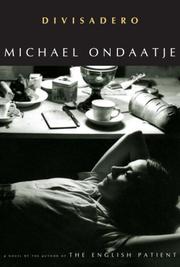
A California family shatters, and halfway through the novel abandons its own characters for a French writer's life. The structural gamble divides readers, so come to it already trusting him.

A boy sails from Colombo to England in 1954. The most straightforwardly enjoyable of the late novels and the most nearly autobiographical since Running in the Family.

Two children are left in postwar London with guardians who may be criminals or spies. A good place to finish the fiction: it is the late style at its most controlled.
The Poetry
IntermediateRead Ondaatje as the poet he started as, and hear the source of every sentence in the novels.
▸ Study plan for this stage
Pace: Two thin books - a selected poems of about 190 pages and a late collection of under 90 - and the schedule is unlike anything else on this path. Do not read either front to back in long sittings. Two or three poems at a time, over two to three weeks, rereading each one before moving on, is the right
- The source of the prose. Lines you will recognise in rhythm and image from every novel you have read, with nothing wrapped around them.
- A poet's selection of his own work. The Cinnamon Peeler is Ondaatje choosing what represents him, which makes its omissions as informative as its contents.
- The title poem, the single best-known thing he has written, and worth reading three or four times before going further into the book.
- Handwriting as the poetic companion to Anil's Ghost - the same island, the same war, the same losses of script and ritual, arrived at from the other direction.
- Image as the whole event. In the poems there is no plot at all to distract from what the novels were already doing, which is the clearest possible demonstration of the method.
- Compression. What takes a chapter in Divisadero takes twelve lines here, and comparing the two is the fastest way to see what Ondaatje thinks a scene is.
- Loss of the recorded and the ritual, which turns out to be the constant across the poems, the collages, the memoir and the novels alike.
- Which poem in The Cinnamon Peeler most resembles a passage from one of the novels, and can you name the passage?
- What does Handwriting say about Sri Lanka that Anil's Ghost could not, and why is the shorter form able to say it?
- Reading these last, do the novels look like poems with narrative attached, or like novels by someone with a poet's ear? The path has been arguing for one of these.
- What did Ondaatje leave out of his own selection, given what you now know he had written by 1991?
- Which single book on this path would you press on someone else, and would it be the one you expected when you started?
- Read the title poem of The Cinnamon Peeler aloud three times on three different days. It is short and it changes each time, which is the argument for reading everything on this path slowly.
- Put one poem from Handwriting beside one paragraph of Anil's Ghost about the same subject. The two were written by the same person about the same war and the difference in what each form permits is stark.
- Take a page of The English Patient that you marked in stage one and rewrite it as ten lines. You will not improve it, but you will find out exactly how much of it was already poetry.
- Go back to The Collected Works of Billy the Kid for twenty minutes now that you have read the poems. It reads as a far more coherent book from this side.
Next up: That is the whole shape of the work, read in the order that makes it legible rather than the order it was written: the sensible next moves are a reread of In the Skin of a Lion, which is the book most readers find has grown since the first pass, or the films and criticism built on this material, but the honest recommendation is to reread rather than to read on - these are books that give more on t
His own selection from three decades of poems, including the title poem that is the single best-known thing he has written. The right first poetry book because he chose it himself.
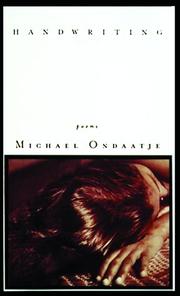
A short late collection about Sri Lanka, war and the loss of script and ritual — effectively the poetic companion to Anil's Ghost. Read it last, when the Sri Lankan material is already familiar.
Discussion
Keep reading
Paths that share books, cover the same subject, or open a related topic.