Michael Pollan Reading Order: Where to Start
Pollan has had three careers in one — garden writer, food journalist, and chronicler of psychedelics — and jumping in at the wrong one gives a badly skewed picture of him. Start with the food book that made him a household name, then take the short practical sequel, then go back to the garden and architecture books that show where the method came from, and finish with the recent work on cooking and consciousness. Every book stands alone, so this is about building the argument in the order that makes it strongest.
Start Here: The Omnivore's Dilemma
BeginnerFollow four meals back to their sources and acquire the question Pollan asks of everything: where did this actually come from?
▸ Study plan for this stage
Pace: Two to three weeks for one book of about 450 pages. It is built as four sections following four meals, so read a section at a time rather than by page count - the corn section is the densest and the slowest, and the hunting and foraging section is the one people finish in a night. One thing to know
- The organising question, asked literally rather than rhetorically: where did this actually come from, traced farm to plate, four separate times
- Industrial corn as the base of the American food system, and the reporting trick of following one commodity as a way of seeing an entire economy
- Big organic - the argument that organic certification became an industrial category rather than an alternative to one, which is the section that annoyed his own readership most
- Polyface Farm and the claim that grass, not meat, is the real crop. Joel Salatin is the book's hero and also a partisan source, and Pollan does not entirely mark the difference
- The hunted and foraged meal as a deliberately impractical control case. It is a thought experiment carried out in real life, not a recommendation
- First person as method: Pollan writes himself into the reporting because he is learning in public, and the not-knowing is load-bearing
- Externalities - the argument that cheap food is priced without its fuel, health and ecological costs, which is the through-line under all four meals
- What are the four meals, and what is each one meant to prove?
- Why does Pollan spend so long on corn before reaching anything a reader would recognise as dinner?
- What is his specific objection to industrial organic - is it an objection to organic certification, or to scale?
- The final meal is not repeatable by any ordinary reader. What is it doing in the book?
- Which parts of the argument depend on 2006 economics, and which would still stand if all the numbers changed?
- Pick one item in your own kitchen and trace it back as far as public information allows. Note where the trail goes cold, because that is Pollan's actual point
- After the corn section, read the ingredient list of one processed product and count how many entries derive from corn
- Before reading the Polyface section, write down what you expect a good farm to look like, then compare it with what Pollan describes
- When you finish, state the book's thesis in one sentence without using the word natural
Next up: The Omnivore's Dilemma deliberately refuses to tell you what to eat, which is exactly the gap the next stage fills.

Industrial corn, big organic, a Virginia grass farm, and a meal he hunts and forages himself. The book that reorganised how a generation talks about food, and by far the best first Pollan.
What to Actually Eat
BeginnerTurn the reporting into a usable position on eating, and see how little of nutrition science survives close reading.
▸ Study plan for this stage
Pace: About a week for both, and they are very different objects. In Defense of Food is short, roughly 200 pages, and argumentative - three or four sittings. Food Rules is sixty-four one-line rules and takes an hour; treat it as an index card summarising the previous two books, not as a fourth argument. R
- Eat food, not too much, mostly plants - and the fact that the entire book is an expansion and defence of seven words
- Nutritionism: the idea that food is best understood as a delivery vehicle for individual nutrients. Pollan treats this as an ideology rather than as a finding, which is the move the whole book turns on
- The Western diet as the unit of analysis, replacing any single nutrient as the thing to study
- The low-fat episode as his central historical case - a public health consensus that formed, held, and then shifted
- Where this is genuinely contested: nutrition scientists dispute how much of their field he writes off, and epidemiological nutrition research is hard for reasons that cut both ways. This is a position in a live argument, not a settled result
- The rules in Food Rules are heuristics chosen to be memorable rather than precise, and Pollan says so. Some are argued for in the previous book and some are simply good sense
- What does Pollan mean by nutritionism, and what would a working nutrition scientist say back?
- Why does he argue that studying single nutrients has failed, and what evidence does he actually offer for that?
- Which of the sixty-four rules were argued for in In Defense of Food, and which arrive unsupported?
- Is eat food a useful instruction or a circular one? What work is the word doing?
- Where does his scepticism about nutrition science stop being a critique of method and start being a general rule of thumb?
- Go through Food Rules and mark every rule that In Defense of Food actually argued for. Count what is left over
- Take one nutrient health claim printed on a package in your kitchen and check whether Pollan's argument predicts how that claim will age
- Read one recent account of nutrition-science methodology and set it beside Pollan's chapter on the same problem, then decide how much of his critique survives
Next up: With the food argument complete, the next stage goes back twenty years to the garden books where the method that produced it was invented.
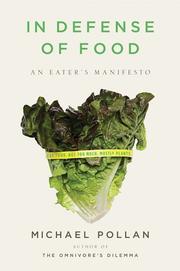
The direct sequel and the source of eat food, not too much, mostly plants. It is the prescriptive book The Omnivore's Dilemma deliberately refused to be, so it only lands properly second.
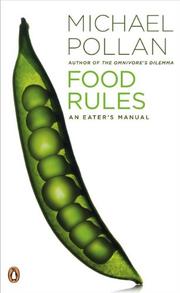
Sixty-four one-line rules distilled from the previous two books. Almost a pamphlet, and best read straight after In Defense of Food as its index card summary.
Back to the Garden
IntermediateRead the early nature and design writing, where Pollan's habit of learning a subject by doing it badly first was formed.
▸ Study plan for this stage
Pace: About four weeks, and expectations need resetting: only one of these three is about food. The Botany of Desire is four self-contained essays across roughly 270 pages and is the easiest reading Pollan has ever done. Second Nature is his first book and is rougher, more personal and slower. A Place of
- The reversal at the centre of The Botany of Desire: the plant as the agent and the human as its pollinator, with apples, tulips, cannabis and potatoes each mapped onto a human desire
- The genetically modified potato chapter as his first sustained industrial-agriculture reporting - read it as the seed The Omnivore's Dilemma grew from
- Second Nature's case against the American lawn, which is really an argument about what nature is for and who gets to decide
- The garden as a third position between wilderness preservation and total use - the idea that survives into every later book
- A Place of My Own as the clearest statement of the method: build the hut badly, then read everything about hut-building afterwards. Learning by incompetence, reported honestly
- Reading these late means watching a writer assemble the equipment he will later point at food, and then at consciousness
- What does The Botany of Desire gain by telling each story from the plant's side, and where does the conceit strain?
- What is Pollan's objection to the lawn - is it aesthetic, ecological, or political?
- Second Nature is far more personal than the food books. What does the earlier voice do that the later one no longer does?
- What does A Place of My Own reveal about how Pollan learns a subject before he writes about it?
- Which specific ideas from the potato chapter reappear in The Omnivore's Dilemma, and what had he learned in between?
- Read the potato chapter of The Botany of Desire immediately after rereading a few pages of the corn section, and list what changed in the intervening years
- Pick a plant you grow or eat regularly and write a page of its story from the plant's point of view
- While reading A Place of My Own, take on one small manual task you are genuinely bad at, and notice what reading about it afterwards adds that reading first would not have
- Put the opening pages of all three books side by side and describe in a paragraph how the prose changed across twenty years
Next up: With the method visible in its original form, the last stage follows it into two subjects nobody could have predicted from a book about lawns.

Apples, tulips, cannabis and potatoes, each told from the plant's point of view as a story about domesticating humans. The bridge between the garden books and the food books, and the most purely enjoyable thing he has written.
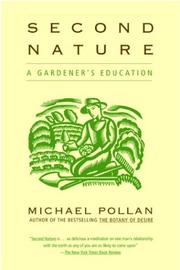
His first book: five years of failing at a Connecticut garden, and an argument against the American lawn. Read it after The Botany of Desire to see the same ideas in rougher, more personal form.
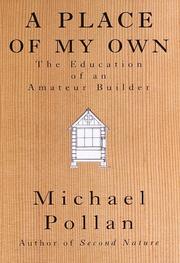
He builds a writing hut in the woods with almost no carpentry skill. Not about food at all, and the clearest statement of his method — learn by doing the thing, then read everything about it afterwards.
Cooking, and Then Consciousness
IntermediateFollow the late turn from what we eat to what we do with it, and then to drugs and the mind.
▸ Study plan for this stage
Pace: Five to six weeks - these are the longest books in the path. Cooked runs around 470 pages in four parts and is best read one element at a time with actual cooking in between. How to Change Your Mind is around 460 pages and is the densest thing he has written, mixing science history with trial report
- Fire, water, air and earth as four transformations - barbecue, braising, bread and fermentation - and the claim that cooking is what made us human
- Cooked as the practical conclusion of the food books: having told you what to eat, he argues that you should cook it yourself, and treats the decline of home cooking as the real problem
- The psychedelic research history - the 1950s and 1960s work, the political shutdown, and the revival at Johns Hopkins and NYU. The archival reporting is the strongest part of How to Change Your Mind
- Ego dissolution and the default mode network as the mechanism he reports. This is a hypothesis under active study, not an established finding, and he is clearer about that than his popularisers are
- The three plants of the last book - opium, caffeine, mescaline - chosen so that the drug books and the garden books turn out to have been the same project all along
- Legal and personal risk written about openly, including the opium essay that was cut when it was first published
- First person as evidence: at his best it is the only way to report an interior experience, and at his weakest it is a sample of one. Both happen in these books
- What is the argument that cooking made us human, and whose research is it built on?
- Cooked has four elements and four methods. Is that structure earned by the material, or imposed on it?
- What does Pollan claim psychedelics do, and how much of the claim rests on his own experience rather than on the trials he reports?
- Why does caffeine belong in a book with mescaline and opium? What does its inclusion argue?
- Looking back across all four stages, what is the single method that connects the hut, the garden, the farm, the kitchen and the mushroom?
- Cook one thing from each of Cooked's four parts before you finish the book. The argument is close to unassessable from an armchair
- Give up caffeine for the length of the caffeine essay, as Pollan does, and read that essay during withdrawal
- Find one of the Hopkins psilocybin trials he reports and compare its stated effect sizes and sample size with the book's account of it
- Write one paragraph on where his first-person method is the strongest evidence in a book, and one on where it is the weakest
Next up: You now have the whole arc - hut, garden, farm, kitchen, mind - and the honest next step is one of the primary sources he keeps pointing at rather than another book of his.
Fire, water, air and earth — barbecue, braising, bread and fermentation — as the four transformations that made us human. The natural endpoint of the food books: having told you what to eat, he now argues you should cook it.
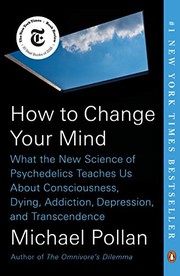
The history and revived science of psychedelics, with Pollan taking them himself. A genuine change of subject, and the point at which reading him chronologically stops helping — come to it once you trust his reporting.
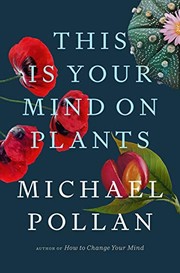
Opium, caffeine and mescaline, three long essays that fold the drug books back into the garden books. Read it last: it is the one place where all three of his careers are visibly the same project.
Discussion
Keep reading
Paths that share books, cover the same subject, or open a related topic.