J.M. Coetzee Reading Order: Where to Start
Coetzee is a writer people bounce off if they start in the wrong place, because his most famous book is also his coldest. This order gives you the three novels that made his reputation first, then the allegories and the essayistic fiction, then the autobiographical trilogy that reframes everything before it, and finally the late Jesus novels, which only make sense once you know how he uses parable. Read in this sequence, the austerity stops looking like coldness and starts looking like method.
Start here: the three that made his name
IntermediateMeet Coetzee's central subject — a person stripped of power inside a system that will not explain itself — in the three novels where it is clearest, and decide whether his prose is for you.
▸ Study plan for this stage
Pace: Four weeks for 644 pages: Waiting for the Barbarians 178, Life & Times of Michael K 214, Disgrace 252. None of these is long and all three read slowly, because the sentences are short, plain and load-bearing. Twenty-five pages a sitting is right, and each of the three deserves a day's gap before the
- A warning before the third book, because it matters more than the reading order does. Disgrace contains a rape and is largely about its aftermath, told from the perspective of a father who is not the victim. It is unflinching, it offers no consolation, and it does not resolve. If that is not somethi
- Coetzee's prose is spare to the point of austerity: present tense, plain vocabulary, no ornament, very little interiority granted to anyone but the narrator. Read in the right order this stops looking like coldness and starts looking like method.
- Waiting for the Barbarians is the best possible entry because it is a fable: no country, no date, no proper nouns for the Empire or its enemies. Learning to read that refusal to name is the first skill this path teaches.
- The Magistrate's complicity is the novel's real subject. He is decent, he objects to the torture, and he is part of the apparatus — Coetzee is interested in the liberal who deplores the system that feeds him, which is a self-portrait of a kind.
- Life & Times of Michael K gives you the purest Coetzee protagonist: a man who survives by refusing to be interpreted, who will not explain himself, and who slips out of every institution that tries to hold and classify him.
- Its second section switches to a medical officer desperate to make Michael K mean something. That switch is the novel's argument — the reader has been doing the same thing for 150 pages.
- Disgrace is set in the first years after apartheid and refuses every available political consolation. David Lurie is not endorsed by the novel; he is simply not condemned in the terms a reader wants, and the discomfort that produces is deliberate.
- The dogs in Disgrace, and what Lurie ends up doing with them, are where the book locates whatever grace it has. Nothing in the human plot carries it.
- What does the Magistrate believe he is doing when he takes in the barbarian girl, and what does the novel suggest he is actually doing?
- Why does Coetzee refuse to name the Empire, and what would be lost if he set the book in South Africa explicitly?
- What does Michael K want? Answer it honestly, and notice how little the text gives you.
- The medical officer wants Michael K to be a symbol. Are you doing the same thing, and does the novel let you stop?
- In Disgrace, why does Lucy make the choice she makes, and how much of the reader's frustration with it is the point?
- Does Lurie change over the course of Disgrace? Locate the strongest evidence for yes and for no.
- Read the first two pages of Waiting for the Barbarians twice and note what information a conventional novel would have given you that Coetzee withholds. That list is your reading instructions for everything after.
- In Michael K, mark every time someone tries to name or categorise him — patient, gardener, prisoner, parasite. The tally is the book.
- Before starting Disgrace, decide how you will read it: in a few long sittings or spread out. Most readers find the concentrated version less punishing, not more.
- After Disgrace, write down what you think the novel's position is on Lucy's decision. Then find the sentences that support it. Most readers discover the sentences are not there.
- If you stop after two books, that is a legitimate stopping point and this path acknowledges it.
Next up: You have met three protagonists who cannot or will not narrate themselves, which is exactly the problem the next stage makes explicit.
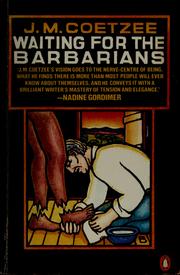
The best possible first Coetzee: a short, propulsive fable about an imperial magistrate on a nameless frontier. It carries all his themes with none of the difficulty, and it teaches you to read his refusal to name places and dates.

His first Booker winner, and the purest version of the Coetzee protagonist — a man who survives by refusing to be interpreted. Read second, because the frontier fable prepares you for a novel that withholds even more.
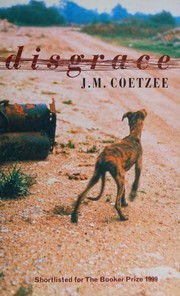
The second Booker and the most read of his books, but a punishing first one. Placed third so you already trust him: by now you know he is not endorsing his professor, only refusing to console you about him.
The core: allegory and argument
BeginnerSee Coetzee turn fiction into a device for arguing — with the canon, with apartheid, and with the reader — and learn to hold his narrators at the right distance.
▸ Study plan for this stage
Pace: Four to five weeks for 606 pages: Foe 160, Age of Iron 213, Elizabeth Costello 233. Foe is short and disorienting and should be read in as few sittings as possible. Age of Iron is a single sustained letter and reads faster than its length. Elizabeth Costello is eight discrete lectures and works best
- Foe rewrites Robinson Crusoe with a woman castaway who cannot get her story told and a Friday whose tongue has been cut out. The subject is not the island; it is who is permitted to narrate and who is narrated about.
- Placed here it answers the previous stage directly: after three novels whose protagonists refuse or cannot explain themselves, Coetzee writes the book about that silence and about the author who wants to sell it.
- Foe's final section abandons realism entirely and goes underwater. It is his most experimental page and the closest he comes to stating that some silences cannot be represented by a writer at all.
- Age of Iron is the opposite technique: a first-person confession, a dying classics teacher writing an unsendable letter to her daughter abroad while Cape Town burns in the late 1980s. It is his most direct novel about apartheid and his warmest.
- The homeless man Mrs Curren takes in is the novel's device: she needs a witness and he is completely unqualified to be one, which makes the confession honest rather than performed.
- Elizabeth Costello is the hinge of the late career. Eight lectures delivered by a novelist Coetzee invented, so that he can put arguments — about animals, evil, realism, the humanities — into circulation without owning any of them.
- Two of its lessons were first delivered by Coetzee as actual academic lectures, with the fiction as the delivery mechanism. That is the whole point: a man asked to give a lecture instead read a story about a woman giving a lecture.
- The animal-rights lessons compare industrial slaughter to the Holocaust, in Costello's voice, and other characters in the book object at length. Coetzee is constructing an argument he does not have to defend, and readers reasonably differ on whether that is intellectual courage or evasion.
- Everything late — including the Jesus novels — depends on you being comfortable with a fiction that argues. If Elizabeth Costello does not work for you, the final stage will not either.
- What does Susan Barton want from Foe, and what does he want from her story?
- Friday cannot speak. What does Coetzee gain by that, and what is he saying about his own position as a white South African writing black characters?
- In Age of Iron, why does Mrs Curren choose Vercueil as her witness, and what does he give her that a suitable listener could not?
- Age of Iron is addressed to a daughter who will not read it until after the writer's death. What does that do to what can be said?
- In Elizabeth Costello, is Costello right about animals? Note where the book supplies the counter-arguments and how good they are.
- What is Coetzee doing by putting his own lecture invitations inside a fiction — protecting himself, or making a point about how arguments travel?
- Read the first chapter of Robinson Crusoe, or a summary of it, before Foe. Half the novel's effect requires knowing what it is arguing with.
- In Age of Iron, mark the passages where Mrs Curren's classical learning fails her. The novel's argument about the value of European humanism is entirely in those moments.
- Read the Lives of Animals lessons in Elizabeth Costello, then the objections that follow them, then the lessons again. Coetzee designed them to be re-entered.
- After Elizabeth Costello, write down which lesson you found most convincing and which you found most evasive. You will use both judgements in the final stage.
- Set the last page of Foe beside the last page of Michael K. Two refusals to conclude, five years apart, doing different work.
Next up: Having watched him invent a novelist to speak through, the next stage watches him do it with his own life.
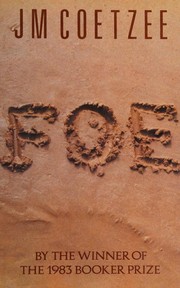
A rewriting of Robinson Crusoe in which the castaway woman cannot get her story told and Friday has no tongue. It is the book where Coetzee's interest in who is permitted to narrate becomes explicit, so it belongs right after the three silent protagonists.

His most direct novel about late apartheid: a dying classics teacher writing to her daughter as Cape Town burns. Read after Foe, because its first-person confession is the opposite technique and shows the range.
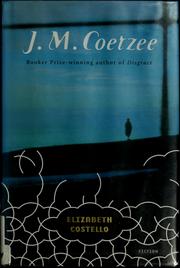
Eight lectures given by a novelist Coetzee invented so he could argue without owning the argument. It is the hinge of the late career and the essential preparation for the Jesus novels.
The autofiction: Scenes from Provincial Life
BeginnerRead the three memoir-novels in sequence and understand why Coetzee wrote his own life in the third person and the present tense — and, in the last volume, from beyond his own death.
▸ Study plan for this stage
Pace: Four weeks for 625 pages: Boyhood 186, Youth 173, Summertime 266. The first two are short and brisk. Read them in order and close together — the trilogy's effect is cumulative and Summertime is largely a demolition of the previous two. Give Summertime a full fortnight; its interview structure is eas
- All three are written in the third person and the present tense: 'he' rather than 'I', 'is' rather than 'was'. Coetzee is writing his own life as though it were happening to someone else, in front of him, right now.
- That device is the whole project. It denies the memoirist's usual advantages — hindsight, self-forgiveness, the shaping of a life into a story — and it produces a self-portrait with no warmth in it whatsoever.
- Boyhood is the plainest of the three: Worcester and Cape Town in the 1940s and 1950s, a child navigating Afrikaans and English, a mother he cannot bear to be loved by, a father he despises, and a farm he loves. The distancing device is at its most legible here.
- The child in Boyhood is not sympathetic and is not meant to be. He is snobbish, cold to his mother, and aware of his own dishonesty, and Coetzee declines to soften any of it from the vantage of fifty years later.
- Youth covers London, work as a computer programmer, and an apprenticeship to art that fails. It is deliberately unflattering — the young man is pretentious, sexually inept and self-deceiving — and read after Boyhood the self-punishment reads as a sustained project rather than a pose.
- Summertime is the trapdoor. A biographer is researching the late 'John Coetzee' and interviews five people who knew him in the 1970s, none of whom found him impressive. It is autobiography written from beyond the author's own death.
- Its interviewees contradict the record, contradict each other, and are themselves plainly unreliable. The book stages the impossibility of getting a life right, which is the same problem Foe posed about narration thirty years earlier.
- Summertime only detonates if you have read the first two, because much of its force comes from watching the earlier volumes' claims be flatly denied by people who were there.
- Read as a trilogy, this is the answer to the question the whole path raises: why does a writer this severe with his characters keep going? Because he is at least as severe with himself.
- What does the third person and present tense actually prevent Coetzee from doing? Try rewriting a paragraph of Boyhood in the first person past and see what changes.
- In Boyhood, what does the boy want from the farm, and what does he already know he will not be allowed to have?
- Youth's narrator wants to be an artist and produces almost nothing. Is the book cruel to him, accurate about him, or both?
- In Summertime, which interviewee do you trust most, and what makes you trust them?
- What do the notebook fragments that frame Summertime add, given that they too are invented?
- After all three, what would you say Coetzee's actual view of himself is — and is the trilogy evidence for it or a defence against having to give it?
- Read Boyhood and Youth within a week of each other. The gap between the boy's certainty and the young man's paralysis is easiest to feel at close range.
- Keep a note of what Boyhood and Youth claim about the young Coetzee's family, work and love life, then check each claim against what the interviewees say in Summertime.
- In Summertime, read the five interviews in a different order the second time. The book is designed so the sequence changes the portrait.
- Write two sentences of your own life in Coetzee's third-person present. It is an unpleasant exercise and it explains the trilogy faster than any commentary.
- Finally, ask which of the three volumes is closest to being a novel. Most readers say Summertime, which is also the one presenting itself as research.
Next up: With the self dismantled and the parable technique fully in hand, the late novels can be read as what they are rather than as a puzzle.
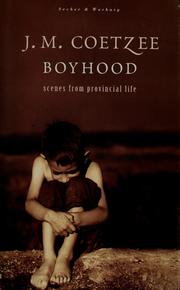
The childhood in Worcester and Cape Town, written as 'he' rather than 'I'. Start the trilogy here: it is the plainest of the three and shows the distancing device at its most legible.
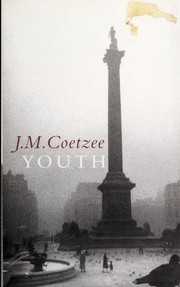
London, computing work, and a failed apprenticeship to art. It is deliberately unflattering, and reading it after Boyhood makes the self-punishment feel like a project rather than a pose.
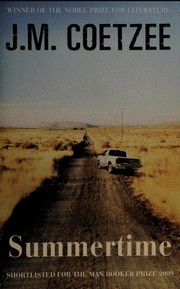
The trilogy's trapdoor: a biographer interviews people who knew the late 'John Coetzee'. It only detonates if you have read the first two, so it goes last.
The completist tail: the Jesus trilogy
BeginnerFollow the late allegorical turn to its end, and be able to say what Coetzee is doing with the parable form after he stopped writing about South Africa.
▸ Study plan for this stage
Pace: Four weeks for 560 pages: The Childhood of Jesus 288 and The Schooldays of Jesus 272. Read them consecutively with no gap — they are one argument split across volumes and the second opens more or less where the first stops. Both are deliberately flat, so 30 pages a sitting is enough; forcing them pr
- A man and a boy arrive by boat in a Spanish-speaking country, having had their memories washed. They are given new names, new ages and a new language, and nobody around them finds any of this remarkable. Nothing in the novel explains it.
- The flatness is the technique, not a failure. The prose is affectless, the setting is a benign bureaucratic nowhere, and the characters converse in a Socratic register that nobody uses in life. If you have read Elizabeth Costello you already know why.
- The country is a place with no hunger, no passion and no history — an arranged goodwill in which everyone is reasonable. Coetzee is testing whether a life without appetite or memory is worth having, and the boy is the test.
- Davíd refuses to accept that things mean what everyone says they mean, starting with numbers and letters. His resistance to being taught is the same refusal Michael K makes against being interpreted, transplanted into a child.
- Don Quixote is the boy's reading primer, and Coetzee's choice is exact: a book about a person who insists on his own account of reality against everyone else's.
- The title is not a claim that the boy is Jesus. It sets an expectation of allegory that the novels then decline to satisfy, which is itself the joke and the argument — you will spend both books trying to decode a text built to resist decoding.
- The Schooldays of Jesus adds dance, number mysticism and a violent crime, and its trial sequence is the closest the sequence comes to conventional drama. The philosophy of the Academy is presented seriously and left unadjudicated.
- The sequence has a third and final volume that closes the argument. It is not part of this stage, but when you reach the end of Schooldays you will want it, and you should go and find it.
- Read against everything before it, the late turn is consistent rather than strange: a writer who has spent a career on people who will not explain themselves, finally writing a world where explanation itself is not available.
- What is missing from Novilla that the reader keeps expecting, and what does its absence do to the reading experience?
- Why does Simón take responsibility for the boy, given that he has no memory of any obligation?
- What exactly does Davíd refuse to learn, and is his refusal wisdom, stubbornness or something the novel deliberately leaves open?
- What is Inés for, structurally? The novel treats her arrival as necessary — why?
- In The Schooldays of Jesus, is the Academy's philosophy of number and dance taken seriously by the book, mocked, or held at a distance?
- Having read the whole path: is the late work a departure from the South African novels, or the same book with the politics removed?
- Read the first thirty pages of The Childhood of Jesus and list every question you have. Keep the list; almost none of it gets answered, and knowing that early makes the rest readable.
- Note every time an adult explains the world to Davíd and he rejects the explanation. The pattern is the novel's spine.
- Read a summary of Don Quixote's opening if you do not know it. The primer is doing real work.
- Resist allegorising as you read, then allow yourself one page of allegory at the end of each volume. Watching your own interpretations fail is the intended experience.
- Finally, set the last page of The Schooldays of Jesus beside the last page of Waiting for the Barbarians. Thirty-six years apart, and both end with a man who has understood less than he hoped and is still standing there.
Next up: You have the fables, the apartheid novels, the arguing fictions and the autofiction, which is the whole shape of the career — the essays and the remaining novels can be taken in any order.

A man and a boy arrive in a Spanish-speaking country with their memories washed. Deliberately flat, deliberately unexplained — it needs the reading muscles Elizabeth Costello builds.

Continues the boy's story into dance, number and a murder. Read straight after the first: the trilogy is one argument split into three, and the pieces do not stand alone.
Discussion
Keep reading
Paths that share books, cover the same subject, or open a related topic.