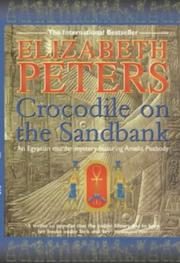
Start with Crocodile on the sandbank. There is no alternative worth arguing about: the Emersons age in real time across twenty novels, a small boy in book three is a working archaeologist by book ten, and the household accumulates people the later books never pause to reintroduce. Publication order and internal chronology are the same thing here.
The one thing to know before you open it is that the voice takes about fifty pages to click, and readers who bounce off this series almost always bounce there. Amelia narrates in a deliberate parody of the Victorian lady traveller's memoir — orotund, self-congratulatory, entirely certain — and the comedy lives in the gap between what she reports and what you can plainly see. Do not rush the first novel waiting for a murder to start behaving like a murder.
The first three
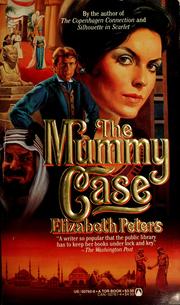
Crocodile on the sandbank, The curse of the Pharaohs, The mummy case. The seasonal rhythm is set in the second book — England in summer, an Egyptian dig in winter — and becomes the skeleton of every volume after it. Ramses arrives in the third as a small boy who talks like a Victorian professor, and the series quietly reorganises itself around him without announcing that it has.
Set your expectations honestly: the murder plots are the weakest part of this series and always have been. If you are reading for the mystery you will be disappointed by book four. The household is what you stay for. The Egyptology, by contrast, is real — Peters held a doctorate in the field under her own name, and the sites, seasons, permits and professional feuds hold up to checking.
The early run
Lion in the valley, The deeds of the disturber, The Last Camel Died at Noon. Sethos, the Master Criminal, arrives here and turns into the series' most durable device: a villain Amelia cannot see clearly because he is the one person who will not be straight with her.
Two warnings. The deeds of the disturber moves the cast to London, which proves how much of the pleasure was the setting; most readers rank it lowest of the early books, and it earns its place mainly for the relatives it introduces, several of whom return much later. The Last Camel Died at Noon is an open pastiche of Rider Haggard's lost-race adventures and is barely a mystery at all. It pays off several books later rather than in itself.
The peak years
The snake, the crocodile, and the dog, The hippopotamus pool, Seeing a large cat. The amnesia plot in the first of these ought to be a disaster and is instead the emotional centre of the series, because it makes Emerson fall in love with his own wife again in front of her — which works only because six previous volumes built the marriage.
The hippopotamus pool is a soft restart, with a jump in time and new permanent characters, and is the only other point at which someone could reasonably begin. Seeing a large cat introduces Manuscript H, third-person sections following Ramses that Amelia did not write and cannot control. Note the page where the pronoun changes: it is the most important formal decision in the series and it is made very quietly.
Where to stop
The ape who guards the balance, The falcon at the portal, He shall thunder in the sky — then stop. Read the last two back to back with nothing in between; The falcon at the portal is the darkest volume, built on an accusation against a family member and a public marriage breakdown, and it deliberately does not resolve. He shall thunder in the sky pays off roughly eight books of setup at once in Cairo in 1914.
There are twenty novels. These twelve are the arc, and He shall thunder in the sky is the summit; the remaining eight are enjoyable but never reach it again, leaning harder on wartime espionage as the domestic comedy thins. You are not leaving a story unfinished by stopping here. More series reading orders are on Discover.
Follow the full ordered path here: Amelia Peabody Reading Order: Where to Start.