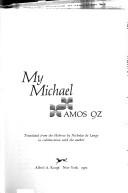
Start with A Tale of Love and Darkness. The obvious alternative is My Michael, the early novel that made his name and reads in a week, and it is a perfectly good book — but the memoir is the key to everything else. The cramped Jerusalem flat, the scholarly father, the mother who killed herself when Oz was twelve, and a state being founded in the street outside: once you have those, every novel afterwards is furnished out of the same rooms.
Know what you are taking on. It is by a wide margin the longest book here, and it circles rather than advances, returning to the same few scenes for hundreds of pages before it will say plainly what happened. The suicide is withheld almost to the last page, and the delay is the structure rather than coyness. If three weeks of that sounds like too much, read My Michael first — 252 pages, a 1950s Jerusalem marriage seen through a wife whose inner life has turned violent while nothing outward happens at all — and come back to the memoir once you want to know where it came from.
Everything on this path is translated from Hebrew, and several volumes credit Nicholas de Lange, a partnership that ran for decades. The English voice stays remarkably consistent across the whole body of work.
The three major novels
A Perfect Peace, Black Box, Judas, in that order. Each is set in one confined space, and the confinement is the method: Oz writes about national events by keeping the camera in a kitchen.
A Perfect Peace treats the kibbutz as a working institution with a budget, a committee and a founding generation that will not hand over. Oz lived on one for around twenty-five years, writing in the mornings on a work allocation, which is why the rotas and the small politics are exact. Black Box is built entirely from letters, telegrams and lawyers' notes; the form makes every character self-serving and unreliable, and it is the funniest of the three. Judas, his last novel, is mostly two or three people talking in one house, arguing about whether the man who betrays his own side might be the one who saw furthest — through Judas Iscariot, a 1948 dissenter and a student in 1959. It supplies the strongest case on both sides and settles neither.
The quieter, stranger books
To Know a Woman, Fima, The Same Sea, Scenes from Village Life. These are books to read once you already trust the writer, which is why they sit here rather than at the front.
To Know a Woman is deliberately eventless: a retired intelligence officer gives up the work, cleans the house, tends the garden, and the novel pointedly refuses to hand him a mystery. Fima is the comic inversion, a man who settles the Middle East over breakfast and cannot find his own keys. The Same Sea is a novel in verse with the author walking in as a character among his own creations — read the first ten pages aloud, and you will know within a quarter of an hour whether to go on. Scenes from Village Life is eight linked stories in one invented village, each built around an absence, and closer to Kafka than to anything in the earlier realism.
The political writing
In the Land of Israel is reportage gathered in 1982: Oz travelled the country and the territories with a notebook and printed people's arguments at length in their own words, largely without rebutting them. How to Cure a Fanatic is two lectures treating fanaticism as a condition that precedes whatever cause it attaches to. Dear Zealots collects three late essays and openly restates positions he had held for decades.
Read these knowing what they are. Oz was a founding figure of Peace Now and argued for partition from shortly after 1967 until his death in 2018; these books make one participant's case in a long and contested argument, and a reader who wants the opposing positions put with equal force will have to go outside this path for them.
Where to stop
Four books — the memoir, My Michael, Black Box and Judas — will give most readers the whole writer. The quieter books and the essays are for people who want the argument as well as the fiction. More literary reading orders are on Discover.
Follow the full ordered path here: Amos Oz Reading Order: Where to Start.