Michael Lewis Reading Order: Where to Start
Michael Lewis writes about the same thing whatever the setting: a system everybody believes in, and the handful of outsiders who noticed it was wrong. Chronology is the worst way in, because his first book is his least representative and his best-known ones come from the middle. Start with the two that teach the method, then read the finance books as a set, then the books about people rather than markets, and finish with the later work, where the outsider is usually a government scientist nobody wanted to listen to.
Start Here
BeginnerLearn the Lewis move — find the person who saw it first, explain the system through them, and make a technical subject read like a heist.
▸ Study plan for this stage
Pace: 1–2 weeks. Moneyball is 317 pages and The Big Short 291, and both move fast — 50 pages a sitting is normal and most readers go faster. Lewis's books are almost entirely standalone, so the order in this path is about appetite, not sequence; these two come first because they teach the method in its cl
- The Lewis move: locate the person who noticed the mispricing before anyone else, then explain the entire system through their eyes
- Moneyball's argument is about how institutions value people — scouts' intuition versus recorded outcomes — and baseball is the test case, not the subject
- The Big Short converts collateralised debt obligations and credit default swaps into character: each instrument arrives attached to someone who bet against it
- Both books need an unlikeable or awkward protagonist to work, because a comfortable insider would have no reason to see the flaw
- Lewis compresses technical explanation into the moment a character first understands it, which is why the reader never feels lectured
- The books are structurally similar and consciously so — same shape, different system — which is worth spotting early so the later books read as variations
- What he leaves out is part of the method: consequences for people outside the cast get very little page space, and that is a fair criticism to carry forward
- State the Lewis method in one sentence after finishing both, then check it against every later book in the path.
- In Moneyball, how much of the argument is about statistics and how much about institutional resistance to being measured?
- In The Big Short, who is the reader meant to root for, and is that comfortable by the last chapter?
- Where does each book explain a technical mechanism, and how many sentences does it actually spend doing so?
- Which characters in either book are given interiority and which are used as scenery? What does that pattern serve?
- Write down the three financial instruments in The Big Short in your own words before reading anyone else's summary. If you cannot, reread that chapter — the book is designed to make it possible.
- List the four or five outsiders across the two books and what each was ignoring that everyone else respected.
- Find the passage in Moneyball where a scout is quoted at length, and decide whether the book is fair to him.
- Sketch the shape of each book in five beats. The identical skeleton will become obvious and will make the rest of the path faster to read.
Next up: With the method clear, the finance books can be read as one continuous twenty-five-year account of Wall Street rather than as separate titles.
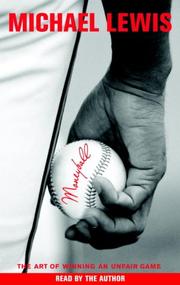
Baseball scouting versus statistics, via the underfunded Oakland A's. The purest demonstration of his method and the least prior knowledge required; if you do not enjoy this one, the rest will not convert you.
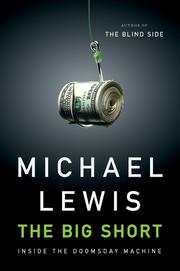
The 2008 mortgage collapse told through the few investors who bet against it. Read it second because Moneyball has already taught you to watch for the contrarian, and because this is the book where the stakes stop being a game.
The Finance Books
BeginnerTrace Wall Street from the 1980s bond desk to the microsecond, and see how his scepticism of finance hardened over twenty-five years.
▸ Study plan for this stage
Pace: 2–3 weeks for Liar's Poker (304 pages), Flash Boys (320) and Boomerang (215). Boomerang is essay-length pieces and can be read in single sittings. Read Liar's Poker first for the chronology of the industry even though it was written first — it is the one book here where publication order and subject
- Liar's Poker is memoir rather than reportage: Lewis was inside Salomon Brothers, and the book's authority and its blind spots both come from that
- The bond-trading floor of the 1980s is the origin story for everything in The Big Short — same instruments, twenty years earlier and less abstract
- Flash Boys moves the subject from mispriced assets to mispriced time, and the villain is infrastructure rather than a person
- Boomerang treats the sovereign debt crisis as national character study — Iceland, Greece, Ireland, Germany, California — which is the most contestable thing he has done and should be read sceptically
- Lewis's scepticism hardens across these three: Liar's Poker is amused, Flash Boys is angry, Boomerang is bleakly comic
- A recurring structural problem to notice: when he cannot find an outsider hero, the book becomes a set of vignettes, which is exactly what Boomerang is
- Liar's Poker was read as a recruitment brochure by the people it satirised, a fact Lewis has written about since and a warning about what narrative glamour does to critique
- What does being an insider let Liar's Poker say that The Big Short cannot, and what does it prevent it from seeing?
- In Flash Boys, what exactly is being taken, from whom, and how large is the harm? Is the book precise about the size?
- Boomerang explains financial behaviour by national temperament. Where does that become a stereotype rather than an argument?
- Across the three, is Lewis's target individuals, incentives or institutions? Does his answer change?
- Why did Liar's Poker fail as a deterrent, and what does that suggest about the limits of this kind of writing?
- Draw a timeline from Liar's Poker's mortgage desk to The Big Short's collapse. It is one continuous story and seeing it laid out changes both books.
- Summarise the Flash Boys argument to someone in three sentences without using the word algorithm.
- Take one Boomerang chapter and rewrite its thesis without the national-character claim. Notice how much is left.
- Find a critical review of Flash Boys and identify which of its objections the book itself anticipates.
Next up: The finance books share a subject; the next stage shows the same method aimed at sport, the first internet boom and the psychology of judgement, which is where his outsiders' reliability finally gets explained.
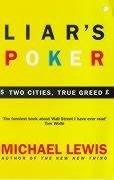
His debut, a memoir of Salomon Brothers in the mortgage-bond era. Read after The Big Short and it becomes an origin story: the instruments that blew up in 2008 are being invented in front of him.

High-frequency trading and the fibre-optic line built to shave milliseconds off a route. The most contested of his books, which is worth knowing going in; place it after Liar's Poker so you can see how far the same culture travelled.
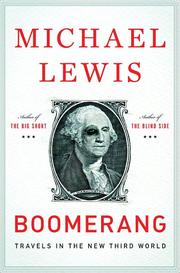
The financial crisis as national character study, from Iceland to Greece to Ireland to California. The lightest of the finance set and a good breather before the non-finance books.
Beyond the Markets
IntermediateSee Lewis apply the same lens to sport, the first internet boom, and the psychology of judgement itself — the book that explains why his outsiders keep being right.
▸ Study plan for this stage
Pace: 3 weeks for The Blind Side (346 pages), The New New Thing (268) and The Undoing Project (362). The Undoing Project is the slowest and most demanding — allow it more time and read it last, because it retroactively explains the other two.
- The Blind Side runs two tracks — the evolution of the left tackle position, and Michael Oher's life — and the tension between them is the book's ethical problem
- The New New Thing is a portrait of Jim Clark and Silicon Valley in 1999, and is the clearest example of Lewis writing inside a bubble without naming it as one
- The Undoing Project is about Amos Tversky and Daniel Kahneman, and it explains the mechanism behind every earlier book: expert intuition is systematically, predictably wrong
- Reading The Undoing Project after Moneyball is the intended experience — the statistical argument in Moneyball is downstream of this research
- Lewis is far better at the friendship between Tversky and Kahneman than at the science, which is worth noticing as both strength and limitation
- The Blind Side raises consent and authorship questions that Oher himself later disputed publicly; the book does not resolve them and a reader should not pretend it does
- Across all three, the recurring claim is that value is misjudged by people paid to judge it — a lineman, a company, a decision
- Does The Blind Side's dual structure serve Oher's story or use it? What would the book look like told only one way?
- What in The New New Thing looks different now that the 1999 boom has an ending? Does Lewis's enthusiasm date the book?
- What are the two or three cognitive biases The Undoing Project actually explains, and could you state them without the anecdote attached?
- How does The Undoing Project change your reading of the scouts in Moneyball?
- Where does Lewis's affection for a subject start to compromise his scepticism? Name the specific chapter.
- Write the argument of Moneyball again after finishing The Undoing Project, in one paragraph. It should look materially different.
- List the biases named in The Undoing Project with an example from your own work or life for each.
- In The Blind Side, mark every place Oher speaks for himself directly. The count is instructive.
- Read the first chapter of The New New Thing as if it were fiction and identify the genre conventions it is using.
Next up: The last stage follows Lewis out of markets and into government, where the ignored expert is a civil servant and the cost of ignoring them is counted in lives.

The rise of the left tackle as a market inefficiency, wrapped around one player's adoption. Read it as Moneyball's companion; be aware the personal story has drawn substantial criticism since publication.
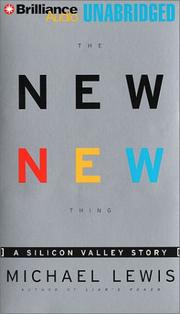
Jim Clark and the first dot-com bubble, written while it was still inflating. A useful corrective, because here Lewis is inside the mania rather than narrating it afterwards.
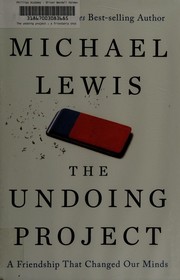
The friendship between Daniel Kahneman and Amos Tversky and the birth of behavioural economics. Placed late deliberately: it is the theoretical spine underneath every earlier book about people getting things systematically wrong.
The Later Work
IntermediateFollow the shift from markets to the state, where the expert nobody listened to is a civil servant and the cost of ignoring them is measured in lives.
▸ Study plan for this stage
Pace: 2–3 weeks for The Fifth Risk (256 pages), The Premonition (304) and Going Infinite (258). All three are short and quick. Read in publication order — The Premonition explicitly extends The Fifth Risk's argument, and Going Infinite is a departure best taken last.
- The Fifth Risk is about what federal departments actually do, and argues that the risk nobody manages is the one nobody has heard of
- The Premonition follows a group of doctors and officials who saw the pandemic coming, and is Lewis's clearest statement that institutional knowledge exists but is routinely unheard
- The heroes here are civil servants rather than traders, which changes the moral temperature entirely — nobody in these books gets rich by being right
- Going Infinite is the outlier: Lewis had extraordinary access to Sam Bankman-Fried before and during the collapse, and the book's judgement of him was widely contested on publication
- Going Infinite is the sharpest test of the Lewis method's weakness — proximity to a charismatic outsider can produce sympathy rather than scrutiny
- Read together, the late books show the outsider archetype breaking down: the outsider is now sometimes the person causing the damage
- These books were written fast and against events, and their reporting is thinner than Say Nothing-style narrative history; judge them on that scale
- What is the fifth risk, and does the book's structure earn the title?
- In The Premonition, why were the people who were right unable to act? Is the answer institutional, political or personal?
- Does Going Infinite know what it thinks about Bankman-Fried? Point to the passage where you decided.
- Has the Lewis method aged well, or does the search for a sympathetic outsider now distort the story?
- Across the whole path, which single book would you defend as his best, and against what criterion?
- For The Fifth Risk, pick one department it profiles and find out what it currently does. The book is a prompt for that kind of checking.
- Write down the timeline in The Premonition of who warned whom and when, then compare it to the public record you remember.
- Read a hostile review of Going Infinite alongside the book and mark every claim the book itself already contains.
- Rank all eleven books by how much you trust them, and separately by how much you enjoyed them. Where the two rankings diverge is where Lewis's method is doing its work.
Next up: That is the full shelf; readers wanting the same reporting with a colder eye and more archival depth should go next to Patrick Radden Keefe.
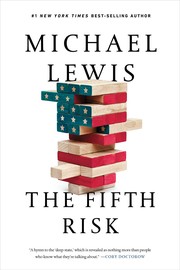
What the federal government actually does, discovered through a presidential transition that did not bother to find out. Short, angry, and the pivot point of his late career.

The pandemic told through the public-health outsiders who saw it coming. The direct sequel in argument to The Fifth Risk, so read them back to back.

Sam Bankman-Fried and FTX, reported from inside as the collapse happened. The most divisive book he has written and the right place to finish, because it tests whether you have learned to read his sympathy for the outsider critically.
Discussion
Keep reading
Paths that share books, cover the same subject, or open a related topic.