The history of Sri Lanka: books to read, in order
Sri Lanka's history is dominated by a twenty-six-year civil war whose ending in 2009 is still being fought over in commissions and courtrooms, so this path treats the war as the destination rather than the whole subject. It starts with the island's long history and the colonial reorganisation that hardened modern ethnic categories, works through the post-independence politics that made Sinhala and Tamil nationalism mutually exclusive, and only then reaches the fighting — with a stage given entirely to the disputed final months and the civilian death toll that the Sri Lankan state, the UN and the LTTE's remaining defenders all describe differently.
The island and the colonial remaking of it
BeginnerGet the long view — the Anuradhapura and Polonnaruwa kingdoms, the Kandyan interior, Portuguese, Dutch and then British rule — and understand the argument that matters most: that the rigid Sinhalese and Tamil identities of modern politics were substantially hardened by nineteenth-century censuses, plantations and colonial ethnography rather than inherited intact from antiquity.
▸ Study plan for this stage
Pace: Four to five weeks for 963 pages, and the two books are doing different jobs. De Silva's A History of Sri Lanka is 603 pages, nearly two thirds of the stage and the longest book on the path: a comprehensive single-volume history from antiquity to the modern state, written as a reference work rather
- The Anuradhapura and Polonnaruwa kingdoms and the Kandyan interior as the deep chronology the modern arguments reach back to
- Three successive European powers with different objectives, and what each left behind in law, land and administration
- The census and colonial ethnography as instruments that made ethnicity countable and therefore politically usable
- The plantation economy and the importation of Indian Tamil labour as a distinct population from the northern Tamils
- The distinction between an identity that is old and an identity that is politically rigid, which is the whole of Wickramasinghe's argument
- Why a reference history and an interpretive history of the same period disagree without either being simply wrong
- What specifically did the colonial census do to categories that already existed, on Wickramasinghe's account?
- How did the plantation economy create a third community whose position differed from both established groups?
- Which continuities between the ancient kingdoms and modern politics does De Silva emphasise, and how would Wickramasinghe qualify them?
- What would have to be true of pre-colonial Sri Lanka for the hardening argument to be wrong?
- Where can you see De Silva's institutional position in what he chooses to foreground?
- Pick one nineteenth-century decade and read both books on it, then write a page listing every point where the emphasis differs and every point where the facts differ. The two lists will not be the same length, and that asymmetry is the finding.
- Trace the census categories through Wickramasinghe from their introduction to their political use, writing down at each step who was counted as what.
- Write a short definition of Sinhalese and of Tamil as political categories as of 1900, using only these two books, and keep it beside you for the rest of the path.
- Note every claim De Silva makes about the antiquity of ethnic difference and mark which ones Wickramasinghe directly contests.
Next up: With the categories in place and their colonial construction visible, the next stage watches an independent state turn those categories into law, which is where two nationalisms become mutually exclusive.

The standard single-volume history by the island's most prominent historian, running from antiquity to the modern state. Comprehensive and essential; also written from within Sinhalese scholarly institutions, and contested on that basis by some Tamil historians, so treat it as the baseline you will later argue with.
The best account of how colonial rule and its categories produced modern Sri Lankan identity politics. This is the book that makes the rest of the path intelligible; if you read only one from this stage, read this one.
Independence and the making of two nationalisms
IntermediateFollow 1948 to 1983: the Sinhala Only Act, the disenfranchisement of Indian Tamil plantation workers, university standardisation, the 1972 constitution and Buddhism's place in it, and the July 1983 pogrom that turned political grievance into insurgency. The two Tambiah books are the analytical core here, and both were written by a Sri Lankan Tamil scholar arguing against the majoritarian consensus.
▸ Study plan for this stage
Pace: Three weeks for 661 pages, all three books short and none of them easy. Pakeman's Ceylon (256 pages) is a period survey by a British academic who taught on the island, written before anyone knew what the state would become, and it is valuable precisely because it is innocent of the future; read it f
- The Sinhala Only Act and the conversion of language into a mechanism of exclusion from the state
- The disenfranchisement of Indian Tamil plantation workers as a separate injury from the northern Tamil grievance
- University standardisation and the closing of the professional route out for Tamil students
- The 1972 constitution and the formal position it gave Buddhism
- The July 1983 pogrom as the hinge that converted political grievance into armed insurgency
- Tambiah's institutional argument: which arrangements might have contained the conflict and how each was dismantled
- The sangha as a political actor rather than a religious background condition
- What did Sinhala Only actually change for a Tamil-speaking civil servant, and over what timescale?
- Why did university standardisation matter more to a generation than the language act had to its predecessors?
- Which institutions does Tambiah identify as potential brakes on majoritarianism, and what removed each one?
- What is the argument of Buddhism Betrayed?, stated in a way a Sinhalese Buddhist reader would recognise as a fair summary?
- What does Pakeman not see coming, and is there anything in his own account that should have warned him?
- List every legislative and constitutional change between 1948 and 1983 that these books treat as significant, with a one-line note on who gained and who lost from each.
- Read Pakeman's description of communal relations, then write down what a reader of Wickramasinghe from stage one would have said to him at the time.
- Reconstruct Tambiah's institutional argument as a sequence of removals, and for each ask whether the removal was intended to have the effect it had.
- Given that Buddhism Betrayed? was banned in Sri Lanka, identify the specific passages you think prompted it and write a paragraph on what that tells you about the argument's reach.
Next up: The pogrom at the end of this stage produced an insurgency, and the next stage looks squarely at what that insurgency became and how it treated the people it claimed to represent.
A 1964 survey by a British academic who taught in Ceylon, describing the newly independent state before anyone knew what it would become. A period document, valuable precisely because it is innocent of the future.
Tambiah's account of how majoritarian politics dismantled the institutions that might have contained the conflict, written in the immediate aftermath of the 1983 riots. The catalogue files it under the bare title Sri Lanka.

Tambiah on political Buddhism and the sangha's role in Sinhala nationalism. The book was banned in Sri Lanka, which tells you how directly it lands — read it after the previous one, which sets up its argument.
Inside the war
IntermediateUnderstand the LTTE as an organisation — its origins, its suicide-bombing doctrine, its destruction of rival Tamil groups, its child recruitment and its treatment of Tamil civilians — alongside the state's conduct of the war. Note that Hoole's book was written by Tamil academics who opposed both the government and the Tigers, and that colleagues of theirs were later murdered; it is testimony written at real cost.
▸ Study plan for this stage
Pace: Four weeks for 1,102 pages. Narayan Swamy's Tigers of Lanka (348 pages) is the organisational history and comes first: how the LTTE grew from a handful of young men in Jaffna into a force with its own naval arm, written as journalism and moving at that pace. His Inside an Elusive Mind (290 pages) fo
- The LTTE's origins in a specific generation and place, and the conditions that made recruitment possible
- The destruction of rival Tamil militant groups as a deliberate strategy rather than a byproduct of factionalism
- Suicide bombing as an organisational doctrine with training, selection and commemoration built around it
- Child recruitment, and how the organisation justified it to the population it drew from
- The Indian Peace Keeping Force as a third armed party whose conduct belongs in the same account
- Documentation as a form of dissent, and the physical cost of producing The Broken Palmyra
- Why a movement claiming to represent a people may be the principal threat to members of it
- How did the LTTE eliminate rival Tamil organisations, and what did that do to the possibility of a negotiated Tamil position?
- What does Narayan Swamy establish about Prabhakaran that is evidenced, and where does the biography rely on inference?
- What was the Indian Peace Keeping Force sent to do, and what did it end up doing?
- How do Hoole and his co-authors handle the problem of documenting abuses by a movement whose community they belong to?
- Which of the three armed parties is best documented in these books, and what does the unevenness do to the picture?
- Build an organisational chart of the LTTE from Tigers of Lanka, marking which functions were military, which political and which financial.
- Take one incident recorded in The Broken Palmyra and check whether either Narayan Swamy book mentions it; where it does not, note what kind of event the journalistic narrative systematically omits.
- Keep a tally as you read Hoole of which party each documented abuse is attributed to, and look at the distribution at the end. Then ask what that distribution can and cannot tell you.
- Write a paragraph on Prabhakaran as Narayan Swamy presents him and a second as he appears in Hoole's documentation, and identify what accounts for the difference in each case.
Next up: You now know what both armed parties were capable of and how they were documented, which is the only basis on which the next stage's dispute over the final months can be judged rather than merely taken sides in.

The standard narrative of how the LTTE grew from a handful of young men in Jaffna into an army with its own navy. Start here for the organisational history.
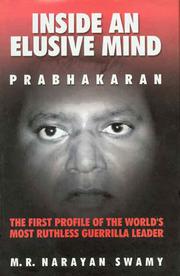
The same journalist's biography of Velupillai Prabhakaran — the only serious attempt in English to explain the man who ran the movement for three decades and killed most Tamils who disagreed with him.
Dissident academics at Jaffna University documenting abuses by the Sri Lankan forces, the Indian Peace Keeping Force and the LTTE alike. The most courageous book on this list and the one that refuses every available side.
2009 and the disputed ending
IntermediateThis stage is the argument itself. The war ended in May 2009 on a strip of beach where the army shelled an area it had itself declared a no-fire zone and the LTTE held civilians as a shield. UN-linked estimates of civilian deaths in the final months range from roughly seven thousand to over forty thousand, and the Sri Lankan state disputes all of them. Read these four together and pay attention to what each source can actually establish rather than to which side it favours.
▸ Study plan for this stage
Pace: Four weeks, and this is the stage the whole path exists for. The war ended in May 2009 on a strip of beach where the army shelled an area it had itself declared a no-fire zone and the LTTE held civilians as a shield; UN-linked estimates of civilian deaths in the final months range from roughly seven
- The no-fire zone and what a state declaring one commits itself to
- Human shielding as an LTTE tactic, and why establishing it does not by itself resolve the state's responsibility
- The spread between the low and high civilian death estimates, and the different methods that generate each
- Testimony from survivors and from internment camps as a source with different strengths and weaknesses from institutional estimates
- The counterinsurgency frame: what Hashim's question can establish and what it structurally cannot ask
- How the post-war state has managed the record, and what that management implies about the record
- That every book here is positioned, and that positioning is not the same as unreliability
- What are the actual bases of the competing casualty estimates, and which of them could in principle be checked?
- What does Weiss's position as a UN spokesman in Colombo give him access to, and what does it constrain him from saying?
- What can survivor testimony establish that an aggregate estimate cannot, and vice versa?
- What question is Hashim asking, and what follows from the fact that his framing treats the outcome as a success?
- What does Subramanian find people saying afterwards, and how does public speech differ from what the earlier books document?
- Having read all four, what do you believe about the final months, and which specific evidence carries the most weight for you?
- Make a table of every civilian casualty figure the four books mention, with its source, its method and its date, and see how much of the range is method and how much is source.
- Read Weiss and Hashim on the same weeks of the final offensive and write out the two accounts in parallel, marking every fact they share and every fact only one reports.
- Take three testimonies from Harrison and note for each what it could establish if corroborated and what corroboration would look like.
- Write the strongest version of the Sri Lankan government's case using only material these four books themselves report, then mark where you had to go beyond them.
- Return to your notes on The Broken Palmyra and ask which of the patterns documented there recur in 2009.
Next up: Having pushed the documentary record as far as it goes and found it still contested, the final stage turns to two novels that reach material the histories and the estimates cannot.

By the UN spokesman in Colombo during the final offensive, arguing the state's conduct amounted to mass atrocity while being explicit about the LTTE's use of civilians as shields. The book that put the casualty argument into international circulation, and the one the government has attacked hardest.
Survivor testimony gathered by a former BBC Colombo correspondent, including from the internment camps and from Tamils who had worked with the LTTE. Harder to read than Weiss and much closer to the ground.
The military-analytic counterweight: how the state actually defeated the LTTE, treated as a case study in counterinsurgency. Included deliberately because it asks a different question from the two books above and sits uncomfortably beside them.

Subramanian travelled the island after the war interviewing Sinhalese, Tamils and Muslims about what they did and what they now say. The best single account of the aftermath and the right end to the historical sequence.
What the histories cannot reach
IntermediateFinish with two novels doing evidential rather than decorative work: a childhood inside the 1983 pogrom, and the forensic identification of the disappeared. Both were written by Sri Lankans in the diaspora, and the reception of the second is itself part of the argument the earlier stages set up.
▸ Study plan for this stage
Pace: Two weeks, and both books are doing evidential rather than decorative work. Selvadurai's Funny Boy, whose page count is not recorded in our catalogue, is a Tamil boy's coming of age in Colombo ending in the July 1983 riots, and it is the most precise account on this path of what the pogrom felt like
- Fiction as a source for interior experience that documentary history structurally cannot record
- The 1983 pogrom from inside a targeted household, at the scale of a street and a family
- Forensic identification of the disappeared as both a technical practice and a political act
- The southern insurgency and its disappeared, a second layer of violence often lost behind the ethnic war
- The controversy over Anil's Ghost, and what critics argue neutrality does in a conflict with an asymmetry of power
- Diaspora authorship, and what distance gives a writer and what it costs
- What does Funny Boy convey about July 1983 that Tambiah's account cannot, and what can Tambiah establish that the novel cannot?
- How does Selvadurai use a household to represent a political process without reducing one to the other?
- What is the specific objection Tamil critics made to Anil's Ghost, and is it an objection to the book's politics or to its form?
- Does Ondaatje's forensic framing imply a position, whatever the narrative refuses to say?
- Having finished the path, which of the sources you have read do you now trust most on the 1983 pogrom, and why?
- Read the riot sequence in Funny Boy directly after Tambiah's account of the same days and write down what each source can prove.
- Trace the forensic procedure in Anil's Ghost as the novel describes it and note where the technical detail carries an argument the dialogue avoids making.
- Find at least one published critique of Anil's Ghost by a Tamil reader, then write half a page stating whether you think the criticism lands, quoting the passages you rely on.
- Write a final page on the history of Sri Lanka using only the fourteen books on this path, marking every point where your sources disagree rather than resolving it. Those marks are the honest state of the subject, and the disagreement about 2009 will be the largest of them.
Next up: This ends the path: from the ancient kingdoms and the colonial hardening of ethnic categories, through two nationalisms, an insurgency, a contested ending nobody has been able to settle, and the two novels that reach what the records do not.

A Tamil boy's coming of age in Colombo, ending in the July 1983 riots. The most widely read novel of the pre-war years and a precise account of what the pogrom felt like inside a targeted household.

A forensic anthropologist returns to identify the dead of the southern insurgency and the war. Ondaatje's refusal to assign blame drew sharp criticism from Tamil readers, which is worth knowing before you start.