Understand baseball: the thinking fan's game
This four-stage curriculum takes a complete newcomer from "what are the rules?" to thinking like a front-office analyst and a baseball historian — all while falling in love with the game's stories and soul. Each stage builds the vocabulary, intuition, and emotional investment needed to fully appreciate the next, so the books should be read in the order given.
First Pitch: Rules, Rhythms & Wonder
BeginnerUnderstand how baseball is played, why it feels different from other sports, and fall in love with the game's pace and drama through an irresistible narrative.
▸ Study plan for this stage
Pace: 6–8 weeks total: Weeks 1–3 on "The Baseball Codes" (~25–30 pages/day, reading thematically by chapter clusters); Weeks 4–7 on "Ball Four" (~30–35 pages/day, read like a diary — ideally one journal entry or chapter per sitting); Week 8 reserved for review, reflection, and exercises.
- The unwritten rules of baseball — how the game is governed as much by tradition, etiquette, and peer enforcement as by the official rulebook (The Baseball Codes)
- The concept of 'respecting the game' — why veterans police behavior like bat flips, stealing signs, and brushback pitches, and how these norms create an invisible social contract (The Baseball Codes)
- Baseball's internal culture of silence and loyalty — why players historically kept clubhouse secrets and what happens when those walls break down (The Baseball Codes & Ball Four)
- The tension between the player as human being and the player as commodity — Bouton's radical act of treating himself and teammates as full, flawed people rather than mythic heroes (Ball Four)
- The rhythm and pace of a baseball season — the grind of 162 games, road trips, boredom, and how Ball Four captures the sport's true texture from the inside (Ball Four)
- How baseball storytelling works — Turbow uses anecdote and oral history while Bouton uses diary form; together they show that baseball is as much a literary subject as a sporting one
- The role of the pitcher as a strategic and psychological actor — both books center pitchers (Turbow's many pitcher-focused codes, Bouton's own career) revealing how pitching is chess, not just athletics
- Why baseball feels different from other sports — its lack of a clock, its pastoral mythology, its tolerance for failure, and its generational continuity, all felt viscerally through these two books
- After reading The Baseball Codes, can you explain at least four specific unwritten rules — what they are, why they exist, and what the consequences of breaking them are?
- Ball Four was considered scandalous on publication in 1970. Based on what you read, what exactly made it controversial, and do those same things feel controversial to you today? What does the gap tell you about how baseball culture has changed?
- Both books deal with power — between veterans and rookies, players and managers, players and owners. How does each book portray that power dynamic, and whose side does each author seem to be on?
- Jim Bouton was a knuckleball pitcher fighting to stay in the majors. How does his precarious position on the roster shape the perspective and tone of Ball Four compared to how a star player might have written the same diary?
- The Baseball Codes argues that unwritten rules exist to protect the integrity and flow of the game. Do you agree, or do you see them as a way for insiders to enforce conformity? Use specific examples from the book to support your view.
- Having finished both books, how would you describe baseball's pace and rhythm to someone who has never watched a game? What details from Bouton's diary or Turbow's anecdotes would you use?
- The Codes Journal: As you read The Baseball Codes, keep a running two-column log — Column A: the unwritten rule described; Column B: your gut reaction (fair or absurd?). By the end, tally which column has more entries and write a one-paragraph verdict on whether the codes serve the game or the gatekeepers.
- Watch Along: Pick any full baseball game to watch (live or archived) while keeping The Baseball Codes nearby. Every time something happens on the field — a batter admires a home run, a pitcher throws inside, a manager argues — pause and ask: 'Is there a code being followed or broken here?' Jot down three moments and connect them to Turbow's text.
- Ball Four Diary Response: Bouton wrote his experience as a daily diary. Write your own three diary entries as an imaginary rookie experiencing your first week in a big-league clubhouse, drawing on the culture, slang, and social dynamics Bouton describes. Aim for honesty over heroism, just as Bouton did.
- The Unwritten vs. Written Rule Debate: Choose one unwritten rule from The Baseball Codes and write a short two-sided argument (one paragraph 'for,' one paragraph 'against') on whether it should be made an official MLB rule or abolished entirely. This forces you to engage with Turbow's reasoning critically.
- Character Map of Ball Four: As you read, build a simple cast-of-characters sheet — name, team, role, and one defining moment or quote from Bouton's diary. By the end you should have at least 10 characters. This trains you to track the ensemble nature of a baseball season, which is essential for deeper baseball literature.
- Stage Synthesis Essay (one page): After finishing both books, write a short personal essay answering: 'What does baseball value, and what does it fear?' Use at least one specific scene from each book as evidence. This is your capstone for the stage and a document you can revisit as you go deeper into the curriculum.
Next up: By internalizing baseball's unwritten culture through Turbow and its human interior through Bouton, the reader has the emotional and cultural fluency needed to tackle more complex historical, statistical, or analytical treatments of the game in the next stage.

A perfect first book — it teaches the unwritten rules and customs of baseball through vivid stories, giving a newcomer an immediate feel for how the game is actually played and experienced on the field.
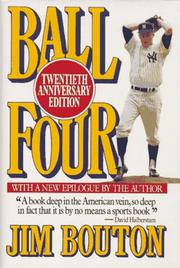
This landmark diary of a big-league season humanizes players and the daily rhythms of baseball life, making the sport feel real and alive for a reader just getting hooked.
Strategy & the Thinking Fan
BeginnerLearn the strategic logic of the game — why managers make the decisions they do — and develop the mental framework to watch a game with genuine understanding.
▸ Study plan for this stage
Pace: 6–8 weeks total: Weeks 1–3 on "The Art of Fielding" (~25–30 pages/day, reading novelistically but with a strategic eye); Weeks 4–7 on "The Hidden Game of Baseball" (~15–20 pages/day, slower and more analytical — pause to work through the statistics and arguments as you go); Week 8 is a synthesis/rev
- In-game decision-making: how managers weigh risk, probability, and personnel when choosing between strategic options (bunts, stolen bases, pitching changes, lineup construction)
- The concept of 'situation baseball' — how the score, inning, base-runners, and outs combine to define the correct strategic response at any moment
- Positional identity and defensive alignment: why each fielding position carries distinct responsibilities and how defensive positioning shifts with game context (drawn from The Art of Fielding's deep focus on shortstop play and team dynamics)
- The limits of traditional statistics (batting average, RBI, pitcher wins) and why they can mislead a fan trying to understand true player value — the central argument of The Hidden Game of Baseball
- Linear Weights and run expectancy: the idea that every on-field event (single, walk, out, stolen base) can be assigned a run value, allowing objective comparison of strategies and players
- The 'hidden' cost-benefit logic of sacrifice plays: when giving up an out to advance a runner is mathematically justified and when conventional wisdom gets it wrong
- How pressure, team chemistry, and individual psychology interact with cold strategic logic — The Art of Fielding dramatizes what The Hidden Game of Baseball quantifies
- Watching vs. seeing: developing the habit of tracking not just what happened but why the manager made each decision before the outcome was known
- After reading The Art of Fielding, can you describe at least three moments where a character's on-field decision reflected a broader strategic philosophy — and explain what that philosophy was?
- What is the core critique that The Hidden Game of Baseball makes against traditional baseball statistics, and what alternative framework does it propose?
- What is 'run expectancy,' and how does it change the way you evaluate a sacrifice bunt or a stolen-base attempt?
- Using the logic from The Hidden Game of Baseball, how would you argue for or against the strategic value of the stolen base in a close, late-inning situation?
- How does The Art of Fielding use the shortstop position as a metaphor for strategic thinking, and what does that suggest about the relationship between preparation and in-game decision-making?
- What is one conventional piece of baseball wisdom that The Hidden Game of Baseball challenges with data, and do you find the argument convincing? Why or why not?
- 'Manager's Chair' live viewing: Watch two full games while keeping a decision log — every time a manager makes a strategic move (pitching change, bunt, intentional walk, pinch hitter), pause and write down (a) what you expected and (b) why you think the manager chose differently. Compare your reasoning to the run-expectancy tables from The Hidden Game of Baseball.
- Stat translation drill: Pick any player's traditional stat line (BA, RBI, ERA) from a current or historical season and attempt to re-evaluate that player using the principles of Linear Weights described in The Hidden Game of Baseball. Write a one-paragraph 'true value' summary.
- Character strategy journal: As you read The Art of Fielding, keep a running journal entry for the character Henry Skrimshander — log every fielding or game decision he faces and annotate it with the strategic concept it illustrates (positioning, pressure management, situational awareness, etc.).
- Sacrifice bunt debate: Using the run-expectancy argument from The Hidden Game of Baseball, write a short (1-page) position paper either defending or attacking the sacrifice bunt as a strategy. Cite specific passages or data from the book.
- Scorekeeping practice: Learn basic baseball scorekeeping notation and score at least one full game by hand (live or on broadcast). Afterward, review your scorecard and identify two moments where the run-expectancy logic from The Hidden Game of Baseball would have predicted a different decision than what the manager made.
- Synthesis comparison: After finishing both books, write a one-page reflection answering: 'What does The Art of Fielding teach about strategy that The Hidden Game of Baseball cannot, and vice versa?' — this forces integration of the narrative and analytical lenses.
Next up: By internalizing both the emotional narrative of strategy (The Art of Fielding) and its analytical foundation (The Hidden Game of Baseball), the reader now has the mental vocabulary to engage with deeper historical, cultural, and statistical literature about baseball — making the next stage's more advanced or specialized texts immediately accessible rather than overwhelming.

This celebrated novel immerses the reader in baseball's interior world — the obsession, the pressure, the beauty of the game — building emotional investment before diving into pure strategy.
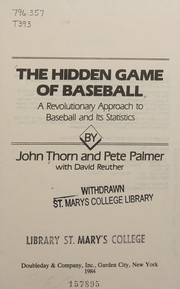
The foundational text for understanding how statistics describe strategy; it introduces the analytical vocabulary every thinking fan needs, written accessibly enough for a newcomer.
The Analytics Revolution
IntermediateUnderstand how data and modern analysis transformed the way teams are built and games are managed, and why that revolution matters for how we watch baseball today.
▸ Study plan for this stage
Pace: 8–10 weeks total, reading roughly 25–35 pages per day: ~3 weeks for "Moneyball" (~320 pp), ~2.5 weeks for "The Extra 2%" (~270 pp), and ~3 weeks for "Smart Baseball" (~320 pp). Allow a 2–3 day review buffer between each book to consolidate notes and attempt the reflection questions before moving on.
- Market inefficiency in baseball: how the Oakland A's exploited undervalued statistics (OBP, walks) when the rest of the league was fixated on traditional scouting metrics — the central argument of Moneyball
- The scout vs. stat divide: Lewis frames the tension between old-school subjective evaluation and evidence-based player valuation, a cultural conflict that still echoes in front offices today
- Small-market ingenuity: Jonah Keri's 'The Extra 2%' shows how the Tampa Bay Rays built a contender on a shoestring budget by finding edges in roster construction, the draft, and in-game tactics — extending Moneyball's thesis beyond Oakland
- Organizational systems thinking: Keri emphasizes that sustainable winning requires coherent front-office philosophy, not just one clever move — the whole operation must be aligned
- Debunking traditional statistics: Keith Law's 'Smart Baseball' systematically dismantles flawed metrics (RBI, pitcher wins, fielding percentage, batting average) and explains precisely why they mislead evaluators
- Modern replacement-level metrics: Law introduces and defends advanced stats — wOBA, FIP, WAR, UZR/DRS — explaining what they measure, how they are calculated, and why they are superior predictors of true player value
- Context and sample size: Law's framework for understanding statistical noise vs. signal — why small samples lie, why park factors matter, and how to read a stat line critically
- The revolution's cultural impact: across all three books, the recurring theme that analytics did not just change roster decisions — it changed how fans, media, and managers think about and communicate the game
- After reading Moneyball, can you explain in plain language what specific market inefficiency Billy Beane exploited, and why that inefficiency existed in the first place?
- How does the Tampa Bay Rays' approach in The Extra 2% both confirm and complicate the lessons of Moneyball — in what ways did the Rays go further or differently than the A's?
- According to Keith Law in Smart Baseball, what are the three most damaging traditional statistics still widely used, and what is the core logical flaw in each one?
- How do WAR and FIP (as explained by Law) attempt to isolate a player's individual contribution from team and contextual noise, and what are their known limitations?
- All three books feature resistance from baseball's establishment. What forms does that resistance take in each book, and what does it reveal about how institutions respond to disruptive ideas?
- Having read all three books in sequence, how would you describe the arc of the analytics revolution — where did it start, how did it spread, and what unresolved tensions remain?
- Moneyball debrief — After finishing Moneyball, pull up the 2002 Oakland A's roster on Baseball Reference. Look up the OBP and slugging numbers for the key players Lewis profiles (e.g., Scott Hatteberg, Jeremy Giambi). Do the numbers match Lewis's narrative? Note any surprises in your reading journal.
- Rays front-office audit — After The Extra 2%, choose one specific roster or draft decision Keri highlights (e.g., the Evan Longoria extension, the Andrew Friedman draft strategies) and research its long-term outcome. Write a one-page 'was it worth it?' verdict using the criteria Keri establishes.
- Stat autopsy using Smart Baseball — Pick any current MLB player and pull their traditional stat line (BA, RBI, W-L if a pitcher) alongside their advanced line (wOBA, wRC+, FIP, WAR) from FanGraphs. Write a short paragraph explaining the gap between the two narratives, using Law's framework as your guide.
- Metric translation exercise — Using FanGraphs' glossary alongside Smart Baseball, define in your own words: OBP, SLG, wOBA, FIP, WAR, and UZR. For each, write one sentence on what it measures and one sentence on its biggest limitation — Law is explicit about limitations, so hold yourself to that standard.
- Cross-book comparison chart — Create a simple table with three columns (one per book) and rows for: 'Core inefficiency exploited,' 'Key decision-makers profiled,' 'Biggest obstacle faced,' and 'Lasting legacy.' Filling it in forces you to synthesize the arc across all three authors.
- Mock front-office memo — Imagine you are a GM of a low-budget team in the current era. Drawing on lessons from all three books, write a one-page internal memo outlining your team-building philosophy: which metrics you will prioritize in player acquisition, how you will handle the scout/analyst tension, and one 'extra 2%' edge you would pursue.
Next up: Mastering the analytics revolution gives you the evaluative vocabulary and critical lens needed to engage with deeper tactical and historical material — the next stage can now assume you can read a stat line intelligently, question conventional wisdom, and understand why front-office decisions are made the way they are.
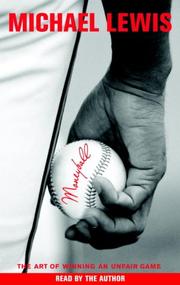
The essential entry point to baseball analytics — Lewis tells the story of the Oakland A's using on-base percentage and market inefficiencies to compete, making abstract statistics feel urgent and human.

A perfect follow-up to Moneyball, showing how the Tampa Bay Rays pushed the analytics revolution even further, deepening the reader's understanding of modern roster construction and game theory.

A former scout and analyst systematically debunks outdated stats and explains modern metrics (WAR, wOBA, FIP) in plain language, giving the reader a complete analytical toolkit.
History, Soul & the Long Story of the Game
ExpertGrasp baseball's deep cultural and historical roots — its relationship to race, America, and identity — and encounter the essential literary works that define the game's soul.
▸ Study plan for this stage
Pace: 10–12 weeks total. Week 1–4: "Baseball" by Geoffrey C. Ward (~30–35 pages/day, paired with episode viewings of the Ken Burns documentary if accessible). Week 5–7: "The Soul of Baseball" by Joe Posnanski (~25–30 pages/day, a lighter but emotionally rich read — allow time to sit with each chapter). We
- Baseball as a mirror of American history: how the game has reflected and shaped national identity, politics, and social change across more than 150 years (Ward)
- Race and the color line: the Negro Leagues, Jackie Robinson's integration of the majors, and the ongoing reckoning with baseball's racial history as documented across all three books
- The mythology of the game: how baseball constructs heroes, legends, and a sense of timeless continuity — and how writers like Kahn interrogate that mythology with honesty
- Buck O'Neil as a living philosophy: Posnanski's portrait of O'Neil as a vessel of joy, dignity, and historical memory, representing what the game meant to those who loved it most and were longest denied it
- Literary journalism and memoir as historical record: how Kahn's first-person account of the 1950s Brooklyn Dodgers blurs the line between sports writing, elegy, and American literature
- The arc of a player's life — glory, decline, and mortality: Kahn's 'boys' revisited decades later force a meditation on time, aging, and what athletic greatness costs
- Community, place, and belonging: how teams (the Dodgers in Brooklyn, the Negro League clubs in Ward) become anchors of identity for cities, neighborhoods, and ethnic or racial communities
- The tension between nostalgia and truth: all three books wrestle with romanticizing the past while refusing to ignore its injustices and failures
- How does Ward's sweeping historical narrative connect baseball's evolution to major turning points in American history — war, immigration, industrialization, and civil rights — and which moments does he argue were most transformative for the game?
- What does Buck O'Neil's life and outlook, as rendered by Posnanski in 'The Soul of Baseball,' reveal about the psychological and spiritual cost of the color line, and why does Posnanski frame O'Neil's joy as an act of resistance rather than naivety?
- In 'The Boys of Summer,' how does Roger Kahn use the device of revisiting his former Dodger subjects decades later to construct an argument about mortality, identity, and the price of American dreams?
- Across all three books, how is the Negro Leagues portrayed — as a parallel universe, a tragedy, a triumph, or something more complicated — and how do the authors' perspectives differ?
- What literary and journalistic techniques does Kahn use that distinguish 'The Boys of Summer' from conventional sports writing, and how do those techniques shape the emotional impact of the book?
- How do Ward, Posnanski, and Kahn each handle the relationship between individual greatness and team or community — and do they ultimately argue that baseball is a sport of heroes or of collectives?
- Parallel timeline exercise (Ward): As you read 'Baseball,' build a two-column timeline — one column for baseball milestones, one for concurrent American historical events. At the end, write a one-page reflection on which historical forces most visibly bent the shape of the game.
- Character study journal (Posnanski): After each chapter of 'The Soul of Baseball,' write 3–5 sentences in Buck O'Neil's voice responding to something that happened that day in the news. This forces you to internalize his worldview and philosophy as Posnanski constructs it.
- Close reading annotation (Kahn): Select any two consecutive chapters from 'The Boys of Summer' and annotate every literary device you find — metaphor, elegy, irony, foreshadowing. Then write a paragraph arguing what Kahn is really 'about' beyond baseball.
- Comparative essay (all three books): Write a 600–900 word essay responding to this prompt: 'Which of these three authors is most honest about baseball's failures, and does that honesty make their love of the game more or less convincing?' Use specific passages as evidence.
- Research extension (Ward + Posnanski): Choose one Negro League player mentioned in either Ward or Posnanski who is not Jackie Robinson. Research their career independently and write a one-page biography, then reflect on why they may have been overlooked by mainstream baseball history.
- Discussion or reading-group debate: Stage a structured discussion around the question, 'Is nostalgia for baseball's past a form of dishonesty?' Assign one participant to defend nostalgia using Ward and Posnanski, and another to challenge it using Kahn. Swap sides and repeat.
Next up: By grounding the reader in baseball's cultural soul, racial conscience, and literary tradition, this stage builds the emotional and historical fluency needed to engage analytically with the game's strategy, statistics, and modern transformation in subsequent stages.
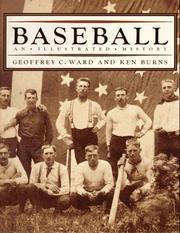
The companion to Ken Burns's landmark documentary, this sweeping narrative covers baseball from its origins to the modern era and is the single best one-volume history of the sport.
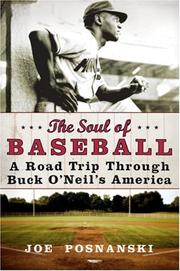
A beautifully written year spent with Buck O'Neil, the great Negro Leagues ambassador — it connects the game's history to race, joy, and what baseball means to America at its best.
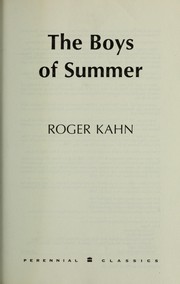
The gold standard of baseball literature — Kahn's portrait of the Brooklyn Dodgers captures what the game does to the people who play it and love it, and why it endures across generations.
Discussion
Keep reading
Paths that share books, cover the same subject, or open a related topic.