The expedition has an unusual literature. A single popular history sells more copies than everything else combined, the primary sources are extraordinary and are available in several very different editions, and the scholarship of the last forty years has substantially reframed the story the popular history tells. Reading in the wrong order means absorbing one account so thoroughly that the corrections feel like quibbles.
The other thing worth saying at the outset: the Corps of Discovery travelled through the territory of dozens of sovereign nations, depended on them for food, horses, guides and information, and its findings were used to organise the dispossession that followed. Older accounts treat those nations as scenery. Newer ones do not, and the difference is not a matter of tone — it changes what the expedition is understood to have been doing.
The narrative most people start with
Undaunted Courage by Stephen E. Ambrose is the popular account, built around Meriwether Lewis and around Jefferson's ambitions for the continent, and it is genuinely gripping. It is also celebratory in a way current scholarship is not, and it gives comparatively little attention to the Native nations whose cooperation made the journey possible. Ambrose was separately found, after publication of several of his books, to have reproduced passages from other authors without adequate attribution; that is a matter of record and it is worth knowing about the author whose version of this story is most widely read.
Read it for the narrative shape and the momentum, then keep reading.
The journals themselves
The Journals of Lewis and Clark in Bernard DeVoto's one-volume abridgement is the practical way into the primary source: roughly a tenth of the full text, edited for continuity, and readable straight through. The spelling is preserved, which takes about twenty pages to get used to and is then a pleasure.
The Journals of the Lewis and Clark Expedition is the complete scholarly edition, running to more than a dozen volumes with full annotation. You do not need both. Take the abridgement unless you have a research reason for the whole thing, in which case the abridgement will not be enough.
The corrections
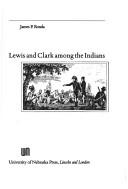
Lewis and Clark among the Indians by James P. Ronda is the single most important book on this path after the journals. It reconstructs the encounters from the perspective of the Mandan, Shoshone, Nez Perce, Teton Sioux and others, using the same journals and reading them for what the Native participants were doing and calculating. The expedition looks different afterwards, and more interesting.
Lewis and Clark, pioneering naturalists by Paul Russell Cutright covers the scientific work — the plants, animals and specimens catalogued, and what happened to the collections. It is the corrective to treating the journey as pure adventure; the natural history was a large part of the point.
The way to the western sea by David Sievert Lavender is the alternative full narrative, less centred on Lewis than Ambrose and stronger on the geography and the logistics.
The wider context and the aftermath
The course of empire by Bernard DeVoto places the expedition in three centuries of continental exploration, from the Spanish entradas onward, and it is the book that shows why anyone was there at all. It was written in the 1950s and its prose and its framing both belong to that period.
The fate of the corps by Larry E. Morris follows the members after they came home, which is the part almost every account omits, and it is often bleak.
Meriwether Lewis by Thomas C. Danisi, written with John Jackson, is the detailed biography, and it argues against the long-standing conclusion that Lewis died by suicide in 1809. That question is genuinely disputed among historians, the evidence is thin and circumstantial on both sides, and this book represents one position in an argument rather than its resolution.
Follow the full path for the sequence with study notes, or browse related history paths for the continent this journey opened.
Follow the full ordered path here: The Lewis and Clark Expedition: What to Read, in Order.