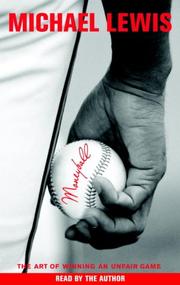
Start with Moneyball. It is the cleanest demonstration of the thing Michael Lewis actually does, which is not finance writing: he finds a small group of people who noticed that everyone else was measuring the wrong thing, and follows them until the rest of the world catches up. Baseball happens to be the version of that story with the fewest prerequisites.
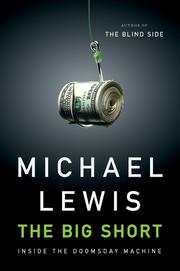
The obvious alternative is The big short, which is his most famous book and probably his best. It is also the one that most rewards knowing the method in advance, because the 2008 material is so overwhelming that a first-time reader tends to remember the crisis rather than the writing. Read them in that order, a week or two for the pair — both are around 300 pages and move fast.
Order barely matters, with two exceptions
Almost every Lewis book is standalone. There are no recurring characters, no continuing argument, and nothing that requires prior reading. So the stages below are grouped by subject and you should feel free to jump to whichever appeals.
Two exceptions are worth honouring. The Premonition explicitly extends the argument of The Fifth Risk, so read The Fifth Risk first. And The undoing project retroactively explains why the people in Moneyball and The Blind Side could see what nobody else could, so it lands hardest if you read it after them rather than before.
The finance books
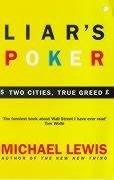
Liar's Poker, Flash Boys and Boomerang — two to three weeks for roughly 840 pages. Read Liar's Poker first. It was written first and it covers the earliest period, which makes it the one book here where publication order and subject order agree. It is also a first book, and reads like one: funnier, looser and less controlled than what came after. Flash Boys, on high-frequency trading, provoked the most organised pushback of his career from people inside the industry who argued he had misdescribed how the market works. Boomerang is essay-length pieces on the sovereign debt crisis and can be read in single sittings.
Beyond the markets
The Blind Side, New New Thing, The and The undoing project — about three weeks. The middle one, published as The New New Thing, is his Silicon Valley book from 1999 and is now most interesting as a period document. The Blind Side should carry a note: the account it gives of Michael Oher's relationship with the Tuohy family was disputed by Oher in a 2023 court filing, and the book is not a neutral record of that dispute. The undoing project, on Daniel Kahneman and Amos Tversky, is the slowest and most demanding thing Lewis has written. Give it more time and read it last in this group.
The later work
The Fifth Risk, The Premonition and Going Infinite — all short, two to three weeks for the three. Read them in publication order. Going Infinite is the departure and belongs last: it is his book about the collapse of a cryptocurrency exchange, and it drew the harshest reviews of his career, with many critics arguing he stayed too close to his subject for too long. Whether that is a flaw or the honest record of a reporter caught mid-story is exactly the argument readers have about it.
Where to stop
Moneyball, The big short, Liar's Poker and The undoing project are the four that people still recommend twenty years on. If you read only those you have not missed much, and you have read the version of Lewis that made his reputation.
More reading paths in narrative non-fiction are on Discover.
Follow the full ordered path here: Michael Lewis Reading Order: Where to Start.
Ready to learn something deeply?
Build a reading path — free