Best Books on Financial Crises and Market Crashes, in Reading Order
Crises look unique from inside and repetitive from outside, so this path alternates between the two views. You begin with the general anatomy of a bubble and the long history of speculative manias, then read 1929 and 2008 as close narrative history — the second one from several angles, because no single account of it is neutral. The final stage steps back to the comparative data and the argument about what would actually make the system safer, which is where economists disagree most sharply and where the reader has to choose.
The anatomy of a bubble
BeginnerLearn the recurring structure of a financial mania — displacement, credit expansion, euphoria, distress, revulsion — and be able to apply it to episodes you already half-know
▸ Study plan for this stage
Pace: Five weeks. Kindleberger and Aliber's Manias, Panics, and Crashes is 304 pages, organised analytically rather than chronologically, and repays a chapter every two or three days with notes. Chancellor's Devil Take the Hindmost is 400 pages of narrative and reads twice as fast. Take Kindleberger first
- The Minsky-Kindleberger sequence: displacement, credit expansion, euphoria, financial distress, revulsion, panic — and the fact that the framework's value is as a checklist for spotting stage transitions, not as a prediction machine
- Displacement as the trigger: an exogenous shock — a new technology, a war's end, a change in monetary regime — that genuinely does create new profit opportunities, which is why bubbles begin in truth rather than in delusion
- Credit as the necessary condition. Kindleberger's central claim is that manias require monetary expansion, and that the supply of credit is endogenous and hard for authorities to control
- Minsky's hedge, speculative and Ponzi finance as a progression of borrower balance sheets, and the observation that stability itself breeds the leverage that ends it
- The lender of last resort question, and Kindleberger's uncomfortable conclusion that it should exist, should act, and should be deliberately vague about when — because clarity creates moral hazard
- Chancellor's episodes as the raw material: tulipmania, the South Sea and Mississippi bubbles, the 1840s railway mania, the 1929 boom, Japan in the 1980s, and the 1980s junk bond era
- Fraud as a lagging indicator: Chancellor and Kindleberger both note that swindles are revealed by the downturn rather than causing it, which is why the arrests always come after the crash
- The revisionist caution on tulipmania in particular — later research questions how economically significant it actually was — which is worth carrying as a reminder that famous bubbles get retold more than researched
- State Kindleberger's stages in order and give a one-line definition of each. Then apply them to an episode you knew about before opening this book.
- Why does Kindleberger insist that credit expansion is necessary for a mania? What would a bubble without credit look like, and are there examples?
- Explain Minsky's three financing postures and describe the mechanism by which an economy migrates from the first to the third.
- Kindleberger argues the lender of last resort should be deliberately ambiguous. What problem is the ambiguity solving, and what does it cost?
- Take two of Chancellor's episodes separated by two centuries. What is genuinely common between them, and what is the framework smoothing over?
- Make a one-page table of Kindleberger's stages down the side and four of Chancellor's episodes across the top, and fill every cell with the specific event. The cells you cannot fill are as informative as the ones you can.
- Take a market episode from your own lifetime and write 500 words placing it in the framework, naming the displacement, the credit source and the point of revulsion. Being specific about the credit source is the hard part.
- Write a paragraph on what evidence would falsify Kindleberger's model. If you conclude that nothing would, say so plainly — that is a serious criticism of the book and worth having formed yourself.
- Pick one episode Chancellor covers and find one contrary account of it. Tulipmania is the easiest case and the most instructive.
Next up: With a general grammar of manias in hand, the next stage takes the crash the whole field is measured against and the long argument over whether the crash caused the Depression at all.
The book that gave the field its grammar, generalizing a model of crisis from three centuries of examples. Read it first: everything else in this path is a case study you will be able to slot into its framework.

A narrative history of speculation from tulips and the South Sea Bubble to the 1980s, which supplies the episodes Kindleberger only gestures at. Read second, as the illustrated companion to the theory.
1929 and the Depression
IntermediateUnderstand the crash itself, the policy response, and the long argument over which of the two caused the Depression
▸ Study plan for this stage
Pace: Six weeks. Galbraith's The Great Crash, 1929 is 206 pages, written with unusual wit, and reads in under a week — but reread the final chapter on the causes, which is where he states his argument. Eichengreen's Hall of Mirrors is 520 pages and alternates chapters between the 1930s and 2008; allow fou
- The 1928 to 1929 boom mechanics Galbraith describes: brokers' loans, buying on 10 percent margin, and the closed-end investment trusts whose leverage was stacked on other leverage
- The sequence of October 1929 — Black Thursday, the banker's pool, Black Monday and Black Tuesday — and Galbraith's point that the market kept falling for nearly three years afterward, so the crash was an event and the Depression was a process
- Galbraith's explanation — speculative excess, bad income distribution, weak corporate and banking structure, poor economic intelligence — presented as one position in a long argument rather than as the settled account
- The rival monetary explanation associated with Friedman and Schwartz, that the Federal Reserve's failure to prevent monetary contraction turned a recession into a depression, which Galbraith's book largely predates
- Eichengreen's gold standard argument, developed in his earlier work and assumed here: that the gold standard transmitted and amplified contraction internationally, and that recovery correlated with the timing of leaving it
- Hall of Mirrors' central thesis: that 2008 policymakers had learned enough from the 1930s to prevent a second Great Depression, and that this very success removed the political pressure for deeper reform, producing a weak recovery and an unreformed system
- The counterfactual problem that runs through this stage: claims about what prevented a depression cannot be tested, and every author in this path is arguing from analogy
- Galbraith is writing in 1955 as a liberal economist with a thesis about the dangers of unregulated markets. Reading him with that in view does not diminish the book; it is the only way to use it properly
- Describe how margin buying and the investment trusts amplified both the rise and the fall. What was the leverage multiple at the top, on Galbraith's figures?
- Galbraith and the monetarist account attribute the Depression's severity to different things. Set out each explanation and identify what evidence each rests on. Do not choose — this argument has run for seventy years among people with the same data.
- What is Eichengreen's account of the gold standard's role, and how does it relate to the two explanations above — as a rival, or as a mechanism both could accept?
- State Hall of Mirrors' central paradox in your own words. What would have had to be true in 2008 to 2010 for deep reform to have been politically possible?
- Eichengreen argues 2008 policymakers learned the right lessons. What lessons specifically, and which ones does he think they got wrong?
- Build a chart or table of the Dow from 1928 through 1932 and mark the October 1929 dates on it. The visual proportion between the crash and the subsequent three-year decline is the point Galbraith makes in prose.
- Write 400 words explaining the closed-end investment trust structure to someone who has never heard of it, including where the leverage sat. It is the clearest historical example of a structure nobody could unwind under stress.
- Make a two-column comparison of Eichengreen's paired crises: for each of policy response, banking rescue, fiscal action and international coordination, what happened in the 1930s and what in 2008 to 2010.
- Write a paragraph naming the single strongest piece of evidence for each of the three explanations of the Depression's severity. Then write a paragraph on what data would distinguish between them, and be honest if none would.
Next up: Eichengreen has now put the two crises side by side; the next stage goes inside the second one, from the instruments up to the rooms where the rescue was negotiated, through four authors who saw it from four very different places.
Still the classic short account of the crash, mordant and readable, written close enough to the events to carry their texture. Note that Galbraith's explanation — speculative excess and weak institutions — is one position in a debate, not the consensus.
Reads 1929 and 2008 as a matched pair, arguing that policymakers in the second crisis learned the lessons of the first well enough to avert a depression and badly enough to guarantee a weak recovery. It is the best single bridge between the two halves of this path.
2008, up close
IntermediateFollow the modern crisis from the instruments to the trading floors to the bailout negotiations, and see how differently the same events read depending on where the author stood
▸ Study plan for this stage
Pace: Nine to ten weeks for about 1,705 pages, and the order matters more here than anywhere else in the path. Lewis's The Big Short is 291 pages and reads in a week — take it first, purely to learn what the instruments were. Tett's Fool's Gold is 338 pages, three weeks, for the intellectual history. Sork
- The instrument chain: subprime mortgage, mortgage-backed security, tranching, CDO, CDO-squared, and synthetic CDO. Lewis teaches this better than any textbook and you should be able to draw it before moving on
- Credit default swaps as the pivot — insurance without an insurable interest requirement, and the mechanism by which a limited pool of bad mortgages generated unlimited exposure through synthetic replication
- The ratings agency failure: how pools of BBB tranches became AAA securities, the model assumptions about regional default correlation, and the issuer-pays conflict of interest
- Tett's origin story: the J.P. Morgan team that developed the modern credit derivative to reduce concentrated risk, and the gap between that original purpose and what the instruments became in other hands
- The funding structure that actually broke — repo, commercial paper, and the reliance of investment banks on overnight wholesale funding against illiquid assets. This is the run mechanism, and it is not the same thing as the mortgage losses
- The September 2008 sequence in Sorkin: Lehman's failure, the AIG rescue, the Reserve Primary Fund breaking the buck, and the TARP negotiation — and the specific question of why Lehman was allowed to fail when Bear Stearns and AIG were not
- Blinder's policy taxonomy: what TARP, the Fed's facilities, the stress tests, quantitative easing and the fiscal stimulus were each intended to do, and his assessment of which worked
- Reading each author's vantage point. Lewis wrote heroes-and-fools narrative and simplifies accordingly; Tett had unusual access to one bank's derivatives team; Sorkin's extraordinary access to principals means the book substantially reflects how those principals wished to be seen; Blinder is a forme
- Draw the chain from a single subprime mortgage to a synthetic CDO. At which step does the total exposure stop being limited by the number of actual mortgages?
- What did the ratings models assume about correlation between regional house price declines, and why was that assumption catastrophic rather than merely wrong?
- Tett's protagonists built these instruments to reduce risk. At what point in her account does the purpose change, and who changed it?
- Distinguish the solvency problem from the liquidity problem in 2008. Which one actually forced the September events, and how do Sorkin and Blinder differ on this?
- Why was Lehman allowed to fail? Set out the official explanation, the alternative explanations, and what evidence would settle it.
- Sorkin reconstructs conversations from participants' recollections. Which of his claims would you want independent corroboration for, and how does his access cut both ways?
- Draw the full securitisation chain on one page with a worked numerical example: a pool of mortgages, tranches with attachment points, and the loss level at which each tranche is wiped out. You cannot understand 2008 without having done this arithmetic once.
- Write 300 words explaining a synthetic CDO to a smart non-specialist. If you cannot, reread Lewis's chapters on it.
- Build a timeline of September 2008 day by day from Sorkin, then annotate each day with what Blinder says the policy objective was. The two layers together are the clearest picture of the month available.
- Take one episode described by both Sorkin and Blinder — the AIG rescue is the sharpest — and write a page on how the insider narrative and the economist's account differ in emphasis and in what they treat as the decisive factor.
- List the five institutions that failed or were rescued and write, for each, one sentence on what specifically killed it. The answers are not the same, which is the point.
- Return to your Kindleberger stage table from stage one and add a 2008 column. Note where the framework fits cleanly and where the shadow banking structure has no obvious historical analogue.
Next up: Having seen one crisis in maximum detail, the final stage pulls back to eight centuries of them and to the unresolved argument about what would actually make the next one less severe.
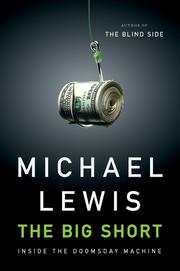
The most enjoyable way to learn what a subprime mortgage bond and a synthetic CDO actually were, taught through the handful of people who bet against them. Start here for the instruments; it is character-driven journalism, not analysis, and its heroes-and-fools framing is a simplification.
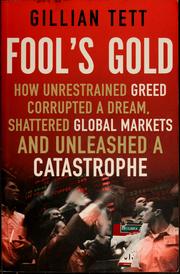
The origin story of credit derivatives told through the J.P. Morgan team that built them, which explains how a risk-reducing invention became a system-wide hazard. Read after Lewis for the intellectual history behind the trades.
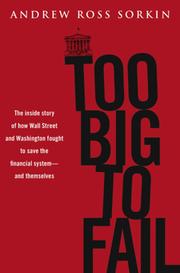
The definitive hour-by-hour account of the September 2008 collapse and rescue, reconstructed from the participants. Its access is also its limit — it largely reflects how the principals saw themselves — so read it as the view from inside the room.
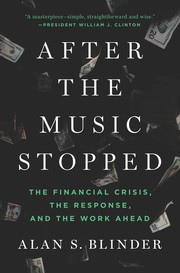
An economist's orderly explanation of what happened and what each policy response was meant to do, including a defence of the bailouts. Read it last in this stage to convert the narrative into a coherent account of the mechanisms.
The long view and the fixes
IntermediateAssess crises comparatively across countries and centuries, and evaluate the competing proposals for making the financial system less fragile
▸ Study plan for this stage
Pace: Eight to nine weeks for about 1,170 pages. Reinhart and Rogoff's This Time Is Different is 488 pages and is a data book — read the narrative chapters closely and treat the country tables as reference. Admati and Hellwig's The Bankers' New Clothes is 398 pages of argument written for a general reader
- The Reinhart and Rogoff dataset: sovereign external and domestic default, banking crises, currency crashes and inflation across sixty-six countries and eight centuries, and the argument that the recurring pattern is denied each time by the belief that this time is different
- Their empirical regularities: the aftermath of banking crises is deep and long, with large asset price declines, sustained output and employment losses, and government debt rising by a large multiple — driven mostly by collapsing revenue rather than by bailout cost
- The 90 percent debt threshold finding and the well-known 2013 challenge to it by Herndon, Ash and Pollin, which identified a spreadsheet error and disputed the weighting and exclusions. Reinhart and Rogoff accepted the coding error and disputed the broader conclusion. The correlation between high de
- Admati and Hellwig's core argument: bank equity is not a reserve set aside but a funding structure, so requiring much more of it is not costly to society, and most industry objections rest on conflating the two
- The Modigliani-Miller starting point and why it matters: absent tax and subsidy distortions, a firm's funding mix does not change its total value, so higher equity does not raise the true cost of capital — it reallocates who bears risk
- The counterarguments Admati and Hellwig address and their critics' replies: the tax shield for debt, the disciplining role of short-term debt, credit contraction during transition, and regulatory arbitrage into non-banks. This is a genuinely contested policy question and both sides include serious e
- LTCM as the rehearsal: two Nobel laureates, a leverage ratio in the tens, models calibrated on a period without the correlation regime that arrived, and a Fed-convened private rescue in 1998 — every element of 2008 in miniature, ten years early
- The moral hazard thread running from Kindleberger's lender of last resort through LTCM's rescue to TARP, which is the path's most durable unresolved question
- What are the empirical regularities Reinhart and Rogoff find in the aftermath of banking crises? Give the magnitudes, and say what drives the debt increase.
- Explain the Herndon, Ash and Pollin critique and what survived it. How should a careful reader now cite This Time Is Different?
- Reconstruct Admati and Hellwig's argument that higher equity requirements are close to costless. Which premise would a well-informed banker attack, and what is the strongest version of that attack?
- If higher capital requirements are as cheap and effective as Admati and Hellwig argue, why have they not been adopted at the levels they propose? Distinguish economic objections from political ones.
- What did LTCM's models assume, and what specifically broke those assumptions in 1998? Compare with the ratings agency correlation assumptions from the previous stage.
- Across the whole path: is the recurrence of crises a policy failure or a structural property of leveraged finance? Name the evidence for your answer and the strongest case against it.
- Chart the aftermath variables Reinhart and Rogoff track — house prices, equities, unemployment, output, public debt — for one crisis they cover and one they do not, and see whether the newer episode fits their averages.
- Write 500 words on the Herndon, Ash and Pollin episode as a case study in empirical practice: what the error was, what it did and did not overturn, and what it should change about how you read data-driven policy books.
- Take three objections to higher capital requirements that you have encountered in the press, find Admati and Hellwig's response to each, and write a paragraph on whether the response is complete. Mark any objection you think survives.
- Draw LTCM's balance sheet structure and leverage ratio, then draw a 2008 investment bank's beside it. The similarity is the argument the path has been building to.
- Return one final time to your Kindleberger table and add LTCM as a column. A hedge fund failure that never became a public crisis is the useful edge case for testing whether the framework describes bubbles or merely narrates them.
- Write a closing 800-word memo recommending two specific reforms, citing at least one book from each stage, and ending with the objection to your own recommendation that you cannot answer. If you have none, you have not read the counterarguments carefully enough.
Next up: This is the end of the path — the pattern, two crises in depth, the comparative data and the reform argument — and the natural next step is Bagehot's Lombard Street, written in 1873, which states the lender-of-last-resort problem more clearly than anything written since.
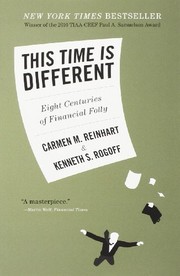
Eight centuries of sovereign defaults, banking crises and inflations assembled into one dataset, and the strongest evidence that crises rhyme. Read it after the case studies so the aggregates have narrative underneath them; be aware its debt-threshold findings drew a well-known empirical challenge and are not settled.

The clearest argument that far higher bank equity is both cheap and effective, written to dismantle the industry's objections one by one. It is an advocacy book on a contested question, and the best-argued one on its side.
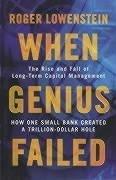
The Long-Term Capital Management collapse — leverage, model risk and a rescue a decade before the big one. A deliberate closing note: it shows the whole pattern in miniature and in advance, which is the path's point.
Discussion
Keep reading
Paths that share books, cover the same subject, or open a related topic.