Michael Chabon Reading Order: Where to Start
Chabon writes long, warm, sentence-rich novels about men who make things — comics, novels, records, families — and who are usually failing at the family part. His career divides cleanly into the literary novels that established him and the genre experiments he wrote after publicly arguing that the wall between literary and popular fiction should come down. This path starts with the most purely enjoyable book he has written, moves to the big prize-winning novels, then into the genre work, and closes with the essays where he explains exactly what he thought he was doing.
The way in
BeginnerMeet Chabon at his funniest and most immediately readable, and get used to prose that piles on clauses and metaphors without ever losing the story
▸ Study plan for this stage
Pace: 4 weeks. Wonder Boys is 368 pages and the fastest-reading book on the path - ten days at ~35 a night, and the weekend structure keeps the pages turning. The Mysteries of Pittsburgh is 303 pages and more diffuse; two weeks at ~25 a night, read as a debut rather than as a peer of the later novels.
- The Chabon sentence: long, clause-heavy, metaphor-dense, and yet almost never losing the thread of the story - the trick is that the digressions are load-bearing
- Grady Tripp as the central Chabon type - a man who makes things, is very good at it, and is failing completely at the family part
- The 2,000-page unfinishable manuscript as a joke about ambition that the rest of Chabon's career takes entirely seriously
- Farce as structure in Wonder Boys: a weekend, a stolen car, a dead dog, escalating on classic comic mechanics
- The Mysteries of Pittsburgh as an origin point - the ingredients are all present and not yet under control, which is exactly what makes it useful
- Bisexual and queer desire treated without crisis in the debut, in 1988, and the way that carries forward as a matter-of-fact element of the later books
- Place as a character - Pittsburgh here, and later New York, Alaska and the Caucasus, each rendered with the same affectionate over-specificity
- Male friendship as the emotional core, more consistently than romance, across everything he writes
- Is Grady Tripp's manuscript a joke about him or about the ambition Chabon himself has? The answer changes after stage two.
- What does the farce structure of Wonder Boys let Chabon do with material that would otherwise be sad?
- The Mysteries of Pittsburgh is a first novel. Name two things it does not yet control and one it already does better than the later books.
- How does Chabon handle desire and sexuality in the debut, and what is notable about the tone?
- After these two: is the voice for you? Everything ahead is longer, and the answer will not change.
- Find the longest sentence in Wonder Boys and diagram it. It will be doing three jobs at once and that is the technique in a nutshell.
- List every disaster in the Wonder Boys weekend in order. Farce is a machine and seeing the gears is instructive.
- Note where The Mysteries of Pittsburgh strains for effect. Chabon at twenty-four is visibly reaching, and comparing it with stage two shows what he learned.
- Pick one paragraph of description from each book and count the metaphors. The density is a deliberate and consistent setting.
Next up: You now trust the digressions - which is precisely what the big novels require, since they digress gloriously and at length and reward it every time.

A blocked novelist, a 2,000-page manuscript, a stolen car and a dead dog, all over one chaotic weekend. The best entry point by a distance: short, hilarious, and the fastest way to learn whether his voice is for you.
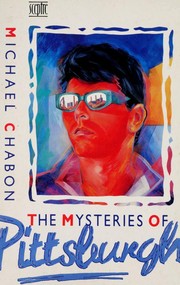
The debut, written in his early twenties: one summer, a gangster's son, and a love triangle that refuses the shape you expect. Read it second as the origin point — the ingredients are all here, just not yet under control.
The big novels
IntermediateRead the two long, ambitious novels about art, invention and inherited family myth that Chabon's reputation actually rests on
▸ Study plan for this stage
Pace: 7 weeks, the heaviest stage. The Amazing Adventures of Kavalier and Clay is 639 pages - four weeks at ~25 a night, and it genuinely rewards a steady daily pace rather than long weekend sessions. Moonglow is 480 pages and structurally looser; three weeks, and keep a note of dates because the chronolo
- Kavalier and Clay's central braid: two Jewish cousins inventing a superhero in 1940s New York while one of them tries to get his family out of Prague, so escapism and escape are the same word doing two jobs
- The golem as the book's governing figure - a made thing built to protect a people, which is also a definition of a comic-book hero and of a novel
- Comics history rendered with real archival specificity, so the invented Escapist sits convincingly among figures who actually existed
- Chabon's argument that popular forms carry serious freight, made here by embodiment rather than by essay - the essay comes in stage four
- Moonglow presented as a deathbed confession from a grandfather, framed as memoir and openly unreliable about which parts are true
- The V-2 and rocketry material connecting Moonglow to Kavalier and Clay's twentieth century, seen from the family side rather than the invention side
- Fabricated memoir as a form: Moonglow puts a character called Michael Chabon in the frame and then declines to tell you where the record stops
- Failure at intimacy as the constant - both novels are about men whose making is a way of not being present
- What is the Escapist for, in Joe's life rather than in the plot?
- Where does Kavalier and Clay use the golem literally and where figuratively, and does the novel keep them separate?
- Moonglow is labelled a memoir and is a novel. What does the labelling do to your reading that a straight novel could not?
- Both books involve a man who builds superbly and fails domestically. Are they the same diagnosis or two different ones?
- Which digression in Kavalier and Clay would you cut, and what would the book lose? The exercise is harder than it sounds.
- Track the Prague material across Kavalier and Clay. It occupies a small share of the pages and organises the whole book.
- Build a rough timeline of Moonglow as you read. The scrambling is deliberate but the underlying chronology is recoverable and worth having.
- Write one paragraph on what escapism means in Kavalier and Clay. The novel gives you at least three definitions and they do not agree.
- Find one passage in Moonglow that you are certain is invented and one you suspect is true. Then ask what makes you certain - that is the book's real experiment.
- Compare an action set piece in Kavalier and Clay with one in Wonder Boys. The scale changed; check whether the sentence did.
Next up: Having seen Chabon at full literary weight, you can read the genre books as the deliberate raid they are rather than as a lighter sideline.
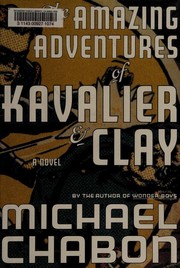
Two Jewish cousins invent a superhero in 1940s New York while one of them tries to get his family out of Prague. The Pulitzer winner and his masterpiece; read it once the shorter books have taught you to trust the digressions, because this one digresses gloriously.

A deathbed confession from a grandfather, presented as memoir and openly unreliable about which parts are true. Read it after Kavalier and Clay, whose concerns — rocketry, escape, Jewish twentieth-century history — it revisits from the family side.
The genre experiments
IntermediateFollow Chabon's deliberate raids on detective fiction, adventure serials and alternate history, and see the argument he was making about literary snobbery carried out in practice
▸ Study plan for this stage
Pace: 5 weeks. The Final Solution is 131 pages and reads in an evening or two. Gentlemen of the Road is 206 pages of serial adventure and moves fast. The Yiddish Policemen's Union is 427 and the most demanding of the three - three weeks at ~25 a night, since the invented Sitka slang takes fifty pages to b
- The deliberate raid on genre: Chabon argued publicly that the wall between literary and popular fiction should come down, and this stage is that argument executed rather than asserted
- The Final Solution as the gentlest entry - an unnamed elderly detective who is obviously Sherlock Holmes, a missing parrot, and a title carrying two meanings at once
- Refusing the detective's mastery: the old man solves the case and misses what actually matters, which is the point of using Holmes and not naming him
- Gentlemen of the Road as pure formal pleasure - two Jewish adventurers in the tenth-century Caucasus, written as an old-fashioned serial with chapter titles to match
- The Yiddish Policemen's Union fusing hard-boiled noir with alternate history, in a Sitka where Jewish refugees were resettled in 1940, without condescending to either genre
- Invented idiom as world-building: the Yiddish-inflected slang does the work that pages of exposition would otherwise require
- Genre conventions used sincerely rather than ironically, which is the difference between this stage and pastiche
- The same subjects throughout - Jewish history, exile, made worlds and disappointing fathers - now carried by borrowed machinery
- What does the detective in The Final Solution fail to understand, and why does that failure need him to be Holmes?
- Gentlemen of the Road is the slightest book here. What is it for, in a career this ambitious?
- How long did the Sitka slang take to become transparent, and what did the opacity buy Chabon in the meantime?
- Does The Yiddish Policemen's Union work as a detective novel judged on genre terms, and not only as literary fiction wearing a coat?
- Has genre changed what Chabon can say, or only how he says it? Argue from a specific scene.
- Read The Final Solution in one sitting. At 131 pages its effect is built on compression and it dissipates if spread out.
- List ten Sitka slang terms and their meanings as you infer them. Compare your list with the novel's later usage - you will have got most of them right, which is the design.
- Take one noir convention in The Yiddish Policemen's Union - the partner, the ex-wife as superior, the corrupt institution - and note where Chabon plays it straight and where he bends it.
- Name the recurring Chabon subject in each of the three books. The continuity with stage two is stronger than the genre shift suggests.
Next up: You have read the novels the essays were written to defend, which is the only order in which the manifesto is interesting rather than abstract.
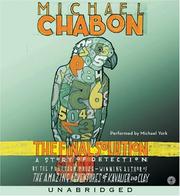
An unnamed elderly detective, obviously Sherlock Holmes, investigates a missing parrot in wartime England. A novella, and the gentlest introduction to the genre turn.
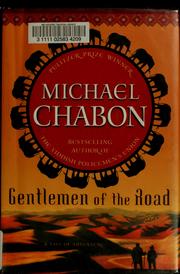
Two Jewish adventurers in the tenth-century Caucasus, written as a deliberately old-fashioned serial. Slight, fast, and useful here as the purest example of Chabon writing for the pleasure of the form.
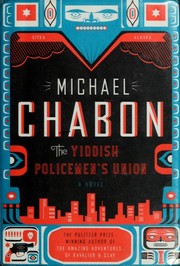
A hard-boiled murder mystery set in an alternate Alaska where Jewish refugees were resettled in 1940. The most accomplished of the genre books, fusing noir and alternate history without condescending to either. Read it last in this stage.
The essays
BeginnerRead Chabon's non-fiction on genre, fatherhood and craft, and understand the case behind the choices the novels make
▸ Study plan for this stage
Pace: 3-4 weeks. Maps and Legends is 222 pages and Manhood for Amateurs 313 - both collections, so read three or four pieces per sitting rather than straight through. Two weeks for Maps and Legends while the genre stage is fresh, then a fortnight of Manhood for Amateurs, which is best taken slowly.
- Maps and Legends as the explicit manifesto behind stage three - the case for comics, Sherlock Holmes, golems and the borderlands between genre and literature, stated outright
- The argument that entertainment is not the opposite of seriousness, and the specific history Chabon marshals for it
- The golem essay as the key to Kavalier and Clay, written after the fact and reading almost as authorial commentary
- The gap between manifesto and practice - the essays claim more for the genre novels than the genre novels always deliver, and you are now equipped to referee
- Manhood for Amateurs turning the same voice on being a son, husband and father, unguarded in a way the fiction never permits itself
- The emotional material the novels keep dressing up as adventure, here presented without costume, which retroactively changes what Grady Tripp and Joe Kavalier were about
- Chabon on craft: what he says he is doing with sentences, and whether his own prose obeys it
- The essay as his most natural short form, given a novelist whose instinct is always to digress
- What is Chabon's actual argument against the literary and genre distinction, and where is it weakest?
- Which essay in Maps and Legends best explains The Yiddish Policemen's Union, and does it flatter the novel?
- What does Manhood for Amateurs reveal about the emotional source of the fiction's absent and failing fathers?
- Does the unguarded voice of the memoir pieces make the novels look more honest or more evasive?
- After four stages: is Chabon a literary novelist who slums in genre, a genre writer with literary equipment, or is the question itself the thing he defeated? Answer from the books rather than from the essays.
- Read the golem essay immediately after skimming the golem passages in Kavalier and Clay. The commentary effect is direct.
- Take the manifesto's central claim and test it against Gentlemen of the Road, the slightest genre book. If it survives that, it survives.
- Pick one piece from Manhood for Amateurs and find its fictional counterpart in an earlier novel. There is almost always one.
- Write 300 words on what Chabon thinks novels are for. You now have his fiction, his genre fiction and his own account of both.
Next up: This closes the path - the entry comedies, the big novels, the genre raid and the defence of it, read in the order that makes the argument land as demonstration before declaration.
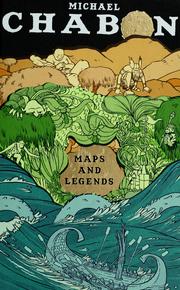
Essays on comics, Sherlock Holmes, golems and the borderlands between genre and literature. The explicit manifesto behind the previous stage — far more interesting once you have read the novels it defends.
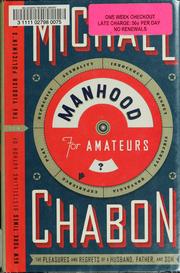
Short pieces on being a son, husband and father, unguarded in a way the fiction rarely is. A good closing book: it makes visible the emotional material the novels keep dressing up as adventure.
Discussion
Keep reading
Paths that share books, cover the same subject, or open a related topic.