Best Books on the 2008 Financial Crisis, in Reading Order
There are dozens of books on 2008 and most of them tell the same Lehman weekend from a slightly different chair, so this path is deliberately built out of different vantage points rather than different narrators. You start with the two great narrative accounts, go back to how the instruments and the mortgage chain were built, then hear from the regulators who made the calls, the economists who explain the damage, and finally the historians who put the whole thing in a global and long-run frame.
The narratives that pull you in
BeginnerGet the shape of the crisis and its cast of characters from the outside and from the boardroom, so later analysis has scenes attached to it.
▸ Study plan for this stage
Pace: Three to four weeks for about 890 pages. The Big Short (291pp) is the fastest reading in the whole path — many people finish it in a weekend — but slow down at the two or three passages where Lewis stops to explain a mortgage bond, a tranche and a synthetic CDO, because the rest of the path assumes
- The mortgage-backed security and the CDO, explained the way Lewis's characters had to learn them: a pool of loans sliced into tranches, with the lowest tranche absorbing the first losses and the top tranche rated AAA
- The credit default swap as the instrument that let Burry, Eisman and the Cornwall crowd short a market they could not sell — and why writing those swaps concentrated risk at AIG
- Why the shorts were nearly wrecked by being early: mark-to-market losses on a correct position, which is a general lesson about the difference between being right and surviving
- The synthetic CDO, and the point that matters most in Lewis — the losses were far larger than the underlying mortgages because bets were layered on top of the same loans
- Sorkin's sequence of the collapse: Bear Stearns in March, Fannie and Freddie in September, Lehman's failed weekend, the AIG rescue days later, and the forced recapitalisation in October
- Why Lehman went and AIG did not, in Sorkin's account, and how much of that turned on collateral, counterparties and available legal authority rather than on principle
- The limits of both books as evidence: Lewis writes from the perspective of a few winning contrarians, Sorkin from access to the principals who agreed to talk. Both are excellent narrative and neither is a causal account
- Explain, without the book open, what a subprime mortgage bond is and how tranching turns bad loans into a AAA-rated security.
- What is a credit default swap, and why did buying them let Burry short the housing market when there was no other way to do it?
- How did the synthetic CDO make the eventual losses larger than the total value of the underlying mortgages?
- In Sorkin's telling, what were the specific reasons given for rescuing Bear Stearns and AIG but not Lehman?
- Whose voices are missing from both books, and what would a borrower's-eye or a regulator's-eye account of the same events emphasise instead?
- Draw the tranche stack of a single mortgage-backed security on one page — the loans at the bottom, the tranches above, the ratings beside them — and mark where the losses land first. Keep it; every later book assumes this picture.
- Build a day-by-day timeline of September 2008 from Sorkin, from the Fannie and Freddie conservatorship to the TARP capital injections. You will use it in every subsequent stage.
- Write 200 words explaining a credit default swap to someone who has read neither book. If you need more than 200 words, you have not got it yet.
- List each of the shorts in The Big Short and note what each one had to believe, and for how long, before being paid. The differences between them are the actual investment lesson.
- Note every claim in Sorkin attributed to a single unnamed participant. It is a large number, and marking them is good practice for the insider memoirs two stages from now.
Next up: You have the scenes and the cast; the next stage takes the two instruments you just met and shows where they were invented and how the mortgages that filled them were manufactured.
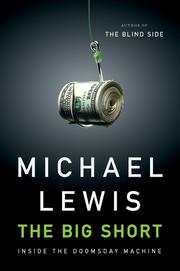
The view from the handful of investors who saw it coming and bet against the mortgage market. It is the fastest way to understand what a subprime CDO actually was, because the characters have to figure that out too.
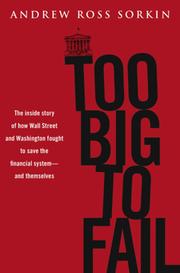
The blow-by-blow of the September 2008 weekend from inside the banks and Treasury, reconstructed from hundreds of interviews. Lewis gives you the trade; Sorkin gives you the room where it collapsed.
How the machine was built
BeginnerTrace the crisis back through the derivatives and the mortgage pipeline to understand why the losses were so large and so hard to locate.
▸ Study plan for this stage
Pace: Three to four weeks for about 730 pages. Fool's Gold (338pp) is reported financial history and reads steadily at 25 pages a session; its early chapters on the 1994 Boca Raton offsite are the part to read slowly. All the Devils Are Here (389pp) is structured as a series of linked institutional histor
- The J.P. Morgan team's original credit derivative and what it was actually for — moving credit risk off a balance sheet to free up regulatory capital, which was a defensible idea before it was scaled
- Tett's central distinction between the invention and its abuse: the same structure applied to corporate loans, where default correlations were understood, behaved very differently applied to subprime mortgages
- Correlation as the buried assumption. The models priced tranches on an estimate of how likely borrowers were to default together, and a national house-price decline made that estimate worthless
- The originate-to-distribute chain in McLean and Nocera: broker, originator, securitiser, ratings agency, investor — and the point that nobody in the chain kept the risk they created
- The ratings agency conflict — issuers pay for their own ratings — and what McLean and Nocera document about how that shaped the AAAs at the top of Lewis's stack
- Fannie Mae and Freddie Mac's ambiguous public-private status, and why their role is the most politically contested element of the whole story
- Regulatory gaps as a structural fact rather than a personal failing: several agencies each held part of the picture and none held all of it
- How Tett's anthropological training shapes the book — she is interested in why a group of professionals could not see what they were doing, which is a different question from who was to blame
- What problem was the original credit derivative designed to solve, and why does Tett think the invention was reasonable even though the outcome was not?
- What assumption about default correlation did the CDO models rest on, and what specifically made it fail?
- Trace one subprime loan from the broker's office to a AAA tranche held by a European bank. Who profited at each step, and who held the risk at the end?
- What does the issuer-pays model do to a ratings agency's incentives, and what evidence do McLean and Nocera give that it mattered in practice?
- Between Tett's account of the instrument and McLean and Nocera's account of the pipeline, which contributed more to the scale of the losses — and what would settle that question?
- Extend your tranche diagram from the previous stage backwards into the full origination chain, with every intermediary named and their fee marked. This one page is the most useful thing you will make in this path.
- Write 200 words on the correlation assumption and why it broke, in language a non-specialist could follow. This is the single technical idea the crisis turns on.
- Take one of Lewis's characters and locate in Tett or McLean the institutional counterpart they were trading against. The two views of the same trade are instructive.
- List every entity in All the Devils Are Here that had authority to stop some part of the chain, and note what each would have had to see to act. The answer is rarely 'nothing'.
- Find the passage where Tett describes the original team's reaction to how their invention was later used, and write a paragraph on whether you find their distinction convincing.
Next up: With the instruments and the pipeline understood, you can now read the officials' accounts of the rescue as arguments about a machine you know rather than as assertions you have to take on trust.
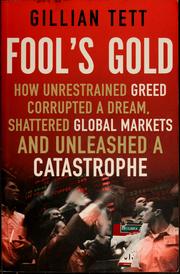
Tett followed the J.P. Morgan team that invented credit derivatives in the 1990s, so this is the origin story of the instruments at the centre of everything. Read it before any policy book — it is what the policymakers were struggling to understand.

Written with Joe Nocera, this traces the other half of the pipeline: mortgage originators, Fannie and Freddie, the ratings agencies and the regulators who waved it through. Together with Tett it accounts for the whole supply chain.
The regulators, in their own words
IntermediateHear the decisions defended and attacked by the people who made them, and learn to read an insider memoir critically.
▸ Study plan for this stage
Pace: Four to five weeks for about 1,000 pages, and the most demanding reading of the first four stages because you must read actively rather than receptively. Stress Test (592pp) and Bull by the Horns (415pp) cover many of the same meetings from incompatible positions. The intended method is to read Geit
- Geithner's central argument — that in a panic, moral hazard concerns must yield to stopping the run, because punishing a failing bank frightens creditors of every other bank
- The stress tests of 2009 as Geithner's showcase: a disclosure exercise designed to distinguish solvent from insolvent institutions and end the guessing that was driving the run
- Bair's counter-position: that the FDIC had a working resolution playbook for failed banks, that shareholders and creditors should have absorbed more loss, and that Citigroup in particular got treatment its condition did not warrant
- The homeowner relief dispute — Bair's case that mortgage modification was under-resourced relative to bank recapitalisation, and Geithner's case about operational limits and take-up
- Institutional vantage as explanation: the New York Fed sits at the market end and sees contagion, the FDIC sits at the resolution end and sees a bank it knows how to close. Both are describing something real
- How to read an insider memoir — noticing what is documented, what is recalled, what is defended and what is simply not mentioned by either author
- Moral hazard versus systemic risk as the genuine trade-off underneath the personal disagreement, and why reasonable people landed in different places on it
- State Geithner's argument against punishing failing banks during a panic in its strongest form, without caricature.
- State Bair's argument for imposing losses on shareholders and creditors in its strongest form, without caricature.
- What were the stress tests actually testing, and why does Geithner regard them as the turning point?
- Identify one meeting both books describe. Where do the accounts differ, and what does each author have at stake in their version?
- On homeowner relief specifically, what did each of them want, what was done, and what evidence does either offer about what more was feasible?
- Build a two-column table of the disputed episodes: Geithner's account on the left, Bair's on the right, with your own note on what would settle it. This table is the whole point of the stage.
- Write 200 words defending the bailouts as Geithner would, then 200 words attacking them as Bair would. Then mark which sentences in each you actually believe.
- For any three factual claims where the two disagree, check the public record — the FCIC report, congressional testimony, contemporaneous reporting — and note who is corroborated.
- Return to your September 2008 timeline from stage one and annotate it with what each author says they were doing on the key dates.
- List everything Geithner says he got wrong and everything Bair says she got wrong. The lengths and the contents of the two lists are themselves evidence about how to read each book.
Next up: Having heard the participants defend their choices, the next stage steps outside the room to ask what the data says actually drove the recession — including a book that argues both memoirists were focused on the wrong balance sheet.
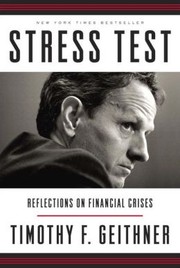
The New York Fed president and later Treasury Secretary defending the bailouts and the stress tests. Self-serving in places, but no other book explains as clearly why the officials thought punishing banks would deepen the crisis.

The FDIC chair who fought Geithner over bank rescues and homeowner relief. Read it immediately after Stress Test: the same meetings, incompatible accounts, and the disagreement is the substance.
What the economists concluded
IntermediateMove from narrative to causal explanation — why household debt made the recession so deep, and what the pre-crisis warnings actually said.
▸ Study plan for this stage
Pace: Five weeks for about 965 pages, and the analytical core of the path. After the Music Stopped (476pp) is written for general readers and is the bridge — 25 to 30 pages a session. House of Debt (219pp) is short but is an argument built on data; read the charts properly and expect to reread the identif
- Blinder's separation of the financial crisis from the recession that followed, and his systematic account of each policy response — TARP, the Fed's facilities, the stimulus — with a verdict on each
- Mian and Sufi's levered-losses thesis: that a house-price collapse destroys the net worth of the most indebted households first, and that those households cut spending hardest, which is what makes the recession deep
- Their county-level identification strategy — comparing places by pre-crisis household leverage — and why it lets them argue about causation rather than correlation
- The direct challenge to the banking-centric view, including Geithner's: if collapsing household balance sheets drove the downturn, then repairing banks without writing down mortgage debt was treating the wrong patient
- The debt-versus-equity argument in Mian and Sufi's final chapters — mortgages that share risk between lender and borrower — which is their constructive proposal rather than a critique
- Rajan's 'let them eat credit' argument: that stagnant middle incomes created political pressure to expand housing credit as a substitute for redistribution, which puts inequality upstream of the mortgage boom
- Rajan's other fault lines — global trade and savings imbalances, and financial-sector incentive structures — which extend the explanation beyond American politics
- Rajan's 2005 Jackson Hole paper and its reception as a case study in how a warning can be both correct and professionally unwelcome
- In Blinder's assessment, which policy responses worked, which did not, and what standard is he judging them by?
- What is the levered-losses mechanism, step by step, from house-price decline to fallen employment in a county with no bank failures?
- How do Mian and Sufi use variation across counties to argue that household debt was the cause rather than a symptom, and what is the strongest objection to their identification?
- If Mian and Sufi are right, what should have been done differently in 2009 — and how does that map onto the Geithner-Bair dispute you have just read?
- What are Rajan's fault lines, and which of them do you think has been least addressed since?
- Blinder, Mian and Sufi, and Rajan locate the primary cause in different places. Can all three be substantially right at once, or do they genuinely conflict?
- Reconstruct one of Mian and Sufi's central charts in your own hand — high-leverage counties against consumption decline — and write beneath it exactly what it does and does not establish.
- Write 200 words explaining the levered-losses argument to a reader who has only read The Big Short. This forces you to connect the mortgage stack to household spending.
- Take your Geithner-Bair table from the previous stage and add a third column: what Mian and Sufi would say about each disputed decision. Several disputes look different once the household balance sheet is the object.
- Find Rajan's account of the Jackson Hole reception and write a paragraph on what it suggests about how professional consensus handles inconvenient claims — being careful to separate that question from whether he was right.
- List Blinder's verdicts on each policy in a single table with his stated reasoning. It is the most compact record of the mainstream assessment you will find.
Next up: You now have competing explanations of a single American episode; the last stage widens the lens to eight centuries of crises, a transatlantic banking system, and the question of whether the fundamental vulnerability was ever fixed.
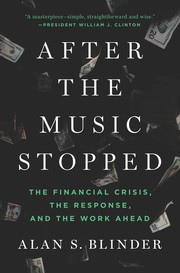
A former Fed vice chair's comprehensive account of both the collapse and the policy response, written to be understood. The best bridge from the narrative books to the analytical ones.

Mian and Sufi use county-level data to argue the recession was driven by collapsing household balance sheets, not by broken banks — a direct challenge to the Geithner view. The most important empirical argument in the field.

Rajan warned about exactly these risks at Jackson Hole in 2005 and was dismissed. His account roots the crisis in inequality and political pressure to expand credit, widening the frame beyond Wall Street.
The long view
BeginnerPlace 2008 in global and historical context and judge which of the underlying problems were actually fixed.
▸ Study plan for this stage
Pace: Six to eight weeks for roughly 1,600 pages, and unapologetically the hardest stage. This Time Is Different (488pp) is a data book with a narrative wrapper — read the framing chapters closely and treat the country tables as reference. Crashed (720pp) is a major work of contemporary history with a hug
- The Reinhart-Rogoff pattern: financial crises recur with striking regularity, follow similar arcs in output, employment and public debt, and are preceded each time by an argument that the old rules no longer apply
- Their taxonomy of crisis types — banking, currency, sovereign default, inflation — and the finding that banking crises are followed by sharp increases in government debt, largely from lost revenue rather than from bailout costs
- The honest caveat on this book: a later Reinhart and Rogoff paper on debt and growth was found to contain a spreadsheet error and contested weighting, which was widely and correctly reported. The eight-century crisis database here is the durable contribution and is a separate piece of work from that
- Tooze's central reframing: 2008 was a crisis of a transatlantic banking system, with European banks holding vast dollar-denominated exposures — which is why the Fed's swap lines to foreign central banks were among the most consequential actions taken
- The eurozone crisis as continuation rather than sequel, and Tooze's account of how the same balance-sheet problem was handled under a very different institutional constraint
- Tooze's long tail: austerity, Ukraine, the 2016 political ruptures, and his argument that the financial and the geopolitical cannot be separated
- Admati and Hellwig's core claim: banks operate on very thin equity, equity is not idle money set aside but a funding structure, and the industry arguments against higher requirements are largely confused or self-interested
- The bankers' new clothes as a test of your own understanding — after eleven books, you should be able to evaluate each industry objection they list on its merits rather than on authority
- What is the recurring pre-crisis argument that Reinhart and Rogoff title their book after, and where did you encounter its 2008 version in the earlier books?
- Why, in their data, does public debt rise so sharply after banking crises, and what does that imply about the fiscal debates of 2010 onward?
- Why does Tooze insist 2008 was not an American crisis, and what evidence about European bank balance sheets supports that?
- What did the Fed's dollar swap lines do, and why does Tooze rank them so highly among the crisis responses?
- What is Admati and Hellwig's argument that bank equity is not a cost to society, and which industry counter-argument do you find hardest to dismiss?
- Across the whole path: which vulnerabilities of 2007 do you judge to have been substantially addressed, and which are still in place?
- Take the Reinhart and Rogoff arc of a typical post-crisis decade — output, employment, house prices, public debt — and plot the actual American figures against it. The fit, and its imperfections, is the exercise.
- Redraw your origination-chain diagram from stage two with the European banks Tooze describes added as buyers. The picture changes shape, and that change is his whole argument.
- Write 200 words on the dollar swap lines for someone who has read only the American narrative books. Most readers of Lewis and Sorkin have never heard of them.
- List every argument against higher bank equity requirements that Admati and Hellwig catalogue, and write your own one-line verdict on each before reading theirs. Then compare.
- Write a final two-page account of what caused the 2008 crisis, naming for each claim which book you are relying on and how strong you think that evidence is. Where the books conflict — and they do, repeatedly — say so rather than picking a winner by preference.
Next up: This is the end of the path — narrative, instruments, officials, economists and the long historical frame — and the natural next move is to reread The Big Short, which reads as a very different book once you know what the rest of the system was doing while those trades were on.
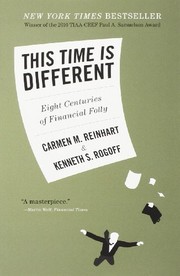
Eight centuries of financial crises, showing how reliably the same pattern recurs and how reliably people insist it will not. Read it knowing that one of its later austerity papers was found to contain a spreadsheet error — the historical database here is the durable contribution.

The essential reframing: 2008 was a transatlantic banking crisis, not an American one, and it runs forward into the eurozone, Ukraine and the populist decade. It is the book that makes every earlier one look parochial.

Ends the path on the unresolved question: banks still run on very little equity, and Admati dismantles every industry argument for why that is fine. Finish here and you are equipped to judge the next crisis, not just the last one.
Discussion
Keep reading
Paths that share books, cover the same subject, or open a related topic.