Best books on loneliness and building connection
This curriculum moves from the lived, emotional experience of loneliness — building empathy and self-recognition — through the hard science of isolation and belonging, and finally into practical and philosophical frameworks for rebuilding deep human connection. Each stage equips the reader with the language and concepts needed to go deeper in the next, turning personal feeling into scientific understanding and, ultimately, into actionable wisdom.
Foundations: Naming the Feeling
BeginnerRecognize and articulate loneliness as a universal human experience, understand its emotional texture, and begin to see it as something worth studying rather than simply suffering through.
▸ Study plan for this stage
Pace: 4–5 weeks, ~25–30 pages/day. Week 1–2: "Loneliness" by Cacioppo (~400 pages); Week 3–4: "The Lonely City" by Laing (~300 pages); Week 5: Review and synthesis exercises.
- Loneliness as a measurable biological and psychological state, distinct from solitude (Cacioppo's framework)
- The evolutionary roots and survival mechanisms of loneliness as a social pain signal
- Loneliness as a universal human experience that transcends geography, class, and era
- The emotional texture of loneliness: how it feels in the body and mind
- Loneliness in modern urban life and its paradox—being surrounded yet isolated (Laing's exploration)
- The role of perception and expectation in experiencing loneliness
- Loneliness as a worthy subject of intellectual and creative inquiry, not merely a problem to escape
- What is the difference between loneliness and solitude, and why does Cacioppo emphasize this distinction?
- How does Cacioppo explain loneliness from an evolutionary and biological perspective?
- What does Laing mean by 'the lonely city,' and how does she illustrate loneliness in urban environments?
- Can you describe the emotional and physical sensations of loneliness as portrayed in these books?
- How do Cacioppo and Laing each argue that loneliness is a universal human experience?
- What examples from Laing's book show how creative and cultural figures have grappled with loneliness?
- Loneliness inventory: After reading Cacioppo, write a personal reflection identifying moments in your own life when you've experienced loneliness vs. solitude. What were the differences?
- Evolutionary timeline: Create a visual or written summary of Cacioppo's explanation of why loneliness evolved as a survival mechanism. How does this reframe your understanding of the feeling?
- Urban observation: After reading Laing, spend 30 minutes in a public space (café, park, transit) and observe moments of isolation within crowds. Journal 3–4 observations and connect them to Laing's themes.
- Character study: Choose one figure Laing discusses (e.g., Andy Warhol, Henry Darger, or another) and write a 1–2 page reflection on how their loneliness shaped their creative work.
- Emotion mapping: Create a visual map (diagram, collage, or drawing) of the different emotional textures of loneliness as described across both books. Label the sensations, triggers, and impacts.
- Dialogue with the authors: Write a 2–3 page imagined conversation between Cacioppo and Laing about loneliness. What would they agree on? Where might they differ?
Next up: This stage establishes loneliness as a legitimate, universal phenomenon rooted in biology and culture, preparing you to explore in the next stage how loneliness affects relationships, community, and what genuine connection requires.
The single best starting point — a pioneering neuroscientist translates decades of research into accessible prose, defining what loneliness actually is and why it hurts. It gives the reader a shared vocabulary for everything that follows.

A beautifully written memoir-essay that grounds the science in lived, artistic experience. Reading it right after Cacioppo transforms abstract definitions into felt reality, making the science stick.
The Science of Isolation
BeginnerUnderstand the biological, psychological, and social mechanisms that drive loneliness — why the human brain is wired for connection, and what happens to mind and body when that need goes unmet.
▸ Study plan for this stage
Pace: 8–10 weeks, ~40–50 pages/day (approximately 3–4 hours of focused reading per week)
- Social pain is processed in the brain similarly to physical pain (anterior cingulate cortex activation), making rejection and loneliness neurologically real experiences
- The brain's default mode network (DMN) is fundamentally social—it evolved to simulate others' minds and predict social outcomes, making social thinking our brain's 'default'
- Loneliness is distinct from solitude: it's the gap between desired and actual social connection, creating a stress response that affects immune function, cardiovascular health, and mortality risk
- Mirror neurons and mentalizing enable humans to read minds and build empathy, but chronic loneliness impairs these capacities, creating a self-perpetuating cycle
- Social connection activates the parasympathetic nervous system (vagal tone), reducing inflammation and promoting healing; isolation triggers chronic stress physiology
- Loneliness is a public health crisis comparable to smoking and obesity, with measurable impacts on lifespan, cognitive decline, and disease susceptibility
- The social baseline theory: our nervous systems are designed to regulate through proximity and attunement with others, not in isolation
- Intentional connection practices (vulnerability, active listening, presence) can rewire neural pathways and restore the capacity for genuine intimacy
- How does the brain process social rejection, and why is it neurologically similar to physical pain?
- What is the default mode network, and why does Lieberman argue it evolved for social purposes?
- What is the difference between loneliness and solitude, and why does that distinction matter for health?
- How does chronic loneliness affect the immune system, cardiovascular health, and lifespan, according to Murthy?
- What are mirror neurons and mentalizing, and how do they break down in chronically lonely individuals?
- Why does Murthy frame loneliness as a public health crisis, and what evidence supports this claim?
- Map your own social baseline: For one week, track your nervous system state (anxiety, calm, energy) in relation to social contact. Note when you feel most regulated and when you feel dysregulated. Identify patterns.
- Practice mentalizing: In three social interactions, pause and explicitly ask yourself 'What might this person be thinking or feeling right now?' Write down your hypothesis and then ask them. Compare accuracy.
- Conduct a social audit: List your current social connections by category (intimate, close friends, acquaintances, weak ties). Assess which relationships feel nourishing vs. draining. Identify one gap and take one action to address it.
- Experience solitude intentionally: Spend 2–3 hours alone without screens, doing something you enjoy (reading, walking, creating). Reflect on the difference between this chosen solitude and loneliness.
- Read case studies from both books and write a 1–2 page analysis of how isolation affected the person's biology, psychology, and behavior. Identify the turning point where connection began to restore them.
- Teach someone else: Explain the default mode network and social pain to a friend or family member in your own words. Notice where you struggle to articulate the concepts—those are areas to revisit.
Next up: This stage establishes the *why* and *how* of loneliness at the biological and psychological level, providing the foundation to move into the next stage, which will likely focus on practical strategies for building and maintaining meaningful connections in modern life.
A UCLA neuroscientist reveals that social connection is a primary need — as fundamental as food or shelter. This book explains the brain architecture behind belonging, providing the scientific backbone for the whole curriculum.

Written by a former U.S. Surgeon General, this book frames loneliness as a public-health crisis with measurable consequences. It bridges individual neuroscience and societal-level data, widening the reader's lens.
Belonging: What Connection Really Means
IntermediateMove beyond the problem of loneliness to understand what genuine belonging looks like — its social, cultural, and evolutionary roots — and why modern life so often undermines it.
▸ Study plan for this stage
Pace: 8–10 weeks, ~40–50 pages/day (mix of reading and reflection)
- Social capital and civic engagement: how communities build trust and participation through shared institutions (Putnam's framework)
- The decline of associational life: why membership in clubs, churches, unions, and civic groups has collapsed in modern America
- Bonding vs. bridging social capital: the difference between tight-knit in-groups and networks that connect across differences
- The paradox of connection in the digital age: why technology and suburban sprawl have replaced face-to-face interaction despite promises of connectivity
- Depression and disconnection as systemic: how loneliness stems not just from individual psychology but from broken social structures and unmet human needs (Hari's framework)
- The role of meaningful work, community participation, and narrative identity in combating disconnection
- Cultural and evolutionary roots of belonging: why humans are wired for reciprocal relationships and collective meaning-making
- What is social capital, and how does Putnam distinguish between bonding and bridging forms? Why does this distinction matter for understanding modern loneliness?
- What specific evidence does Putnam present for the decline of civic participation in America since the 1960s, and what does he identify as the primary causes?
- How does Hari reframe depression and loneliness as problems rooted in disconnection from meaningful relationships, work, and community rather than purely individual neurochemistry?
- What are the nine disconnections Hari identifies, and how do they relate to the breakdown of social structures that Putnam documents?
- How do digital technology and suburban design contribute to the erosion of the informal, face-to-face interactions that build social capital?
- What does genuine belonging require, according to these authors, and how does it differ from mere social contact or online connection?
- Map your own social capital: List all the groups, clubs, institutions, and regular social gatherings you participate in. Compare this to your parents' or grandparents' generation. What has changed, and why?
- Conduct a local audit: Identify civic institutions in your neighborhood (libraries, community centers, churches, clubs, parks). Visit 2–3 and observe the level of participation and intergenerational mixing. Write a 1–2 page reflection on what you find.
- Interview someone from an older generation about their civic participation in their 20s or 30s. Ask about clubs, unions, churches, volunteer work, and informal social gatherings. Compare their experience to your own.
- Identify one disconnection from Hari's framework that resonates most with your life (e.g., disconnection from meaningful work, from nature, from community). Design a small experiment to address it over 2 weeks and document the results.
- Create a 'belonging audit' of your current relationships: Which are bonding relationships (tight-knit, similar to you)? Which are bridging relationships (connecting you across differences)? Do you have enough of each?
- Read one section of Putnam and one section of Hari on the same theme (e.g., both on community decline), then write a 500-word synthesis comparing their diagnoses and explanations.
Next up: This stage establishes that belonging is not a luxury but a structural necessity—rooted in how humans evolved and how societies function—preparing you to explore practical, evidence-based strategies for rebuilding connection in the next stage.

A landmark sociological study documenting the collapse of community and civic life in America. It explains the structural forces eroding connection, giving the reader a crucial historical and cultural context.

Hari investigates the social and environmental causes of depression and anxiety, with disconnection at the center. It bridges sociology and psychology, and its storytelling style keeps the intermediate reader engaged without overwhelming them.
Going Deeper: Vulnerability, Shame, and Authentic Relating
IntermediateUnderstand the internal barriers — shame, fear, and emotional armor — that prevent people from forming genuine bonds, and learn the research-backed conditions under which real intimacy and belonging become possible.
▸ Study plan for this stage
Pace: 8–10 weeks, ~25–30 pages/day. Read "Daring Greatly" (first 4–5 weeks), then "Attached" (next 4–5 weeks). Allow 1 week for integration and reflection exercises.
- Vulnerability as strength: Brown's argument that shame thrives in secrecy and that wholehearted living requires embracing imperfection and uncertainty
- Shame resilience: The four elements (recognizing shame, understanding triggers, reaching out, and speaking shame) that build capacity to move through shame rather than be paralyzed by it
- Emotional armor and numbing: How we protect ourselves from vulnerability through perfectionism, people-pleasing, cynicism, and substance use—and the cost to connection
- Attachment theory fundamentals: The three primary attachment styles (secure, anxious, avoidant) and how early relational patterns shape adult bonding capacity
- Attachment in romantic relationships: How attachment styles influence conflict resolution, intimacy, and the ability to communicate needs and fears
- The neurobiology of safety in relationships: How feeling secure with another person literally changes brain function and enables authentic relating
- Shame vs. guilt distinction: Guilt is about behavior ('I did something bad'), while shame is about identity ('I am bad')—and only guilt motivates healthy change
- Authenticity as a practice: Vulnerability and genuine connection are not destinations but ongoing practices that require courage, self-compassion, and repeated risk-taking
- What is the relationship between shame and disconnection in Brown's framework, and how does shame thrive in secrecy?
- Describe the four elements of shame resilience and explain how each one helps move someone from shame-triggered behavior to authentic response.
- What are the three primary attachment styles described in 'Attached,' and how does each one typically respond to conflict or emotional distance in relationships?
- How do the concepts of emotional armor and numbing in 'Daring Greatly' relate to insecure attachment patterns in 'Attached'?
- What does Levine mean by 'felt security' in a relationship, and why is it foundational for vulnerability and intimacy?
- How does understanding your own attachment style change the way you interpret a partner's behavior or your own relational patterns?
- Shame mapping: Identify three personal shame triggers (e.g., failure, rejection, not being 'enough'). For each, write down the shame story you tell yourself, then practice Brown's four-step shame resilience response: recognize it, understand the trigger, reach out to one trusted person, and speak the shame aloud.
- Attachment style self-assessment: Take the attachment questionnaire in 'Attached' (or a validated online version) and honestly identify your primary style. Journal about how this style shows up in your current or past relationships—specific moments when it activated, how you responded, and what you needed but didn't ask for.
- Vulnerability practice: Choose one low-stakes area of your life (work, friendship, family) and practice one act of authentic vulnerability per week for 4 weeks. Document what you shared, how you felt beforehand and after, and what you learned about your fear.
- Emotional armor audit: List the ways you typically protect yourself from vulnerability (perfectionism, humor, withdrawal, overworking, etc.). For each, identify the underlying fear and the cost to your closest relationships. Then experiment with lowering one piece of armor in a safe relationship.
- Attachment dialogue: If you're in a relationship, share your attachment style with your partner and discuss how it shows up in conflict. Identify one specific pattern (e.g., 'I withdraw when you raise concerns') and practice a different response together.
- Shame vs. guilt journal: Over two weeks, notice moments when you feel bad about something. For each, write down whether it's shame (identity-based) or guilt (behavior-based). Reflect on what each one is telling you and what action it calls for.
Next up: This stage equips you with the internal and relational self-awareness needed to recognize your own barriers to connection; the next stage will build on this foundation by exploring how to actively repair ruptures, communicate needs, and sustain intimacy over time in the face of inevitable conflict and change.
Brown's research on vulnerability and shame directly explains why people feel lonely even in crowds. This book is the essential psychological bridge between diagnosing disconnection and understanding how to overcome it.

Attachment theory — the science of how early bonds shape adult relationships — is indispensable for understanding why connection is hard for so many people. Reading it after Brown makes the theory feel personally relevant and actionable.
Rebuilding: Practices and Philosophy of Connection
ExpertSynthesize everything learned into a practical and philosophical framework for actively rebuilding meaningful connection — in relationships, communities, and daily life.
▸ Study plan for this stage
Pace: 5–6 weeks, ~25–30 pages/day (alternating between both books; ~2.5 weeks per book with overlap for synthesis)
- Mindful listening as the foundation of authentic communication and connection
- The role of presence and non-judgment in understanding others deeply
- How compassionate speech transforms relationships and reduces isolation
- The practice of 'knowing' another person through sustained attention and curiosity
- Building bridges between self-understanding and genuine connection with others
- Creating rituals and practices that sustain meaningful relationships over time
- The philosophical shift from transactional to relational ways of being in community
- How does Thích Nhất Hạnh define mindful communication, and why is listening more important than speaking in rebuilding connection?
- What does David Brooks mean by 'knowing' a person, and how does this concept differ from casual acquaintance?
- How can you apply Thích Nhất Hạnh's principles of compassionate speech to a specific relationship in your life?
- What are the practical obstacles to truly knowing another person, and how does Brooks suggest overcoming them?
- How do the philosophies in both books complement each other in creating a framework for rebuilding community connection?
- What daily or weekly practices could you implement to sustain meaningful connection based on these two authors' teachings?
- Practice a 'mindful listening' session: spend 20 minutes listening to someone without planning your response, interrupting, or offering advice; afterward, reflect on what you noticed about their needs and your own patterns
- Conduct a 'knowing interview' with someone in your life using Brooks' framework—ask open-ended questions designed to understand their values, struggles, and inner world; document what you learn
- Write a compassionate response to a recent conflict using Thích Nhất Hạnh's principles of loving speech; focus on expressing your needs without blame before sharing it (or practicing it aloud)
- Create a 'connection ritual' for one relationship—a weekly call, monthly coffee, or daily check-in—and commit to it for 3 weeks; track how the relationship deepens
- Map your current relationships on a spectrum from transactional to relational; identify one relationship to intentionally shift toward deeper knowing and connection
- Teach someone else (a friend, family member, or group) one core principle from either book and observe how they apply it; reflect on what this teaches you about the material
Next up: This stage equips you with both the philosophical grounding and practical tools to sustain meaningful connection, preparing you to explore how these principles scale into broader social, cultural, or systemic contexts in the next stage.

A contemplative, philosophical capstone that reframes communication as a practice of deep listening and presence — the very foundation of real connection. Its simplicity is deceptive; it integrates all prior learning into daily habit.
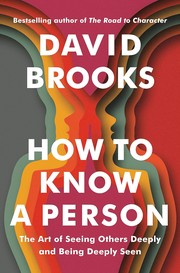
Brooks synthesizes psychology, philosophy, and moral thought into a practical guide to truly seeing and being seen by others. As the final book, it offers both a summation of why connection matters and a concrete path forward.
Discussion
Keep reading
Paths that share books, cover the same subject, or open a related topic.