Best books on introversion and thriving as a quiet person
This curriculum moves from self-recognition to deep science to real-world application, helping introverts first name and validate their experience, then understand its biological and psychological roots, and finally wield their quiet strengths in leadership, relationships, and creative life. Each stage builds the vocabulary and confidence needed for the next, so no step feels like a leap.
Foundations: Naming the Introvert Experience
BeginnerRecognize and validate introversion as a legitimate, powerful temperament — not a flaw to fix — and build a shared vocabulary for the rest of the path.
▸ Study plan for this stage
Pace: 4–5 weeks, ~25–30 pages/day (approximately 150–200 pages total across both books)
- Introversion is a neurobiological trait rooted in nervous system sensitivity and stimulation preferences, not shyness or social dysfunction
- Introverts process information more deeply and deliberately, leading to different (not inferior) strengths in focus, reflection, and meaningful relationships
- The 'Extrovert Ideal' in Western culture has created a false narrative that introversion is a weakness requiring correction
- Quiet strength emerges from introverts' capacity for deep work, listening, and thoughtful decision-making in high-stakes environments
- Recognizing your introversion type and energy patterns is essential for self-advocacy and designing a life that honors your temperament
- Introverts and extroverts have different optimal stimulation levels; managing this difference is key to thriving, not conforming
- Introversion exists on a spectrum and can coexist with social confidence, leadership ability, and public-facing success
- What is the neurobiological basis of introversion, and how does it differ from shyness or social anxiety?
- How does the concept of the 'Extrovert Ideal' shape societal expectations, and what impact has it had on how introverts view themselves?
- What are the core strengths and advantages that introverts bring to work, relationships, and decision-making?
- How do introverts and extroverts differ in their optimal levels of stimulation, and what does this mean for managing energy?
- What is 'quiet strength,' and how can you recognize it in yourself and others?
- How can you identify your specific introversion type or pattern, and why does this self-knowledge matter for your daily life?
- Create a personal 'introversion profile' documenting your energy patterns, preferred work environments, and social recovery needs over one week
- Write a reflection comparing how you've internalized the 'Extrovert Ideal' and identify 2–3 ways it has influenced your self-perception or choices
- Conduct a 'quiet strength inventory': list 5 accomplishments or moments where your introverted traits (deep focus, listening, reflection) directly contributed to success
- Interview an introvert you know (or yourself, if journaling) about their experience using vocabulary from the books (e.g., stimulation sensitivity, deep processing, quiet strength)
- Design your ideal 'introvert-friendly' day or work environment based on what you've learned about your stimulation needs and energy recovery
- Identify one area of your life where you've been conforming to extrovert norms and brainstorm one small change to honor your introversion
Next up: With a solid foundation in *why* introversion matters and *what* your strengths are, the next stage will equip you with practical strategies to leverage quiet strength in specific contexts—from relationships and work to leadership and public presence.

The essential starting point — a landmark, accessible book that defines introversion clearly, challenges cultural bias toward extroversion, and gives readers an immediate sense of recognition and pride. Read first to establish the core framework everything else builds on.
Follows Quiet perfectly by grounding introversion in neuroscience and physiology, explaining why introverts are wired differently. It converts the 'aha' moment from Cain into practical, biological understanding.
Going Deeper: Psychology and Personality Science
IntermediateUnderstand the broader psychological landscape — personality typology, sensitivity, and the inner world — so introversion is seen not in isolation but as part of a rich inner architecture.
▸ Study plan for this stage
Pace: 8–10 weeks, ~25–30 pages/day (approximately 2–3 weeks per book with time for reflection and exercises)
- The MBTI framework and how the four dichotomies (E/I, S/N, T/F, J/P) map personality differences, with particular attention to how introversion functions within different type combinations
- Sensory processing sensitivity (SPS) as a distinct neurobiological trait that often co-occurs with introversion but is independent—affecting how introverts and extroverts process stimuli
- The distinction between introversion (preference for internal focus) and shyness or social anxiety, and how sensitivity amplifies introversion's characteristics
- The concept of 'quiet influence'—how introverts lead, persuade, and create impact through listening, preparation, and authentic presence rather than visibility or volume
- The inner world as a source of strength: depth of processing, reflection, and self-awareness as competitive advantages in professional and personal contexts
- How personality science validates introversion as a normal, valuable variation rather than a deficit to overcome
- Practical integration: recognizing your own type, sensitivity profile, and influence style to work with—not against—your natural wiring
- What are the four dichotomies of the MBTI, and how does the I/E preference interact with the other three to create different personality patterns?
- How does Elaine Aron define sensory processing sensitivity, and why is it important to distinguish it from introversion itself?
- What are the key differences between introversion, shyness, and social anxiety, and how do they relate to sensitivity?
- According to Kahnweiler, what are the core strengths of quiet influence, and how do introverts create impact without relying on extrovert-style visibility?
- How can you identify your own MBTI type and sensitivity level, and what does this reveal about your natural work style and leadership approach?
- What misconceptions about introversion does this stage of reading challenge, and how does understanding personality science change your perspective on your own strengths?
- Complete an official MBTI assessment (or use a reputable online version) and write a 1–2 page reflection on your four-letter type. Note which dichotomies feel most accurate and which surprised you. Cross-reference your type with examples from 'Gifts Differing.'
- Take Elaine Aron's Highly Sensitive Person (HSP) self-test and score yourself. Journal about which sensory domains (visual, auditory, tactile, olfactory) affect you most, and reflect on how sensitivity shows up in your daily life separately from your introversion.
- Create a personal 'influence inventory': list 3–5 recent situations where you influenced others or made an impact. Analyze each using Kahnweiler's quiet influence framework—did you listen first? Prepare thoroughly? Build trust? Identify your natural influence patterns.
- Interview 2–3 people with different MBTI types (ideally including at least one extrovert and one introvert) about their work style, energy management, and how they prefer to be led. Document their responses and compare to the frameworks in the books.
- Design a 'personality-aligned work day' experiment: for one week, structure your schedule, communication, and breaks around your MBTI type and sensitivity profile. Track your energy, productivity, and well-being. Write a brief case study of what worked.
- Create a visual map (poster, digital graphic, or mind map) showing how your MBTI type, sensitivity level, and quiet influence strengths interconnect. Use this as a reference tool for understanding yourself and others.
Next up: This stage grounds introversion in validated personality science and reveals it as a multifaceted strength—preparing you to move into the next stage where you'll learn concrete, practical strategies for leveraging these strengths in specific life domains (career, relationships, leadership, creativity).

The original source behind the Myers-Briggs framework, written by its creator. Reading it here gives the learner a rigorous, nuanced model of personality type that contextualizes introversion within a full psychological system.
Introversion and high sensitivity frequently overlap; Aron's research-backed book illuminates the trait of sensory-processing sensitivity, adding crucial depth to self-understanding and preventing conflation of two related but distinct traits.

Bridges psychology and practice by identifying the six specific strengths introverts use to influence others — a natural next step after understanding the 'why' of introversion, now moving toward the 'how.'
Quiet Leadership and the World of Work
IntermediateApply introvert strengths to leadership, communication, and professional life — learning to lead, present, and collaborate authentically without pretending to be extroverted.
▸ Study plan for this stage
Pace: 6–8 weeks, ~25–30 pages/day (approximately 2–3 weeks per book, with overlap for reflection and integration)
- Introverts possess distinct leadership strengths: deep listening, thoughtful decision-making, and one-on-one influence that differ from—but rival—extroverted approaches
- Quiet power emerges through authenticity: leading and communicating as your true self rather than adopting an extroverted persona builds credibility and sustainable influence
- Strategic communication for introverts: preparing thoroughly, leveraging written communication, and choosing high-impact moments to speak amplifies professional presence
- Building genuine relationships at work: introverts excel at depth over breadth, creating loyal networks through meaningful one-on-one and small-group interactions
- Managing energy and visibility: introverts must balance their need for solitude with strategic visibility and networking to advance careers without burnout
- Reframing introversion as a professional asset: shifting from 'fixing' introversion to leveraging it as a competitive advantage in leadership and collaboration
- Navigating workplace expectations: recognizing and resisting pressure to conform to extroverted norms while finding sustainable ways to meet professional demands
- What are three specific leadership strengths that introverts bring to the workplace, and how do they differ from extroverted leadership approaches?
- How can an introvert maintain authenticity in their professional role while still meeting visibility and communication expectations?
- What communication strategies from these books allow introverts to have influence and impact without relying on constant verbal presence or high-energy networking?
- How can introverts build and maintain professional networks in ways that align with their natural strengths rather than draining their energy?
- What does 'quiet power' mean in a work context, and how is it different from being passive or invisible?
- How can you identify and push back against workplace cultures or expectations that undervalue introvert strengths?
- Conduct a personal leadership audit: identify 3–5 moments in your professional life where you led or influenced others quietly (through listening, preparation, or one-on-one conversation). Write a brief reflection on what made these moments effective and how they align with Kahnweiler's framework.
- Draft a 'communication strategy' for your current role: map out which communications you'll handle in writing, which require face-to-face time, and which moments you'll deliberately choose to speak up in meetings. Test this for one week and journal the results.
- Practice the 'prepared presence' technique: select one recurring meeting or professional situation where you typically stay quiet. Prepare one specific, high-value contribution in advance and deliver it. Reflect on how preparation shifted your confidence and impact.
- Interview two introverted professionals (or peers) about how they've built their careers without conforming to extrovert stereotypes. Ask about their strategies for visibility, networking, and leadership. Synthesize their insights into a personal playbook.
- Create a 'quiet networking plan' for the next month: identify 3–5 one-on-one coffee meetings, small-group collaborations, or written contributions (blog post, email insight, project proposal) that feel authentic to you. Execute and track the relationships and opportunities that emerge.
- Reflect on a recent professional challenge where you felt pressure to 'be more extroverted.' Reframe it using concepts from both books: what would a quiet-strength approach have looked like? Write a scenario showing how you'd handle it differently.
Next up: This stage equips you to lead and communicate authentically as an introvert in professional settings; the next stage will likely deepen your ability to sustain this authenticity under pressure, build resilience, and extend quiet strength into broader life domains beyond work.

A focused, practical guide to leading as an introvert, with real case studies and a four-step framework. It directly applies the self-knowledge built in earlier stages to workplace challenges.

Cain's follow-up applies her core ideas to younger readers and real-life social situations, but its concrete scenarios and strategies are equally valuable for adults navigating social and professional dynamics.
Mastery: Solitude, Creativity, and the Examined Life
ExpertExplore the philosophical and creative dimensions of introversion — solitude as a source of power, deep work as a competitive advantage, and the examined inner life as a lifelong practice.
▸ Study plan for this stage
Pace: 8–10 weeks, ~25–30 pages/day (alternating between both books; ~4–5 weeks per book with overlap)
- Deep work as a rare and valuable skill: sustained focus on cognitively demanding tasks in a distraction-filled world
- The four disciplines of deep work: focus, work metrics, execution, and a deep work philosophy
- Solitude as essential to creative output and intellectual achievement, not a liability
- The introvert's paradox: social pressure to perform extroversion versus the authentic power of quiet strength
- The examined life as a deliberate practice: self-awareness, introspection, and intentional living
- Shallow work versus deep work: how constant connectivity erodes the capacity for meaningful contribution
- The cultural devaluation of introversion and the cost of performing extroversion
- Solitude, creativity, and the inner world as sources of competitive advantage and personal fulfillment
- What are the four disciplines of deep work, and how does each one contribute to building a deep work practice?
- How does Rufus characterize the introvert's experience of solitude, and why does she argue it is essential rather than pathological?
- What does Newport mean by 'the attention residue' and how does it undermine deep work in the modern workplace?
- How do the pressures of social performance and extroversion culture affect introverts' ability to access their authentic strength?
- What is the relationship between solitude, creativity, and the examined life across both books?
- How can you design your own deep work practice that honors your introversion rather than fighting it?
- Audit your current work/life schedule: identify and log all shallow work activities (email, meetings, social media) for one week; calculate the percentage of time spent on deep work versus shallow work
- Design a personal deep work ritual: choose a specific time, location, and set of rules (no phone, no email, specific duration) and practice it for 2 weeks; document what you notice about focus, output, and energy
- Conduct a solitude inventory: reflect on when you feel most creative, clear-headed, and authentic; identify the conditions (time alone, environment, activity) and create a weekly solitude practice that protects these conditions
- Read and annotate one chapter from each book side-by-side: identify where Newport and Rufus align or diverge on the value of introversion and solitude; write a 1–2 page synthesis
- Interview yourself on the examined life: answer Rufus's implicit questions—What do you actually believe? What do you want? What are you avoiding?—in a journal; revisit these answers weekly
- Create a 'shallow work reduction plan': identify 3–5 shallow work habits (notifications, unnecessary meetings, etc.) and design specific interventions to eliminate or batch them; track the impact on your deep work capacity over 3 weeks
Next up: This stage establishes solitude and deep work as sources of power and authenticity, preparing you to explore how introverts can lead, influence, and contribute meaningfully to the world without abandoning their core nature.
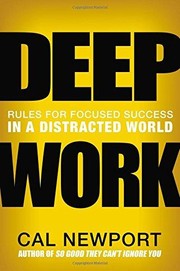
Reframes the introvert's natural preference for focused, uninterrupted thinking as the most valuable professional skill of the modern era — a powerful culmination of the 'quiet strength' theme at its most strategic.

A bold, literary celebration of solitude and the loner temperament that challenges social norms at a philosophical level — best read last, when the reader has the grounding to engage critically and joyfully with its provocative thesis.
Discussion
Keep reading
Paths that share books, cover the same subject, or open a related topic.