Make friends as an adult
This curriculum moves from understanding the loneliness crisis and why adult friendship is structurally hard, to learning the science of how bonds actually form, and finally to hands-on strategies for building lasting community. Each stage builds the vocabulary and emotional honesty needed for the next, so that by the end the reader has both a clear diagnosis of the problem and a practical, evidence-backed toolkit for solving it.
Foundations: Naming the Problem
BeginnerUnderstand the loneliness epidemic, why adult friendship fades, and why this is a structural and cultural problem — not a personal failure.
▸ Study plan for this stage
Pace: 6–8 weeks total: ~3 weeks on *Bowling Alone* (~25–30 pages/day, focusing on Parts I–III and the conclusion) and ~3 weeks on *Friendship* (~20–25 pages/day); allow a buffer week between books for reflection journaling and concept review.
- Social capital (bonding vs. bridging): Putnam's foundational distinction between tight in-group ties and broader cross-group connections, and why both have eroded since the mid-20th century
- Civic disengagement as a structural trend: Putnam's data showing the decline of clubs, religious groups, unions, and informal socializing is driven by generational change, suburbanization, technology, and time pressure — not individual laziness
- The friendship paradox of adulthood: Denworth explains how the biological and evolutionary machinery for friendship is real and ancient, yet adult life systematically dismantles the three conditions friendship requires — proximity, repeated unplanned interaction, and a setting that encourages openne
- Friendship as a health imperative: Denworth's neuroscience and epidemiology showing that strong social bonds reduce inflammation, buffer stress, and predict longevity as powerfully as diet or exercise
- Loneliness vs. solitude: Denworth distinguishes the subjective pain of unwanted isolation (loneliness) from chosen aloneness, and explains why chronic loneliness is a threat state that distorts perception and behavior
- The 'personal failure' myth: Together, both books build the case that declining friendship is a macro-level, structural phenomenon — rooted in urban design, work culture, and social norms — not a character flaw or introversion
- Historical baseline: Putnam's longitudinal data gives readers a concrete before/after picture of American community life, making the scale of the problem legible rather than vague
- Biology meets sociology: Denworth's account of how the brain's social circuitry co-evolved with group living provides the 'why it hurts' complement to Putnam's 'how we got here' narrative
- According to Putnam, what are the four main forces he identifies as responsible for the collapse of social capital, and which does he weight most heavily? Can you cite at least one data trend from *Bowling Alone* to support his argument?
- What are the three situational conditions Denworth identifies as necessary for adult friendship to form, and which of those conditions does modern adult life most reliably destroy?
- How does Putnam differentiate 'bonding' social capital from 'bridging' social capital, and why does he argue society needs both?
- Denworth draws on neuroscience and evolutionary biology to argue friendship is not a luxury. What is the core biological argument she makes, and what health outcomes does she link to social connection?
- Both books together make a structural argument against self-blame. In your own words, synthesize one point from each book that supports the claim that adult loneliness is a societal problem, not a personal failure.
- What does Denworth mean when she says loneliness functions as a 'threat state,' and how does that concept change the way we should think about lonely people's behavior?
- **Putnam Data Audit (Week 1–2):** Choose one civic institution Putnam tracks — a bowling league, a PTA, a union, a religious congregation — and spend 30 minutes researching whether that trend holds in your own city or country today. Write a one-page reflection on what you find.
- **Personal Social Capital Map (Week 2):** Draw a simple two-column map of your own bonding ties (close family/friends) and bridging ties (acquaintances across different social circles). Note where each relationship formed. Identify which of Denworth's three conditions (proximity, repetition, openness) was present when each began.
- **Loneliness vs. Structural Audit Journal (Week 3–4):** After finishing *Bowling Alone*, write a journal entry answering: 'Which parts of my daily environment — commute, housing, work schedule, neighborhood design — actively work against unplanned social interaction?' Be specific. The goal is to externalize blame from self to structure.
- **Denworth Reading Log — Science Tracker (Week 4–5):** As you read *Friendship*, keep a running list of every study or biological mechanism Denworth cites. After finishing, pick the three findings that surprised you most and explain in writing why they challenge a common cultural assumption about friendship.
- **'Why It Faded' Interview (Week 6):** Have a candid 20-minute conversation with one adult friend or family member about a friendship that drifted apart. Afterward, map the drift onto the frameworks from both books: Which structural forces (Putnam) and which lost conditions (Denworth) best explain what happened? Write up your analysis.
- **Stage Synthesis Essay (Week 7–8 buffer):** Write a 400–600 word personal essay titled 'Why I'm Not to Blame — and Why That Matters.' Use at least one concrete argument from *Bowling Alone* and one from *Friendship*. The goal is not to excuse passivity, but to reframe the problem accurately before moving into solutions.
Next up: By establishing that adult friendship decline is structural and biological — not a personal moral failing — this stage clears the psychological ground needed to move from diagnosis to deliberate action: understanding *what friendship actually requires* so it can be intentionally rebuilt.
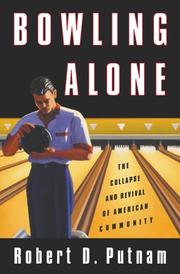
The landmark diagnosis of America's collapsing social fabric; gives you the big-picture vocabulary (social capital, civic life, community decline) that every later book assumes you know.

A science journalist's accessible survey of what friendship actually is biologically and evolutionarily — a perfect, jargon-free primer before diving into deeper psychology.
The Science of Connection: How Bonds Actually Form
BeginnerLearn the psychological and neurological mechanics behind loneliness, belonging, and how closeness is genuinely built between people.
▸ Study plan for this stage
Pace: 6–8 weeks total: Weeks 1–3 for "Loneliness" by Cacioppo (~25–30 pages/day, 5 days/week), and Weeks 4–8 for "Together" by Murthy (~20–25 pages/day, 5 days/week). Allow one buffer day per week for reflection journaling and review.
- Loneliness as a biological signal: Cacioppo's core argument that loneliness is an evolutionary alarm system — like hunger or pain — designed to motivate reconnection, not a personal failing or character flaw.
- The difference between perceived isolation and objective isolation: Cacioppo demonstrates that it is the subjective feeling of disconnection, not the number of social contacts, that drives harm to health and cognition.
- The physiological cascade of chronic loneliness: How prolonged loneliness elevates cortisol, disrupts sleep, accelerates cellular aging (via telomere shortening), and suppresses immune function — as documented in Cacioppo's research.
- The 'loneliness loop': Cacioppo's concept of how loneliness distorts social perception (hypervigilance to threat, self-protective withdrawal), making reconnection harder and reinforcing isolation in a self-perpetuating cycle.
- Murthy's 'pillars of social connection': Intimate relationships, friendships, and community — and why all three layers are necessary for full belonging, with the loss of any one layer creating distinct vulnerabilities.
- The modern loneliness epidemic as a structural and cultural problem: Murthy's argument in 'Together' that loneliness is not merely individual but is shaped by technology overuse, workplace culture, urban design, and social fragmentation.
- The neuroscience of bonding — oxytocin, shared vulnerability, and the role of consistent, responsive interaction in building trust and closeness over time (threaded through both books).
- The distinction between being alone and being lonely: Both authors converge on the idea that solitude can be restorative while loneliness is defined by unmet connection needs — a critical reframe for readers who conflate the two.
- According to Cacioppo in 'Loneliness,' why did the capacity for loneliness evolve, and what does that tell us about its purpose versus its modern experience?
- What specific physical health outcomes does Cacioppo link to chronic loneliness, and what biological mechanisms does he identify as the bridge between social pain and bodily harm?
- How does the 'loneliness loop' described in 'Loneliness' explain why lonely people often struggle to escape isolation even when opportunities for connection are available?
- In 'Together,' how does Murthy define the three pillars of connection, and what does he argue happens to a person's wellbeing when each pillar is absent or weakened?
- Both Cacioppo and Murthy treat loneliness as a public health crisis rather than a private struggle. What evidence and arguments do they each use to make that case, and where do their perspectives complement each other?
- Based on both books, what practical conditions — behavioral, environmental, and attitudinal — are most necessary for genuine closeness to form between people?
- Loneliness Audit (after 'Loneliness'): Using Cacioppo's framework of perceived vs. objective isolation, write a one-page honest inventory of your own social landscape. How many relationships feel genuinely reciprocal? Where do you notice the distorted perceptions of the loneliness loop in your own thinking?
- Biological Stakes Tracker: As you read Cacioppo's chapters on health outcomes, keep a running list of every physiological system he links to loneliness. After finishing, rank them by the ones that surprised you most — this builds retention and personal relevance.
- Pillars Mapping (after 'Together'): Draw Murthy's three-pillar model (intimate, friendship, community) and place your current relationships into each category. Identify which pillar feels most depleted and brainstorm one small, concrete action to strengthen it.
- Comparative Annotation Exercise: Choose one chapter from 'Loneliness' and one thematically related chapter from 'Together' and read them back-to-back. Write a half-page note on where the two authors agree, where they diverge, and what each adds that the other doesn't.
- The 'Weak Ties' Experiment (inspired by Murthy's community pillar): For one week, intentionally engage in one brief but genuine interaction per day with a 'weak tie' — a neighbor, barista, or colleague you rarely speak to. Journal what you notice about your mood and sense of belonging.
- Synthesis Essay: After completing both books, write a 300–500 word personal response to this prompt: 'What is the single most important thing I have learned about how human connection actually works, and how will I apply it?' This consolidates the stage's core insight before moving forward.
Next up: Having established the biological and psychological foundations of why connection matters and how it forms, the reader is now ready to examine the practical, relational skills — communication, vulnerability, conflict, and maintenance — that turn that scientific understanding into real, lasting adult friendships.
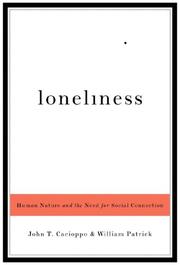
The definitive scientific account of loneliness by the researcher who defined the field; reading it after Putnam connects the societal collapse to what it does inside individual minds and bodies.

Written by a former U.S. Surgeon General, this bridges hard science and personal narrative, reinforcing Cacioppo's findings and introducing the idea of connection as a public-health imperative.
The Psychology of Closeness: What Makes Friendship Real
IntermediateUnderstand the specific interpersonal dynamics — vulnerability, self-disclosure, proximity, and repeated contact — that turn acquaintances into genuine friends.
▸ Study plan for this stage
Pace: 6–8 weeks total: Weeks 1–4 cover "Frientimacy" (~25–30 pages/day, 4–5 days/week); Weeks 5–8 cover "The Relationship Cure" (~20–25 pages/day, 4–5 days/week). Allow one buffer day per week for journaling and reflection exercises.
- The Frientimacy Triangle: Nelson's three-point model of Positivity, Consistency, and Vulnerability as the non-negotiable ingredients of close friendship
- Levels of vulnerability: Nelson's distinction between surface-level sharing and the deeper self-disclosure that signals trust and accelerates intimacy
- The Frientimacy Gap: the painful mismatch between the closeness we want and the closeness we actually experience, and why it is so common in adulthood
- Bids for connection: Gottman's foundational concept of the small, everyday emotional bids people make — and the three responses (turning toward, turning away, turning against) that determine relational depth
- Bid awareness and attunement: how consistently noticing and responding to a friend's bids builds an emotional bank account that sustains closeness over time
- Proximity and repeated unplanned contact: why physical nearness and low-effort, frequent interaction (as explored in both books) are structural prerequisites for friendship formation
- The role of positive sentiment override: Gottman's finding that a reservoir of goodwill built through small positive interactions buffers relationships against conflict and distance
- Intentional relationship rituals: how both Nelson and Gottman emphasize that closeness is not accidental but is built through repeated, deliberate relational habits
- According to Nelson's Frientimacy Triangle, why is vulnerability the hardest of the three elements to sustain, and what specific barriers does she identify for adult women (and adults generally)?
- How does Gottman define a 'bid for connection,' and can you give three concrete examples of bids that might occur in a casual friendship versus a close one?
- What does Nelson mean by the 'Frientimacy Gap,' and what structural features of modern adult life does she argue make it so persistent?
- Gottman describes three ways people respond to bids — turning toward, turning away, and turning against. How do patterns of these responses over time determine whether an acquaintance becomes a genuine friend?
- How do the concepts of Positivity and Consistency in Nelson's model map onto Gottman's idea of building an emotional bank account through bid responses?
- Both books argue that closeness is built incrementally rather than in dramatic moments. What practical strategies do Nelson and Gottman each offer for engineering more frequent, low-stakes contact with someone you want to grow closer to?
- Frientimacy Audit: List 5 current relationships and rate each one on Nelson's three axes (Positivity, Consistency, Vulnerability) on a scale of 1–5. Identify which axis is weakest in each relationship and write one concrete action to strengthen it this week.
- Bid Journal (2 weeks): Keep a small notebook or phone note. Each day, log at least two bids you made or received in a friendship context — note whether you/they turned toward, away, or against, and how it felt. Review patterns at the end of week two.
- Vulnerability Ladder: Using Nelson's levels of self-disclosure as a guide, write out a 'ladder' of 8–10 conversation topics ranked from least to most vulnerable. In your next three friend interactions, consciously climb one rung higher than you normally would and note the response.
- Ritual Design: Drawing on Gottman's emphasis on relational rituals, design one recurring micro-ritual (e.g., a monthly walk, a weekly voice-memo exchange) with a friendship you want to deepen. Schedule the first instance before finishing the stage.
- Bid Role-Play: With a trusted person (or in a journal as a thought experiment), script out a short conversation in which you practice turning toward three different types of bids — an emotional bid, a humor bid, and an information-seeking bid — using Gottman's framework.
- Frientimacy Gap Reflection Essay: Write a 1–2 page personal reflection answering: 'Where is my biggest Frientimacy Gap right now, and using both Nelson's Triangle and Gottman's bid theory, what is the most likely cause and the most actionable fix?'
Next up: By internalizing the psychological mechanics of how closeness is built — vulnerability cycles, bid responsiveness, and intentional consistency — the reader is now equipped to zoom out and examine the structural and social forces (life transitions, geography, identity, community design) that either enable or obstruct those mechanics at scale, which is the focus of the next stage.

Nelson's 'Frientimacy Triangle' (positivity, consistency, vulnerability) gives you a concrete, memorable model for diagnosing why friendships stall and how to deepen them.
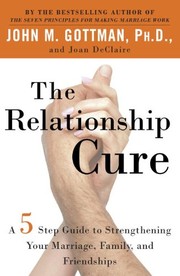
Gottman's research on 'bids for connection' explains the micro-moments that build or erode closeness — essential reading before tackling community-scale strategies.
Finding Your People: Practical Community Building
IntermediateApply everything learned to actively seek out, create, and sustain a real-world community and friendship circle as an adult.
▸ Study plan for this stage
Pace: 8–10 weeks total; ~3 weeks per book at roughly 20–25 pages/day. Week 1–3: "The Art of Gathering"; Week 4–6: "Big Friendship"; Week 7–9: "Find Your People"; Week 10: integration, reflection, and exercise completion.
- Intentional gathering design (Parker): every gathering needs a sharp, specific purpose that shapes all decisions — venue, guest list, format, and facilitation — rather than defaulting to 'the way it's always been done'
- The power of the host (Parker): good hosting is an act of generous authority — protecting the room, setting the tone, and creating the conditions for real connection rather than polite small talk
- Threshold moments & opening/closing rituals (Parker): how a gathering begins and ends determines how deeply people engage; deliberate transitions signal that this time together is meaningful
- Big Friendship as a practice, not a feeling (Sow): deep adult friendship requires active maintenance, honest conflict, and intentional 'stretching' — it does not sustain itself on goodwill alone
- Vulnerability and repair in friendship (Sow): the willingness to name tension, seek help (e.g., friendship therapy), and do the hard work of repair is what separates lasting bonds from fading ones
- The loneliness epidemic as a structural problem (Allen): adult isolation is not a personal failure but a cultural and architectural one — solving it requires deliberate counter-cultural choices
- Proximity, consistency, and vulnerability as the three engines of community (Allen): real belonging is built by being physically near people repeatedly and letting yourself be known — all three must be present
- Moving from consumer to contributor (Allen): sustainable community requires shifting from 'what can I get?' to 'what can I build and give?' — taking ownership rather than waiting to be invited in
- After reading Parker, can you articulate the single specific purpose of the next gathering you plan to host, and explain how that purpose should shape at least three concrete decisions about how you run it?
- Parker argues that 'chill' hosting is actually a form of selfishness — what does she mean, and do you agree? How does this reframe your own instincts as a host or guest?
- Sow and Aminatou describe 'the big talk' — a direct, vulnerable conversation to repair their friendship. What conditions made that conversation possible, and what does their experience reveal about what most adult friendships are missing?
- How does Sow's concept of 'stretching' a friendship differ from simply spending more time together, and what would stretching look like in one of your current relationships?
- Allen identifies proximity, consistency, and vulnerability as the three non-negotiable ingredients of community. Which of the three is hardest for you personally, and what specific structural barrier is causing that difficulty?
- Across all three books, a common thread emerges: real connection requires someone to go first and take a risk. Drawing on Parker, Sow, and Allen together, what does 'going first' look like at the gathering level, the friendship level, and the community level?
- Design a gathering from scratch using Parker's framework: write a one-sentence purpose statement, then make a guest list, choose a venue, and plan an opening ritual and a closing ritual — all explicitly justified by that purpose. Host it, then debrief alone or with a trusted friend.
- Audit your current friendships using Sow's lens: list your three closest adult friendships and honestly assess each one — when did you last have a 'big talk'? Is there unresolved tension? Write a one-paragraph 'friendship health check' for each and identify one concrete next step.
- Initiate a 'stretch' with one friend: propose something neither of you has done together — a trip, a creative project, a shared class — that requires planning and vulnerability. Document what resistance or excitement comes up in the process.
- Map your proximity and consistency gaps using Allen's framework: draw a simple diagram of where you spend your recurring time (neighborhood, gym, workplace, place of worship, etc.) and identify which spaces have the most potential for community. Choose one and commit to showing up consistently for 30 days.
- Start or join one recurring micro-community: using Allen's principles, either launch a small group (4–8 people, shared interest, regular cadence) or plug into an existing one. After four sessions, journal on which of Allen's three engines — proximity, consistency, or vulnerability — felt strongest and which felt absent.
- Write a 'community manifesto' of 1–2 pages synthesizing Parker, Sow, and Allen: What kind of gatherer do you want to be? What do you owe your close friends? What community are you committing to build? Keep it somewhere visible and revisit it in 90 days.
Next up: By actively applying Parker's hosting craft, Sow's model of deep friendship maintenance, and Allen's community-building framework, the reader has moved from theory to lived practice — and is now ready to explore the deeper psychological and sociological forces (identity, belonging, difference, and long-term resilience) that shape why communities thrive or fracture over time.
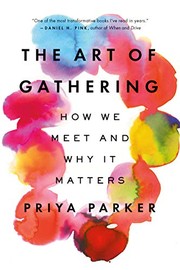
Teaches how to design meaningful gatherings that actually create connection — a practical, immediately actionable guide for anyone who wants to host or build community intentionally.

A candid, personal account of sustaining a deep adult friendship through real effort and explicit conversation — models the vulnerability and intentionality the earlier books prescribe.

A direct, practical guide to building a small, committed community from scratch; pairs well with Parker's gathering design as a step-by-step action plan for the reader's own life.
Discussion
Keep reading
Paths that share books, cover the same subject, or open a related topic.