The Best Books on Jim Crow and Segregation
This curriculum traces racial segregation in America from the collapse of Reconstruction through the hard-won victories of the Civil Rights Movement, building from essential narrative history toward deeper analytical and experiential works. Starting at an intermediate level, each stage assumes the vocabulary and context built by the previous one, moving from broad historical framing to legal architecture, lived experience, and finally the ideological and activist forces that dismantled Jim Crow.
Foundations: The World Jim Crow Built
IntermediateEstablish a clear chronological and political narrative of how Jim Crow emerged from Reconstruction's collapse and what it looked like on the ground across the South.
▸ Study plan for this stage
Pace: 4-5 weeks, ~40-50 pages/day (approximately 200-250 pages total). Read in 3-4 focused sittings per week to allow time for reflection and note-taking between sessions.
- Jim Crow was not inevitable or monolithic—it emerged gradually from Reconstruction's political collapse rather than springing fully formed from slavery's end
- The role of Redeemer Democrats and the 'Solid South' in consolidating white political power and dismantling Reconstruction protections
- The distinction between informal segregation practices in the Upper South and the later, more rigid legal codification of Jim Crow in the Deep South
- How economic interests, racial ideology, and political opportunism intersected to create segregationist policy across different regions and time periods
- The critical period of the 1890s-1900s as the turning point when segregation hardened into law and custom
- Woodward's revisionist argument against the 'Lost Cause' mythology and deterministic narratives of Southern history
- The role of poor whites, Black political participation, and Populism in shaping the trajectory toward Jim Crow
- How Jim Crow functioned as both a legal system and a lived reality that shaped daily life, labor, and social hierarchy in the South
- According to Woodward, why was Jim Crow not an inevitable outcome of slavery or Reconstruction, and what does his evidence suggest about the contingency of segregation?
- What was the political significance of the Redeemer movement, and how did it differ from earlier Reconstruction-era Republican rule?
- How did segregation practices differ between the Upper South and Deep South, and what does this regional variation tell us about Jim Crow's origins?
- What role did the 1890s-1900s play as a turning point in the hardening of segregation into law, and what factors drove this shift?
- How does Woodward challenge the 'Lost Cause' narrative, and what alternative interpretation does he offer for understanding Southern racial history?
- What were the connections between economic change, Populism, and the rise of rigid Jim Crow segregation?
- Create a detailed timeline of Jim Crow's emergence from 1865-1920, marking key political events (Reconstruction, Redemption, Populism, disfranchisement), legal milestones (state constitutions, segregation laws), and regional variations between Upper and Deep South.
- Construct a comparison chart showing segregation practices before 1890 vs. after 1900 in specific areas (transportation, education, public accommodations, labor). Use Woodward's evidence to identify what changed and what remained consistent.
- Write a 2-3 page analytical response to this prompt: 'Was Jim Crow inevitable?' Use Woodward's argument and specific historical evidence to defend your position against deterministic interpretations.
- Map out the political coalitions that supported segregation (Redeemers, poor whites, business interests, etc.) and trace how these shifted during the Populist era and afterward. Identify which groups benefited most from Jim Crow.
- Annotate 3-4 key passages from Woodward that directly challenge Lost Cause mythology. For each, explain what the Lost Cause version claimed and what Woodward's evidence reveals instead.
- Create a 'biography' of segregation in one specific Southern state or city during the period Woodward covers, using his framework to explain how local conditions shaped the timing and form of Jim Crow laws.
Next up: This stage establishes the foundational narrative of how Jim Crow emerged and solidified as a system, preparing you to examine in subsequent stages how it was experienced, resisted, and eventually dismantled through the perspectives of those who lived under it and fought against it.
The essential starting point — a landmark work that traces the origins and evolution of segregation laws, demolishing the myth that Jim Crow was inevitable or ancient. Reading it first gives you the historical spine the rest of the curriculum hangs on.
Terror and Enforcement: How Segregation Was Enforced
IntermediateUnderstand the mechanisms of racial terror — lynching, mob violence, and economic coercion — that enforced the color line and kept Black Americans subjugated beyond mere statute.
▸ Study plan for this stage
Pace: 6–7 weeks, ~40–50 pages/day. Start with Wells-Barnett's "Red Record" (weeks 1–2), then move to Brundage's "Lynching in the New South" (weeks 3–6), with week 7 reserved for review, synthesis, and reflection exercises.
- Lynching as a tool of racial terror: how mob violence functioned as an extrajudicial enforcement mechanism to maintain white supremacy and the color line
- The role of false accusations and myth-making: how charges of rape and other crimes were weaponized to justify lynching and obscure its true purpose as social control
- Regional and temporal variation in lynching: how Brundage's analysis reveals that lynching patterns differed by geography, time period, and local context rather than being monolithic
- Economic coercion and social subjugation: how lynching and the threat of violence worked alongside economic exclusion to keep Black Americans powerless and dependent
- The complicity of institutions: how law enforcement, courts, newspapers, and civic leaders enabled or participated in lynching rather than preventing it
- Documentation and resistance: how Wells-Barnett's investigative journalism and record-keeping served as an act of counter-narrative and resistance to white denial
- The psychology of mob violence: how collective action, community participation, and spectacle transformed lynching into a public ritual that reinforced racial hierarchy
- Intersections of gender, sexuality, and race: how accusations of sexual transgression were central to justifying violence against Black men and women
- What evidence does Wells-Barnett present in 'Red Record' to challenge the myth that lynching was a response to rape, and what alternative explanations does she offer for the actual causes of lynching?
- How does Brundage's 'Lynching in the New South' complicate the idea of lynching as a single, unchanging phenomenon? What regional and temporal differences does he identify?
- What role did institutions—law enforcement, courts, newspapers, and local government—play in enabling or participating in lynching according to both texts?
- How did the threat and reality of lynching function as a mechanism of economic and social control beyond its immediate violence?
- What methods did Wells-Barnett use to document and counter the dominant narratives about lynching, and why was this documentation significant?
- How did gender and sexuality intersect with race in justifying and perpetuating lynching, as discussed in these texts?
- Create a detailed timeline of lynching incidents from 'Red Record,' categorizing them by alleged crime, region, and outcome. Annotate with Wells-Barnett's commentary on the accuracy of charges.
- Analyze 3–5 newspaper accounts or primary documents cited in either text. Compare how they describe lynching events versus how Wells-Barnett or Brundage interpret them. What narratives are emphasized or omitted?
- Map the geographic distribution of lynching discussed in Brundage's work. Identify patterns by state, county, or region. What do these patterns suggest about how lynching was unevenly deployed?
- Write a 2–3 page analytical essay: 'How did lynching function as both a tool of terror and a ritual of community reinforcement?' Use specific examples from both texts.
- Conduct a close reading of Wells-Barnett's preface and introduction to 'Red Record.' What is her explicit purpose in writing? How does she position herself as an investigator and witness? How does this framing affect the text's authority?
- Create a comparison chart of the causes, perpetrators, and consequences of lynching as presented in 'Red Record' versus 'Lynching in the New South.' What does each text emphasize, and where do they align or diverge?
Next up: This stage establishes the violent, extrajudicial mechanisms that enforced segregation, preparing you to examine in the next stage how segregation was codified into law, institutions, and everyday practices—moving from terror to systemic structure.

Wells's pioneering investigative journalism on lynching is a primary source of extraordinary moral clarity; reading it here grounds the abstract history in documented atrocity and introduces the earliest organized resistance.
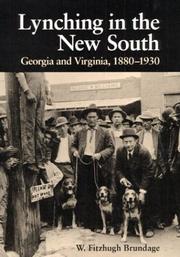
A rigorous scholarly analysis of lynching's geography, patterns, and social functions in Georgia and Virginia, building directly on Wells's testimony with statistical and comparative depth.
The Legal Architecture: Separate and Unequal
IntermediateUnderstand the constitutional and legal scaffolding of segregation — from Plessy v. Ferguson to the NAACP's long legal campaign — and how the law both created and ultimately dismantled Jim Crow.
▸ Study plan for this stage
Pace: 8–10 weeks, ~40–50 pages/day. Start with "Simple Justice" (680 pages, ~3 weeks), then "The Color of Law" (480 pages, ~2.5 weeks), with 2–3 weeks for review, synthesis, and exercises.
- Plessy v. Ferguson (1896) as the constitutional foundation of 'separate but equal' and how it legitimized segregation across all domains
- The NAACP's strategic legal campaign from the 1930s onward: incremental challenges to segregation through education cases (Missouri ex rel. Gaines, Sweatt v. Painter, McLaurin v. Oklahoma) before the frontal assault on Plessy
- The role of Thurgood Marshall and the Inc. Fund in coordinating litigation strategy and building the legal record for Brown v. Board of Education
- How federal, state, and local governments actively created and enforced segregation through law—not merely as passive reflection of custom, but as deliberate policy (redlining, zoning, housing covenants, FHA practices)
- The distinction between de jure segregation (mandated by law) and de facto segregation (resulting from government action and private discrimination), and how both were legally constructed
- Brown v. Board of Education (1954) as a watershed moment: the legal repudiation of Plessy and the beginning of desegregation, though implementation remained contested
- The gap between legal victory and enforcement: massive resistance, token integration, and the limits of court orders without executive and legislative backing
- What was the 'separate but equal' doctrine, and how did Plessy v. Ferguson establish it as constitutional law? What were the practical consequences?
- Explain the NAACP's incremental legal strategy in the 1930s–1940s. Why did the organization challenge segregation in graduate and professional education before attacking segregation in primary and secondary schools?
- What role did Thurgood Marshall and the NAACP Inc. Fund play in coordinating the legal campaign against segregation, and how did they build the factual and legal record for Brown?
- How did federal, state, and local governments actively construct segregation through law (beyond merely reflecting existing prejudice)? Give specific examples from housing, education, and urban planning.
- What was the significance of Brown v. Board of Education, and why did implementation prove so difficult despite the Supreme Court's ruling?
- Distinguish between de jure and de facto segregation. How does Rothstein's argument complicate the traditional understanding of this distinction?
- Create a timeline of landmark Supreme Court cases from Plessy (1896) to Brown (1954), noting the legal arguments, outcomes, and how each case incrementally weakened or strengthened segregation doctrine.
- Read and annotate excerpts from Plessy v. Ferguson and Brown v. Board of Education. Identify the key legal reasoning in each and explain how Brown explicitly overturned Plessy's logic.
- Map the NAACP's litigation strategy: identify 3–4 cases from Kluger's account (e.g., Gaines, Sweatt, McLaurin) and explain how each case was chosen to build toward Brown. What was the incremental logic?
- Using Rothstein's examples, identify one federal policy (FHA lending, redlining, zoning) and one state/local policy (housing covenants, school funding formulas) that actively created segregation. Document how each operated and its lasting effects.
- Analyze a primary source document (e.g., a restrictive covenant, an FHA underwriting manual, a state segregation statute) and explain how it legally enforced segregation. What language made segregation 'law' rather than mere custom?
- Write a 2–3 page comparative analysis: How does Kluger's focus on litigation and personalities differ from Rothstein's focus on governmental policy and structural architecture? What does each approach reveal that the other might miss?
Next up: This stage establishes that segregation was not natural or inevitable but was deliberately constructed through law and policy—and that law could also dismantle it, setting the stage for the next phase: understanding the actual implementation of desegregation, the resistance it provoked, and the ongoing struggle for racial equality beyond legal doctrine.
A masterful narrative of the legal road to Brown v. Board of Education, tracing the NAACP's decades-long strategy; it bridges the legal and human dimensions of segregation better than any other single volume.

Focuses on government-sponsored residential segregation in the North and West, expanding the reader's frame beyond the South and demonstrating that Jim Crow was a national, state-sanctioned system — essential corrective context after Kluger.
Living It: Black Life and Resistance Under Jim Crow
IntermediateExperience Jim Crow from the inside — through memoir, sociology, and cultural history — to understand how Black Americans built community, identity, and resistance within a system designed to dehumanize them.
▸ Study plan for this stage
Pace: 8–10 weeks, ~40–50 pages/day (alternating between both books to allow for reflection and cross-comparison)
- The Great Migration as both escape and continuation: how Black Americans fled Jim Crow in the South only to encounter de facto segregation in Northern cities
- Intergenerational trauma and resilience: how Jim Crow shaped family structures, parental discipline, and the transmission of survival strategies across generations
- The construction of Black identity under dehumanization: how Black Americans claimed agency, dignity, and selfhood despite systems designed to deny them
- Community and cultural resistance: how Black neighborhoods, churches, schools, and informal networks became spaces of meaning-making and collective survival
- The role of literacy and intellectual awakening as acts of resistance: how reading, writing, and critical thinking became tools for liberation
- Intersecting oppressions: how Jim Crow segregation was enforced through violence, economic exploitation, legal systems, and psychological manipulation
- The personal cost of systemic racism: the emotional, psychological, and physical toll of navigating a world structured to diminish Black humanity
- Migration as metaphor: how movement—geographic, social, intellectual—represents both the desire to escape oppression and the difficulty of truly leaving it behind
- What were the primary motivations that drove the Great Migration, and how did migrants' experiences in Northern cities compare to their expectations?
- How does Richard Wright's childhood under Jim Crow shape his intellectual development, and what role does literacy play in his resistance to the system?
- How did Black families and communities maintain dignity, identity, and hope within Jim Crow's constraints, and what specific cultural or social practices enabled this?
- What does Wilkerson reveal about the systemic nature of segregation—how was it enforced beyond explicit laws, and what were its long-term consequences?
- How do the three protagonists in 'The Warmth of Other Suns' experience Jim Crow differently based on their gender, class, and region, and what does this reveal about segregation's complexity?
- In what ways does Wright's memoir demonstrate that Jim Crow was not just a legal system but a psychological and social apparatus designed to control Black consciousness?
- Create a migration timeline: Track the three main characters from 'The Warmth of Other Suns' across their journeys, noting key moments of discrimination, hope, and adaptation. Compare their paths and identify patterns in how Jim Crow followed them North.
- Close-read a passage on violence: Select one scene of racial violence or threat from 'Black Boy' (e.g., the encounter with white boys, the threat of lynching) and analyze how Wright uses language to convey both the external danger and his internal psychological response.
- Construct a 'Jim Crow infrastructure map': Using details from both books, diagram the systems that enforced segregation—legal, economic, social, psychological—and show how they interconnected to maintain control.
- Write a comparative character study: Choose one character from 'The Warmth of Other Suns' and compare their coping strategies, worldview, and sense of agency with Wright's. What different conclusions do they reach about survival and resistance?
- Document community resilience: Identify 3–4 specific examples from the books where Black Americans created meaning, joy, or resistance through community (church, family, friendship, art, humor). Write a brief reflection on how these moments functioned as resistance.
- Trace Wright's intellectual awakening: Create a reading log of the books, authors, and ideas that shape Wright's consciousness throughout 'Black Boy.' Analyze how each discovery shifts his understanding of himself and his world.
Next up: This stage moves you from understanding Jim Crow's lived experience to analyzing the broader historical, legal, and political structures that created and sustained it, preparing you to examine the systemic forces that required organized resistance and legal challenge.
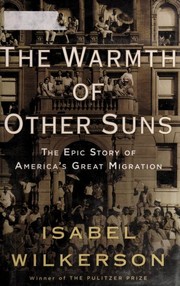
Through three epic life stories, Wilkerson shows why millions fled the Jim Crow South in the Great Migration; its narrative power makes the human cost visceral and personal after the structural analysis of earlier stages.
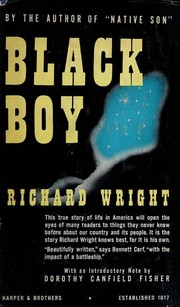
Wright's autobiographical account of growing up under Jim Crow in Mississippi and Tennessee is one of the most searing first-person documents of the era, giving interior life to the statistics and laws studied so far.
Discussion
Keep reading
Paths that share books, cover the same subject, or open a related topic.