The Best Books to Understand Fascism
This curriculum moves from accessible historical and definitional grounding through deep ideological analysis and case studies, finishing with scholarship on fascism's contemporary resurgence. Because the learner starts at an intermediate level, the path skips introductory primers and opens directly with authoritative historical narratives, then layers in theory, comparative politics, and modern applications across four tightly sequenced stages.
Defining the Beast
IntermediateEstablish a working definition of fascism as a political ideology and movement, and understand why it is so difficult to pin down — building the conceptual vocabulary needed for everything that follows.
▸ Study plan for this stage
Pace: 6–7 weeks, ~40–50 pages/day (Paxton first: ~400 pages over 3 weeks; Passmore second: ~250 pages over 2–3 weeks, with 1–2 weeks for synthesis and review)
- Fascism as a political movement vs. ideology: why Paxton emphasizes practice and mobilization over fixed doctrine
- The 'primacy of politics' and the centrality of the leader-mass relationship in fascist regimes
- Fascism's parasitic relationship with existing state structures and conservative elites (Paxton's 'alliance' thesis)
- The role of violence, paramilitary action, and the street as defining features of fascist mobilization
- Fascism's rejection of both liberal democracy and Marxist socialism, and its attempt to forge a 'third way'
- National/racial regeneration as a core mythic appeal, and how it differs across contexts (Italian, German, French variants)
- Why fascism is difficult to define: the gap between fascist ideology, rhetoric, and actual governance once in power
- The distinction between fascism as a generic phenomenon and specific fascist movements (Italian Fascism, Nazism, etc.)
- According to Paxton, why is it more useful to define fascism by its actions and mobilization strategies than by a fixed ideological platform?
- What does Passmore mean by fascism's 'revolutionary' character, and how does this complicate the idea that fascists were merely tools of big business?
- How do Paxton and Passmore each explain the relationship between fascist movements and traditional conservative or monarchist elites? Where do they agree or diverge?
- What role does the concept of national or racial 'regeneration' play in fascist ideology, and how does it manifest differently in Italian Fascism versus Nazism?
- Why is violence—both symbolic and actual—central to fascist politics rather than incidental to it?
- What are the key differences between fascism as a generic political form and specific fascist regimes once they seized state power?
- Create a two-column comparison chart: 'Fascism vs. Communism' and 'Fascism vs. Liberalism,' using specific examples from both books to show how fascists positioned themselves against each ideology
- Write a 500-word synthesis essay: 'Why Paxton says fascism is easier to recognize than define,' using at least three concrete examples from The Anatomy of Fascism
- Map the 'lifecycle' of a fascist movement (pre-power, seizure of power, consolidation) using Paxton's framework, then test it against a case study from Passmore (e.g., Italian Fascism or another movement Passmore discusses)
- Annotate a primary source fascist text or speech (provided or sourced) against Passmore's definition, noting which elements fit the definition and which resist it
- Create a visual diagram showing Paxton's concept of the 'alliance' between fascist movements and conservative elites—what each side wanted, where interests aligned and diverged
- Debate exercise (solo or with a partner): 'Is [specific movement] fascist?' using definitional criteria from both Paxton and Passmore, and identify which definition is more useful and why
Next up: Understanding fascism's definitional slipperiness and its core features—the leader-mass bond, the myth of national regeneration, the parasitic relationship with state power—equips you to examine how these elements played out in specific historical contexts and how fascist regimes actually governed once they seized power.
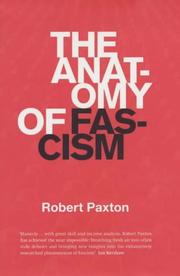
The single most respected scholarly definition of fascism, organized around what fascists *do* rather than what they say. Reading this first gives you the analytical framework — mobilization, myth, violence, palingenesis — that every subsequent book assumes.

A compact but sophisticated survey of fascism's varieties across Europe, read second to stress-test Paxton's framework against harder cases like Hungary, Romania, and Spain before diving into the big national histories.
The Two Archetypal Regimes
IntermediateUnderstand the rise, internal logic, and human consequences of the two canonical fascist regimes — Mussolini's Italy and Hitler's Germany — in enough depth to use them as benchmarks for comparison.
▸ Study plan for this stage
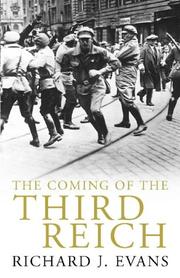
Pace: 8–10 weeks, ~40–50 pages/day. Bosworth (approx. 350 pages) over 4–5 weeks, then Evans (approx. 500 pages) over 4–5 weeks, with 1 week for review and synthesis.
- The role of nationalism, militarism, and imperial ambition in Italian fascism's rise and consolidation under Mussolini
- How Mussolini's regime used propaganda, corporatism, and the cult of personality to maintain control and legitimacy
- The ideological and structural differences between Italian fascism and German Nazism, and why they cannot be treated as identical
- The Nazi Party's path to power through economic crisis, mass politics, and the exploitation of Weimar's institutional weaknesses
- Racial ideology as the central organizing principle of the Third Reich, distinguishing it from Italian fascism
- The machinery of totalitarian control: the Gestapo, SS, party apparatus, and how terror and consent coexisted in Nazi Germany
- The human consequences of both regimes: persecution, war, genocide, and the lived experience of ordinary citizens under fascism
- How memory, historiography, and competing interpretations shape our understanding of these regimes today
- What were the specific historical, economic, and social conditions that enabled Mussolini's rise to power, and how did he consolidate fascist rule in Italy?
- How did Mussolini's regime use corporatism, propaganda, and the cult of personality to govern, and what were its limits and contradictions?
- What were the key ideological and structural differences between Italian fascism and German Nazism, and why is it misleading to treat them as a single phenomenon?
- How did the Nazis exploit the weaknesses of Weimar democracy, and what role did economic crisis, mass politics, and institutional collapse play in Hitler's rise?
- Why was racial ideology central to Nazi ideology and governance in ways it was not for Italian fascism, and what were the consequences?
- How did the Nazi regime combine terror (Gestapo, SS) with propaganda and mass mobilization to maintain control, and how did ordinary Germans experience and respond to this system?
- What were the major human consequences of fascism in Italy and Germany—persecution, war, genocide—and how do historians now interpret these regimes' legacies?
- Create a detailed timeline comparing Mussolini's consolidation of power (1922–1925) with Hitler's (1933–1934), noting key events, institutional changes, and turning points in each.
- Write a 1,500-word comparative essay on corporatism in Mussolini's Italy versus the Nazi Party's role in German governance—what did each regime use to control the economy and society, and how did they differ?
- Analyze 3–4 primary source excerpts (speeches, decrees, or propaganda materials) from each regime, identifying the distinct rhetorical strategies, values, and fears each regime appealed to.
- Create a visual map or chart of the key institutions of terror and control in each regime (Gestapo, SS, OVRA, party apparatus, etc.), noting their functions, overlaps, and differences.
- Conduct a close reading of Evans's chapters on historiography and memory, then write a 1,000-word reflection on how different historical interpretations of the Third Reich have changed over time and why.
- Design a comparative case study: select one policy or practice (e.g., youth indoctrination, labor organization, or persecution of a specific group) and trace how it operated differently in Italy versus Germany, using evidence from both books.
Next up: This stage equips you with detailed knowledge of the two canonical fascist regimes, establishing them as benchmarks against which you can measure other authoritarian and fascistic movements, preparing you to explore fascism's broader manifestations across time and geography.
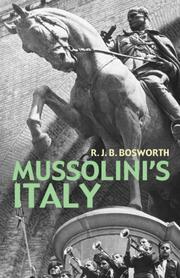
The definitive English-language biography of the Duce; reading Italy first is historically correct (Mussolini invented the movement) and shows fascism in its more improvised, less exterminatory original form.
Kershaw's magisterial biography traces how Hitler's ideology crystallized and how he seized power; its 'working towards the Führer' concept shows how fascist regimes actually function from the inside out.
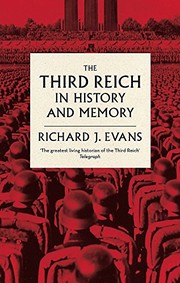
A collection of Evans's essays that synthesizes decades of Nazi historiography — intentionalism vs. functionalism, ordinary perpetrators, memory — giving essential historiographical context after the two biographies.
Ideology, Psychology, and Society
ExpertMove beneath the political surface to understand the ideological roots of fascism, why ordinary people embraced it, and how it transformed everyday life and culture.
▸ Study plan for this stage
Pace: 12–14 weeks, ~40–50 pages/day. Arendt (600 pages, 3 weeks); Browning (220 pages, 1.5 weeks); Allen (400 pages, 2.5 weeks); synthesis and review (3–4 weeks).
- Totalitarianism as a novel form of governance rooted in mass society, imperialism, and antisemitism—not merely authoritarianism (Arendt's foundational framework)
- The role of ideology in mobilizing ordinary citizens: how totalitarian systems exploit loneliness, atomization, and the human need for belonging (Arendt and Browning)
- The banality of evil: how bureaucratic structures and incremental moral compromise enable ordinary people to commit atrocities without seeing themselves as perpetrators (Browning)
- Grassroots adoption of fascism: how local communities, institutions, and social networks normalized Nazi ideology before and after the seizure of power (Allen)
- The transformation of everyday life under fascism: how the regime infiltrated schools, workplaces, families, and civic organizations to reshape culture and consciousness (Allen and Arendt)
- Propaganda, terror, and consent: the interplay between coercion and voluntary participation in sustaining totalitarian systems (all three)
- The psychology of conformity and obedience: how ordinary moral constraints dissolve in hierarchical, ideologically saturated environments (Browning and Allen)
- What does Arendt mean by totalitarianism as distinct from traditional dictatorship, and what historical conditions (imperialism, antisemitism, mass society) did she identify as its precursors?
- How does Browning's study of Reserve Police Battalion 101 challenge the 'banality of evil' interpretation, and what does it reveal about the mechanisms of moral disengagement in ordinary perpetrators?
- In Allen's account of Northeim, what specific institutions and social practices did the Nazi regime use to embed itself into local life, and how did this differ from top-down imposition?
- How did propaganda and ideology function differently in Arendt's theoretical framework versus their actual implementation in the communities Allen studied?
- What does each author suggest about the role of individual choice versus structural coercion in explaining why ordinary people participated in or accepted fascism?
- How did fascism transform the relationship between the individual, the community, and the state in ways that previous political systems had not?
- Trace Arendt's argument across *Origins of Totalitarianism*: create a timeline or concept map showing how imperialism → antisemitism → mass society → totalitarianism. Identify which elements appear in Browning's and Allen's case studies.
- Close-read 3–4 key passages from Browning's *Ordinary Men* (e.g., the first mass shooting, the testimony of perpetrators) and write a 2–3 page analysis of how each man's justifications reveal the psychological mechanisms Arendt theorized.
- Conduct a 'microhistory analysis' of one institution in Allen's Northeim (e.g., the school, the church, the civil service). Document how it was Nazified and what this reveals about the difference between ideology and lived experience.
- Compare Arendt's abstract concept of 'loneliness' and 'atomization' with concrete examples from Browning and Allen. Write a short essay on how isolation made individuals vulnerable to totalitarian appeals.
- Create a primary source dossier: gather 3–5 Nazi propaganda materials, testimonies from *Ordinary Men*, or local documents from Northeim. Annotate them for ideological messaging, and assess how effectively they mobilized consent versus coercion.
- Debate or write a response: Did the perpetrators in Browning's battalion act primarily from ideological conviction, careerism, peer pressure, or fear? Use evidence from all three books to construct a nuanced answer.
Next up: This stage equips you with the psychological, ideological, and social foundations of fascism—why it took root and how it functioned at the level of belief and daily practice—preparing you to examine its specific policies, its opposition, and its legacies in subsequent stages.

Arendt's philosophical masterwork links antisemitism, imperialism, and totalitarianism into a single genealogy; it is demanding but indispensable for understanding fascism as a civilizational rupture rather than a mere political accident.
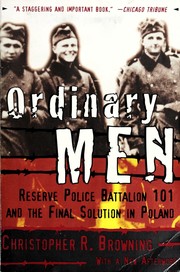
By examining how a unit of middle-aged German policemen became mass killers, Browning answers the hardest question fascism raises — how normal people participate in atrocity — grounding Arendt's theory in documented human behavior.
A micro-history of a single German town that shows fascism's social penetration from the bottom up — the perfect complement to the top-down biographies and grand theory already read.
Legacy and the Modern Resurgence
ExpertTrace fascism's postwar survival, mutation, and 21st-century comeback, and develop tools to recognize fascist dynamics in contemporary politics.
▸ Study plan for this stage
Pace: 4–5 weeks, ~40–50 pages/day (approximately 280–350 pages total across both books)
- The ten pillars of fascism: the mythic past, propaganda, anti-intellectualism, irrationality, unreality, hierarchy and victimhood, law and order, sexual anxiety, sodom and gomorrah, arbeit macht frei—and how they operate in modern democracies
- Fascism as a set of political behaviors and rhetorical strategies rather than a fixed ideology, making it recognizable across different national and temporal contexts
- The distinction between historical fascism (1920s–1945) and neo-fascism: how fascist movements adapt, rebrand, and exploit contemporary grievances without explicitly claiming the fascist label
- The role of the state in fascist systems: the erosion of democratic institutions, the normalization of executive power, and the weaponization of law enforcement and courts
- Propaganda and the manufacture of unreality: how fascist movements control information, delegitimize expertise, and create alternative epistemic frameworks
- Fascism's appeal to the middle class and working class: economic anxiety, status resentment, and the scapegoating of vulnerable groups (immigrants, minorities, intellectuals)
- The warning signs of fascism in liberal democracies: attacks on the press, the judiciary, academia, and civil society; the cult of personality around leaders; and the normalization of political violence
- Historical case studies and contemporary parallels: how fascist dynamics have emerged in post-Cold War Europe, Latin America, and the United States, and what distinguishes them from authoritarianism or populism
- What are the ten pillars of fascism identified by Stanley, and how does each one manifest in contemporary political movements that do not explicitly call themselves fascist?
- How does Albright distinguish between historical fascism and modern fascism, and what does she mean by fascism as a 'threat' rather than a fixed historical phenomenon?
- What role does the manufacture of unreality and propaganda play in fascist politics, and how do contemporary leaders exploit media fragmentation and digital platforms to achieve this?
- How does fascism exploit economic anxiety and class resentment, and why does it appeal to middle-class and working-class voters despite often serving elite interests?
- What are the key warning signs that a democratic system is being undermined by fascist dynamics, and how can citizens and institutions recognize and resist these processes?
- How have fascist movements adapted and mutated since 1945, and what are the similarities and differences between fascism in different regions (Europe, the Americas, etc.) in the 21st century?
- Close reading exercise: Select three speeches or policy statements from a contemporary political figure or movement. Analyze them against Stanley's ten pillars—which pillars are invoked, and how? Write a 2–3 page analysis.
- Comparative case study: Choose one historical fascist movement (1920s–1945) and one contemporary movement or leader. Using both books, trace the parallels and mutations. How has the fascist playbook been adapted? Create a detailed comparison chart.
- Media literacy project: Collect examples of propaganda, misinformation, or unreality-manufacturing from contemporary news sources, social media, or political campaigns. Analyze how these techniques align with Stanley's and Albright's descriptions of fascist communication strategies.
- Institutional vulnerability audit: Identify a democratic institution in your country (press, judiciary, academia, civil society) and research recent attacks on it. How do these attacks align with fascist strategies described in the books? Write a brief report.
- Debate preparation: Prepare arguments for and against the claim that a specific contemporary political movement or leader is 'fascist.' Use evidence from both books to ground your position, and anticipate counterarguments.
- Personal reflection and scenario planning: Write a reflective essay on how you would recognize fascist dynamics in your own community, workplace, or country. What would you do? How would you resist? Ground your response in concrete examples from the books.
Next up: By mastering the diagnostic tools and historical patterns in this stage, you will be prepared to engage with deeper philosophical, ideological, and comparative analyses of fascism's intellectual roots and its relationship to other authoritarian systems in the next stage.

A philosopher's systematic breakdown of fascist political tactics — mythic past, anti-intellectualism, hierarchy, victimhood — explicitly applied to contemporary movements worldwide; best read after the historical foundation is solid.

A former Secretary of State's practitioner-level account of how fascist leaders emerge and how democracies fail to stop them, closing the curriculum with a policy-oriented and personally witnessed perspective on the present danger.
Discussion
Keep reading
Paths that share books, cover the same subject, or open a related topic.