The Atlantic slave trade: essential books on bondage and abolition
This curriculum traces the full arc of the Atlantic slave trade and abolition — from its origins and brutal mechanics to the lived experience of the enslaved, the many forms of resistance, and the long political and moral struggle to end it. Beginning with accessible narrative histories, the path moves through primary voices and firsthand accounts, then into deeper analytical scholarship, building both emotional understanding and intellectual rigor at each stage.
Foundations: The Big Picture
BeginnerUnderstand the scope, scale, and basic mechanics of the Atlantic slave trade — who was enslaved, how the system worked, and why it lasted so long — before diving into deeper detail.
▸ Study plan for this stage
Pace: 4–5 weeks, ~40–50 pages/day. "The Slave Ship" (approx. 450 pages) takes 2.5–3 weeks; "Never Caught" (approx. 300 pages) takes 1.5–2 weeks. Build in 3–4 days for review and synthesis between books.
- The Atlantic slave trade as a complex system involving European merchants, African traders, colonial planters, and enslaved people—not a simple unidirectional extraction
- The material mechanics of slave ships: design, capacity, routes, and the brutal conditions that defined the Middle Passage
- The economics of the slave trade: profitability, capital accumulation, and the integration of slavery into Atlantic commerce and colonial development
- Individual agency and resistance within the system: how enslaved people navigated, resisted, and survived the trade (exemplified by Rediker's focus on human stories and Dunbar's portrait of Ona Judge)
- The timeline and scale of the trade: millions of people forcibly transported over centuries, with peak periods and regional variations
- The role of legal and social structures in naturalizing slavery and race-based bondage in the Americas
- How abolition emerged as a response to the trade's brutality and the resistance of enslaved people themselves
- What were the key structural components of the Atlantic slave trade, and how did ships, merchants, and colonial demand create a self-reinforcing system?
- How does Rediker's account of the slave ship as a 'floating factory' illuminate the daily realities and mechanics of the Middle Passage?
- What role did African traders and European merchants play in the slave trade, and how did their interests shape its operation?
- Who was Ona Judge, and what does her story in 'Never Caught' reveal about enslaved people's agency, resistance, and the limits of freedom even in the North?
- How did enslaved people resist and survive within the slave trade system, and what examples does each book provide?
- Why did the Atlantic slave trade persist for over 400 years despite its brutality, and what economic and social forces sustained it?
- Create a systems diagram mapping the Atlantic slave trade: show the flow of people, goods, capital, and information between Africa, Europe, and the Americas. Identify key actors (merchants, ship captains, planters, traders, enslaved people) and their roles.
- Read Rediker's chapters on specific slave ships (e.g., the Zong, the Brooks) and write a 2–3 page narrative account of a single voyage from the perspective of an enslaved person, a ship captain, and a merchant—compare how their experiences and motivations differed.
- Track Ona Judge's journey in 'Never Caught': create a timeline and map of her movements from Virginia to New Hampshire to Canada. Annotate key moments of decision-making and resistance.
- Compile a list of resistance strategies mentioned in both books (rebellion, escape, legal petitions, etc.). For each, note the risks, outcomes, and what it reveals about enslaved people's agency.
- Write a 1–2 page reflection: Why did the Atlantic slave trade last so long despite widespread knowledge of its brutality? Use specific evidence from both books.
- Create a comparison chart: list the ways Rediker's focus on the ship and Dunbar's focus on an individual life illuminate different aspects of the slave trade system. What does each approach reveal that the other might miss?
Next up: This stage establishes the foundational scope, mechanics, and human reality of the Atlantic slave trade; the next stage will deepen analysis of specific regions, periods, and ideologies—such as how slavery became racialized, how it shaped colonial economies, and how abolition movements gained momentum across different societies.
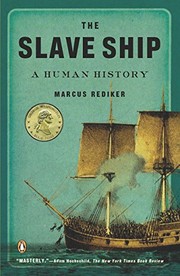
A vivid, accessible, and deeply humane account of the Middle Passage told through the perspectives of sailors, captains, and the enslaved. It makes the abstract horror concrete and gives beginners an unforgettable entry point into the subject.
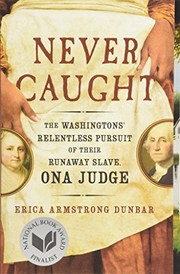
The true story of Ona Judge, who escaped from George Washington's household, grounds the broader system in a single gripping life. Its short, narrative style builds vocabulary and empathy before tackling larger analytical works.
Firsthand Voices: The Enslaved Speak
BeginnerEncounter the institution of slavery through the words of people who lived it, building an irreplaceable moral and experiential foundation that all later analysis must rest upon.
▸ Study plan for this stage
Pace: 8–10 weeks, ~40–50 pages/day (approximately 2–3 weeks per narrative)
- The dehumanization of enslaved people and how they resisted it through literacy, self-assertion, and documentation of their own humanity
- The varieties of slavery across different regions and contexts (African origins, Middle Passage, plantation slavery, urban slavery, slavery in the North)
- The psychological and physical violence embedded in slavery, including sexual exploitation and family separation
- How enslaved people used their own voices and narratives as acts of resistance and tools for abolition
- The role of literacy and education as pathways to freedom and self-determination
- The intersections of race, gender, and slavery (particularly how enslaved women faced distinct forms of exploitation)
- The moral and spiritual dimensions of slavery as experienced by the enslaved themselves
- How does Equiano's account of his capture and the Middle Passage differ from Douglass's experience of American plantation slavery, and what does each reveal about slavery's scope?
- What role did literacy play in the lives of Equiano, Douglass, and Jacobs, and how did each use writing or reading as an act of resistance?
- How do Jacobs's experiences as an enslaved woman differ from those described by Equiano and Douglass, and what unique vulnerabilities did enslaved women face?
- What evidence of enslaved people's humanity, intelligence, and moral agency appears in these three narratives, and how does this contradict pro-slavery ideology?
- How did each author use their narrative to argue for abolition, and who do you think was their intended audience?
- What moments of psychological or spiritual resistance stand out across these three accounts, and what do they reveal about how enslaved people maintained dignity?
- Annotate one passage from each narrative that most powerfully conveys the author's humanity or resistance; write a paragraph explaining why you chose it and what it reveals
- Create a comparative timeline mapping the key events in Equiano's, Douglass's, and Jacobs's lives; note where their experiences overlap and diverge
- Write a letter from the perspective of one of the three authors to a contemporary abolitionist, explaining why your story matters to the cause of abolition
- Identify and analyze 3–4 instances where each author uses language, tone, or rhetorical strategy to persuade readers; discuss how their writing itself becomes an argument against slavery
- Research and write a 2–3 page reflection on the historical accuracy and context of one of these narratives (e.g., Equiano's African origins, Douglass's Baltimore years, Jacobs's hiding place)
- Create a visual or written comparison of how each author portrays family relationships under slavery; discuss what these accounts reveal about slavery's assault on kinship
Next up: By centering the voices and experiences of the enslaved themselves, this stage establishes the irreplaceable human foundation upon which all subsequent analysis of slavery's economics, politics, and ideology must rest—preparing you to examine how systems of power built upon and justified this dehumanization.

Written by a formerly enslaved man who survived the Middle Passage, this 18th-century memoir is the single most important firsthand account of the slave trade and was itself a weapon in the abolitionist cause. Reading it early anchors everything that follows.
The most celebrated slave narrative in American history, Douglass's account of plantation slavery, literacy, and self-liberation is essential reading. Its clarity and rhetorical power make it accessible to any reader while conveying the system's full brutality.

Jacobs provides the indispensable perspective of an enslaved woman, exposing the particular vulnerabilities and forms of resistance available to women — a dimension Douglass's narrative cannot cover. Read third so Douglass's framework is already in place.
The System Examined: Plantation Slavery & the Atlantic World
IntermediateUnderstand how plantation slavery was constructed economically and socially across the Atlantic world, and how it shaped the modern economies and racial ideologies we have inherited.
▸ Study plan for this stage
Pace: 8–10 weeks, ~40–50 pages/day (Mintz: 3 weeks; Baptist: 5–7 weeks). Allocate extra time for Baptist's dense narrative and economic arguments.
- Sugar as a commodity that linked Caribbean plantations, European markets, and African slavery into an integrated Atlantic system
- The transformation of slavery from a marginal institution to the engine of capitalist accumulation and racial ideology
- How enslaved people's labor and knowledge were systematically extracted, measured, and monetized through violence and surveillance
- The role of credit, debt, and financial instruments in expanding slavery and binding together merchants, planters, and imperial states
- Race as a constructed ideology developed to justify and perpetuate slavery, not a pre-existing biological fact
- The internal slave trade and forced migration as central to American slavery's expansion and profitability
- How slavery shaped modern capitalism, consumer culture, and the wealth disparities we see today
- How did sugar production in the Caribbean create demand for enslaved labor, and how did this system integrate with European consumption and African enslavement?
- What does Mintz mean by the 'industrialization' of slavery, and how does Baptist's work on the internal slave trade illustrate this process?
- How did planters and merchants use credit, debt, and financial mechanisms to expand slavery, and what role did this play in building modern capitalism?
- How was race constructed as an ideology during the period of Atlantic slavery, and what evidence do Mintz and Baptist provide for this being a deliberate creation rather than a natural category?
- What were the mechanisms by which enslaved people's labor was measured, monitored, and intensified, and what resistance did they employ?
- How did slavery in the Atlantic world—particularly the Caribbean and American South—generate wealth that shaped modern economies, and who benefited?
- Create a timeline mapping the expansion of sugar plantations (Mintz) and the internal slave trade (Baptist) side by side, noting how they accelerated in tandem from 1600–1860.
- Build a 'commodity chain' diagram tracing sugar from Caribbean plantation to European consumer, identifying all actors (planters, merchants, enslaved people, consumers) and the violence embedded at each stage.
- Analyze 3–4 primary source documents (letters, account books, or advertisements) that Baptist or Mintz cite, identifying the language used to quantify enslaved people and their labor.
- Write a 2–3 page comparative analysis: How does Mintz's focus on consumption and ideology differ from Baptist's focus on labor extraction and financial mechanisms? What does each approach reveal?
- Research one modern company or family fortune with roots in the slave trade or sugar industry (e.g., Tate & Lyle, Barclays Bank, New England merchant families). Trace its origins using Baptist's and Mintz's frameworks.
- Create a visual argument (poster, infographic, or annotated map) showing how slavery was not peripheral to capitalism but central to its development, using evidence from both books.
Next up: This stage establishes slavery as a systematic, profit-driven, and ideologically constructed institution woven into the Atlantic economy; the next stage will examine how enslaved people resisted, survived, and built cultures and movements that challenged this system and ultimately brought about abolition.
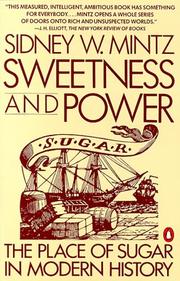
Mintz traces how sugar — the engine of Caribbean plantation slavery — transformed global trade, labor, and everyday life. It reveals the economic logic that made the slave trade so profitable and so difficult to dismantle.
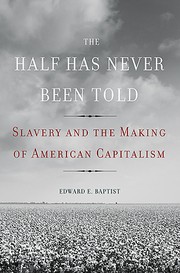
A landmark work of American history arguing that enslaved labor was not peripheral but central to the rise of American capitalism. It synthesizes economic data with personal testimony and is the essential intermediate-level account of plantation slavery in the U.S. South.
Resistance & Abolition: The Long Struggle
IntermediateTrace the many forms of resistance — from everyday acts to full-scale revolution — and follow the transatlantic abolitionist movement from its origins to legal victory, understanding that freedom was fought for, not simply granted.
▸ Study plan for this stage
Pace: 8–10 weeks, ~40–50 pages/day (alternating between books; ~3 weeks on *The Black Jacobins*, ~4–5 weeks on *Bury the Chains*, with 1–2 weeks for review and synthesis)
- Slave resistance as organized political action: The Haitian Revolution as the first successful slave uprising and its radical reimagining of freedom, citizenship, and Black leadership
- Toussaint Louverture's strategic genius: military tactics, diplomatic maneuvering, and the tension between pragmatism and revolutionary ideals
- The transatlantic abolitionist movement as a coalition: Quakers, evangelicals, free Black activists, and working-class allies united by moral conviction and strategic organizing
- Everyday resistance vs. spectacular rebellion: How enslaved people resisted through work slowdowns, escape, cultural preservation, and armed revolt—all as forms of political agency
- The role of enslaved and formerly enslaved people in their own liberation: Olaudah Equiano, Harriet Tubman, and others as authors of abolitionist narrative and strategy
- Legal and economic arguments for abolition: How abolitionists weaponized commerce, law, and public opinion to dismantle slavery as an institution
- The long timeline of abolition: Recognizing that freedom was incremental, contested, and required sustained struggle across decades and continents
- What made the Haitian Revolution unique as a slave uprising, and how did Toussaint Louverture's leadership shape its trajectory and outcomes?
- How did the transatlantic abolitionist movement differ from earlier antislavery sentiment, and who were its key constituencies and strategists?
- What forms did slave resistance take beyond armed rebellion, and why does C. L. R. James emphasize these as political acts?
- How did formerly enslaved people like Equiano and Harriet Tubman use their narratives and activism to advance the abolitionist cause?
- What were the major legal and economic arguments abolitionists deployed, and how effective were they in different contexts (Britain, the Americas)?
- Why did abolition take so long, and what does this timeline reveal about the power of slavery as an economic and social system?
- Create a timeline of key resistance events from *The Black Jacobins* (slave rebellions, Toussaint's military campaigns, the Declaration of Independence of Haiti) and cross-reference with abolitionist milestones from *Bury the Chains*—identify overlaps and divergences
- Write a comparative character study of Toussaint Louverture and a major abolitionist figure from *Bury the Chains* (e.g., Granville Sharp or Thomas Clarkson): How did each navigate power, compromise, and moral conviction?
- Analyze a primary source excerpt from an enslaved person's narrative (referenced in *Bury the Chains*) or Toussaint's letters/proclamations: What rhetorical strategies do they use to claim agency and argue for freedom?
- Map the transatlantic abolitionist network from *Bury the Chains*: Who were the key nodes (Quakers, free Black activists, merchants, politicians)? How did information and people move across the Atlantic?
- Debate: Was the Haitian Revolution a success or a tragedy? Use evidence from *The Black Jacobins* to construct arguments about its immediate outcomes and long-term legacy
- Create a mock legislative debate on abolition: Use economic and moral arguments from *Bury the Chains* to argue for or against the slave trade—research the actual parliamentary language if possible
Next up: This stage establishes that freedom was fought for through organized resistance and sustained abolitionist organizing, setting up the next stage to explore how emancipation was implemented, what freedom actually meant for formerly enslaved people, and the ongoing struggles for equality and reparations in the post-abolition world.
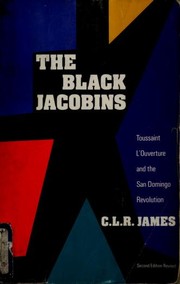
James's masterpiece on the Haitian Revolution — the only successful slave revolt in history — is essential for understanding that enslaved people were the primary agents of their own liberation. It belongs before the abolitionist histories to center Black agency.
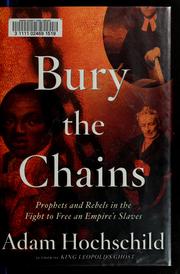
A gripping narrative history of the British abolitionist movement, from a small Quaker meeting in 1787 to the abolition of the slave trade in 1807. It reads like a thriller and shows how ordinary people built the world's first modern human-rights campaign.
Deep Scholarship: Legacy & Long Reckoning
ExpertEngage with the most rigorous historical and philosophical scholarship on how the slave trade shaped the modern world, and grapple with the unfinished legacy of slavery in contemporary life.
▸ Study plan for this stage
Pace: 8–10 weeks, ~40–50 pages/day (with 2–3 days per week for reflection and note-taking)
- The economic entanglement of British capitalism with the slave trade: how slavery financed industrial development, banking, and mercantile networks
- Williams's thesis on the decline of slavery: the relationship between profitability, abolitionism, and economic self-interest in Britain
- The Great Migration as a continuation of racialized labor extraction: how formerly enslaved and Jim Crow-era Black Americans were systematized into Northern industrial economies
- Wilkerson's concept of 'caste' and how slavery established a hierarchical racial order that persisted through Reconstruction, Jim Crow, and into the modern era
- The intergenerational trauma and structural inequality embedded in migration patterns, housing discrimination, and economic opportunity
- How historical scholarship reveals complicity: the ways ordinary institutions (banks, insurance, universities) profited from slavery and its aftermath
- The unfinished reckoning: how contemporary racial inequality is not separate from slavery but a direct continuation of its logic
- According to Williams, what was the relationship between the profitability of slavery and the rise of British industrial capitalism? How did he challenge earlier narratives about abolitionism?
- How does Wilkerson's concept of 'caste' differ from racism as typically understood, and what historical evidence does she use to trace the caste system from slavery through the Jim Crow era?
- What were the three major routes of the Great Migration, and how did the racial hierarchies established during slavery shape where Black migrants could live and work in Northern cities?
- How do Williams and Wilkerson together demonstrate that slavery's legacy is not historical but actively embedded in contemporary economic and social structures?
- What specific examples do these authors provide of how institutions (financial, governmental, social) perpetuated racial inequality after formal slavery ended?
- How might understanding slavery as foundational to modern capitalism change the way we approach contemporary racial justice?
- Create a detailed timeline mapping the profitability cycles of slavery against British industrial milestones (textile production, banking expansion, etc.) using evidence from Williams; annotate where abolitionism emerges in relation to economic shifts
- Trace one family's migration story from Wilkerson (she profiles three families in detail) across all three routes of the Great Migration; map their economic barriers, housing discrimination, and occupational ceilings onto a visual timeline
- Identify 3–5 major British or American institutions mentioned in the books (banks, insurance companies, universities, corporations) and research their historical ties to slavery; write a 2–3 page analysis of how their modern wealth or structure reflects this history
- Construct a comparative chart analyzing how Williams's economic argument about slavery's decline intersects with Wilkerson's caste framework—where do they align, and where do they emphasize different mechanisms of racial hierarchy?
- Write a reflective essay (1,500–2,000 words) addressing: 'How does reading these two books change your understanding of what 'reckoning' with slavery means? What would genuine reckoning require?'
- Conduct a close reading exercise: select one passage from Williams on the economic logic of slavery and one from Wilkerson on caste hierarchy; analyze how each author uses evidence and rhetoric to build their argument, and discuss what each approach reveals or obscures
Next up: This stage equips you with the analytical frameworks—economic, historical, and philosophical—to recognize slavery's structural legacy in the present; the next stage will likely ask you to apply these insights to specific contemporary movements, policy debates, or grassroots reckoning efforts.

First published in 1944, this foundational academic work argues that the profits of the slave trade financed the British Industrial Revolution and that economic — not moral — forces ultimately drove abolition. It is the most debated and influential thesis in the field.
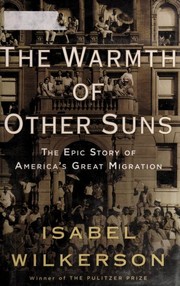
Wilkerson's epic account of the Great Migration shows how the structures of plantation slavery cast a long shadow into 20th-century America, connecting the history studied in earlier stages to living memory and the present. It closes the curriculum by asking what abolition truly left unfinished.
Discussion
Keep reading
Paths that share books, cover the same subject, or open a related topic.