Race in America: an honest reading path
This curriculum moves from accessible historical and personal foundations through landmark essays and memoirs to rigorous contemporary analysis and debate. Each stage builds the vocabulary, emotional grounding, and analytical tools needed for the next, so that by the end the reader can engage critically with the full complexity of race in America — past and present.
Foundations: History and Personal Story
BeginnerEstablish a clear narrative of American racial history — from slavery through Jim Crow — and develop empathy and vocabulary through firsthand voice before encountering more analytical texts.
▸ Study plan for this stage
Pace: 10–12 weeks total, reading roughly 25–35 pages per day. Suggested breakdown: Weeks 1–2 for "Narrative of the Life of Frederick Douglass" (~125 pages, leisurely pace to allow close reading and journaling); Weeks 3–7 for "The Warmth of Other Suns" (~600 pages, ~25 pages/day with weekly reflection paus
- Chattel slavery as a legal, economic, and psychological system — explored through Douglass's firsthand account of how literacy, labor, and dehumanization functioned together
- The role of law and social custom in enforcing racial hierarchy, from the Slave Codes Douglass describes to the Jim Crow statutes that shaped the world of 'To Kill a Mockingbird'
- The Great Migration as a mass act of self-determination — Wilkerson's three protagonists (Ida Mae, George Starling, Robert Foster) illustrate how millions of Black Americans voted with their feet against Southern apartheid
- Structural racism vs. individual prejudice — understanding how systems (legal, economic, geographic) produce racial inequality independent of any single person's intent
- The power and limits of empathy across racial lines — Scout Finch's moral education in 'To Kill a Mockingbird' models how a white perspective can grow, while also showing its blind spots
- Voice, testimony, and narrative authority — Douglass writing his own story as a radical act; Wilkerson centering oral histories as historical evidence
- Vocabulary of race in America: segregation, disenfranchisement, redlining, sharecropping, lynching, passing, and the color line (W.E.B. Du Bois's concept, relevant background for Wilkerson)
- Resistance and agency — each book shows Black Americans not merely as victims but as strategists, intellectuals, and community builders despite systemic oppression
- After reading Douglass's Narrative, can you explain in your own words how slaveholders deliberately used ignorance — denying literacy and family history — as a tool of control, and what it cost Douglass personally to break free of it?
- Wilkerson follows three very different migrants (Ida Mae Gladney, George Starling, Robert Foster) across decades. What common 'push' factors drove each of them north or west, and how did their destinations shape their outcomes differently?
- How does Harper Lee use the trial of Tom Robinson in 'To Kill a Mockingbird' to illustrate the gap between legal innocence and social justice in a Jim Crow community?
- Across all three books, how is the threat or reality of racial violence used to maintain social order? Give at least one specific example from each text.
- How do Douglass's narrative and Wilkerson's oral histories challenge the idea that history is only told through official documents and powerful voices?
- By the end of this stage, how would you define 'systemic racism' using only evidence drawn from these three books — without relying on abstract definitions?
- **Vocabulary log:** Keep a running glossary as you read. Each time you encounter a term tied to racial history (e.g., 'manumission,' 'sharecropping,' 'Jim Crow,' 'the color line'), write the word, the sentence it appeared in, and a plain-language definition. Aim for 30+ entries by the end of the stage.
- **Parallel timeline:** Create a hand-drawn or digital timeline with three tracks — (1) major events in Douglass's life, (2) the decades of the Great Migration as Wilkerson frames them, and (3) the fictional timeline of Maycomb, Alabama in 'To Kill a Mockingbird.' Annotate where real historical events (Reconstruction, WWI/WWII, the Depression) intersect with the stories.
- **First-person reflection journal:** After finishing each book, write a 1–2 page entry from the perspective of one character (e.g., Douglass at the moment he learns to read; Ida Mae on her first night in Chicago; Scout after the verdict). Focus on what that character now understands that they didn't before — this builds empathy and close-reading skills simultaneously.
- **Migration map:** Using Wilkerson's three protagonists as your guide, draw or annotate a map of the United States marking their origin points, routes, and destinations. Add 2–3 sentences per person explaining what they left behind and what they found. This makes the geographic scale of the Great Migration visceral.
- **Comparative character analysis:** Choose one act of resistance from each book (e.g., Douglass learning to read, George Starling organizing grove workers, Atticus Finch's courtroom defense) and write a short comparison (~300 words) asking: What form does resistance take? Who bears the risk? What does it cost? What does it change?
- **Discussion or reflection prompt — 'Who gets to tell the story?':** Write or discuss: Douglass wrote his own narrative against people who said he couldn't; Wilkerson spent 15 years collecting voices history ignored; Scout narrates as an adult looking back on childhood. How does the *narrator's position* shape what we see and what we miss in each book? This primes critical thinking for the more an
Next up: By grounding the reader in lived experience — Douglass's enslaved childhood, the migrants' decades-long journeys, Scout's moral awakening — this stage builds the emotional vocabulary and historical baseline needed to engage productively with more analytical and argumentative texts that explain *why* these patterns persisted and *how* they were structurally reproduced.

A short, gripping firsthand account of slavery that grounds everything that follows in lived reality. Reading a primary source first makes the history visceral rather than abstract.
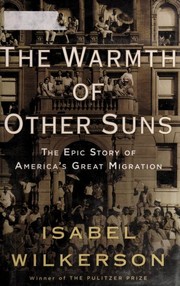
Through three unforgettable life stories, Wilkerson narrates the Great Migration and the systemic racism that drove it — a highly readable bridge from slavery-era history to 20th-century America.
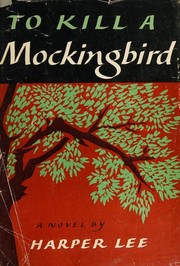
A canonical, accessible novel that dramatizes Jim Crow-era racial injustice and white complicity; its wide familiarity makes it a useful shared reference point before moving to harder texts.
Landmark Voices: Essays and Memoir
BeginnerEncounter the most celebrated personal and essayistic voices on Black American experience, building emotional and intellectual depth and introducing the tradition of the racial essay.
▸ Study plan for this stage
Pace: 8–10 weeks total: ~2.5 weeks for The Autobiography of Malcolm X (~30 pages/day), ~1.5 weeks for The Fire Next Time (~20 pages/day, it is short but dense), and ~3 weeks for I Know Why the Caged Bird Sings (~25 pages/day) — with buffer days after each book for journaling and reflection.
- The racial essay and memoir as political acts: how Baldwin, Malcolm X, and Angelou use personal testimony to indict systemic racism rather than simply recount individual lives
- Identity formation under white supremacy: how each author constructs, loses, and reclaims a sense of self in a society that denies Black humanity
- Conversion and transformation narratives: Malcolm X's journey from street hustler to Nation of Islam minister to pan-Africanist humanist as a model of radical self-reinvention
- The 'letter' as rhetorical form: Baldwin's two-part structure in The Fire Next Time — a private letter to his nephew and a public essay — and how intimacy can carry political urgency
- Childhood and trauma as historical record: Angelou's Stamps, Arkansas as a microcosm of Jim Crow America, showing how segregation is lived in the body from the earliest age
- Religion, spirituality, and liberation: the competing roles of the Black church (Baldwin, Angelou) and the Nation of Islam (Malcolm X) as sites of both refuge and constraint
- Voice, language, and reclamation: how all three authors forge a distinctive literary voice as an act of resistance against erasure
- Intersectionality avant la lettre: Angelou's navigation of race, gender, and class simultaneously, adding a dimension absent from the male-centered narratives of Baldwin and Malcolm X
- How does Malcolm X's autobiography challenge the conventional American 'self-made man' narrative, and what does his repeated reinvention reveal about the relationship between identity and systemic racism?
- In The Fire Next Time, Baldwin addresses his nephew directly before addressing white America. What does this rhetorical choice accomplish, and how does Baldwin define 'love' as a political — not merely personal — force?
- How does Maya Angelou use the setting of Stamps, Arkansas, and specific sensory details of childhood, to make the abstract machinery of Jim Crow concrete and emotionally legible for the reader?
- All three books are told in the first person, yet each constructs a very different kind of 'I.' Compare the narrative voices of Malcolm X, Baldwin, and Angelou: what does each voice assume about its audience, and what does that reveal about the author's political goals?
- How do religion and spiritual community function differently for each author — as liberation, as limitation, or as both — and what does this suggest about the role of institutions in Black American life?
- Taken together, what vision of America do these three books collectively construct, and where do they agree or diverge on what it would take to change it?
- Annotated reading log: After each chapter or section, write 2–3 sentences identifying (a) one moment of personal experience and (b) how the author connects it to a broader social or political claim — tracking how memoir becomes argument across all three books.
- Voice comparison exercise: Choose one paragraph from each book and rewrite it in a neutral, journalistic third-person tone. Then write a short reflection on what is lost — emotionally, rhetorically, politically — when the first-person 'I' is removed.
- Baldwin's letter, your letter: Modeled on the opening of The Fire Next Time, write a one-to-two page letter to a younger family member or friend explaining one aspect of racial inequality in America today, using Baldwin's blend of intimacy and moral urgency as your template.
- Timeline of transformation (Malcolm X): Create a visual or written timeline of Malcolm X's major identity shifts throughout the autobiography. For each stage, note the external event that triggered the shift and the new worldview that emerged — then reflect on whether his final philosophy before his assassination represents a resolution or an open question.
- Comparative close-reading: Select the single scene from I Know Why the Caged Bird Sings that you found most powerful. Find a thematically parallel moment in either The Autobiography of Malcolm X or The Fire Next Time. Write a one-page comparison of how each author handles a similar experience (humiliation, resistance, community, etc.) through different stylistic and structural choices.
- Discussion or journal prompt — 'Who is the audience?': For each book, write a paragraph arguing who the implied reader is (Black Americans, white Americans, both, future generations). Use specific textual evidence. Then reflect: did you feel included in or excluded from that implied audience, and how did that affect your reading experience?
Next up: By grounding readers in the emotional and rhetorical power of first-person Black voices, this stage builds the empathetic and analytical foundation needed to engage with more structurally and historically focused works — moving from how racism is felt and survived to how it has been legally constructed, economically enforced, and academically theorized.
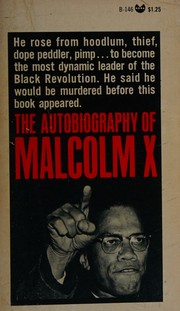
A transformative memoir that complicates the civil-rights narrative by centering Black self-determination and anger — essential counterpoint to more integrationist perspectives.

Baldwin's two searing essays are the gold standard of American racial writing; reading them after Malcolm X lets the reader feel the tension between love and rage that defines the era.
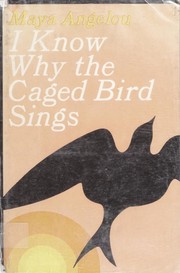
Angelou's memoir adds the dimension of gender and Southern Black girlhood, rounding out the mid-century picture before the curriculum moves into contemporary analysis.
Contemporary Analysis: Structural Racism Explained
IntermediateUnderstand how historical racism was encoded into law, policy, and institutions — and how those structures persist today — using rigorous but accessible modern scholarship.
▸ Study plan for this stage
Pace: 8–10 weeks total: ~5 weeks for "The New Jim Crow" (~25–30 pages/day, 4–5 days/week) and ~4–5 weeks for "Stamped from the Beginning" (~30–35 pages/day, 4–5 days/week). Both books reward slow, annotated reading — budget extra time for Alexander's legal chapters and Kendi's five biographical narratives
- The 'New Jim Crow' thesis: mass incarceration as a racial caste system — Alexander's argument that the War on Drugs functionally recreated the social and legal subordination of Black Americans after the civil rights era
- Colorblindness as ideology: how race-neutral language in law and policy can produce and sustain racially disparate outcomes, insulating the system from challenge
- The criminal justice pipeline: Alexander's step-by-step anatomy of how policing discretion, prosecutorial power, plea bargaining, and felon disenfranchisement compound to strip Black men of citizenship rights
- Structural vs. individual racism: the distinction between racist outcomes embedded in institutions and the intentions of individual actors — a framework central to both books
- Kendi's 'Stamped from the Beginning' taxonomy: the three camps of thought — segregationist, assimilationist, and antiracist — and how each has shaped American racial discourse from the colonial era to the present
- Racist ideas as post-hoc justification: Kendi's core historiographical claim that racist policies came first and racist ideas were invented afterward to justify them, inverting the common assumption
- The five biographical lenses (Cotton Mather, Thomas Jefferson, William Lloyd Garrison, W.E.B. Du Bois, Angela Davis): how Kendi uses individual intellectual histories to trace the evolution of racist and antiracist thought across centuries
- Intersectionality of race and power: both authors show how racism interacts with class, gender, and political economy — Alexander through the lens of the carceral state, Kendi through the lens of intellectual and policy history
- According to Alexander, what specific legal mechanisms — from the point of arrest through post-release restrictions — constitute the 'New Jim Crow,' and how does each stage reinforce racial hierarchy while appearing race-neutral?
- How does Alexander define and critique 'colorblindness,' and why does she argue it is an obstacle rather than an achievement in the pursuit of racial justice?
- What is Kendi's central argument about the causal relationship between racist policy and racist ideas? How does this challenge the conventional narrative that prejudiced attitudes drive discriminatory laws?
- How do Kendi's five biographical subjects illustrate the tension between assimilationist and antiracist thought, and why does Kendi treat assimilationism as a form of racism rather than a step toward equality?
- Taken together, what do Alexander and Kendi suggest about why structural racism is so difficult to dismantle — what forces (legal, ideological, economic, political) work to reproduce it across different historical eras?
- Where do the two books' analytical frameworks complement each other, and where do they tension or diverge — for example, in their treatment of individual agency vs. structural determinism?
- Annotated timeline: After finishing both books, build a dual-track timeline (one track for policies/laws, one track for dominant racial ideas) spanning 1600–present, drawing events and arguments directly from Kendi's historical narrative and Alexander's carceral analysis. Look for moments where the two tracks visibly interact.
- Policy autopsy: Choose one specific policy Alexander analyzes (e.g., mandatory minimums, stop-and-frisk, civil asset forfeiture) and write a 1–2 page memo tracing its origin, its stated race-neutral rationale, and its documented racial impact. Then apply Kendi's framework: what racist idea was deployed to justify it, and which of his three camps does that idea belong to?
- Concept mapping: Draw a visual diagram connecting Alexander's 'New Jim Crow' stages (arrest → prosecution → conviction → incarceration → release/supervision) to Kendi's three ideological camps. At each stage, label which type of thinking (segregationist, assimilationist, or antiracist) has historically dominated the policy debate.
- Counterargument stress-test: Write out the strongest possible objection to Alexander's central thesis (e.g., 'mass incarceration is driven by crime rates, not racial targeting') and then write a rebuttal using only evidence and arguments from the text. Repeat for Kendi's claim that racist ideas follow rather than precede racist policy.
- Comparative reading journal: Keep a running two-column journal as you read — one column for moments where Alexander and Kendi seem to be describing the same underlying mechanism from different angles, and one column for genuine tensions or contradictions between their arguments. Use this journal as the basis for a short synthesis essay at the end of the stage.
- Current events application: Identify one contemporary news story about criminal justice, voting rights, housing, or education policy. Write a one-page analysis applying both Alexander's structural lens and Kendi's ideological taxonomy to explain what the story reveals about the persistence of structural racism today.
Next up: By establishing that structural racism is both legally encoded (Alexander) and ideologically reproduced across centuries (Kendi), this stage equips the reader to move into lived-experience and community-level accounts — the next stage can now be read not as isolated personal stories but as human evidence of the systemic forces already mapped here.
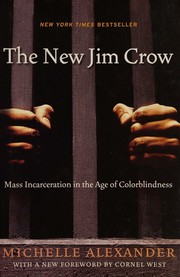
Alexander's landmark argument that mass incarceration functions as a racial caste system is the essential starting point for understanding structural racism in the present day.
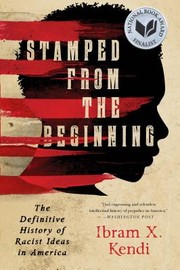
A comprehensive intellectual history of racist and antiracist ideas in America; reading it after Alexander gives the ideological backstory to the structural analysis already absorbed.
Memoir and Journalism: Living Race Now
IntermediateSee structural racism through the eyes of contemporary writers living it, and develop a feel for the range of Black American experience in the 21st century.
▸ Study plan for this stage
Pace: 6–7 weeks total: Week 1–2 — "Between the World and Me" (~10–12 pages/day; it is short but dense, meant to be read slowly and re-read in passages); Week 3–5 — "Becoming" (~25–30 pages/day; longer but more narrative-driven); Week 6–7 — reflection, comparison, and exercises across both books.
- The Black body as a site of vulnerability and state violence — Coates's central argument that the physical safety of Black Americans is structurally imperiled, not incidentally so
- Intergenerational transmission of fear and survival strategies — how Coates's letter to his son Samori mirrors the tradition of Black parents 'having the talk,' and how Obama's parents shaped her sense of self-worth under similar pressures
- The 'Dream' as a racial contract — Coates's critique of the American Dream as a fantasy built on the exploitation and erasure of Black people, and how Obama's life both challenges and complicates that critique
- Code-switching and the politics of respectability — Obama's navigation of predominantly white spaces (Princeton, Harvard Law, corporate Chicago, the White House) and the labor required to be seen as 'acceptable'
- Place and segregation as lived experience — the South Side of Chicago as a character in 'Becoming'; the streets of Baltimore and Howard University in 'Between the World and Me' — how geography shapes racial identity
- Voice, audience, and form — Coates writes an intimate letter to his Black son; Obama writes a memoir for a broad public; how each author's chosen form shapes what can and cannot be said
- Structural vs. individual racism — both books resist reducing racism to individual prejudice, instead revealing systemic patterns in policing, housing, education, and opportunity
- The range of Black American experience — wealth and poverty, fame and anonymity, fear and aspiration coexist across these two books, resisting any single 'Black narrative'
- According to Coates, what does it mean to 'destroy the Black body,' and how does he connect this destruction to the maintenance of the American Dream? Use at least one specific scene or passage from 'Between the World and Me' to support your answer.
- How does Obama describe the role of education as both a tool of liberation and a site of racial testing? Trace this theme from her South Side childhood through her time at Princeton.
- Both Coates and Obama grew up in working-class Black urban neighborhoods. How do their depictions of community, danger, and belonging in those neighborhoods differ, and what might account for those differences?
- Coates addresses his book directly to his teenage son. How does this epistolary choice shape the emotional register and the arguments he makes? Would the book land differently if addressed to a white reader?
- Obama frequently describes the extra effort required to prove herself in predominantly white institutions. How does this connect to Coates's structural argument — and where, if anywhere, do their worldviews seem to diverge?
- After reading both books, how would you describe the 'range of Black American experience' in the 21st century? What does placing these two narratives side by side reveal that neither could show alone?
- Close-reading journal: Choose three passages from 'Between the World and Me' — one from each of its three sections — where Coates's language is most visceral or poetic. Write a paragraph on each explaining what rhetorical or stylistic choice he is making and why it is effective for his argument.
- Mapping exercise: Draw or describe the physical geography of each author's childhood neighborhood as they render it on the page. Note specific streets, institutions, and boundaries mentioned. Then research one policy (redlining, school funding formulas, urban renewal) that shaped one of those geographies and write a one-page connection between the policy and the memoir.
- Comparative character sketch: Both books feature a father figure — Coates's own father (Paul Coates) and Obama's father (Fraser Robinson). Write a 400-word comparison of how each author portrays their father's relationship to race, dignity, and survival.
- Perspective flip — write a one-page response letter: After finishing 'Between the World and Me,' write a one-page letter back from Samori to his father, imagining how a young Black man today might respond to Coates's warnings and grief. Then, after finishing 'Becoming,' write a one-paragraph note from Michelle Obama to Samori — what might she add or push back on?
- Vocabulary and concept tracker: Keep a running list of key terms each author uses repeatedly (e.g., Coates: 'the body,' 'the Dream,' 'the Mecca,' 'plunder'; Obama: 'becoming,' 'enough,' 'the bar'). At the end of both books, write a one-page glossary defining each term as the author uses it — not the dictionary definition, but the author's specific meaning.
- Discussion or essay synthesis: Write a 500-word essay responding to this prompt — 'Coates argues that Black Americans cannot simply work their way into safety and belonging in America. Obama's life story is often read as proof that they can. Are these two views irreconcilable? Use evidence from both texts.'
Next up: Grounded now in the felt, first-person texture of structural racism through Coates and Obama, the reader is ready to step back and examine the historical architecture beneath those lived experiences — moving from memoir and journalism into the analytical frameworks of history and social science that explain how the structures both authors describe were deliberately built.

Written as a letter to his son, Coates synthesizes history, body, and fear into a modern classic — the natural heir to Baldwin that rewards readers who now have the historical and structural context.
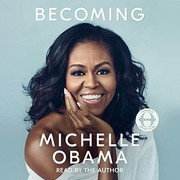
Obama's memoir offers a counterpoint of aspiration and institutional navigation, showing how race shapes even the most 'successful' American lives and broadening the range of voices in the curriculum.
Advanced Debate: Competing Visions and Critiques
ExpertGrapple with genuine disagreements about solutions, identity, and the future — including critiques from within Black intellectual tradition — to think independently rather than adopt any single framework.
▸ Study plan for this stage
Pace: 6–8 weeks total: Weeks 1–3 on "The Content of Our Character" (~20–25 pages/day, including reflection pauses after each essay); Weeks 4–6 on "How to Be an Antiracist" (~25–30 pages/day); Weeks 7–8 reserved for comparative re-reading of key passages, debate prep, and synthesis writing.
- Shelby Steele's concept of 'racial guilt' and how White guilt paradoxically disempowers Black Americans by reinforcing a victim identity
- Steele's distinction between 'bargaining' and 'challenging' as two Black strategies for navigating White America, and his critique of each
- The tension between 'opportunity' and 'entitlement' in Steele's argument — his case that preferential policies (e.g., affirmative action) can undermine individual agency and self-determination
- Steele's notion of 'integration shock' and the psychological costs of racial identity politics on both Black and White Americans
- Kendi's foundational claim that all policies are either racist or antiracist — there is no 'neutral' — and what this binary demands of individuals and institutions
- Kendi's taxonomy of racism: distinguishing segregationist, assimilationist, and antiracist ideas, and his self-critical account of how he himself held assimilationist views
- Kendi's 'power + policy' definition of racism (racism as systemic, not merely attitudinal), and how it directly inverts Steele's emphasis on individual psychology and behavior
- The internal Black intellectual debate these two books embody: conservative self-determinism (Steele) vs. structural antiracism (Kendi) — and the real-world policy stakes of each framework
- According to Steele, how does 'White guilt' function as a social currency, and why does he believe it harms rather than helps Black Americans? Do you find his psychological argument convincing, and where does it seem to break down?
- Kendi argues that 'assimilationist' ideas are a form of racism. How would Steele respond to being labeled an assimilationist? Whose framing of 'assimilation' do you find more analytically precise, and why?
- Both authors write autobiographically. How does each use personal experience as evidence, and how does that rhetorical choice strengthen or weaken their broader arguments?
- Steele and Kendi offer opposing diagnoses of the same problem (persistent racial inequality). Map out each author's causal chain: What is the root cause? What is the proposed remedy? Where do the chains actually conflict versus merely talk past each other?
- Kendi insists that being 'not racist' is a myth — one is either actively antiracist or complicit in racism. What would Steele say about this claim? Which position places a more defensible burden on individuals and institutions?
- After reading both books, what do YOU believe is the single most important unresolved tension between them — and what evidence or argument would be needed to resolve it?
- **Dialectical Annotation:** While reading each book, mark every claim with either a 'S' (Steele would agree) or 'K' (Kendi would agree) or 'BOTH' or 'NEITHER.' At the end of each chapter, write 2–3 sentences on the sharpest point of disagreement you found.
- **Policy Stress-Test:** Choose one real policy (e.g., affirmative action in university admissions, reparations, or diversity training in workplaces). Write a 1-page brief from Steele's perspective and a 1-page brief from Kendi's perspective, using only arguments grounded in the actual texts. Then write a 1-paragraph verdict of your own.
- **Steelman Exercise:** Identify the argument in each book you find least persuasive. Write the strongest possible version of that argument — better than the author wrote it — before writing your critique. This guards against dismissing either thinker too easily.
- **Concept Mapping:** Draw a visual diagram with 'Racial Inequality' at the center. Branch outward with each author's causal factors, proposed solutions, and underlying values. Use different colors for Steele and Kendi. Identify at least two nodes where their maps overlap and two where they are irreconcilable.
- **Socratic Dialogue Draft:** Write a 2–3 page imagined dialogue in which Steele and Kendi debate a single question of your choosing (e.g., 'Is affirmative action antiracist?'). Each speaker must use arguments traceable to their actual book. Avoid caricature — both voices must be intellectually formidable.
- **Personal Position Paper:** After completing both books, write a 500-word essay answering: 'Which framework — Steele's or Kendi's — better equips a citizen to reduce racial inequality in America today, and what does the other framework contribute that the first misses?' Cite specific passages from both books.
Next up: By forcing the reader to hold two rigorous, conflicting frameworks simultaneously and defend an independent position, this stage builds the critical apparatus needed to engage primary sources, policy literature, and emerging scholarship without defaulting to any single ideological lens.
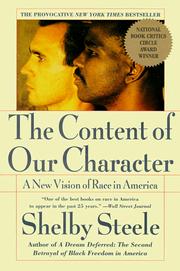
Steele's conservative critique of civil-rights orthodoxy challenges readers to stress-test their assumptions; encountering a dissenting Black intellectual voice sharpens critical thinking.
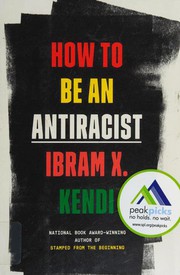
Kendi's prescriptive framework — read last — invites the reader to synthesize everything learned and take a position, making it the ideal capstone for a curriculum built on debate and complexity.
Discussion
Keep reading
Paths that share books, cover the same subject, or open a related topic.