The Civil Rights Movement: the best books, in the right order
This curriculum takes a beginner from vivid personal narratives and accessible histories, through the strategic and organizational mechanics of the movement, and finally into critical scholarly analysis of its legacy and unfinished work. Each stage builds the vocabulary, cast of characters, and conceptual depth needed to fully absorb the next, ensuring the learner develops both emotional grounding and intellectual rigor.
Foundations: Stories That Make It Real
BeginnerBuild an emotional and narrative foundation — who was involved, what segregation felt like on the ground, and why people risked everything to fight it.
▸ Study plan for this stage
Pace: 8–10 weeks, ~25–30 pages/day. Recommended pacing: MLK autobiography (2.5 weeks), Warriors Don't Cry (3 weeks), The Children (2.5–3 weeks), with 1 week for reflection and synthesis.
- Personal testimony as historical evidence: How individual narratives (King's reflections, Melba's diary-like account, Halberstam's portraits of young activists) reveal the human reality of segregation and resistance
- The evolution of nonviolent resistance: From King's theological and philosophical development of nonviolence in his autobiography, to its lived practice by teenagers in Warriors Don't Cry and The Children
- Segregation's psychological and daily toll: The specific, concrete ways Jim Crow affected Black Americans' dignity, safety, education, and family life—not as abstract policy but as lived experience
- Courage and sacrifice across generations: Why ordinary people (including children and teenagers) chose to risk violence, arrest, and social ostracism for change
- The role of faith, family, and community: How religious conviction, parental support, and collective action sustained the movement through fear and trauma
- The intersection of personal identity and political action: How King's intellectual journey, Melba's coming-of-age, and young activists' moral awakening shaped their commitment to justice
- Intersectionality in the movement: Gender, class, and age differences in how people experienced and participated in the Civil Rights Movement
- How did Martin Luther King Jr.'s personal and intellectual development (as described in his autobiography) shape his commitment to nonviolent resistance, and what were the key theological and philosophical influences?
- What specific daily indignities and dangers of segregation does Melba Patillo Beals describe in Warriors Don't Cry, and how did they affect her psychologically and emotionally?
- How did the young activists profiled in The Children—many of them teenagers—come to the decision to participate in sit-ins and other direct action, and what sustained them through violence and arrest?
- What role did faith, family support, and community play in enabling people to endure the risks and trauma of civil rights activism, as illustrated across all three books?
- How do the three books together illustrate the principle of nonviolence—from King's theory to its practice by ordinary people, including children?
- What does each book reveal about the personal costs of segregation and resistance that statistics or policy documents alone cannot convey?
- Parallel timeline: As you read each book, create a personal timeline of key events in each author's life alongside major Civil Rights Movement milestones. Note how their personal moments (King's spiritual crises, Melba's first day at Central High, a sit-in participant's arrest) intersect with historical events.
- Character portrait journal: After finishing each book, write a 1–2 page character study of the main voice(s)—King, Melba, and 2–3 young activists from The Children. Include their fears, motivations, turning points, and what they risked. Revisit these at the end to see how your understanding deepened.
- Segregation impact map: Create a visual (diagram, chart, or written list) of the specific ways segregation affected daily life, based on concrete examples from the books (e.g., schools, transportation, dining, safety, family relationships). Organize by category and note which book(s) illustrate each impact.
- Nonviolence philosophy to practice: Read King's reflections on nonviolence in his autobiography, then trace how that philosophy appears in Warriors Don't Cry and The Children. Write a 2–3 page reflection on how nonviolence worked in practice—what made it powerful, and what made it difficult for those who lived it.
- Courage conversation: Choose one moment from each book where someone made a difficult choice (King's decision to lead, Melba's choice to integrate Central High, a sit-in participant's decision to be arrested). Write a dialogue between these three people discussing why they did it and what they were afraid of.
- Testimony analysis: Select 3–4 powerful passages (one from each book) where the author describes a moment of fear, pain, or determination. Annotate each with: What emotion is being conveyed? Why is this detail important to understanding the movement? What would be lost if we only read history textbooks instead of these accounts?
Next up: This stage builds the emotional and human foundation—you now understand who these people were, what they endured, and why they acted—preparing you to analyze the broader historical forces, organizational strategies, and political/legal structures that shaped the movement's trajectory and impact.
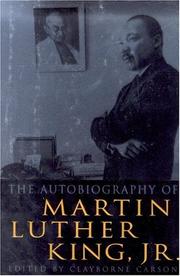
Starting with King's own voice gives the learner an immediate, personal anchor to the movement's most iconic figure and introduces its core moral language — nonviolence, justice, and beloved community.
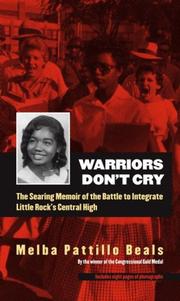
This memoir of the Little Rock Nine puts a teenage face on desegregation, making abstract legal battles viscerally human and showing that ordinary young people were on the front lines.
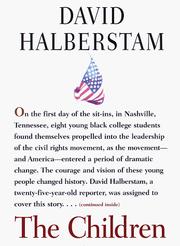
Halberstam follows the Nashville student sit-in movement, introducing grassroots organizing and figures like John Lewis — essential preparation for understanding the movement beyond King.
The Movement in Motion: Strategy and Organization
BeginnerUnderstand how the Civil Rights Movement was actually built — the organizations, tactics, campaigns, and the full range of leaders who made it work.
▸ Study plan for this stage
Pace: 4–5 weeks, ~25–30 pages/day (approximately 150–160 pages per week)
- The role of grassroots organizations (NAACP, SCLC, SNCC, CORE) in building and sustaining the movement
- Nonviolent direct action as a deliberate strategic choice and its tactical applications (sit-ins, marches, boycotts)
- The diversity of leadership styles and approaches—from established figures like King to younger activists in SNCC
- How specific campaigns (Montgomery Bus Boycott, Greensboro sit-ins, Freedom Rides, March on Washington) were organized and executed
- The intersection of local community organizing with national visibility and media strategy
- How the movement adapted tactics in response to opposition and changing circumstances
- What were the main organizations driving the Civil Rights Movement, and how did their strategies differ from one another?
- Why did Civil Rights leaders choose nonviolence as a tactic, and how was it implemented in specific campaigns described in Eyes on the Prize?
- How did the Montgomery Bus Boycott demonstrate the power of organized community action, and what made it successful?
- What role did younger activists and organizations like SNCC play in pushing the movement forward, and how did they differ from established groups?
- How did the movement use media and public visibility to advance its goals, as shown through specific campaigns in the book?
- What were the key turning points or campaigns that shifted the momentum of the movement, and what organizational factors made them possible?
- Create a timeline of 5–6 major campaigns from Eyes on the Prize, noting the organizations involved, tactics used, and outcomes—then analyze which elements made each successful
- Write a 2–3 page profile of two contrasting Civil Rights leaders mentioned in the book (e.g., King and a SNCC organizer), comparing their philosophies, methods, and roles in specific campaigns
- Map out the organizational structure of one major campaign (e.g., Montgomery Bus Boycott or Freedom Rides) showing how decisions were made, who was involved, and how grassroots participation was mobilized
- Conduct a 'tactical analysis' of a specific nonviolent action from the book—describe the strategy, anticipated opposition, actual response, and whether the tactic achieved its goal
- Create a visual comparison chart showing the goals, methods, leadership style, and major campaigns of at least three organizations mentioned in Eyes on the Prize (NAACP, SCLC, SNCC, CORE)
- Write a reflective essay: 'How did the organizational choices and strategic decisions described in Eyes on the Prize shape the outcomes of the Civil Rights Movement?'
Next up: This stage equips you with a concrete understanding of how the movement actually functioned—its organizations, tactics, and diverse leadership—providing the foundation to examine in the next stage the broader social, political, and cultural forces that shaped these strategies and their long-term impact.
The companion book to the landmark PBS documentary series, this is the single most accessible and comprehensive narrative of the movement from 1954 to 1965, tying together all the major events and figures met so far.
Deeper Voices: Women, the South, and the Radical Tradition
IntermediateExpand the story beyond the familiar male leadership to include women organizers, Southern Black communities, and more radical strands of the freedom struggle.
▸ Study plan for this stage
Pace: 8–10 weeks, ~25–30 pages/day (approximately 4–5 weeks per book with time for reflection and note-taking)
- Septima Clark's citizenship schools as grassroots educational infrastructure for voter registration and community empowerment in the South
- The central role of Black women organizers and teachers in sustaining the Civil Rights Movement at the local level
- Mississippi's Black community organizing from the 1950s through the 1960s, including the SNCC and Freedom Summer campaigns
- The relationship between radical organizing traditions (direct action, community self-determination) and mainstream civil rights leadership
- How local people and ordinary citizens—not just famous leaders—drove the movement through sustained, often invisible labor
- The intersection of education, political consciousness, and resistance in Southern Black communities
- The strategic importance of the Deep South (particularly Mississippi) as a site of both repression and transformative organizing
- What were Septima Clark's citizenship schools, and how did they function as both educational and political organizing tools?
- How did Clark's approach to teaching and community organizing differ from or complement the work of more nationally visible civil rights leaders?
- What role did women play in organizing Mississippi's Black communities, and why have their contributions been historically overlooked?
- How did local Mississippi organizing efforts (as documented in 'Local People') connect to broader national civil rights campaigns like Freedom Summer?
- What does 'local people' mean as a concept, and why is centering ordinary community members' agency important to understanding the Civil Rights Movement?
- How did radical traditions of self-determination and direct action manifest in Southern grassroots organizing, and what tensions existed with national civil rights organizations?
- Create a timeline comparing Septima Clark's major organizing milestones (from her early teaching through the citizenship schools) with national civil rights events; annotate where her work intersects with or diverges from mainstream narratives
- Map Mississippi's key organizing sites and campaigns mentioned in 'Local People' (counties, towns, organizations); note which were led or sustained by women and local community members
- Write a 2–3 page biographical sketch of a woman organizer featured in either book (e.g., Septima Clark, Fannie Lou Hamer, or another figure mentioned), focusing on her specific strategies and impact
- Analyze a passage from Clark's 'Ready from Within' about education and consciousness-raising; connect it to a specific organizing campaign or moment described in 'Local People'
- Conduct a close reading of how 'Local People' portrays the relationship between SNCC's radical vision and the Mississippi Black community's own organizing traditions; write a short reflection on what this reveals about power and leadership
- Create a comparison chart of different organizing models (citizenship schools vs. SNCC direct action vs. local church-based organizing) as depicted across both books; assess the strengths and limitations of each
Next up: This stage establishes the foundational understanding that the Civil Rights Movement was built on decades of local, often women-led organizing and radical grassroots traditions in the South, preparing you to examine how these local struggles connected to national policy shifts, international contexts, and the movement's evolution into the late 1960s and beyond.
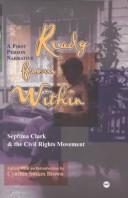
Clark's account of the Citizenship Schools she built reveals the essential but overlooked infrastructure of grassroots literacy and civic education that powered voter registration drives.
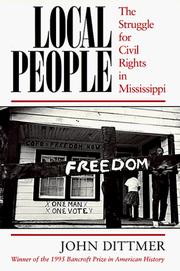
Dittmer shifts the lens from national leaders to the ordinary Black Mississippians who organized under extreme danger, fundamentally reframing where the movement's true power resided.
Critical Perspectives: Law, Power, and Legacy
ExpertAnalyze the Civil Rights Movement through the lenses of law, political power, and ongoing racial inequality — understanding both what was won and what remains contested.
▸ Study plan for this stage
Pace: 8–10 weeks, ~40–50 pages/day (approximately 3–4 hours of reading + annotation per day). "The Warmth of Other Suns" (~622 pages) takes 4–5 weeks; "The New Jim Crow" (~290 pages) takes 2–3 weeks, with 1–2 weeks for synthesis and deeper analysis.
- The Great Migration as a mass movement of Black Americans seeking economic opportunity and escape from Jim Crow—and its role in reshaping American geography and politics
- How systemic racism persisted and evolved after the Civil Rights Movement through legal mechanisms (mass incarceration, drug war, felony disenfranchisement)
- The distinction between de jure segregation (legally mandated) and de facto segregation (maintained through economic, social, and criminal justice systems)
- How individual narratives of resilience and agency coexist with structural forces that constrain Black mobility and opportunity
- The carceral state as a modern form of racial control—how the criminal justice system functions as a tool of social stratification
- The concept of 'colorblindness' as a legal and political ideology that obscures ongoing racial inequality
- How legal victories of the Civil Rights era were incomplete and have been rolled back or circumvented through new policies
- The intergenerational and cumulative effects of historical injustice on contemporary Black communities
- What were the primary push and pull factors that drove the Great Migration, and how did migrants' experiences vary by destination region (North, Midwest, West)?
- How does Wilkerson use individual family narratives to illustrate broader patterns of racial inequality and aspiration in 20th-century America?
- What is mass incarceration, and how does Alexander argue it functions as a system of racial control comparable to Jim Crow?
- How do the drug war and felony disenfranchisement policies perpetuate racial inequality despite being facially race-neutral?
- What is the difference between de jure and de facto segregation, and how did the latter persist after the Civil Rights Movement?
- How does Alexander's concept of the 'New Jim Crow' challenge the narrative of progress that often follows discussions of the Civil Rights Movement?
- Create a migration map tracking the three main family narratives in 'The Warmth of Other Suns' (Ida Mae, George, and Ms. Gladney), annotating key turning points, obstacles, and outcomes. Write a 2–3 page reflection on how geography shaped their opportunities.
- Construct a timeline comparing Jim Crow laws (1890s–1960s) with post-Civil Rights criminal justice policies (1970s–present). Identify parallels in how each system restricted Black freedom and mobility.
- Read and annotate Chapter 2 of 'The New Jim Crow' ('The Lockdown'). Create a visual flowchart showing how drug arrests → convictions → felony records → collateral consequences (employment, housing, voting) create a cycle of marginalization.
- Write a comparative analysis (4–5 pages) of how Wilkerson's migrants experienced economic mobility versus how Alexander's incarcerated populations face structural barriers to mobility. Use specific examples from both texts.
- Research one contemporary criminal justice policy (e.g., three-strikes laws, stop-and-frisk, bail reform) and write a 3-page policy brief analyzing its racial disparities using Alexander's framework and evidence from 'The New Jim Crow.'
- Conduct a close reading of one family narrative from 'The Warmth of Other Suns' and one case study from 'The New Jim Crow,' then write a dialogue between the two figures discussing how systemic racism shaped their lives across different eras.
Next up: This stage equips you to recognize how racial inequality persists through law and institutions rather than explicit ideology—preparing you to examine how contemporary movements (from Black Lives Matter to reparations activism) challenge these systems and imagine alternative futures.
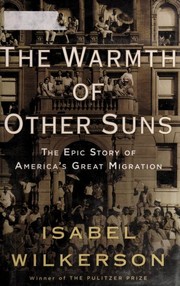
Wilkerson's epic narrative of the Great Migration provides the essential demographic and economic backdrop that explains why the Civil Rights Movement took the shape it did, North and South.
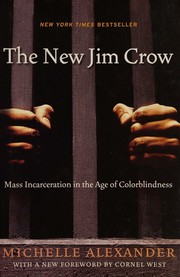
Alexander's landmark argument that mass incarceration reconstituted racial caste after the Civil Rights era is the essential bridge between the movement's victories and the unfinished struggle — the ideal capstone for a learner ready to think critically about legacy.
Discussion
Keep reading
Paths that share books, cover the same subject, or open a related topic.