The Best Books on the Founding Fathers
This curriculum takes you from an engaging, story-driven introduction to the Founding era all the way through deep, scholarly biographies of each major Founder. The stages build deliberately — first giving you the shared context and cast of characters, then diving into individual lives in a logical order (Washington anchors the era, Jefferson and Hamilton illuminate its tensions, Franklin and Adams round out its humanity), and finally returning to the founding moment itself with the sophistication to fully appreciate it.
The Big Picture: The Founding Era as a Whole
BeginnerUnderstand the sweep of the Revolutionary and founding period — its key players, stakes, and drama — before zooming in on individual Founders.
▸ Study plan for this stage
Pace: 6–7 weeks, ~40–50 pages/day (approximately 3–4 hours of focused reading per day)
- The Revolutionary War as a dramatic turning point: how military necessity, ideological commitment, and personal sacrifice converged to create a new nation
- The central tensions among the Founding Fathers: Hamilton vs. Jefferson, ambition vs. principle, centralized vs. distributed power
- The summer of 1776 as the crucible moment: the Declaration, Washington's military struggles, and the fragility of the revolutionary cause
- The personal relationships and rivalries that shaped the founding: how friendships, betrayals, and mutual respect influenced political outcomes
- The stakes of the founding: what was actually being fought for, what was at risk, and what compromises were made
- The role of contingency and individual agency: how different choices by key figures could have altered the course of history
- The transition from revolution to nation-building: the challenges of creating a functioning government from ideals
- The unresolved contradictions of the founding era: slavery, representation, and the gap between revolutionary rhetoric and reality
- What were the major personal and political conflicts among the Founding Fathers, and how did these conflicts shape the early republic?
- Why was the summer of 1776 so critical to the American founding, and what made the revolutionary cause so precarious at that moment?
- How did George Washington's leadership and character influence the outcome of the Revolutionary War and the stability of the new nation?
- What were the core ideological differences between figures like Hamilton and Jefferson, and how did these differences play out in practice?
- What role did individual choices, relationships, and contingency play in the founding—could history have turned out very differently?
- What were the major unresolved tensions and contradictions in the founding era, and how did they set the stage for future conflicts?
- Create a timeline of key events from *Founding Brothers* and *Revolutionary Summer*, marking the major turning points and decisions that shaped the founding
- Write character sketches (2–3 pages each) of three Founding Fathers discussed in the books (e.g., Washington, Hamilton, Jefferson), focusing on their motivations, relationships, and impact
- Trace one major conflict or rivalry (e.g., Hamilton-Jefferson, or the tensions within Washington's cabinet) through both books, noting how it evolved and what it reveals about the founding era
- Create a visual map or diagram showing the key relationships among the Founding Fathers—alliances, rivalries, friendships, betrayals—as depicted in the books
- Write a 3–4 page reflective essay on a moment of contingency from the books: 'If [specific decision/event] had gone differently, how might the founding have changed?'
- Compare how Ellis portrays the same historical figures or events across the two books; what new insights does *Revolutionary Summer* add to the portrait in *Founding Brothers*?
Next up: This stage equips you with a vivid, human-centered understanding of the founding era's drama and key players, preparing you to zoom in on individual Founders' lives, ideas, and legacies in subsequent stages with richer context and deeper appreciation for their choices and contradictions.
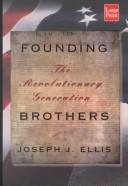
A perfect entry point: Ellis tells the founding story through six pivotal moments and relationships, introducing all the major Founders in an accessible, narrative style that builds the mental map you need for everything that follows.

Zooms into the critical summer of 1776 to show how independence was actually won on the battlefield and in the halls of Congress, grounding the idealism of the founding in military and political reality.
The General and the Visionary: Washington & Jefferson
BeginnerGain a full, humanizing portrait of the two Virginians who most shaped the founding's character — Washington as its indispensable leader and Jefferson as its most eloquent, contradictory voice.
▸ Study plan for this stage
Pace: 8–10 weeks, ~40–50 pages/day. Start with "His Excellency" (464 pages, ~5–6 weeks), then move to "American Sphinx" (498 pages, ~5–6 weeks). Allow 1–2 weeks for review and integration exercises.
- Washington's indispensability: how his character, restraint, and moral authority held the Revolution and early republic together despite lacking Jefferson's intellectual brilliance
- Jefferson's contradictions: the gap between his eloquent ideals (liberty, equality, reason) and his lived reality (slavery, personal ambition, moral compromises)
- The partnership and tension between Washington and Jefferson: complementary visions of leadership and the republic's future
- Washington's journey from reluctant warrior to reluctant president: his repeated withdrawals and returns as a model of civic virtue
- Jefferson's intellectual evolution: from Enlightenment optimism to political pragmatism to late-life pessimism about slavery and the Union
- The role of personality and psychology in shaping the founding: how individual temperament, not just ideology, determined historical outcomes
- Virginia's dominance in the founding: how two Virginians embodied the era's central paradoxes and contradictions
- Legacy and myth-making: how Washington and Jefferson have been remembered versus who they actually were
- Why does Ellis argue that Washington was 'indispensable' to the American founding, and what specific moments or decisions support this claim?
- What are the central contradictions in Jefferson's character and beliefs, and how does Ellis explain their origins?
- How did Washington's and Jefferson's personalities, temperaments, and life experiences shape their different visions of leadership and the republic?
- What was the nature of the relationship between Washington and Jefferson, and where did they agree and disagree on key issues?
- How did Washington's repeated decisions to step away from power (after the Revolution, after his presidency) influence the founding's character?
- What does Ellis reveal about Jefferson's internal conflicts regarding slavery, and how did this shape his political philosophy?
- Create a two-column comparison chart: Washington vs. Jefferson on leadership style, vision for the republic, relationship to power, and personal contradictions. Use specific examples from both books.
- Write a 500-word character sketch of Washington based on Ellis's portrait, focusing on one moment of crisis (e.g., Valley Forge, the Whiskey Rebellion, or his farewell) that reveals his essential character.
- Write a 500-word character sketch of Jefferson based on Ellis's portrait, focusing on the tension between his ideals and his actions (e.g., the Declaration vs. slavery, or his political philosophy vs. his behavior as president).
- Timeline exercise: Create a parallel timeline of Washington's and Jefferson's lives from 1775–1809, marking key personal events, political decisions, and shifts in their relationship. Annotate with how Ellis explains their significance.
- Debate preparation: Prepare arguments for a mock debate between Washington and Jefferson on a founding issue (e.g., the role of the executive, the future of slavery, the proper relationship between the federal government and the states). Ground arguments in Ellis's characterizations.
- Reflection essay (750–1000 words): How does Ellis's portrayal of Washington and Jefferson challenge or complicate the heroic myths you may have held about them? What does it mean for the founding to be shaped by flawed, contradictory human beings?
Next up: This stage establishes Washington and Jefferson as the founding's central figures and reveals the human complexity beneath their legacies, preparing you to understand how their rivals, successors, and critics (Hamilton, Madison, Adams, and others) responded to and shaped the early republic's trajectory.
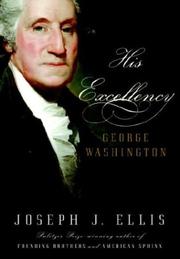
Start with Washington because he is the era's anchor. Ellis strips away the myth to reveal a driven, flawed, and genuinely great man — readable enough for a beginner but substantive enough to reward close attention.

Read Jefferson immediately after Washington to feel the contrast. Ellis focuses on Jefferson's contradictions — liberty vs. slavery, idealism vs. self-interest — giving you the interpretive tools to think critically about the founders.
The Outsiders: Hamilton & Franklin
IntermediateExplore two self-made Founders who rose from nothing and whose ambition, wit, and genius shaped the nation's financial and diplomatic foundations.
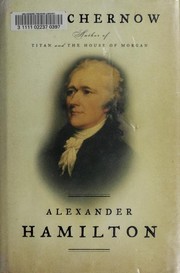
The definitive Hamilton biography and one of the great American biographies, period. Read it here because Hamilton's story of building the financial and constitutional architecture of the new nation makes most sense after you understand Washington and Jefferson's Virginia world.
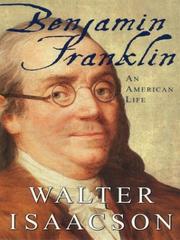
Franklin is the most modern and pragmatic of the Founders; Isaacson's warm, brisk biography is the ideal companion to Chernow's epic, showing a very different path to greatness — through curiosity, humor, and diplomacy rather than intensity.
The Indispensable Underdog: John Adams
IntermediateUnderstand the Founder who held the republic together in its most dangerous early years, and whose story reframes everything you've read so far from an outsider's honest perspective.
▸ Study plan for this stage
Pace: 8–10 weeks, ~40–50 pages/day (McCullough's narrative is engaging but dense; allows time for reflection and note-taking)
- Adams as the indispensable political operator: his role in securing independence, navigating the Revolution, and holding the fragile republic together during crises
- Adams's outsider status and provincial insecurity: how his Massachusetts background and lack of wealth shaped his defensive, principled approach to power
- The Adams-Jefferson relationship as a lens on Founding ideals: their collaboration, bitter rivalry, and eventual reconciliation reveal competing visions of the republic
- Adams's presidency during the Quasi-War and XYZ Affair: how he resisted war fever and protected the young nation from foreign entanglement and internal faction
- The Alien and Sedition Acts and their consequences: Adams's role in a controversial moment that tested constitutional limits and his own principles
- Adams's intellectual foundations: his legal mind, classical education, and Enlightenment reading shaped his constitutional thinking
- Family as political and personal anchor: Abigail Adams's influence, his children's struggles, and how personal sacrifice defined his public service
- Legacy and vindication: how Adams's reputation was rehabilitated in his final years and what his life reveals about the costs of founding a republic
- What were Adams's key contributions to American independence, and how did his role differ from more celebrated figures like Washington and Franklin?
- How did Adams's background and personality—his insecurity, ambition, and moral rigidity—shape his political decisions and relationships?
- What was the nature of the Adams-Jefferson partnership and rivalry, and what did their conflict reveal about competing Founding ideologies?
- How did Adams navigate the foreign policy crises of his presidency (Quasi-War, XYZ Affair), and why did he choose negotiation over war?
- What were the Alien and Sedition Acts, why did Adams's administration support them, and what were the long-term consequences for American civil liberties?
- How did Adams's marriage to Abigail shape his political career, and what role did family play in sustaining him through decades of public service?
- Create a timeline of Adams's major political moments (1774–1826) with 2–3 sentence annotations explaining his role and its significance; compare it to timelines of Washington and Jefferson to see where Adams's contributions are often overlooked
- Read and annotate 3–4 of Adams's letters (from the book or primary sources) to Abigail, Jefferson, or colleagues; analyze his voice, concerns, and how his private thoughts differ from his public positions
- Write a 2–3 page character study of Adams focusing on how his insecurity and outsider status drove his political choices; use specific examples from the book
- Debate or write opposing arguments: 'Adams was right to support the Alien and Sedition Acts' vs. 'They were a betrayal of revolutionary principles.' Use evidence from McCullough's account
- Create a Venn diagram comparing Adams, Jefferson, and Washington on key dimensions (ambition, ideology, vision for the republic, personal integrity); write a paragraph explaining what the overlaps and gaps reveal
- Reread the chapters on Adams's presidency and foreign policy; write a memo from Adams to his cabinet explaining why he chose negotiation with France over war, addressing both strategic and moral reasoning
Next up: Adams's life demonstrates how the Founding was not the work of a unified vision but of competing, conflicting personalities and ideologies—a foundation that will require examining the constitutional and political structures designed to contain those conflicts in the next stage.
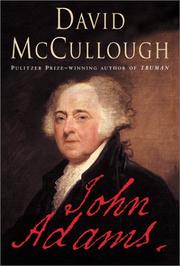
McCullough's Pulitzer Prize-winning biography is the most beloved book in the canon — save it for here so that Adams's running commentary on Washington, Jefferson, Hamilton, and Franklin lands with full force now that you know those men deeply.
The Founding Itself: Deep Dives into the Documents and Ideas
ExpertReturn to the founding moment armed with biographical depth, and grapple with the intellectual, constitutional, and moral arguments that created — and still haunt — the American republic.
▸ Study plan for this stage
Pace: 8–10 weeks, ~40–50 pages/day (mix of primary text and secondary analysis; The Federalist Papers require slower, deliberate reading)
- The Federalist Papers as a defense of the Constitution: how Hamilton, Madison, and Jay constructed arguments for a strong federal government and the separation of powers
- The intellectual sources of American founding thought: Enlightenment philosophy, classical republicanism, and English constitutional tradition as synthesized in the Federalist arguments
- The Constitutional Convention as a negotiation among competing visions: Beeman's account of how diverse delegates compromised on federalism, representation, and executive power
- The moral paradoxes embedded in the founding: how the framers grappled with slavery, property rights, and the tension between republican ideals and practical compromise
- The three founding moments Ellis identifies: the Declaration, the Constitution, and the early republic—and how each required different intellectual and moral choices
- The role of personality and biography in shaping founding ideas: how Hamilton's ambition, Madison's scholarship, and Washington's character influenced constitutional outcomes
- The unresolved tensions that 'still haunt' the republic: federalism vs. state sovereignty, executive power vs. legislative limits, individual rights vs. collective welfare
- What are the core arguments in Federalist Papers 10 and 51, and how do they address the problem of faction and the separation of powers?
- How did the delegates at the Constitutional Convention balance large-state and small-state interests, and what compromises did Beeman identify as pivotal to the document's ratification?
- What does Ellis mean by the three 'founding moments,' and how did the intellectual and moral challenges differ between the Declaration, the Constitution, and the early republic?
- How did the framers' understanding of slavery shape the Constitution, and what unresolved moral tensions did this create for the founding generation?
- What role did Hamilton's financial vision play in establishing federal power, and how did it conflict with other founders' views of republican virtue?
- How do The Federalist Papers function as both a historical document and a continuing argument about constitutional interpretation?
- Read and annotate Federalist Papers 10, 51, and 78 in full; write a one-page summary of each paper's central claim and its relevance to modern constitutional debates
- Create a detailed chart of the Constitutional Convention's major compromises (Great Compromise, Three-Fifths Compromise, Electoral College, etc.) using Beeman's account; for each, note whose interests it served and whose it marginalized
- Write a comparative essay (1,500–2,000 words) analyzing how Hamilton and Madison disagreed on federal power in The Federalist Papers, then trace how their conflict played out in the early republic according to Ellis
- Conduct a 'founding voices' dialogue: write an imagined conversation between two delegates (e.g., Hamilton and Jefferson, or Madison and a slavery-defending delegate) on a specific constitutional issue, grounded in the actual positions described in Beeman and Ellis
- Map the intellectual genealogy of one key founding concept (e.g., separation of powers, federalism, or natural rights) by identifying its sources in Enlightenment thought and tracing how it appears in The Federalist Papers and the Constitution
- Identify three unresolved tensions Ellis highlights in *American Creation*, and for each, write a brief analysis of how it manifests in The Federalist Papers' arguments and remains contested today
Next up: This stage equips you with deep knowledge of the founding documents' intellectual architecture and the moral compromises embedded within them, preparing you to examine how subsequent generations interpreted, extended, and challenged these founding principles in the nineteenth and twentieth centuries.

Now that you know Hamilton, Madison, and Jay as people, read their masterwork in its own right. These 85 essays are the most important political documents of the founding and reward re-reading at every level of sophistication.
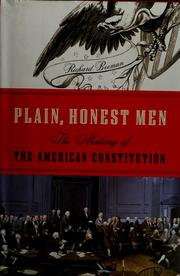
The best single narrative of the Constitutional Convention of 1787 — who fought, who compromised, and why. Reading it last lets you see every delegate as a fully realized human being rather than a name on a document.
A fitting capstone: Ellis returns to assess the founding's greatest triumphs and most tragic failures (especially slavery), asking what the Founders actually achieved and where they fell short — the question every serious student of the era must ultimately face.
Discussion
Keep reading
Paths that share books, cover the same subject, or open a related topic.