Reconstruction: The Best Books to Read, in Order
This curriculum traces Reconstruction from the collapse of slavery through the brief flowering of Black citizenship to its violent dismantling — and the long shadow that followed. Starting at an intermediate level, each stage deepens the analytical and historiographical lens, moving from narrative synthesis to primary-source scholarship to the ideological and legal machinery of Redemption and its legacy.
The Arc of Emancipation
IntermediateUnderstand how enslaved people shaped their own liberation and what freedom meant on the ground in the immediate aftermath of the Civil War.
▸ Study plan for this stage
Pace: 8–10 weeks, ~40–50 pages/day. Start with "The Half Has Never Been Told" (4–5 weeks, ~40 pages/day), then move to "Been in the Storm So Long" (4–5 weeks, ~45–50 pages/day). Build in 1–2 weeks for review and synthesis.
- Enslaved people as active agents in their own emancipation, not passive recipients of freedom from above
- The internal economy and resistance strategies within slavery that laid groundwork for liberation
- The immediate, chaotic transition from slavery to freedom: confusion over land, labor contracts, and legal status
- How formerly enslaved people defined freedom on the ground—family reunification, land ownership, education, political participation
- The role of the Union Army, Freedmen's Bureau, and federal policy in shaping (and constraining) Black liberation
- Regional and temporal variation in the emancipation experience across the South
- The tension between Black aspirations for autonomy and white Southern (and Northern) resistance to genuine equality
- According to Baptist's 'The Half Has Never Been Told,' how did enslaved people's own resistance and economic strategies contribute to the conditions that made emancipation possible?
- What does Litwack mean by freedom 'in the storm'—what were the concrete challenges and opportunities formerly enslaved people faced immediately after the Civil War ended?
- How did formerly enslaved people's priorities for freedom (family, land, education, voting) differ from what white policymakers and Northern Republicans offered them?
- What role did the Freedmen's Bureau play in mediating between Black aspirations and white Southern power, according to Litwack?
- How did the experience of emancipation vary by region, time period, and individual circumstance across the South in 1865–1867?
- What evidence do Baptist and Litwack present that Black people were not simply 'freed' but actively shaped their own liberation?
- Create a timeline of key moments in enslaved people's resistance (from Baptist) and trace how these connect to the conditions of emancipation described in Litwack.
- Compile a list of what freedom meant to different groups of formerly enslaved people (families, laborers, soldiers, women, children) based on Litwack's evidence, and compare it to what federal policy actually provided.
- Write a 2–3 page narrative from the perspective of a formerly enslaved person in 1865–1866, drawing on specific examples from both books about the confusion, hope, and obstacles they faced.
- Map the regional differences in emancipation experiences across the South using Litwack's case studies; identify why some areas saw more Black autonomy than others.
- Analyze 2–3 primary source excerpts (letters, testimony, contracts) that Litwack or Baptist cite, and explain what they reveal about Black agency or white resistance to emancipation.
- Debate: Did the Freedmen's Bureau help or hinder Black liberation? Use specific evidence from Litwack to support your position.
Next up: This stage establishes that emancipation was a contested, unfinished process shaped by Black resistance and initiative, setting up the next stage to examine how Reconstruction policies either advanced or betrayed those aspirations.
Reframes slavery as a modern capitalist engine driven by Black bodies, giving the reader the economic and human stakes that make emancipation's promise so radical — essential context before diving into Reconstruction itself.
A Pulitzer Prize-winning ground-level account of how formerly enslaved people experienced and defined freedom in 1865–66; establishes the human texture and competing expectations that will animate every subsequent stage.
The Promise — Black Citizenship & Radical Reconstruction
IntermediateGrasp the political architecture of Radical Reconstruction — the amendments, the Black officeholders, the labor struggles — and why it represented a genuine, if fragile, democratic revolution.
▸ Study plan for this stage
Pace: 6–8 weeks, ~40–50 pages/day (Du Bois is dense; allow time for re-reading and note-taking)
- The Fourteenth and Fifteenth Amendments as constitutional anchors for Black citizenship and political participation
- The role of Black voters and Black elected officials (state legislators, congressmen, constitutional convention delegates) in reshaping Southern state governments
- Radical Reconstruction as a democratic experiment: the expansion of suffrage, public education, and social welfare in the South
- The labor question during Reconstruction: sharecropping, land confiscation, and the struggle between free labor ideology and plantation restoration
- Du Bois's revisionist thesis: that Reconstruction was not a 'tragic era' of corruption but a genuine attempt at multiracial democracy sabotaged by white violence and Northern betrayal
- The internal conflicts within the Republican Party and between federal enforcement and Southern white resistance
- The role of the Freedmen's Bureau and federal troops in protecting Black rights and the consequences of their withdrawal
- The fragility of Radical Reconstruction: how economic dependence, terrorism (KKK), and the Compromise of 1877 dismantled the experiment
- What were the Fourteenth and Fifteenth Amendments, and how did they legally establish Black citizenship and voting rights?
- Who were some of the major Black political figures during Radical Reconstruction, and what offices did they hold? What did their presence in government represent?
- How did Radical Reconstruction attempt to transform Southern society economically, politically, and socially? What were its concrete achievements?
- What was the 'labor question' during Reconstruction, and why did the struggle over land and labor systems matter as much as voting rights?
- How does Du Bois challenge the traditional narrative of Reconstruction as a 'tragic era'? What evidence does he present?
- What role did white violence, terrorism, and the withdrawal of federal protection play in the collapse of Radical Reconstruction?
- Create a timeline of key Reconstruction legislation (13th, 14th, 15th Amendments; Reconstruction Acts; Civil Rights Act of 1875) with brief notes on what each achieved and who it empowered
- Compile a biographical database of 8–10 Black elected officials mentioned in Du Bois (e.g., Hiram Revels, Blanche K. Bruce, Robert Smalls), noting their state, office, and major legislative or political contributions
- Map the political geography of Radical Reconstruction: identify which Southern states had Black majorities in legislatures, which had Black governors or congressmen, and trace how these changed over time
- Write a 2–3 page analytical essay: 'Was Radical Reconstruction a democratic revolution or a failed experiment?' Use Du Bois's evidence to support your argument
- Analyze a primary source document from the Reconstruction era (e.g., a state constitution, a Freedmen's Bureau report, a Black legislator's speech) and explain how it reflects the goals and contradictions of Radical Reconstruction
- Create a visual comparison chart: 'Radical Reconstruction vs. Presidential Reconstruction' — showing differences in voting rights, land policy, federal involvement, and outcomes for Black people
- Trace the economic argument: explain why control over land and labor was as central to Reconstruction as political rights, and how sharecropping became a tool to undermine Black freedom
Next up: This stage establishes the historical reality and achievements of Radical Reconstruction, preparing you to examine in the next stage how and why this democratic experiment was systematically dismantled through violence, legal rollback, and the rise of Jim Crow.
The 1935 masterwork that first argued Black Americans were active agents — not passive recipients — of Reconstruction; reading it after Foner lets you see how Du Bois anticipated modern scholarship by decades.
Violence, Redemption & the Undoing
IntermediateUnderstand the organized terror, legal chicanery, and political betrayal that dismantled Reconstruction, and how white supremacy was re-institutionalized across the South.
▸ Study plan for this stage
Pace: 4–5 weeks, ~40–50 pages/day (approximately 300 pages total)
- The systematic use of violence (KKK, Red Shirts, White Leagues) as a political tool to suppress Black voters and Republican power
- The role of Northern political abandonment and the Hayes-Tilden Compromise of 1877 in ending federal protection of freedmen
- How Southern white Democrats used legal mechanisms (Black Codes, convict leasing, grandfather clauses) to re-establish racial control without explicitly mentioning race
- The weaponization of the 'Bloody Shirt'—how Republicans and Democrats deployed Reconstruction violence for partisan advantage rather than justice
- The transformation of the Republican Party from liberalism to conservatism and its retreat from racial egalitarianism
- The psychological and political mythology of 'Redemption' that justified white supremacist violence as regional salvation
- What specific organizations and tactics did white Southerners use to terrorize Black voters and Republican officials during Reconstruction, and how did these evolve over time?
- How did Northern politicians and the federal government abandon Reconstruction, and what were the consequences of the 1877 Compromise?
- What does Budiansky mean by the 'Bloody Shirt,' and how did both Republicans and Democrats manipulate memories of Reconstruction violence for political gain?
- How did Southern states use ostensibly race-neutral laws and economic systems (convict leasing, debt peonage, voting restrictions) to re-institutionalize white supremacy after Reconstruction?
- Why did the Republican Party shift from supporting Reconstruction to accepting its defeat, and what does this reveal about Northern racial attitudes?
- How did the mythology of 'Redemption' function to justify violence and reshape the narrative of Reconstruction in the South and the nation?
- Create a timeline of major Reconstruction violence (1865–1877) using Budiansky's examples, noting the perpetrators, targets, and political outcomes of each incident
- Analyze 3–4 specific violent episodes from the book (e.g., Colfax Massacre, Hamburg Massacre, Wilmington Riot) and write a 2–3 page analysis of how each served as a turning point in dismantling Reconstruction
- Construct a chart comparing the stated goals vs. actual effects of Southern 'Redemption' laws—what did they claim to do, and how did they function to disenfranchise and control Black citizens?
- Write a comparative essay (4–5 pages) on how Republicans and Democrats each weaponized the 'Bloody Shirt'—what narratives did each party promote, and why?
- Research and present one organization (KKK, Red Shirts, White Leagues) as Budiansky describes it, including its membership, methods, and political impact during Reconstruction
- Create a visual map or infographic showing the geographic spread of Reconstruction violence and the correlation between violence and Republican electoral losses in different Southern states
Next up: This stage equips you to understand how Reconstruction's violent collapse created the Jim Crow system, preparing you to examine the long-term institutionalization of segregation and racial oppression that defined the subsequent century of American history.

A narrative account of the paramilitary violence — the Klan, the Red Shirts, the rifle clubs — that systematically destroyed Black political power; provides the visceral, event-level story of Redemption.
The Long Shadow — Memory, Myth & the Nadir
ExpertAnalyze how Reconstruction was deliberately misremembered, how the 'Lost Cause' myth shaped a century of policy and culture, and how the era's unfinished business echoes into the present.
▸ Study plan for this stage
Pace: 8–10 weeks, ~25–30 pages/day (approximately 4–5 hours/week of focused reading)
- The 'Lost Cause' mythology: how white Southerners deliberately rewrote Reconstruction as a tragedy of carpetbagger exploitation rather than a transformative moment for Black freedom
- Jim Crow as a gradual, contingent system: Woodward's argument that segregation was not inevitable but constructed over decades through specific political choices and regional variation
- The Nadir (1890–1920): the period of deepest oppression when legal disfranchisement, lynching, and segregation reached their peak, contradicting the myth that Reconstruction itself was the 'dark' period
- The Fourteenth and Fifteenth Amendments as unfinished revolutions: Foner's analysis of how the Second Founding created constitutional protections that were systematically gutted by courts and Southern resistance
- Memory as a weapon: how dominant historical narratives (taught in schools, celebrated in monuments, embedded in law) actively erased Black agency and constitutional rights from public consciousness
- The role of the federal government's retreat: how the end of Reconstruction and the Compromise of 1877 created a power vacuum that Southern white elites filled with violence and legal oppression
- Continuities and ruptures: recognizing both what changed (formal slavery ended) and what persisted (racial hierarchy, economic exploitation, political exclusion)
- The echo into the present: how the unresolved constitutional questions and the cultural dominance of Lost Cause mythology continue to shape contemporary racial politics
- How does Woodward challenge the inevitability of Jim Crow, and what evidence does he use to show that segregation was a contingent historical development rather than a natural Southern tradition?
- What is the 'Lost Cause' mythology, and how did it function as a tool to rewrite Reconstruction's meaning and justify post-Reconstruction racial oppression?
- Why does Foner call the Fourteenth and Fifteenth Amendments a 'Second Founding,' and what was revolutionary about them compared to the original Constitution?
- What was the 'Nadir,' and why is it historically significant that the worst period of racial oppression came *after* Reconstruction rather than during it?
- How did the federal government's withdrawal from the South (after 1877) enable the construction of Jim Crow, and what role did memory/mythology play in justifying this retreat?
- What unfinished constitutional business from Reconstruction remains contested in American politics today, according to Foner?
- Close-read one chapter from Woodward on regional variation in segregation laws (e.g., comparing Virginia, Louisiana, and the Upper South). Create a chart showing which Jim Crow practices emerged early vs. late, and identify the political/economic triggers for each.
- Trace the argument of one Lost Cause text (a primary source excerpt from a Southern history textbook, memoir, or monument dedication—available in Foner's or Woodward's endnotes). Annotate it to identify: (a) what it claims about Reconstruction, (b) what it omits or distorts, (c) what political purpose the distortion serves.
- Map the timeline of federal intervention and withdrawal: create a visual showing key moments (Reconstruction Acts, Compromise of 1877, Plessy v. Ferguson, etc.) and annotate how each shifted the balance of power between federal authority and Southern white control.
- Write a 500-word analytical response: 'How does Foner's concept of the Second Founding help explain why Jim Crow persisted for a century despite the Fourteenth Amendment?' Use specific examples from both books.
- Identify a contemporary policy debate (voting rights, education, criminal justice, etc.) and trace its roots back to unresolved Reconstruction-era questions. Write a brief memo explaining how Lost Cause mythology or the failure to enforce the Second Founding shaped the present issue.
- Create a 'myth vs. reality' document: for 4–5 major Lost Cause claims (e.g., 'Reconstruction was a failure,' 'Jim Crow was a natural Southern tradition'), write the claim, then the evidence Woodward and Foner provide to refute it.
Next up: This stage establishes how Reconstruction's meaning was stolen and buried for a century, setting up the next stage to explore how that erasure was finally challenged—through the Civil Rights Movement, the Second Reconstruction, and contemporary reckoning with historical truth.
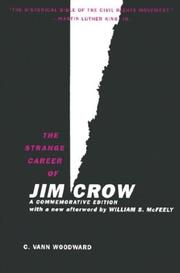
The classic argument that segregation was a deliberate political construction, not an inevitable cultural fact — bridges the end of Reconstruction to the full Jim Crow system and shows the stakes of Redemption's victory.
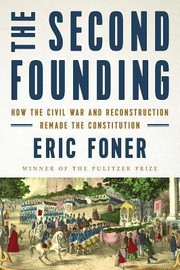
A focused, advanced study of the 13th, 14th, and 15th Amendments as a radical constitutional revolution — and why their betrayal and later revival matter so much; the ideal capstone tying law, history, and present-day civil rights together.
Discussion
Keep reading
Paths that share books, cover the same subject, or open a related topic.