Best Books on Japanese Cinema, in Reading Order
This curriculum moves from a broad historical and aesthetic grounding in Japanese cinema through the towering masters of the classical era, into the ruptures of the Japanese New Wave, and finally into the cultural and artistic rise of anime. Because the learner starts at an intermediate level, the path skips pure introductions and instead opens with rigorous historical context before drilling into auteur studies and movement-specific criticism.
The Landscape: History & Aesthetics
IntermediateBuild a confident historical map of Japanese cinema from the silent era to the postwar golden age, and internalize the key aesthetic concepts (ma, mono no aware, wabi-sabi) that critics use throughout the literature.
▸ Study plan for this stage
Pace: 6–7 weeks, ~40–50 pages/day (Richie first: 3–4 weeks; Bordwell second: 2–3 weeks)
- Japanese cinema's periodization: silent era, prewar sound cinema, wartime disruption, postwar golden age (1950s–1960s)
- Ma (negative space/interval): how emptiness and silence structure meaning in Japanese film composition and editing
- Mono no aware (pathos of things): the aesthetic of transience, melancholy, and acceptance of impermanence in narrative and visual design
- Wabi-sabi: beauty found in imperfection, incompleteness, and the humble—how this shapes character and mise-en-scène
- Ozu's formal innovations: pillow shots, low camera angles, elliptical editing, and the 'floating world' aesthetic as distinctly Japanese cinema
- The influence of Japanese aesthetics (Noh, Zen Buddhism, ukiyo-e) on postwar film language and visual storytelling
- Richie's critical framework: how to read Japanese cinema as a coherent tradition rather than isolated masterworks
- Bordwell's analytical method: close formal analysis of how Ozu's style embodies and extends Japanese aesthetic principles
- How did Japanese cinema develop differently from Western cinema in the silent era, and what aesthetic traditions did it draw on?
- What is ma, and how does it function in Japanese film composition, editing, and narrative structure?
- Define mono no aware and wabi-sabi, and identify at least two concrete visual or narrative examples from the films discussed in Richie or Bordwell
- What are Ozu's signature formal techniques (pillow shots, camera placement, editing patterns), and how do they embody Japanese aesthetic principles?
- How did the postwar period reshape Japanese cinema, and why is the 1950s–60s considered a 'golden age'?
- According to Bordwell, how does Ozu's approach to narrative ellipsis and temporal structure differ from classical Hollywood cinema?
- Create a timeline of Japanese cinema from 1900–1970, marking key films, directors, and historical ruptures (war, sound transition, postwar recovery). Annotate with aesthetic shifts.
- Watch one Ozu film (e.g., *Tokyo Story* or *An Autumn Afternoon*) while reading Bordwell's analysis; pause at pillow shots and low-angle scenes to note how ma and wabi-sabi operate visually.
- Write a 500-word comparative analysis of how mono no aware appears in two different films from Richie's survey (e.g., a silent-era film and a 1950s film).
- Collect 5–6 stills from Japanese films discussed in the books; for each, identify and label the aesthetic principle at work (ma, wabi-sabi, mono no aware) and explain your reasoning.
- Create a visual glossary: draw or diagram what ma, mono no aware, and wabi-sabi look like in film form (composition, editing, color, performance).
- Read Richie's chapters on specific directors (Mizoguchi, Naruse, Kurosawa) and write brief director profiles noting how each interprets or diverges from core Japanese aesthetic principles.
Next up: Mastering this historical and aesthetic foundation equips you to analyze how postwar and contemporary Japanese filmmakers either honor or deliberately subvert these traditions, preparing you to engage with later stages on genre, modernism, and cultural specificity.
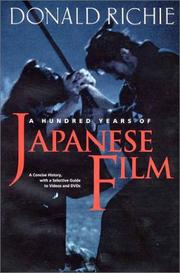
Richie is the foundational Western scholar of Japanese cinema; this sweeping survey establishes the full chronological and cultural framework every subsequent book assumes the reader already has.
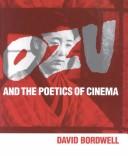
Read second to immediately deepen the aesthetic vocabulary — Bordwell's rigorous formal analysis of Ozu introduces the analytical tools (shot scale, ellipsis, pillow shots) that apply across all classical Japanese filmmaking.
The Golden Age Masters: Ozu, Mizoguchi, Kurosawa
IntermediateDevelop an intimate, auteur-level understanding of the three directors who defined Japan's golden age and brought its cinema to world attention, reading each master in dialogue with the others.
▸ Study plan for this stage
Pace: 8–10 weeks, ~25–30 pages/day, with 2–3 days per week reserved for film viewing and reflection
- Kurosawa's narrative dynamism and Western influence: how his action-driven storytelling, compositional boldness, and humanistic themes differ from traditional Japanese cinema
- Ozu's radical minimalism and formal restraint: the revolutionary use of static camera, pillow shots, low angles, and temporal rhythm as philosophical statements
- The director as auteur: how Richie's critical method reveals each filmmaker's consistent visual language, thematic preoccupations, and evolution across their body of work
- Dialogue between masters: contrasting Kurosawa's dramatic intensity and moral complexity with Ozu's contemplative acceptance and domestic focus
- Japanese cultural context: how each director's work reflects and refracts postwar Japanese society, tradition, and modernity
- Film form as meaning: understanding how editing, mise-en-scène, sound, and performance choices create philosophical and emotional depth
- Richie's critical framework: learning to read cinema through the lens of directorial intention, visual analysis, and cultural interpretation
- What are the defining characteristics of Kurosawa's visual style and narrative approach, and how do they reflect his engagement with Western cinema and Japanese tradition?
- How does Ozu's use of the static camera, pillow shots, and temporal pacing function as a philosophical and aesthetic statement distinct from Kurosawa's approach?
- What are the key thematic preoccupations (e.g., honor, family, aging, social change) that recur across Kurosawa's films, and how do they evolve over his career?
- How does Ozu's focus on domestic life and ordinary moments create profound emotional and philosophical resonance, and what does this reveal about his worldview?
- How do Kurosawa and Ozu each respond to postwar Japanese society and the tension between tradition and modernity, and what do their films reveal about their different values?
- What is Richie's critical method, and how does his analysis of mise-en-scène, editing, and performance help you understand directorial intention?
- Watch 2–3 Kurosawa films (e.g., *Rashomon*, *Seven Samurai*, *Ikiru*) while reading Richie's analysis; pause to annotate how Richie's observations match or deepen your viewing experience
- Create a visual comparison chart: list Kurosawa's and Ozu's signature techniques (camera placement, editing rhythm, use of silence, character positioning) with specific film examples from Richie's text
- Write a 500-word analysis of a single Kurosawa film using Richie's framework: identify the director's thematic concerns, formal choices, and how they create meaning
- Watch 2–3 Ozu films (e.g., *Tokyo Story*, *An Autumn Afternoon*, *Late Spring*) and document how the static camera and pillow shots affect your emotional and intellectual response compared to Kurosawa's dynamic style
- Conduct a close reading: select one chapter from each book and annotate Richie's critical language, noting how he builds arguments about directorial vision through formal analysis
- Create a timeline of each director's career phases (early, mature, late work) and note how their thematic and stylistic concerns shift; identify what historical or personal factors Richie suggests as causes
Next up: This stage establishes the critical vocabulary and visual literacy needed to understand how Mizoguchi synthesizes and transcends the formal and thematic innovations of Kurosawa and Ozu, preparing you to read the third master in productive dialogue with the first two.
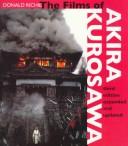
The definitive English-language study of Kurosawa; starting here grounds the learner in the most internationally visible director before moving to the more culturally specific Mizoguchi.
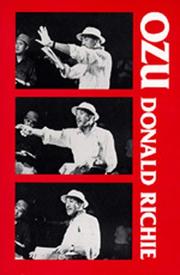
Richie's focused monograph on Ozu completes the triumvirate; reading it after Bordwell's formal study and the Kurosawa/Mizoguchi books lets the learner synthesize all three masters into a coherent picture of the golden age.
Rupture: The Japanese New Wave
ExpertUnderstand how the New Wave directors of the 1960s–70s (Oshima, Imamura, Yoshida, Wakamatsu) broke violently from the studio system and classical aesthetics, and situate that rupture in Japan's postwar political trauma.
▸ Study plan for this stage
Pace: 6–7 weeks, ~40–50 pages/day. Begin with Desser's contextual framework (weeks 1–3), then move to Oshima's theoretical essays (weeks 4–7). Allocate extra time for Oshima's dense argumentation and cross-referencing with Desser's film analyses.
- The Japanese studio system's classical aesthetic conventions and their role in postwar cultural control
- Oshima, Imamura, Yoshida, and Wakamatsu as agents of aesthetic and political rupture in the 1960s–70s
- The relationship between censorship, state ideology, and formal film innovation in postwar Japan
- How New Wave directors weaponized form (montage, narrative fragmentation, taboo content) against institutional constraints
- The connection between Japan's postwar trauma (defeat, occupation, economic transformation) and the violent rejection of classical cinema
- Oshima's theory of cinema as a site of political and erotic transgression
- The distinction between the New Wave's political cinema and earlier progressive or realist traditions in Japanese film
- What were the defining aesthetic and ideological features of the Japanese studio system that the New Wave sought to destroy?
- How did Oshima, Imamura, Yoshida, and Wakamatsu each employ formal rupture (narrative structure, editing, visual language) as a political strategy?
- What role did censorship and state control play in shaping the New Wave's transgressive aesthetic choices?
- How does Oshima theorize the relationship between cinema, sexuality, violence, and political liberation?
- In what ways did postwar Japanese trauma (military defeat, occupation, social upheaval) manifest in the New Wave's rejection of classical narrative and morality?
- How do Desser's film analyses in 'Eros plus Massacre' illustrate the theoretical arguments Oshima makes in 'Cinema, Censorship, and the State'?
- Create a comparative chart mapping the studio system's classical conventions (as described by Desser) against the formal innovations of each New Wave director—note which conventions each director explicitly violated and why.
- Write a 2–3 page analysis of one film discussed in Desser (e.g., Oshima's 'In the Realm of the Senses' or Imamura's 'The Pornographers') that traces how its formal choices enact the political theory Oshima articulates.
- Annotate Oshima's essays in 'Cinema, Censorship, and the State' by marking passages where he directly addresses censorship, then write a synthesis essay on his argument about how state control paradoxically enabled formal innovation.
- Construct a timeline of postwar Japanese history (1945–1975) alongside key New Wave films and publications, identifying how specific political events (student movements, economic crises, cultural shifts) correlate with shifts in cinematic form.
- Debate or write a response: Does Oshima's theory of cinema as transgression adequately account for the differences between Imamura's and Yoshida's approaches? Use specific textual evidence from both Desser and Oshima.
- Select one censorship case or controversy discussed by Oshima and research its historical context, then write a 2–page reflection on how Oshima's theoretical framework illuminates the stakes of that conflict.
Next up: This stage establishes the New Wave as a violent break from both classical Japanese cinema and postwar consensus, positioning you to examine how subsequent generations either inherited, refined, or rejected this legacy of formal and political transgression.
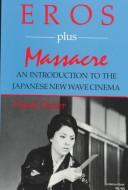
The essential English-language primer on the New Wave; it provides the political, industrial, and aesthetic context needed before tackling primary filmmaker statements or harder theoretical texts.

Reading Oshima's own polemical essays directly after Desser's overview reveals the movement's radical self-consciousness and gives the learner a filmmaker's-eye view of the break from classical cinema.
Anime: From Subculture to Global Dominance
ExpertTrace anime's artistic and industrial rise from postwar television origins through Studio Ghibli and the global explosion of the 1990s–2000s, understanding it as both a continuation of and a departure from live-action Japanese cinema traditions.
▸ Study plan for this stage
Pace: 8–10 weeks, ~40–50 pages/day (accounting for dense analysis and frequent pausing to watch referenced films/series)
- Anime's origins in postwar Japanese television and its evolution from limited animation techniques to a distinctive aesthetic form
- The relationship between anime and live-action Japanese cinema traditions—how anime both inherits from and diverges from Kurosawa, Ozu, and other masters
- Studio Ghibli's role as the pivotal force that elevated anime from subculture to mainstream cultural legitimacy, both domestically and internationally
- The industrial and economic structures that enabled anime's global expansion in the 1990s–2000s, including distribution, merchandising, and fandom
- Miyazaki's artistic vision and thematic preoccupations (nature, technology, pacifism, female agency) as central to understanding anime's artistic maturation
- Key works as case studies: Akira, Ghost in the Shell, Spirited Away, Howl's Moving Castle—their narrative, visual, and philosophical significance
- The distinction between anime as a medium (form) versus anime as an industry (production system), and how both shaped its global reception
- Anime fandom and otaku culture as drivers of both artistic innovation and commercial viability
- How did postwar Japanese television production constraints shape anime's distinctive visual and narrative techniques, and what continuities exist with earlier Japanese cinema?
- What was Studio Ghibli's specific contribution to anime's legitimacy and global reach, and how did Miyazaki's artistic vision differ from contemporaries like Satoshi Kon or Hideaki Anno?
- Trace the industrial and economic factors that enabled anime's explosion in the 1990s–2000s: how did distribution, merchandising, and international licensing reshape the medium?
- How do Akira and Ghost in the Shell exemplify anime's capacity for philosophical and political complexity, and what made them pivotal for Western audiences?
- What are Miyazaki's recurring thematic and visual concerns across his filmography, and how do they reflect broader tensions in Japanese culture (tradition vs. modernity, nature vs. technology)?
- How does anime's relationship to manga, light novels, and video games differ from live-action cinema's relationship to source material, and what does this reveal about anime's industrial structure?
- Create a timeline mapping anime's evolution from 1960s television (Astro Boy) through the 2000s, annotating key industrial shifts, studio formations, and breakthrough works mentioned in Clements and Napier
- Watch and analyze three films across different eras—one pre-Ghibli (e.g., Akira), one Ghibli masterpiece (Spirited Away or Howl's Moving Castle), and one contemporary work—documenting visual techniques, narrative structure, and thematic concerns
- Write a comparative essay (2,000–2,500 words) on how a single Miyazaki film (Spirited Away or Howl's Moving Castle) both continues and departs from live-action Japanese cinema traditions discussed in Clements
- Create a visual/textual chart comparing the production pipelines, funding models, and distribution strategies of anime versus live-action Japanese cinema in the 1990s–2000s
- Conduct a close reading of one pivotal scene from Akira, Ghost in the Shell, or a Miyazaki film, analyzing its visual composition, dialogue, and philosophical implications using concepts from Napier's books
- Interview or survey 3–5 anime fans (online or in-person) about what drew them to anime and when they discovered it; synthesize findings to understand how fandom and otaku culture shaped anime's global expansion
Next up: This stage establishes anime as a mature artistic and industrial phenomenon with deep roots in Japanese visual culture; the next stage can now examine anime's specific genres (mecha, magical girl, psychological thriller) or its influence on global animation and media, building on the foundational understanding of how anime achieved cultural legitimacy.

The most rigorously researched industrial and artistic history of anime available; reading it first establishes the production-side story that aesthetic studies alone cannot provide.
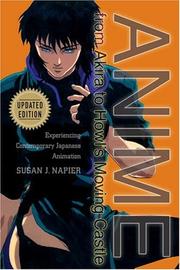
Napier's cultural and thematic analysis of key anime texts complements Clements's industrial history, focusing on how anime negotiates Japanese identity, modernity, and global appeal.

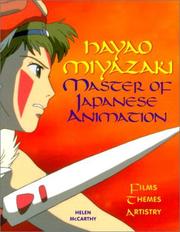
Closes the curriculum with a deep auteur study of Hayao Miyazaki — the figure who most bridges classical Japanese cinematic values and anime's world dominance — bringing the entire arc of the curriculum into focus.
Discussion
Keep reading
Paths that share books, cover the same subject, or open a related topic.