Akira Kurosawa: The Best Books to Read, in Order
Kurosawa is the most written-about Japanese director in English, which is both an advantage and the central problem: for decades he was the Japanese director Western critics could read, and the scholarship that made him famous is also the scholarship that misread him as an honorary Westerner. So this path starts with his own memoir and the people who were in the room, moves to the two standard critical surveys, works through the two films that generated the most writing, and finishes with the revisionist scholarship that puts him back inside Japanese cinema. Several of these are catalogued under truncated display titles, noted below.
Start with the Man
BeginnerGet Kurosawa's account of his own formation, and a working sense of what a Kurosawa set was actually like day to day.
▸ Study plan for this stage
Pace: Three to four weeks. Something Like an Autobiography is around 200 pages of memoir and reads in a week. Waiting on the Weather is 296 pages of recollection by his script supervisor and takes two. Read them in that order and watch or rewatch Rashomon between them, since the memoir stops there and Nog
- The memoir is Kurosawa's own account of his formation and nothing else: childhood in Taisho Tokyo, the earthquake, his brother Heigo working as a benshi narrating silent films, and his apprenticeship under Kajiro Yamamoto at PCL.
- The apprenticeship system he describes — assistant director as a full craft training in editing, script, weather and management — explains more about his working method than any critical account does.
- The memoir deliberately stops at Rashomon, on the grounds that everything after that is in the films. That is a real limitation and it is the reason every other book in this path exists.
- A memoir is a source, not a record. Kurosawa is shaping his own story, and stages four and five give you the material to check it against interviews and against people who were there.
- Teruyo Nogami was his script supervisor from Rashomon to the end, and Waiting on the Weather is the best eyewitness account of how a Kurosawa set actually ran — the collaborative scriptwriting, the waiting for the right sky that gives the book its title, the temper.
- Nogami is a participant and an admirer, and her book is memoir rather than reporting; its authority is proximity, and its limits are the same thing.
- The two books together give you a working picture of the man and the set, which is what makes the critical books in stage two arguable rather than abstract.
- What did Kurosawa learn as an assistant director that shows up later in his direction? Name three specific skills the memoir describes.
- What does the memoir tell you about his brother, and what does it leave out?
- Why does the memoir stop at Rashomon, and what does that decision protect?
- From Nogami's account, describe a single day on a Kurosawa production from call to wrap.
- Where does Nogami's account contradict or complicate something in the memoir?
- Watch Rashomon immediately after finishing the memoir. It is the last film the book covers and the first Nogami worked on, and the seam between the two books runs straight through it.
- Keep a working-method file from Nogami: how a script was written, how a shot was set up, how weather was handled, who made which decision. Every critical claim in the later stages can be tested against it.
- List every factual claim in the memoir about a specific film's production, with page numbers. You will check these against Galbraith and the interviews in stage four.
- Read the memoir's earthquake chapter and then a historical account of the 1923 earthquake, and note what Kurosawa includes and what he passes over.
Next up: With the man's own account and an eyewitness to the set, the standard critical surveys can be read as interpretations rather than as information.
His own memoir, and the only correct first book: childhood in Taisho Tokyo, the 1923 earthquake, his brother the silent-film narrator, and his apprenticeship under Kajiro Yamamoto. It deliberately stops at Rashomon, on the grounds that anything after that is in the films — a limitation worth knowing before you rely on it.
Nogami was his script supervisor from Rashomon to the end, and this is the best eyewitness account of the working method — the waiting for the right sky that gives the book its title, the collaborative scriptwriting, the temper. Read it straight after the memoir as the corrective from someone who was standing next to him.
The Two Standard Critical Surveys
IntermediateAcquire a film-by-film reference for the whole career, and two very different critical frames for it — humanist and formal.
▸ Study plan for this stage
Pace: Six to seven weeks. The Films of Akira Kurosawa is 223 pages, organised film by film, and is designed to be read a chapter at a time alongside the film in question — three weeks if you watch as you go, which is how it works. The Warrior's Camera is 381 pages of academic film studies: it assumes basi
- Donald Richie's book introduced Kurosawa to English-language criticism and is still the standard film-by-film companion, revised across several editions. He knew Kurosawa personally, which is its strength and its bias.
- Richie reads the films as a humanist: individual moral action, the teacher and pupil pairing, the possibility of decency in a corrupt order. He also takes the director's word for a great deal, which is exactly what stage five attacks.
- Stephen Prince's The Warrior's Camera reads the same films through political context and visual construction rather than through personality, and is markedly more sceptical about the late work.
- Prince's formal analysis is the most useful thing in this stage: axial cutting, the multi-camera long-lens method from Seven Samurai onward, wipes as punctuation, the use of weather and mass movement as compositional elements.
- The two books disagree about what Kurosawa's films are for — moral instruction or political analysis — and that disagreement is the shape of the field before the revisionists arrive.
- Both are surveys covering the whole career, so they are reference works as much as arguments; used properly they are read against the films rather than instead of them.
- Neither book is a biography. They are critical studies, and readers looking for a life will find only as much of one as each critic needs for his argument.
- State Richie's humanist reading in one sentence, and name the three films it fits best.
- What is an axial cut, and what does Prince say Kurosawa uses it for?
- Where does Prince argue Richie has accepted Kurosawa's own account uncritically?
- How does each critic handle the late colour films, and what accounts for the difference in their verdicts?
- Take one film covered by both and say which reading you find better supported by what is actually on screen.
- Watch Ikiru and read both books' chapters on it the same evening. The gap between a humanist reading and a formal-political one is at its widest on that film and it makes the whole stage concrete.
- Using Prince's terms, shot-log a five-minute sequence from Seven Samurai: camera count, lens length, cut type, screen direction. This is the exercise that turns his vocabulary into something you can see.
- Go through Richie's chapters and mark every claim that rests on something Kurosawa told him. That marked-up list is what stage five is arguing with.
- Pick one film neither critic rates highly, watch it, and write your own two-paragraph case for it. Doing this before the revisionists arrive keeps you from simply adopting their verdicts.
Next up: Having two general readings of the whole career, the next stage shows how much writing two individual films can sustain.
The book that introduced Kurosawa to English-language criticism and still the standard film-by-film companion, revised across several editions. Richie knew him personally, which is its strength and its bias — he reads the films as a humanist and takes the director's word for a great deal.
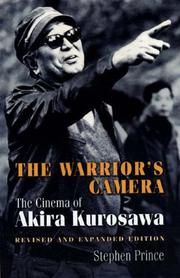
Prince reads the same films through their political context and their visual construction rather than through personality, and is far more sceptical about the late work. Read it after Richie: the disagreement between these two books is the shape of the field.
Rashomon and Seven Samurai in Depth
IntermediateStudy the two films that carried Kurosawa to the West, and see how much criticism a single film can support.
▸ Study plan for this stage
Pace: Four to five weeks. Focus on Rashomon is a 185-page edited casebook — the script, contemporary reviews and critical essays collected in one volume — and is read in pieces rather than straight through; two weeks with the film to hand. Kurosawa's Rashomon is a 252-page argumentative essay by a scholar
- A casebook is a genre: primary documents, contemporary reception and several critics collected around one film so that a reader can see an interpretive argument develop. Focus on Rashomon is the standard one for this film and is catalogued here under its series title.
- The 1951 Venice prize for Rashomon is the event that opened Japanese cinema to Western audiences, and the casebook lets you read the contemporary reviews that constructed the film's reputation in real time.
- The famous claim about Rashomon — that it shows truth to be unavailable — is a critical construction with a history, and the casebook is where you can watch that reading being built rather than simply inherit it.
- Paul Anderer's Kurosawa's Rashomon is short and argumentative, placing the film against Kurosawa's wartime and immediate postwar experience and his brother's suicide. It deliberately unsettles the casebook's consensus.
- Joan Mellen's BFI volume is a close reading of a single film at essay length, concentrating on structure, class politics and the ending. It is the best demonstration on this path of what sustained attention to one film looks like.
- Seven Samurai's class argument — that the farmers, not the samurai, are the film's victors — is the reading Mellen develops, and it is available from the last lines of the film itself.
- Reading three books on two films teaches the difference between criticism that explains a film and criticism that argues with other criticism, which is most of what a field actually consists of.
- What did contemporary Western reviewers in the casebook actually praise Rashomon for, and how much of it is about Japan rather than about the film?
- Where did the truth is unavailable reading come from, and does the film support it as strongly as its reputation assumes?
- What does Anderer argue the film is about, and what evidence outside the film does he rely on?
- What is Mellen's reading of the ending of Seven Samurai, and how does the film's structure support it?
- Compare the reading of Rashomon in Richie's survey with the one in his casebook. Has he changed, or is the form doing the work?
- Watch Rashomon, then read the script in the casebook, then rewatch the woodcutter's account. Reading the scene as written before rewatching it is the single most useful exercise on this path for seeing what the camera adds.
- Read three contemporary reviews from the casebook and write down every claim each makes about Japan rather than about the film. The proportion is the beginning of stage five's argument.
- Watch Seven Samurai in two sittings with the intermission where the film puts it, and use Mellen to mark the structural function of each act. Then check her account of the farmers against the final sequence.
- Take Anderer's biographical reading and test it: find the moments in Rashomon he says carry it, and decide whether they carry it without his framing.
- Write a page comparing what a casebook, a monograph and a BFI-length study each can and cannot do with a single film.
Next up: Two films in depth prepares you for the collaborations and the written scripts, where the question becomes how much of a Kurosawa film is Kurosawa.
Richie's edited volume on the film — the script, contemporary reviews, and critical essays in one place. It is catalogued here under its series title, Focus on Rashomon, and is the standard casebook on the 1951 Venice prize that opened Japanese cinema to the world.

A short, argumentative recent book placing the film against Kurosawa's own wartime and postwar experience, including his brother's suicide. Read it after Richie's casebook, whose consensus reading it is deliberately unsettling.
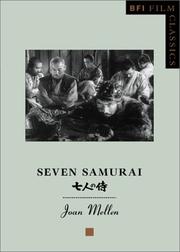
A BFI Film Classics monograph — roughly ninety pages on one film, tightly focused on structure, class politics and the ending. The best demonstration on this path of what close reading of a single Kurosawa film looks like.
The Collaborations and the Screenplays
IntermediateFollow the partnership that defined sixteen of his films, and read a script as written rather than as filmed.
▸ Study plan for this stage
Pace: Six to eight weeks. The Emperor and the Wolf is 823 pages of densely researched double biography of Kurosawa and Toshiro Mifune, with extensive production and studio detail — four weeks and it is a reference as much as a read. The Cardullo volume is a 194-page collection of interviews spanning decad
- Galbraith's double biography covers both careers and the rupture between Kurosawa and Mifune after Red Beard, and it is the most complete account in English of the Japanese studio context both men worked in.
- The studio system — Toho, PCL, the strikes, the collapse of the studio contract in the 1960s, the shift to independent and foreign financing — is the material condition behind every career decision the critical books treat as artistic.
- Kurosawa's scripts were written collaboratively, most often with Hideo Oguni and Ryuzo Kikushima or Masato Ide, in shared confinement, with each writer drafting scenes independently. Sixteen films with Mifune is the partnership that gets the attention, but the writing room is where the films were bu
- The Cardullo collection is a collected-interviews volume, catalogued under the bare title Akira Kurosawa. It is useful precisely because Kurosawa contradicts himself across decades, which is the flattest available test of how far the memoir can be trusted.
- Ran is the published screenplay of the 1985 King Lear adaptation, co-written with Ide and Oguni. A screenplay is not a novel: it is a production document, and reading one teaches you which effects live in the writing and which are added by staging.
- Reading a script against its film is the fastest way to see how much of Kurosawa's meaning is in composition, weather, movement and cutting rather than in dialogue.
- Galbraith's book is a biography; Cardullo's is a primary-source collection; Ran is a primary document. None of the three is criticism, and that is why they come before the revisionist stage.
- What broke the Kurosawa and Mifune partnership after Red Beard, on Galbraith's evidence?
- How did Toho's studio economics constrain what Kurosawa could make, decade by decade?
- How did the writing room actually work, and what did Oguni contribute that Kurosawa did not?
- Find two interviews in the Cardullo volume, decades apart, where Kurosawa gives incompatible accounts of the same thing. What does the discrepancy suggest about the memoir?
- What is in the Ran screenplay that is not in the film, and what is in the film that could not be written?
- Read one scene of the Ran screenplay, then watch that scene, then reread it. Write down everything present on screen that the script did not specify — the sky, the colour blocks, the scale of the armies. That list is the answer to what Kurosawa added as a director.
- Check the production claims you listed from the memoir in stage one against Galbraith's account of the same films. Mark each as confirmed, complicated or contradicted.
- Use the Cardullo interviews to build a short chronology of Kurosawa's stated reasons for making three specific films, and note whether the reason changed with the decade.
- Take the fifteen years of Mifune films and note what each actor and director gained in that period. Galbraith gives both careers, which is the point of a double biography.
- Read the Lear-derived material in the Ran script against Shakespeare's text and mark every structural change. This prepares directly for Goodwin's book on adaptation in stage five.
Next up: With the production facts and the primary documents in hand, the revisionist scholarship can be assessed rather than simply believed.
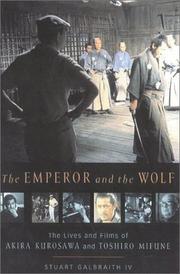
A double biography of Kurosawa and Toshiro Mifune covering both careers and the rupture between them after Red Beard. Long, densely researched and the most complete account of the Japanese studio context either man worked in.

A collected-interviews volume spanning decades, catalogued under the bare title Akira Kurosawa. Useful precisely because Kurosawa contradicts himself across it — the flattest test available of how far the memoir can be trusted.

The published screenplay of the 1985 Lear adaptation, co-written with Ide and Oguni. Reading the script against the finished film is the fastest way to see how much of Kurosawa's meaning is in the staging rather than the words.
The Revisionist Scholarship
IntermediatePut Kurosawa back inside Japanese film history, and understand the argument that the Western canonisation distorted him.
▸ Study plan for this stage
Pace: Ten to twelve weeks. Yoshimoto's Kurosawa is 485 pages of academic film studies and is the hardest book on this path: it engages with film theory and postcolonial critique and assumes you know the films and the standard criticism well — four to five weeks. Goodwin's Akira Kurosawa and Intertextual C
- Yoshimoto's argument: Western criticism made Kurosawa the exception who proved Japanese cinema's foreignness — the accessible one, the Western one — and in doing so misread both him and the national cinema he came out of.
- He rereads the films inside their own industrial and national history: studio conditions, wartime and occupation censorship, and the Japanese critical reception that English-language writers largely ignored.
- The corrective is not that Richie was wrong about the films but that the frame was wrong about the field, which is a harder and more interesting claim to evaluate.
- James Goodwin's book covers the adaptations — Shakespeare, Dostoevsky, Gorky, Hammett — and what Kurosawa does to a source text. The borrowing is exactly what earlier critics used to claim him for the West, so it is the right test case.
- Intertextuality here is not influence-spotting: Goodwin's question is what a transposed source does inside a different national and generic system, which is why it belongs beside Yoshimoto rather than in stage four.
- A Hundred Years of Japanese Film is Richie's late survey of the whole national cinema, in which Kurosawa is one figure among Ozu, Mizoguchi, Naruse and Imamura. It supplies the context needed to judge Yoshimoto's argument and is a reading list in its own right.
- The earlier Japanese Cinema, from 1971, explains national cinema by national character, which is precisely the method Yoshimoto attacks. Reading the same author thirty years apart shows the field correcting itself in one person.
- By this point you have read three kinds of book about the same films — memoir, casebook, revisionist monograph — which is the actual skill this path teaches.
- State Yoshimoto's central argument in your own words, and name the specific critical habits he identifies as the problem.
- Which of Yoshimoto's rereadings of an individual film is strongest, and which is weakest?
- What does Goodwin say Kurosawa does to a source text? Test it on Ran against Lear or Throne of Blood against Macbeth.
- Where does Kurosawa sit in A Hundred Years of Japanese Film relative to Ozu and Mizoguchi, and does the placement support or undermine Yoshimoto?
- Compare Richie in 1971 and Richie in 2001 on the same director other than Kurosawa. What exactly changed in his method?
- After all five stages: was Kurosawa misread by Western criticism? Answer with a specific film and a specific misreading.
- Take one Yoshimoto rereading, watch the film, and decide from the screen whether his reading or Richie's fits better. Doing this at least twice is the only honest way to assess a revisionist argument.
- Read Goodwin's chapter on one adaptation with the source text open. Mark every change of plot, character and ending, then ask what each change does inside a Japanese generic frame.
- Watch one Ozu and one Mizoguchi film using A Hundred Years of Japanese Film as a guide, then rewatch a Kurosawa. The comparison is the practical form of Yoshimoto's argument.
- Set a page of Richie's 1971 Japanese Cinema beside a page of his 2001 survey on the same subject and mark every sentence that could not now be written. That marked-up pair is the clearest picture of a field correcting itself.
- Write a final two pages on what each book on this path was — memoir, eyewitness account, survey, casebook, monograph, biography, interview collection, screenplay, revisionist study — and what you would trust each of them for.
Next up: This is the end of the path: the man's account, the eyewitness, two surveys, two films in depth, the production record and the argument that put him back inside Japanese cinema.
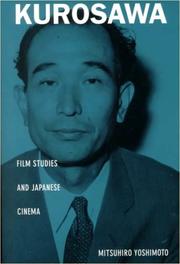
The major revisionist study, catalogued as simply Kurosawa: Yoshimoto argues that Western criticism made him the exception who proved Japanese cinema's foreignness, and rereads the films inside their own national and industrial history. The hardest book here and the one that changes the most.
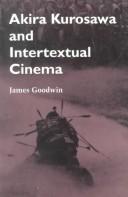
On the adaptations — Shakespeare, Dostoevsky, Gorky, Hammett — and on what Kurosawa does to a source text. Read it alongside Yoshimoto, since the borrowing is exactly what earlier critics used to claim him for the West.
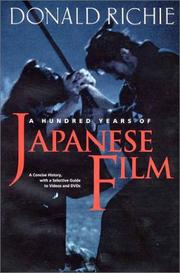
Richie's survey of the whole national cinema, in which Kurosawa is one figure among Ozu, Mizoguchi, Naruse and Imamura. The necessary context for judging Yoshimoto's argument, and a reading list in its own right.
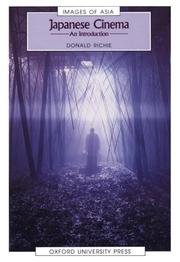
The earlier and much more schematic Richie survey, which is worth reading last precisely because it is the position Yoshimoto is attacking — national cinema explained by national character. Seeing the same author in 1971 and 2002 shows the field correcting itself.